

Deglet Noor Date Palm
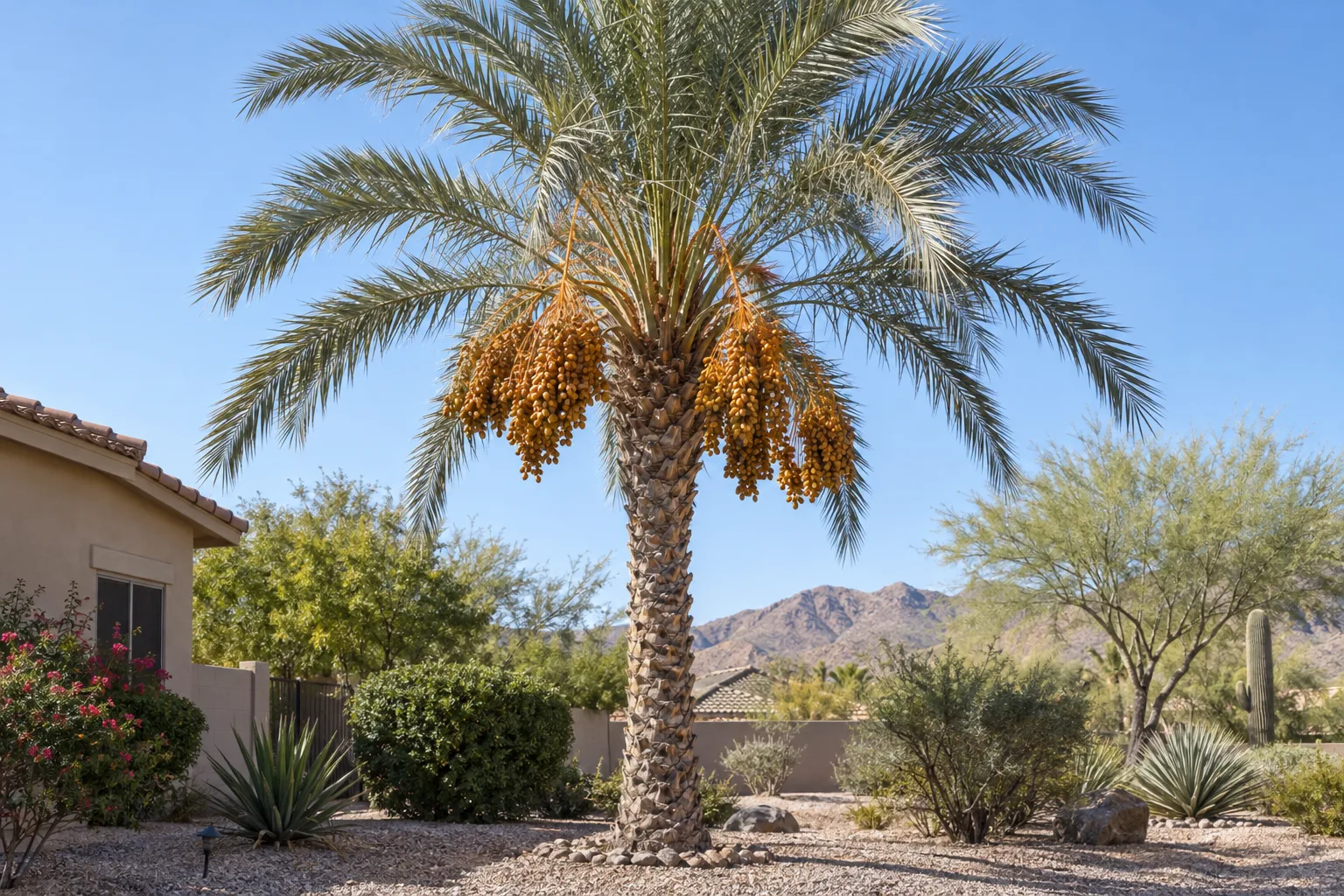
Phoenix dactylifera ‘Deglet Noor’ is a large date palm prized for its sweet, amber, semi-dry dates and arching, featherlike fronds. Well suited to Phoenix heat when adequately irrigated. Special Features Edible dates, strong architectural form, excellent heat tolerance, and moderate drought tolerance once established. True-to-type ‘Deglet Noor’ palms are female and propagated vegetatively; reliable fruit […]
Desert Delight Nectarine
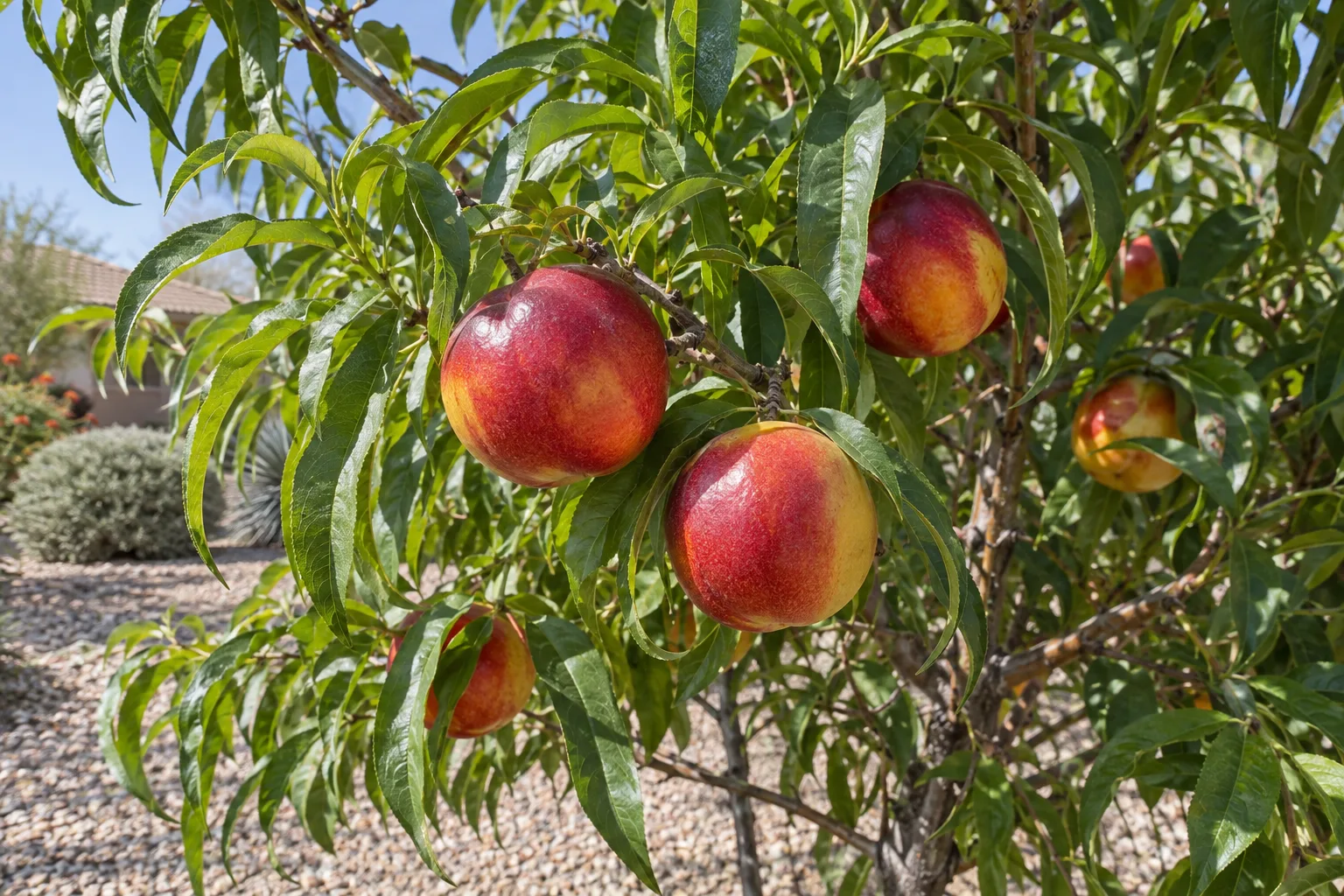
A low-chill nectarine well suited to Phoenix-area home orchards, producing sweet, yellow-fleshed, freestone fruit with red-blushed skin. Special Features Self-fruitful; no second tree required. Low chilling requirement of approximately 100–200 hours. Early-season fruit typically ripens in late spring to early summer, depending on local conditions. Problems & Solutions Sunburn on exposed bark (protect young trunks […]
Donut Peach (Stark Saturn type)
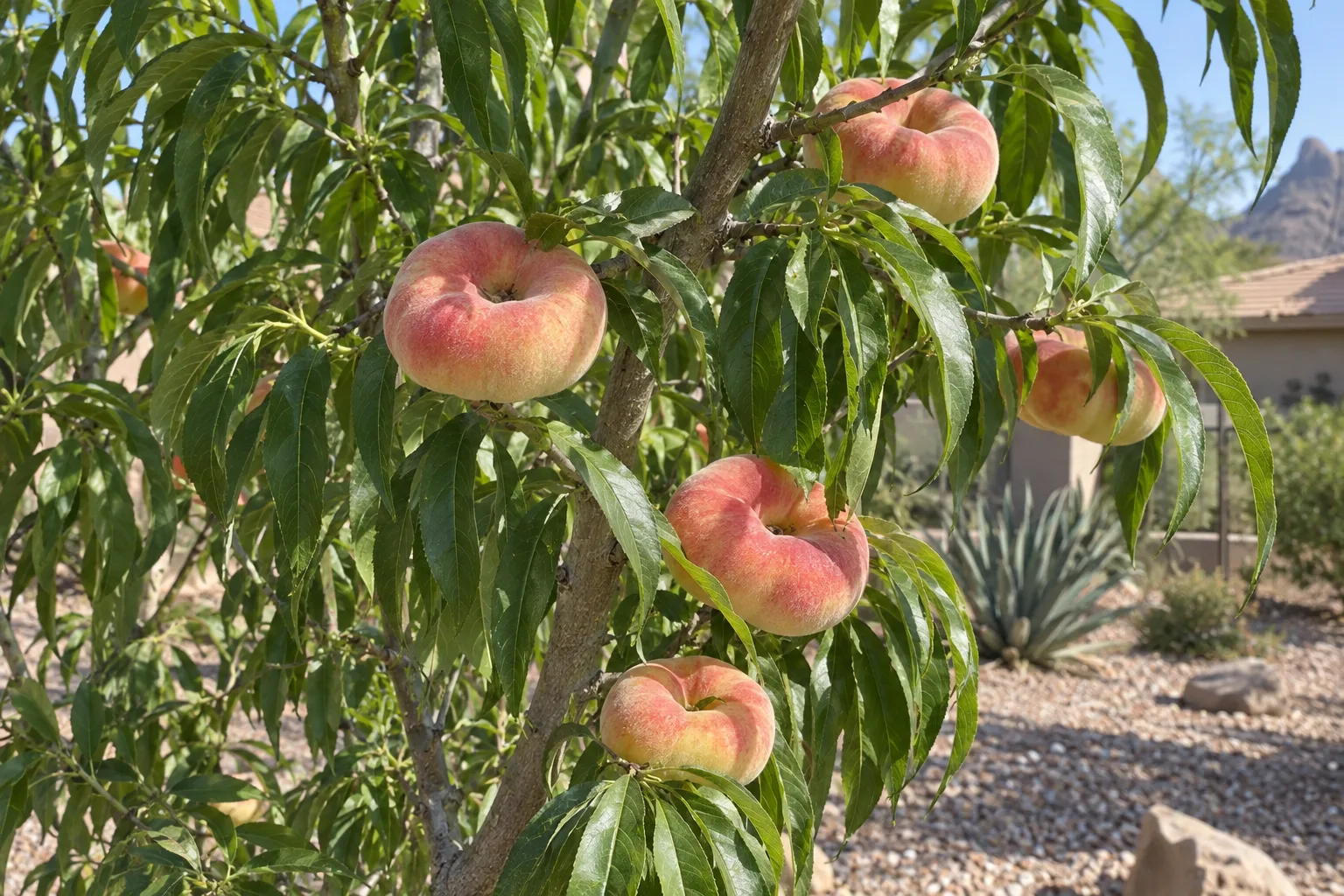
Deciduous fruit tree producing flattened, doughnut-shaped peaches with sweet, low-acid white flesh and red-blushed skin. Fruiting in Phoenix depends on sufficient winter chill. Special Features Distinctive flat peaches with small pits and sweet white flesh; self-fruitful, so a second peach tree is not required for pollination. Problems & Solutions Insufficient winter chill can cause irregular […]
Dorsett Golden Apple

A low-chill apple cultivar producing sweet, crisp, golden-yellow fruit, often with a pink blush. Well suited to Phoenix with adequate irrigation and protection from intense afternoon heat. Special Features Very low chilling requirement, commonly estimated at 100–200 hours below 45°F. Early harvest helps avoid peak summer heat. Partially self-fruitful, but an overlapping-bloom apple such as […]
Earligrande Peach
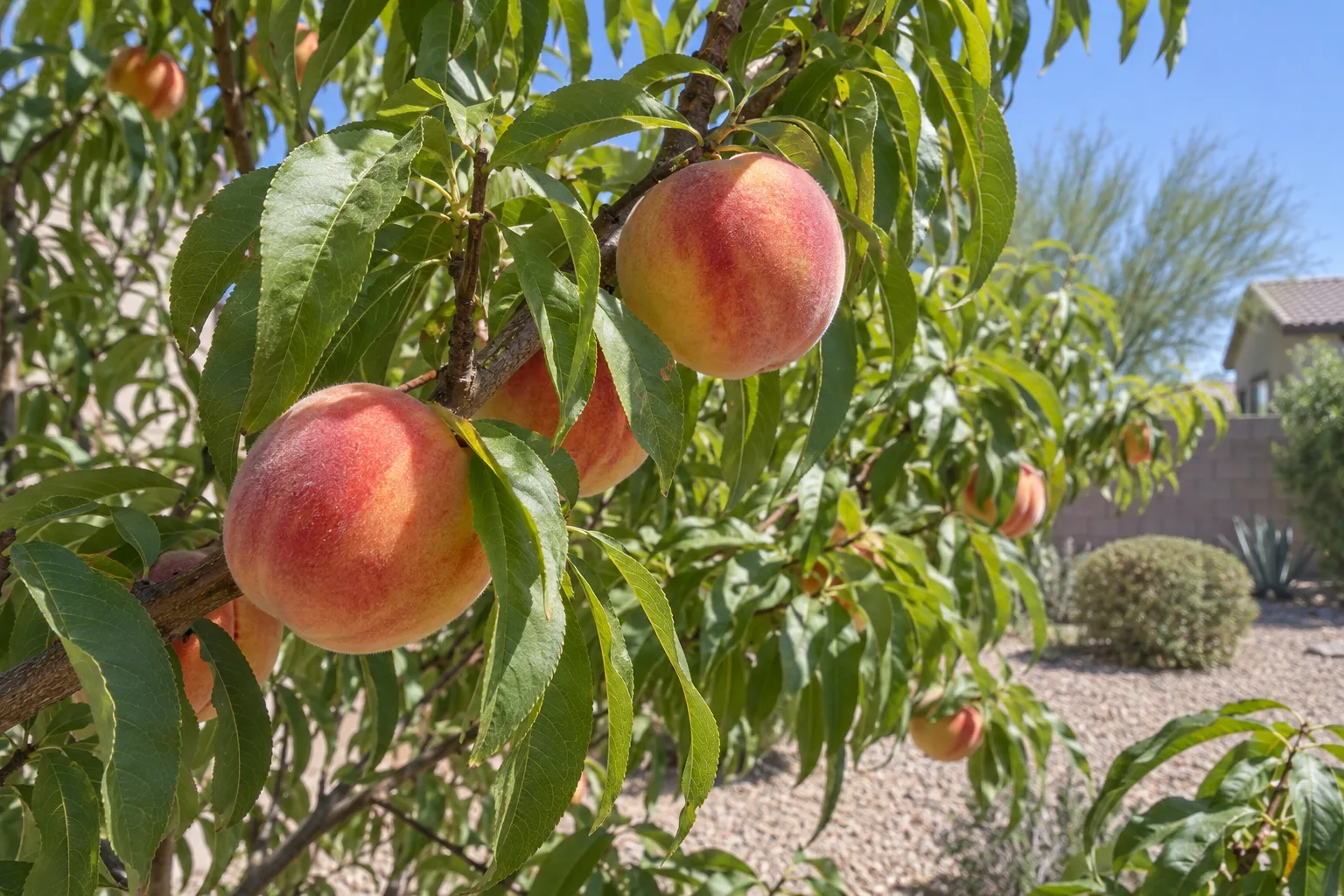
A low-chill peach variety well suited to Phoenix gardens, producing early-ripening, yellow-fleshed peaches with red-blushed yellow skin and sweet flavor. Special Features Self-fruitful; no second peach tree is required. Low chilling requirement, approximately 200–300 hours below 45°F. Early harvest helps avoid the worst summer heat. Problems & Solutions Trunk sunburn: protect exposed bark with diluted […]
Dragon Fruit Cactus
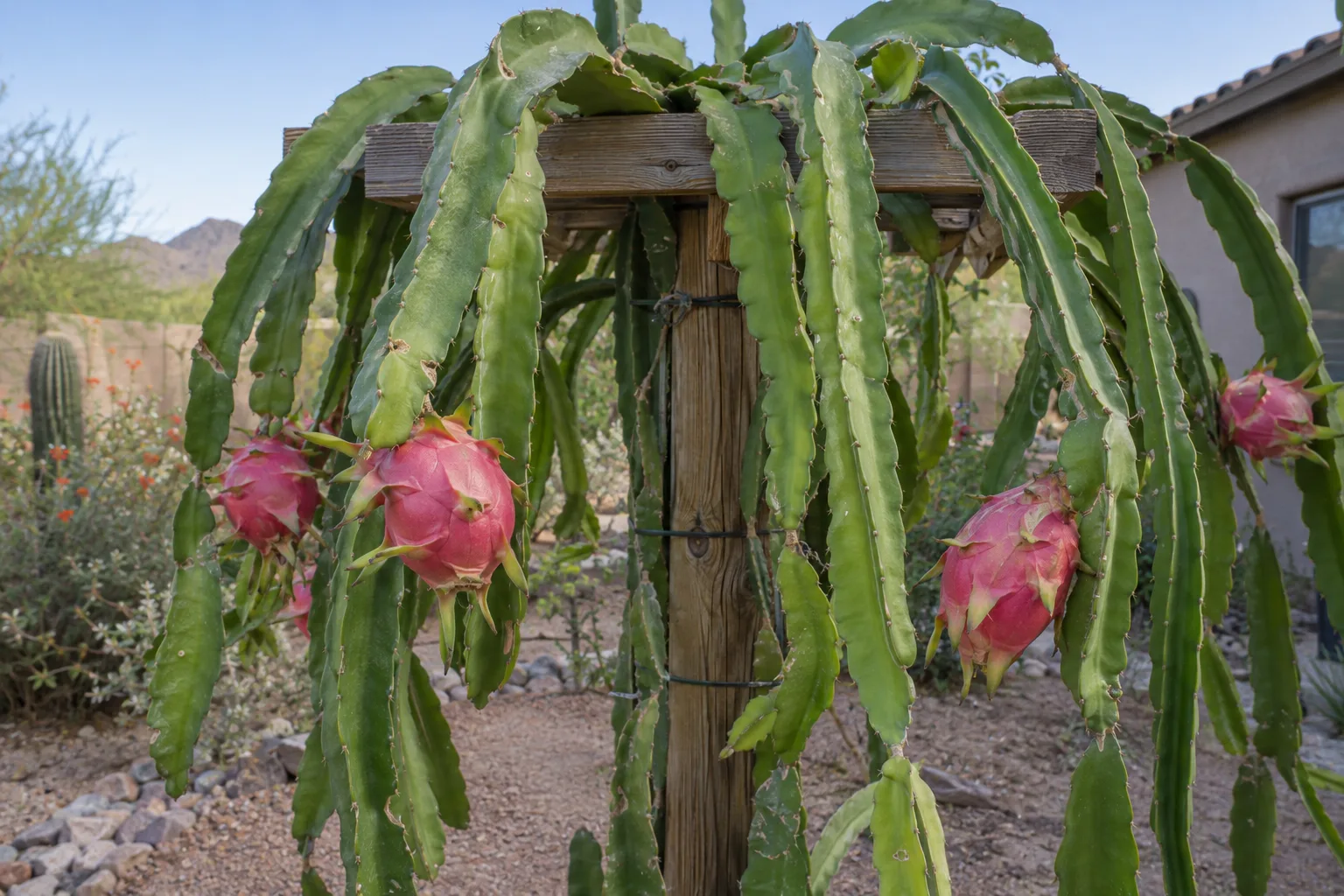
A tropical climbing cactus (Selenicereus spp., formerly Hylocereus) with fleshy, three-angled stems, spectacular night-blooming flowers, and edible dragon fruit; requires protection from Phoenix’s intense sun and winter freezes. Special Features Edible fruit with white, red, or purple flesh depending on variety; large fragrant nocturnal flowers; aerial roots attach stems to supports. Problems & Solutions Intense […]
Edgars Red Dragon Fruit
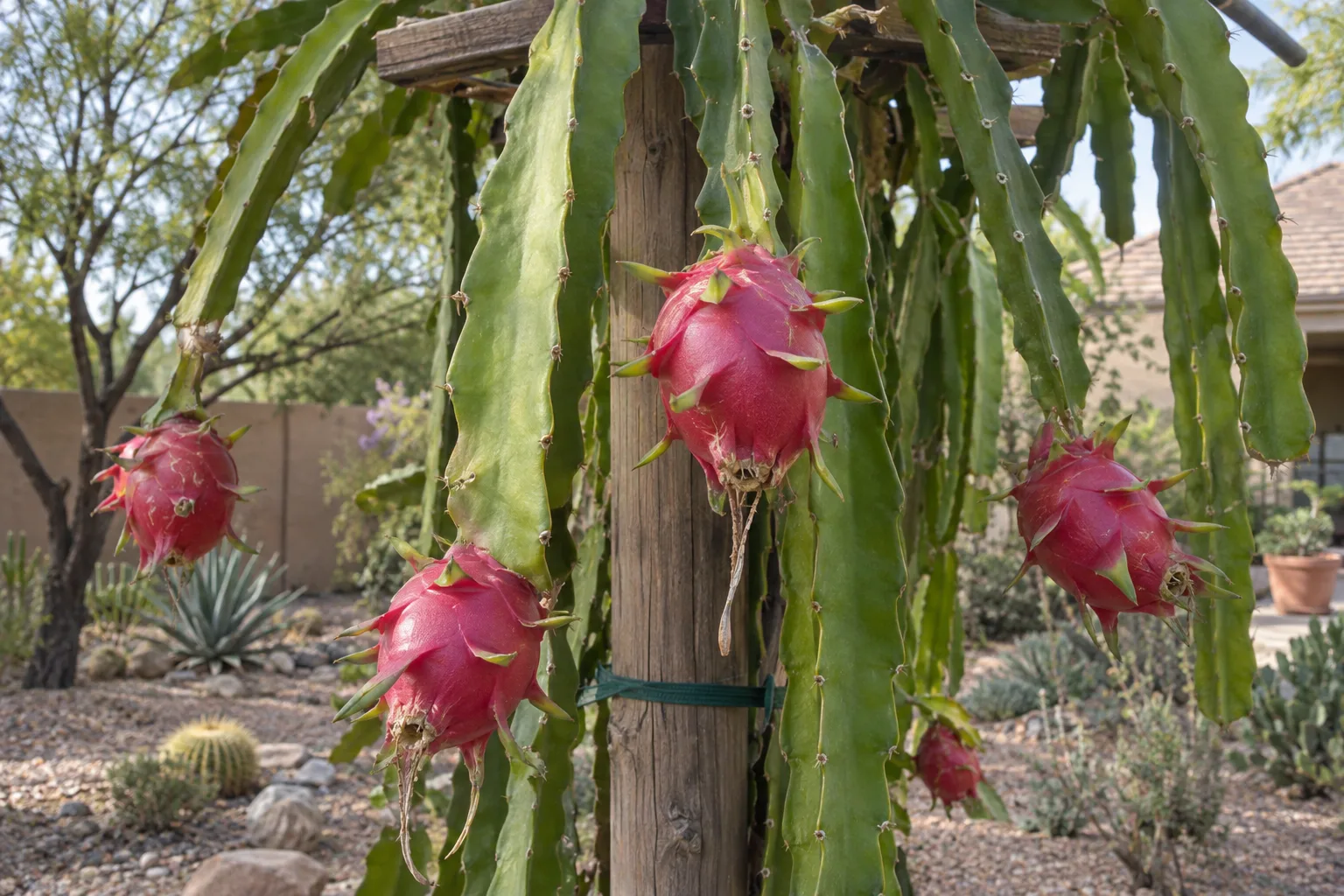
Edgar’s Red is a climbing tropical cactus grown for red-skinned dragon fruit with red to magenta flesh. Often sold as Selenicereus undatus, its exact species or hybrid parentage may vary by supplier. Special Features Edible red-fleshed fruit, spectacular night-blooming flowers, and aerial roots that attach to supports. More moisture-loving than desert cacti. Problems & Solutions […]
Egyptian Guava

A tropical fruit tree commonly sold as a white-fleshed guava, producing fragrant, yellow-skinned fruit with sweet, aromatic flesh and numerous hard seeds. Special Features Edible, vitamin C-rich fruit; fragrant flowers; attractive peeling bark. Usually self-fruitful, though cross-pollination may improve fruit set. Problems & Solutions Frost-sensitive, especially when young; plant in a sheltered location and protect […]
Eversweet Pomegranate

A fruiting pomegranate prized for sweet, low-acid fruit with soft seeds, pale pink arils, and nearly clear juice. Well suited to Phoenix heat. Special Features Self-fruitful; sweet, low-acid fruit with soft edible seeds and juice that stains less than red-juiced varieties. Heat tolerant and drought tolerant once established, though irrigation improves fruit production. Problems & […]
Eva’s Pride Peach

Eva’s Pride peach (Prunus persica ‘Eva’s Pride’) is a low-chill fruit tree producing sweet, aromatic, yellow-fleshed peaches with red-blushed skin. Well suited to warm-winter gardens, including Phoenix. Special Features Self-fruitful; no second peach variety is required. Low chilling requirement, commonly listed at approximately 100–200 hours below 45°F. Early harvest and flavorful fruit for fresh eating, […]