Pencil Cactus
A branching succulent shrub or small tree with slender, pencil-like green stems and tiny, short-lived leaves; not a true cactus. Special Features Sculptural branching, strong heat tolerance, and excellent drought resistance once established. Milky sap is toxic and highly irritating. Problems & Solutions Frost-tender and not reliably hardy throughout Zone 9b; freezing temperatures can damage […]
Blue Torch Cactus
Columnar cactus native to Brazil, known for its striking blue-green stem and dense white to golden wool at the apex and along the ribs. Produces nocturnal pink to red flowers and grows as a tall, branching column in warm desert landscapes. Special Features Striking blue-green stem color; dense white woolly trichomes at growing points; nocturnal […]
Prickly Pear Cinnamon Bunny Ear
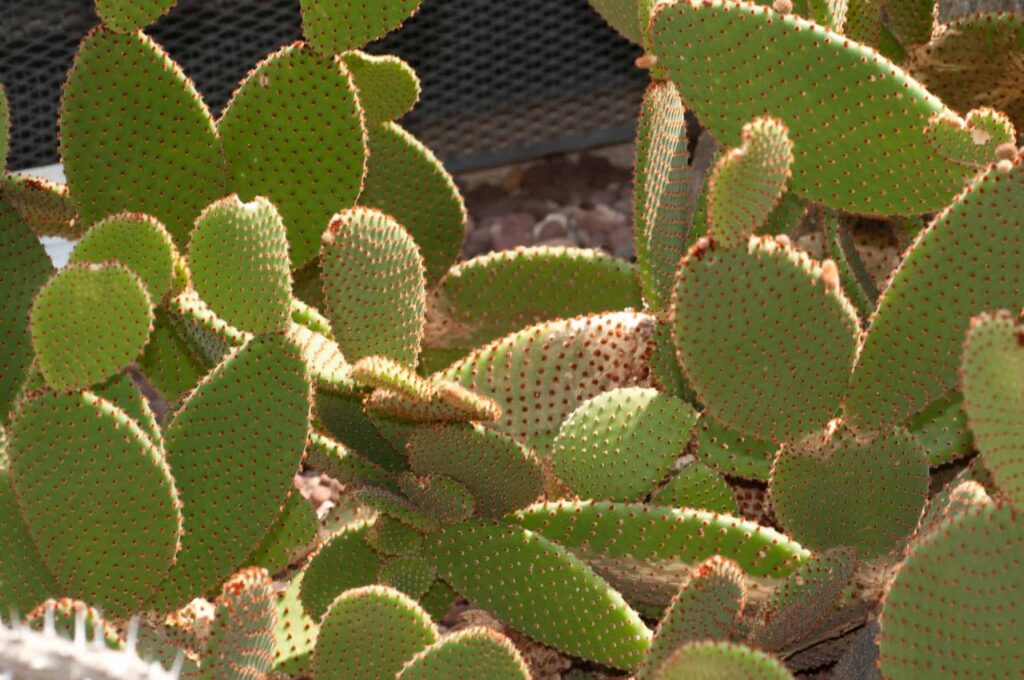
A compact prickly pear cactus with oval, bright green pads dotted with cinnamon-brown tufts of tiny, barbed bristles called glochids, creating a bunny-ear appearance. Special Features Distinctive cinnamon-colored glochids; heat and drought tolerant once established; sculptural pads provide year-round interest. Problems & Solutions Overwatering causes root and pad rot; improve drainage and let soil dry […]
Plumeria
A tropical small tree with thick, succulent branches, large green leaves, and fragrant flowers traditionally used in Hawaiian leis. In Phoenix Zone 9b, it requires frost protection and relief from intense afternoon sun. Special Features Fragrant tropical flowers, sculptural branching, and good container adaptability. Established plants tolerate brief dry periods, but are not frost hardy. […]
Prickly Pear Old Mexico Gomei
A mostly spineless Mexican prickly pear with broad, flattened green pads and distinctive wavy or scalloped edges; often sold as Opuntia gomei ‘Old Mexico’. Special Features Sculptural, wavy-edged pads; few prominent spines; excellent heat and drought tolerance. Tiny irritating glochids may still be present. Problems & Solutions Overwatering and poor drainage cause rot; allow soil […]
Roadkill Cactus
A tree-form Caribbean cactus with unusually thin, flattened, irregularly shaped pads that give it the common name roadkill cactus. Special Features Distinctive flattened pads, sculptural branching, and good heat and drought tolerance once established; often nearly spineless but still bears irritating glochids. Problems & Solutions Frost-sensitive and not reliably hardy through Zone 9b freezes; protect […]
Royal Palm
Majestic tropical palm with a smooth, pale-gray trunk, prominent green crownshaft, and large, arching featherlike fronds. Marginal and generally unreliable outdoors in Phoenix Zone 9b because of frost, extreme dry heat, and low humidity. Special Features Striking architectural trunk and crownshaft; tropical appearance; self-cleaning canopy; flowers attract pollinators and fruits feed birds. Problems & Solutions […]
Ruby Red Euphorbia
An upright, branching succulent, Euphorbia trigona ‘Rubra’ has three-sided stems, short paired spines, and burgundy-red leaves. Often called African milk tree, it is not a true cactus. Special Features Sculptural burgundy coloration; drought tolerant once established; easily grown in containers. Milky sap is toxic and irritating. Problems & Solutions Not reliably hardy outdoors in Zone […]
Sago Palm – #25 or 24box

A slow-growing, palm-like cycad with stiff, glossy fronds forming a symmetrical crown above a stout trunk. Despite its common name, it is not a true palm. Special Features Architectural form, glossy foliage, and excellent container potential. All parts are highly toxic if ingested, especially the seeds; keep away from pets and children. Problems & Solutions […]
Sago Palm XL
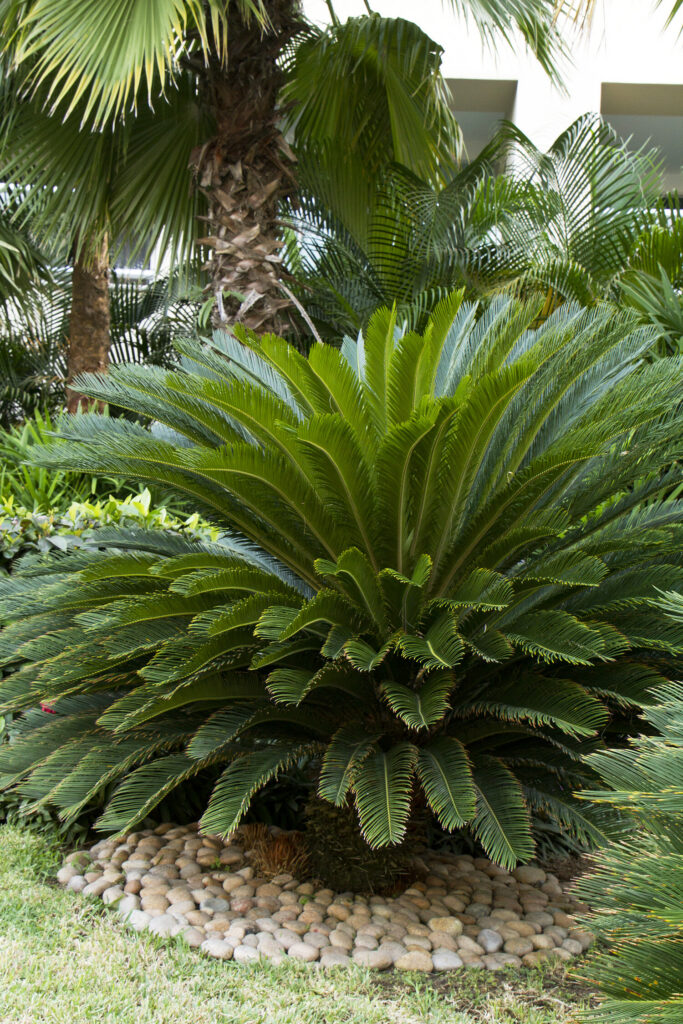
An ancient, palm-like cycad with stiff, arching fronds and a stout trunk. XL indicates nursery size, not a distinct variety. Special Features Bold architectural foliage; drought tolerant once established; suitable for containers. All parts are highly poisonous to people and pets, especially the seeds. Problems & Solutions Afternoon sun and reflected heat can scorch fronds; […]