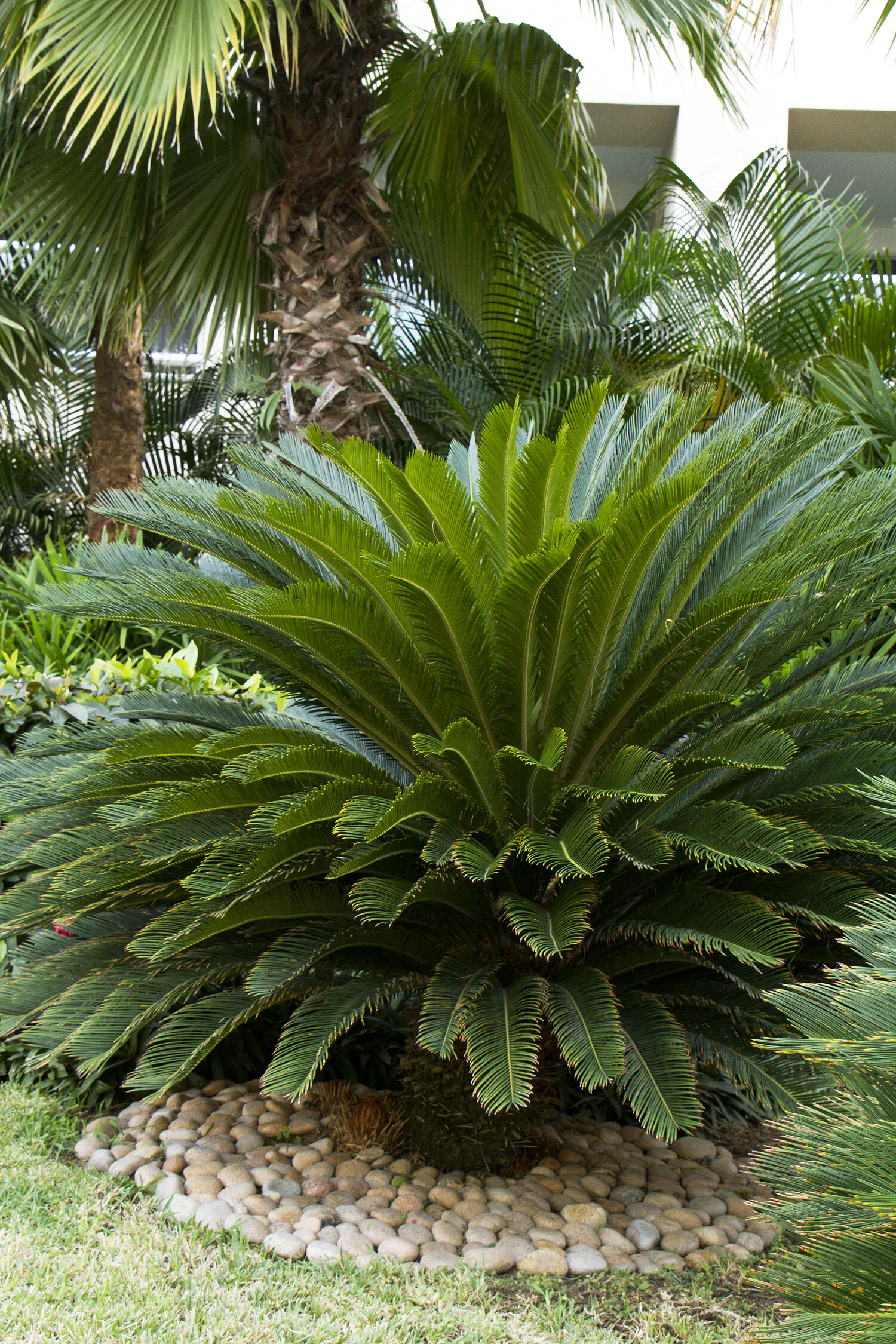
Water deeply, then let the upper several inches of soil dry before watering again. Established plants tolerate some drought but benefit from regular summer irrigation; reduce watering substantially in winter.
Size
4-6 ft tall × 4-6 ft wide
Habit
Palm – single-trunk
Toxicity
Toxic — Pets & Humans
Description
A slow-growing, palm-like cycad with stiff, glossy fronds forming a symmetrical crown above a stout trunk. Despite its common name, it is not a true palm.
Bloom Time
Non-flowering (grown for foliage)
Deciduous / Evergreen
Evergreen
Special Features
Architectural Form, Toxic (see detail)
Growth Rate
Slow
Growth Habit
Palm – single-trunk
Mature Size
4-6 ft tall × 4-6 ft wide
Flower Color
None (grown for foliage)
Foliage Color
Dark green
Landscape Use
Container / Patio, Foundation Planting, Specimen / Accent, Tropical Garden
Toxic to pets & humans if ingested (can be fatal to dogs)
Care Instructions
Light: Morning sun with afternoon shade is best in Phoenix; avoid intense reflected heat and unfiltered afternoon sun.
Water: Water deeply, then let the upper several inches of soil dry before watering again. Established plants tolerate some drought but benefit from regular summer irrigation; reduce watering substantially in winter.
Soil: Well-drained sandy or loamy soil; avoid compacted soil, standing water, and planting the crown too deeply. Use a freely draining mix in containers.
Mature size: Typically 6–10 feet tall and 6–8 feet wide over many years; very old specimens can grow taller. #25 and 24-inch box refer to nursery stock sizes, not mature dimensions.
Bloom: Does not flower. Mature plants periodically produce reproductive structures, with male and female structures on separate plants.
Evergreen / deciduous: Evergreen.
Growth rate: Very slow; often produces only one flush of new fronds annually.