

Blue Myrtle

A large columnar cactus native to central Mexico, valued for striking blue-green stems and candelabra-like branching. Develops a tree-like form with age and produces small edible fruits (garambullos). Excellent structural accent for low-water landscapes. Special Features Distinctive blue-green stems; edible garambullo fruit; year-round structural interest; crested (cristate) forms available Problems & Solutions Root rot in […]
Monstrose Cereus
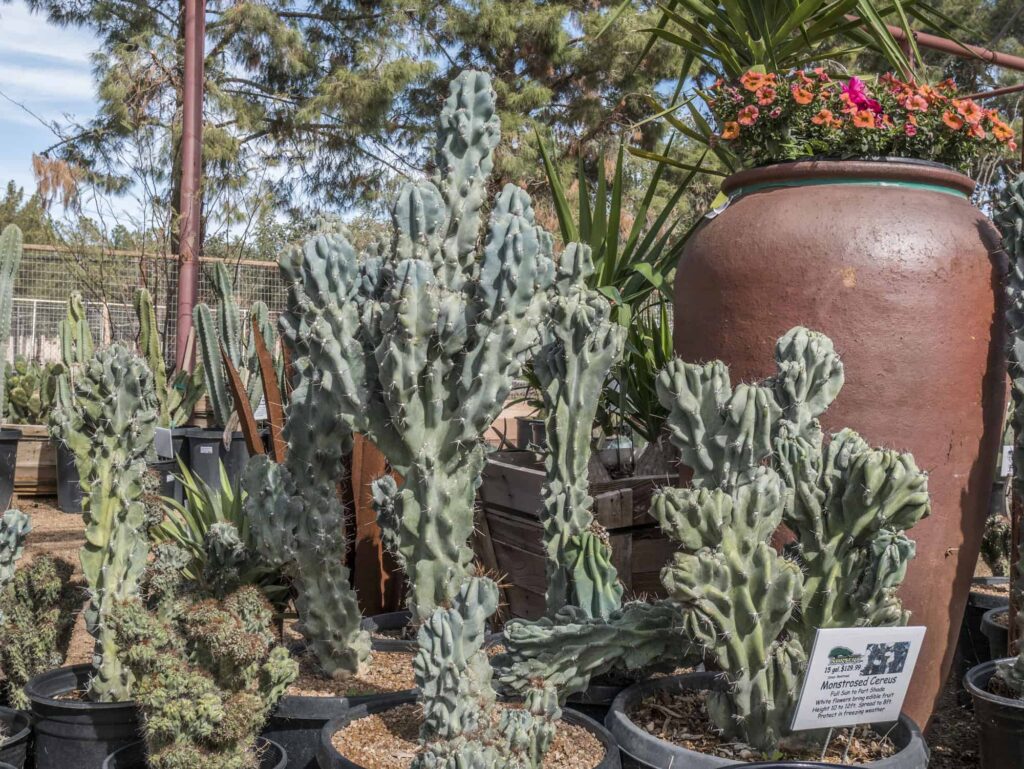
A sculptural cactus with irregular, knobby, twisted blue-green stems; commonly sold as Cereus peruvianus ‘Monstrosus’ or Cereus repandus ‘Monstrosus’. Special Features Distinctive sculptural stems; heat and drought tolerance; occasional edible red fruit following successful pollination. Problems & Solutions Overwatering causes root and stem rot; ensure excellent drainage. Sudden exposure to intense sun can scorch stems; […]
Organ Pipe Cactus
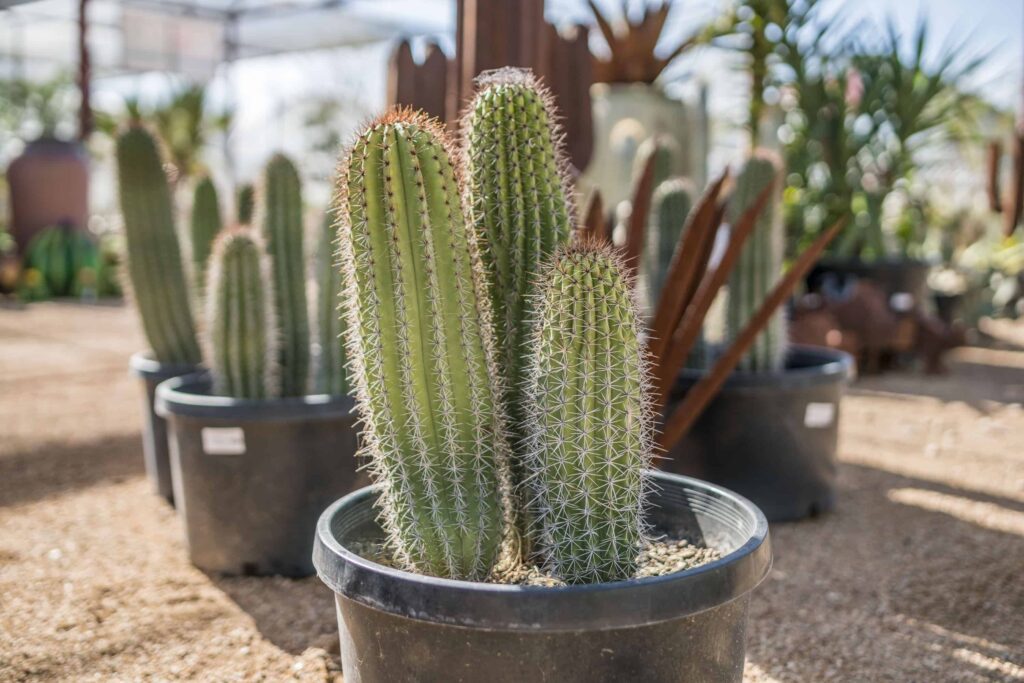
A sculptural Sonoran Desert cactus with numerous upright, ribbed green stems branching from the base like organ pipes. Special Features Striking architectural form; excellent heat and drought tolerance; night-blooming flowers attract bats and moths; edible red fruits provide wildlife food. Problems & Solutions Frost-sensitive and marginal in exposed Zone 9b sites; temperatures in the upper […]
Blue Columnar Cactus
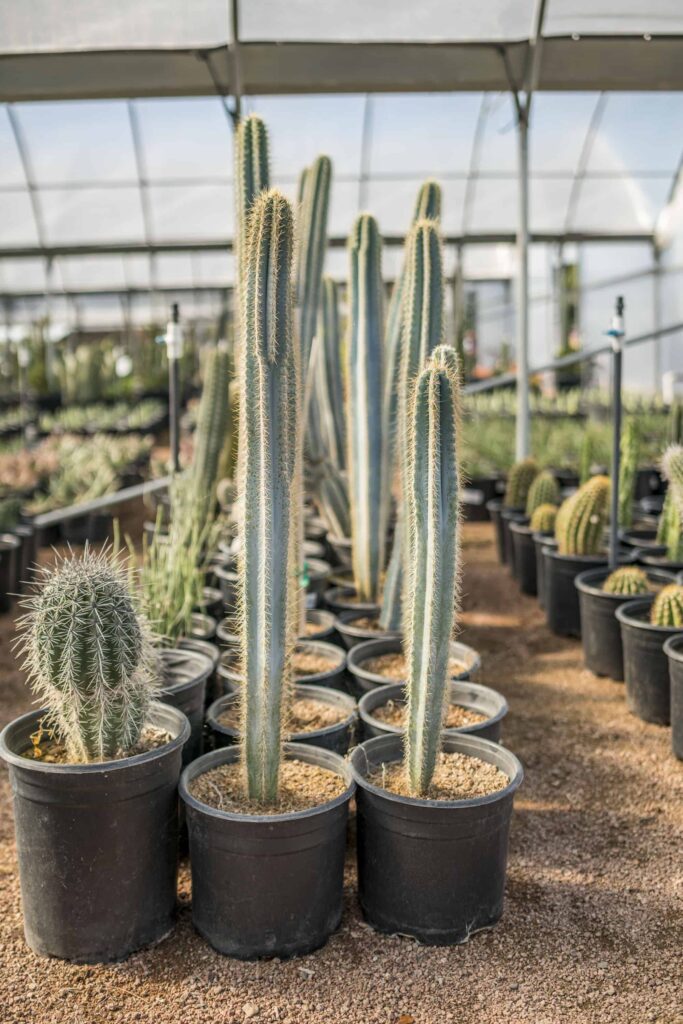
A striking Brazilian columnar cactus with powdery blue, ribbed stems, golden spines, and an upright, branching form. Special Features Vivid blue stems; sculptural vertical accent; heat and drought tolerant once established. Problems & Solutions Frost tender and marginal outdoors in Zone 9b; protect when temperatures approach freezing, and move containers under shelter. Prevent root rot […]
Mexican Fencepost

An upright Mexican columnar cactus with deep green, ribbed stems edged by closely spaced white areoles and short spines, creating a fencepost-like appearance. Special Features Strong vertical accent; heat and drought tolerant; useful as a living fence; flowers attract pollinators. Problems & Solutions Root and stem rot from excess moisture: provide excellent drainage and avoid […]
Blue Torch Cactus

Columnar cactus native to Brazil, known for its striking blue-green stem and dense white to golden wool at the apex and along the ribs. Produces nocturnal pink to red flowers and grows as a tall, branching column in warm desert landscapes. Special Features Striking blue-green stem color; dense white woolly trichomes at growing points; nocturnal […]
Peruvian Apple Cactus
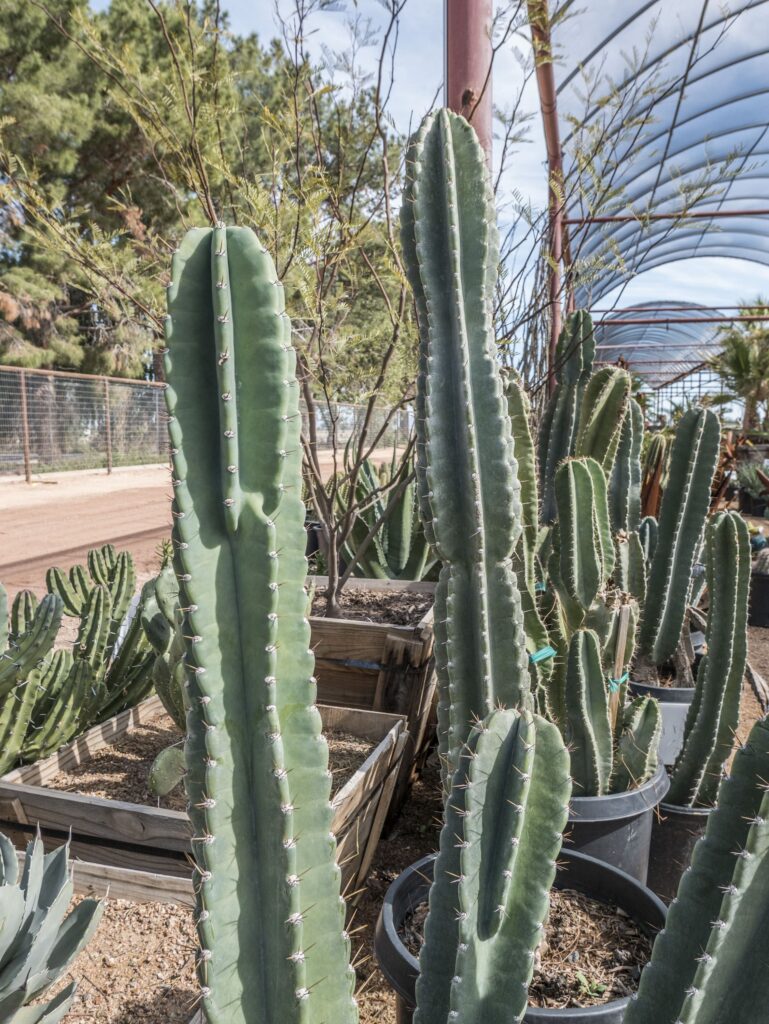
A tall, branching South American cactus with ribbed, blue-green stems, large night-blooming flowers, and edible fruit; commonly sold as Cereus peruvianus or Cereus repandus. Special Features Dramatic vertical form; excellent heat and drought tolerance; edible pink-red fruit with sweet white flesh and small black seeds; attracts nocturnal pollinators. Problems & Solutions Root and stem rot […]
Peruvian Old Man Cactus
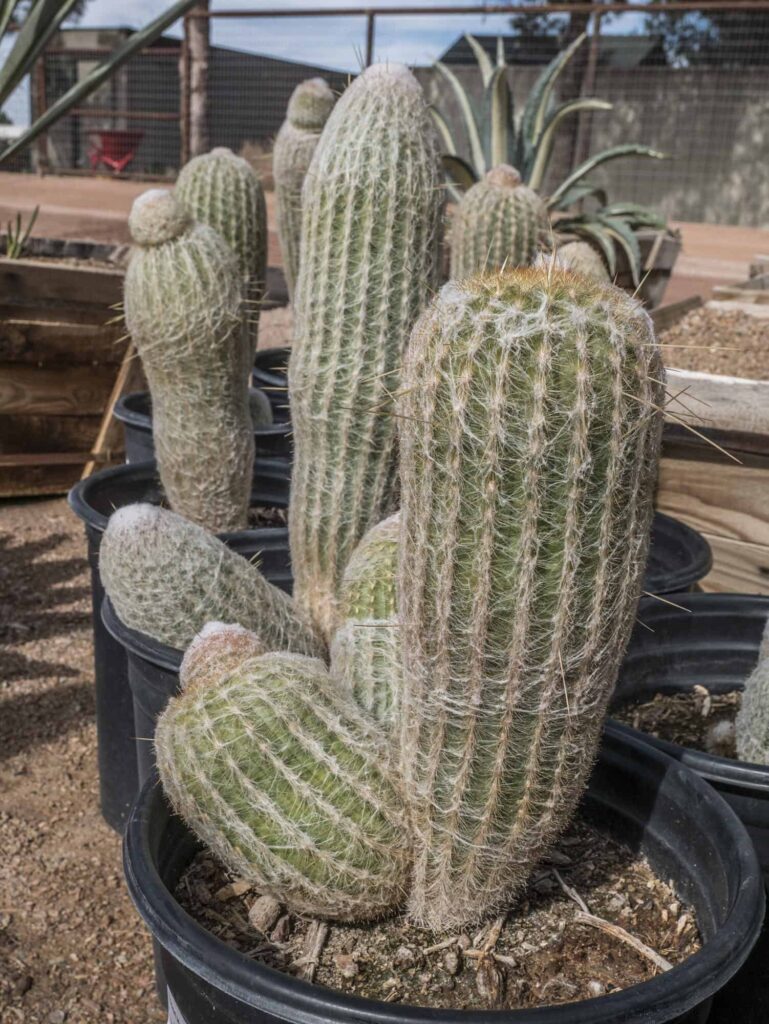
A columnar cactus native to Ecuador and Peru, with ribbed green stems densely covered in white, woolly hairs that conceal sharp spines. Special Features Distinctive white woolly covering; drought tolerant once established; striking vertical accent. Problems & Solutions Root and stem rot (improve drainage and reduce watering); sunburn in intense Phoenix exposure (provide afternoon shade); […]
Saguaro

Iconic Sonoran Desert cactus (Carnegiea gigantea) with a tall, ribbed green trunk, prominent spines, and upward-curving arms that develop with age. Special Features Exceptionally heat- and drought-tolerant; long-lived Arizona native. Flowers support pollinators, fruits feed wildlife, and mature plants provide bird nesting sites. Problems & Solutions Overwatering and poor drainage cause root or stem rot; […]
Senita

A branching Sonoran Desert cactus with upright, ribbed green stems. Mature stems develop dense, shaggy gray spines near their tips, giving senita its distinctive old-man appearance. Special Features Distinctive shaggy gray spines on mature stems; excellent heat and drought tolerance; flowers attract nocturnal pollinators, including the specialized senita moth in its native habitat. Problems & […]