

Boobie Cactus (Blue Candelabra)
A columnar cactus native to central and northern Mexico with thick, blue-green stems that branch candelabra-style with age. Produces small edible berries (garambullo) resembling blueberries. A popular specimen or accent for desert landscapes. Special Features Edible berries; blue-green candelabra stems for year-round structure; tolerates reflected heat; drought tolerant once established Problems & Solutions Root rot […]
Blue Torch Cactus (Azureus)
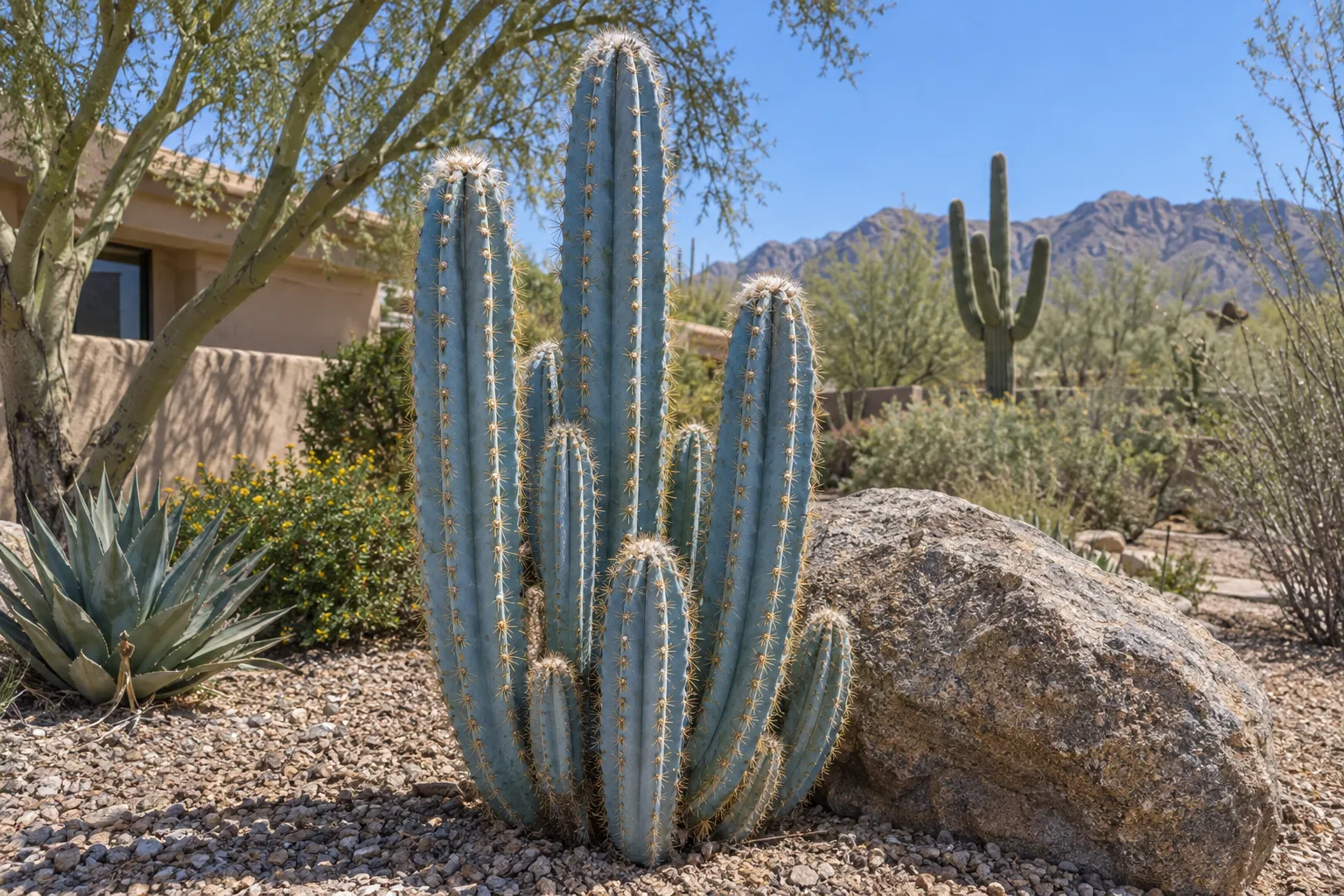
A Brazilian columnar cactus with vivid blue, ribbed stems, golden spines, and woolly areoles. Commonly sold as Pilosocereus azureus, often treated as Pilosocereus pachycladus. Special Features Striking powder-blue stems; sculptural vertical accent; heat and drought tolerant once established, but frost tender. Problems & Solutions Freezing temperatures can scar or kill stems; protect when temperatures approach […]
Dragon Fruit Cactus
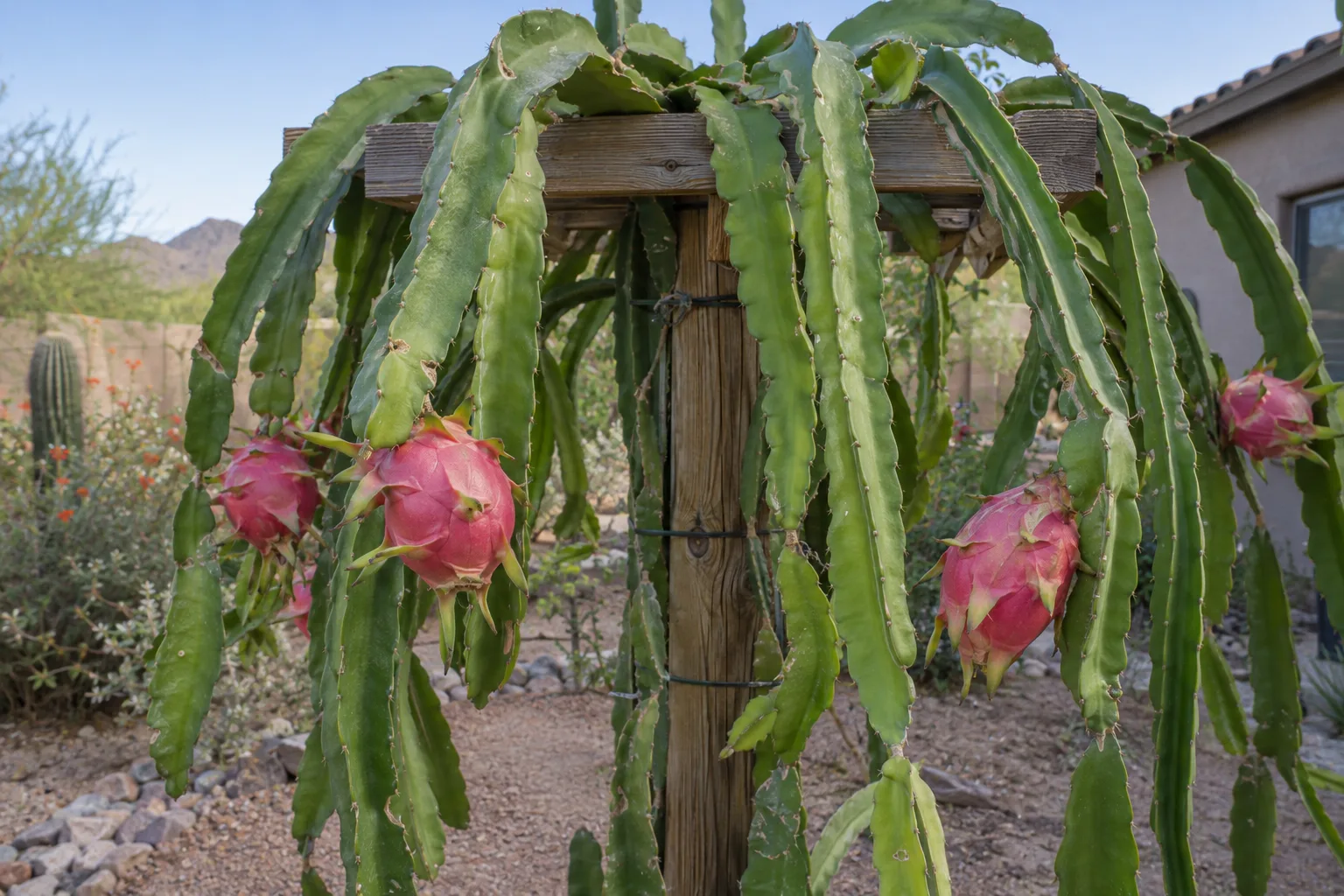
A tropical climbing cactus (Selenicereus spp., formerly Hylocereus) with fleshy, three-angled stems, spectacular night-blooming flowers, and edible dragon fruit; requires protection from Phoenix’s intense sun and winter freezes. Special Features Edible fruit with white, red, or purple flesh depending on variety; large fragrant nocturnal flowers; aerial roots attach stems to supports. Problems & Solutions Intense […]
Edgars Red Dragon Fruit
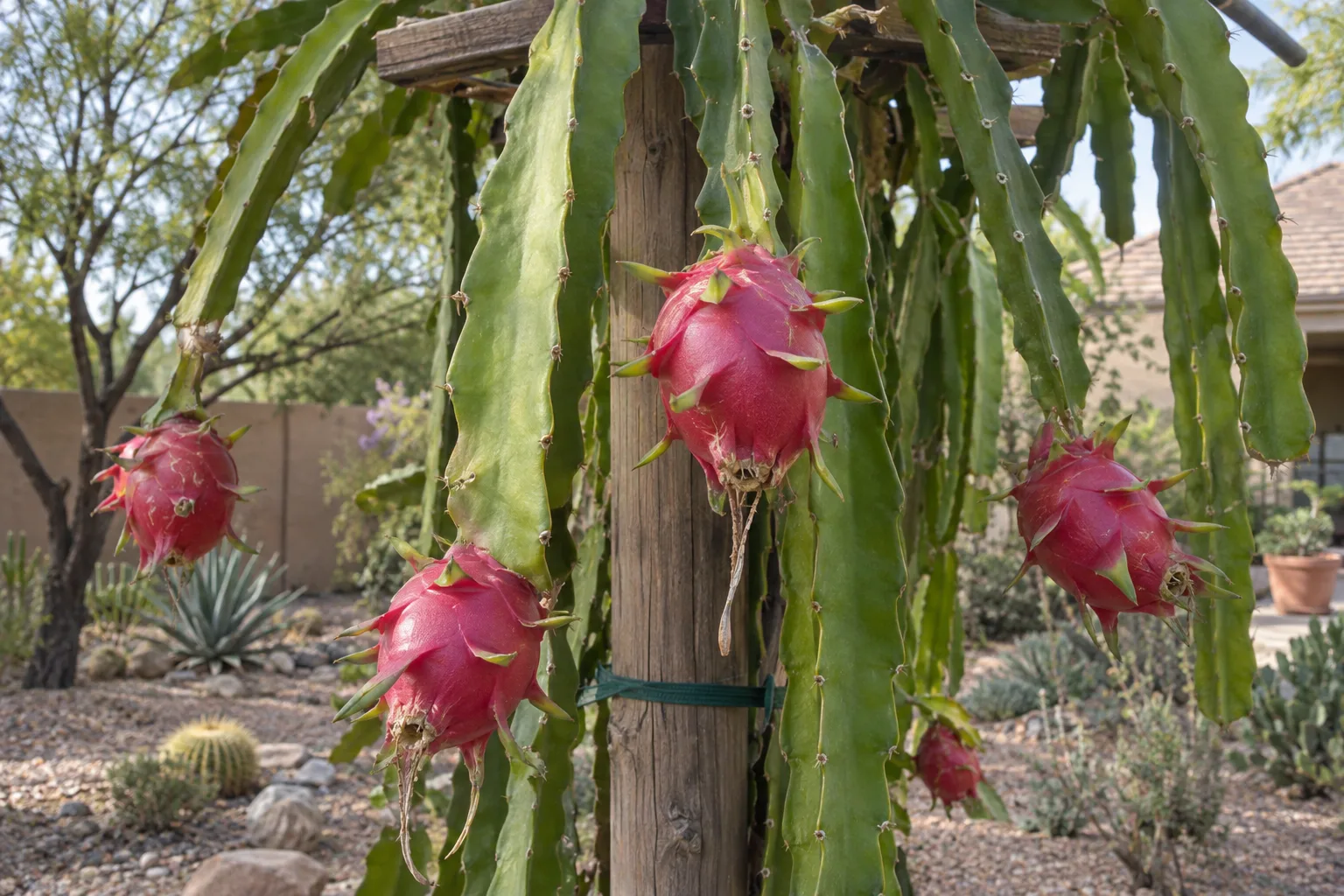
Edgar’s Red is a climbing tropical cactus grown for red-skinned dragon fruit with red to magenta flesh. Often sold as Selenicereus undatus, its exact species or hybrid parentage may vary by supplier. Special Features Edible red-fleshed fruit, spectacular night-blooming flowers, and aerial roots that attach to supports. More moisture-loving than desert cacti. Problems & Solutions […]
Golden Rat Tail

A trailing cactus native to Bolivia, with slender green stems densely covered in soft-looking golden spines and showy salmon-orange flowers. Special Features Golden spines, cascading stems, drought tolerance, and flowers attractive to hummingbirds and other pollinators. Problems & Solutions Overwatering causes root rot; provide excellent drainage. Intense afternoon sun can scorch stems; provide shade and […]
Indian Comb Cactus
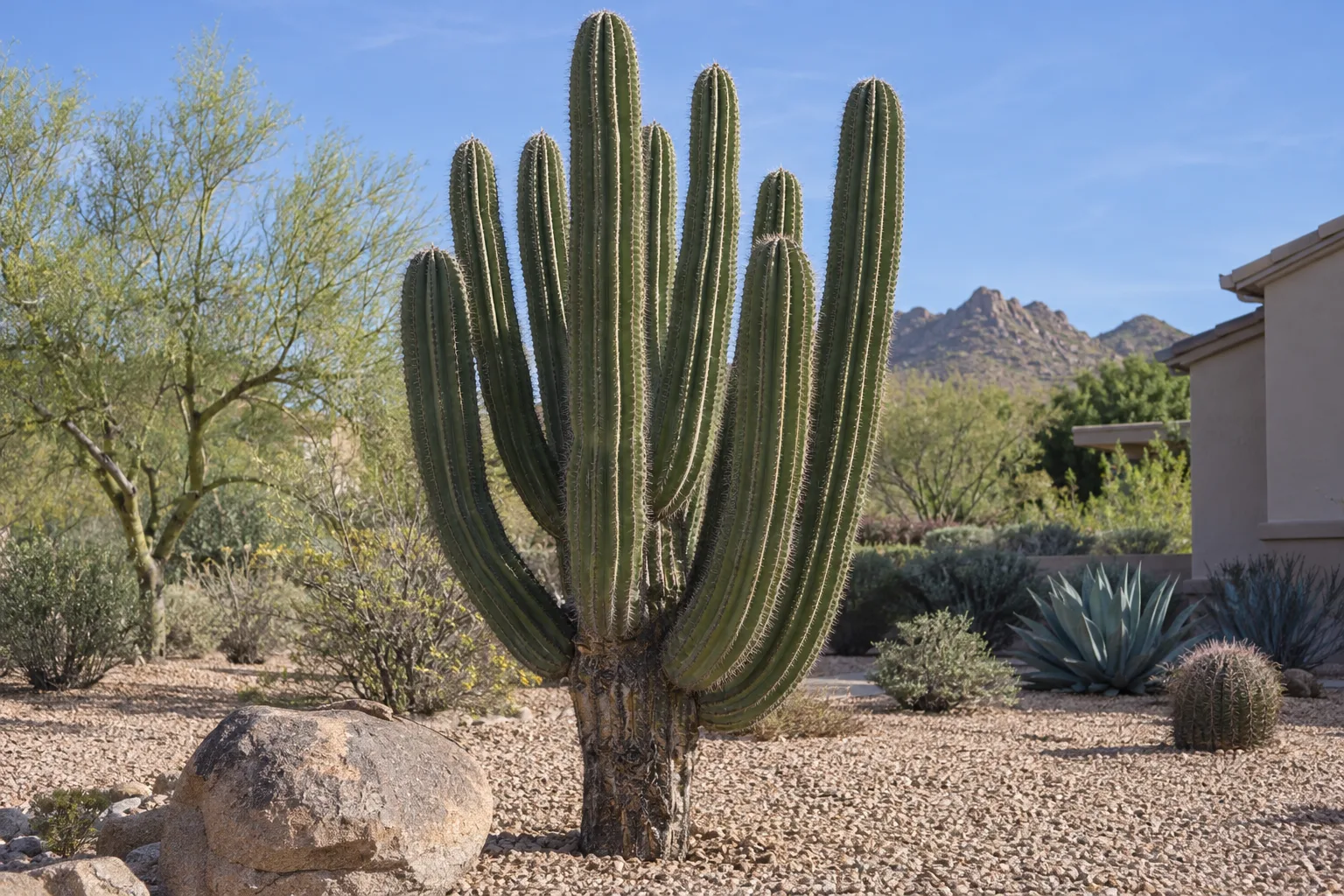
A large, tree-like columnar cactus native to northwestern Mexico and the Sonoran Desert. Forms tall ribbed columns and branches with age, with dense comb-like spine clusters. Bears white nocturnal flowers followed by spiny red edible fruit. Special Features Drought tolerant once established; edible fruit historically used by indigenous peoples; provides wildlife habitat and nesting sites […]
Old Man of the Andes
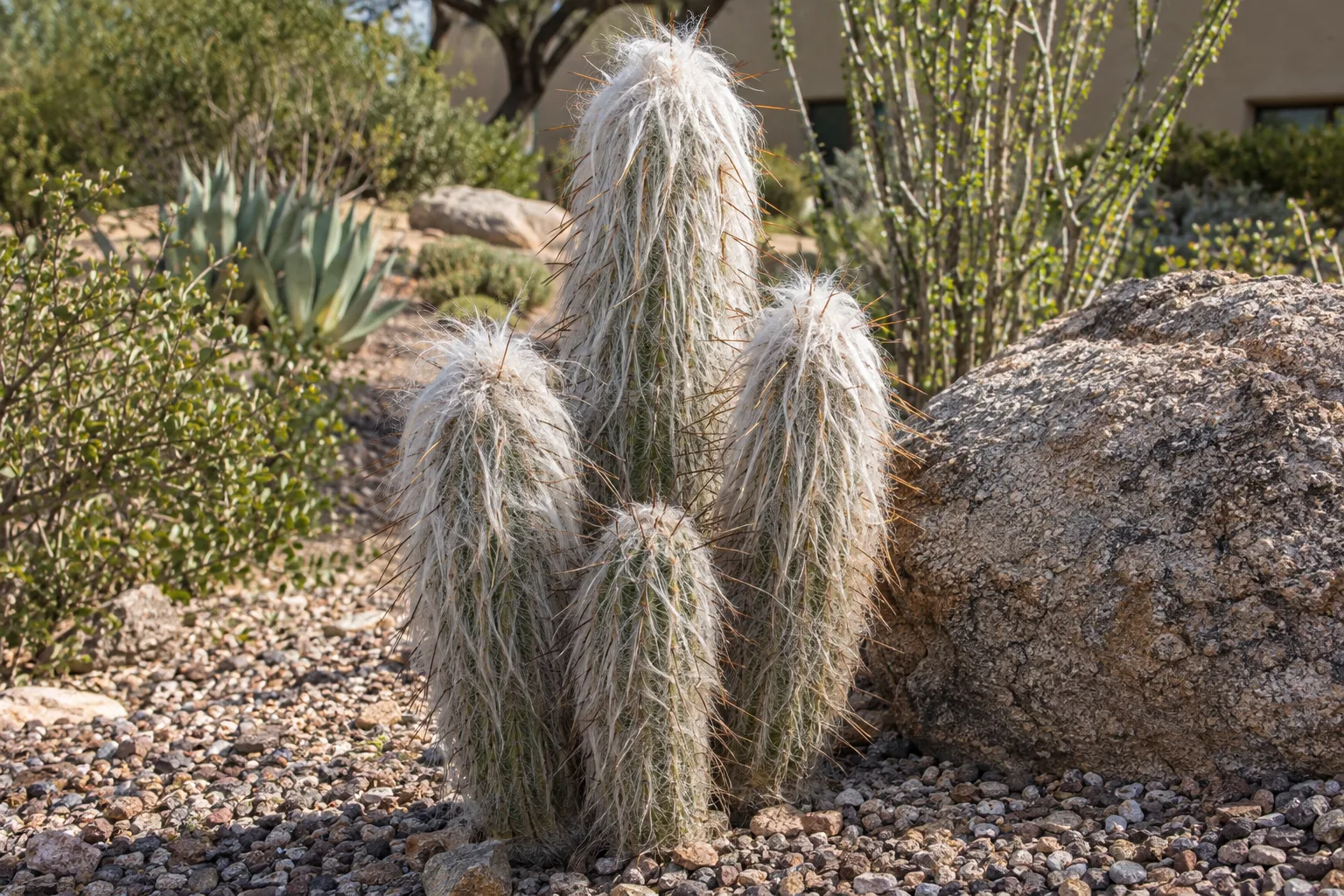
A slow-growing, columnar cactus native to the high Andes, with green stems cloaked in shaggy white hairs and stout golden to reddish-brown spines. Special Features Distinctive woolly white stems; drought tolerant once established; better cold tolerance than many columnar cacti when kept dry. Problems & Solutions Root rot from excess moisture (ensure excellent drainage); sunburn […]
Argentine Saguaro

A large, tree-like cactus native to South America, with thick, ribbed green stems, stout golden spines, and a branching silhouette resembling Arizona’s native saguaro. Special Features Bold architectural form; excellent heat and drought tolerance; generally cold hardy into the upper teens Fahrenheit when established and kept dry. Problems & Solutions Root and stem rot in […]
Blue Cardon (Mexican Giant Cardon)

One of the world’s most massive cacti, native to the Sonoran Desert of Baja California and Sonora. Develops a stout trunk with multiple upright arms in a columnar, candelabra form. Slow but steady, eventually reaching great size as a bold desert specimen. Special Features One of the largest cacti in the world by mass; nocturnal […]
Blue Cereus

A branching, columnar cactus native to Argentina, prized for its blue-gray, ribbed stems and contrasting dark spines. Special Features Distinctive blue-gray stems, dark spines, drought tolerance, and large nocturnal flowers. Problems & Solutions Root rot in wet soil: improve drainage and let soil dry between waterings. Sunburn: provide afternoon shade and gradual sun acclimation. Frost […]