

Pecan ‘Western Schley’
A large, deciduous pecan cultivar widely grown in the Southwest, producing flavorful, thin-shelled nuts. Well suited to Phoenix heat when given ample irrigation and room to develop. Special Features Edible, thin-shelled pecans; substantial summer shade; adapted to Southwestern heat. A Type I pollen-shedding cultivar; planting a compatible Type II cultivar such as Wichita improves pollination […]
Philippine Red Guava
A tropical fruiting guava prized for reddish-bronze foliage and aromatic, red-skinned fruit with pink to red flesh. In Phoenix, it needs protection from severe summer exposure and winter freezes. Special Features Edible, fragrant fruit; ornamental reddish foliage; attractive exfoliating bark. Generally self-fruitful, though insect pollination improves fruit set. Problems & Solutions Frost can damage foliage […]
Pink Lemon – Variegated
An ornamental Eureka lemon with cream-and-green variegated leaves, striped young fruit, and pink flesh. Ripe lemons have mostly yellow rinds and tart juice that is generally clear rather than pink. Special Features Pink-fleshed edible lemons, decorative striped immature fruit, variegated foliage, and fragrant flowers. Self-fruitful; one tree can produce fruit. Problems & Solutions Sunburn and […]
Pixie Mandarin
A late-season mandarin producing small, sweet, seedless fruit with easy-peeling orange skin. ‘Pixie’ refers to the fruit size, not a naturally dwarf tree. Special Features Sweet, seedless, easy-peeling fruit; self-fruitful and does not require a pollinator. Late harvest season; may take several years to become productive. Problems & Solutions Sunburn on exposed bark and fruit […]
Plum – Santa Rosa

Japanese plum producing aromatic, reddish-purple fruit with sweet-tart amber flesh, excellent fresh or preserved. This profile assumes ‘Santa Rosa’; Prunus salicina ‘Beauty’ is a different cultivar. Special Features Edible fruit, fragrant spring flowers, and self-fruitfulness; another compatible Japanese plum can improve production. Generally needs approximately 300–500 winter chill hours, which may limit reliable cropping in […]
Plum – Beauty
An early-ripening Japanese plum producing sweet, juicy fruit with reddish-purple skin and amber flesh. ‘Beauty’ is a low-chill cultivar, but Phoenix heat and variable winter chilling can affect fruit production. Special Features Self-fruitful; another compatible Japanese plum flowering at the same time may improve yield. Commonly listed as needing approximately 250 chill hours; inadequate winter […]
Ponderosa Lemon
A thorny citrus hybrid, generally considered a citron–pomelo cross, producing exceptionally large, thick-skinned yellow fruit with acidic, lemon-like juice. Special Features Very large edible fruit, fragrant flowers, and self-fertile blossoms; one tree can produce fruit. Fruit may remain on the tree for an extended period after ripening. Problems & Solutions More frost-sensitive than many citrus; […]
Prickly Pear Green
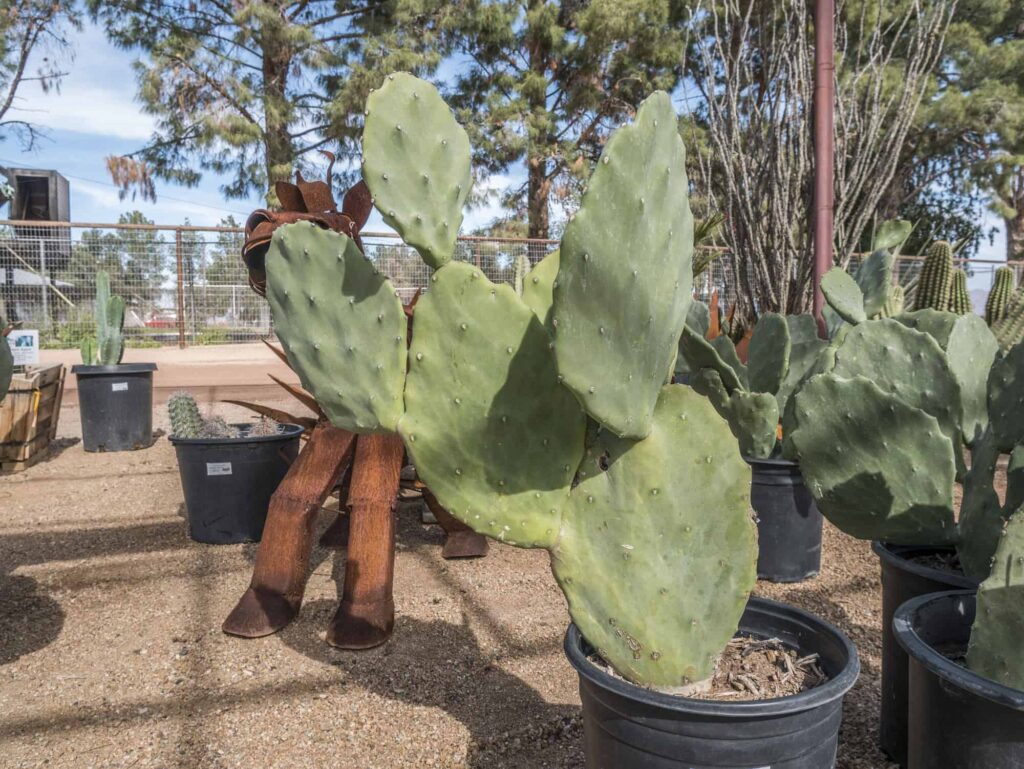
A large, tree-like prickly pear cactus with broad, flattened green pads and edible fruit. Often nearly spineless, but pads and fruit still bear irritating hairlike glochids. Special Features Heat and drought tolerant; edible young pads and ripe fruit after proper removal of spines and glochids; flowers attract pollinators and fruit attracts wildlife. Problems & Solutions […]
Red Baron Peach
Showy flowering and fruiting peach, commonly sold as ‘Red Baron,’ with double red blossoms and sweet, yellow-fleshed freestone fruit. Suitable for Phoenix gardens where winter chill is sufficient. Special Features Ornamental double blossoms and edible summer fruit; self-fruitful. Typically requires about 250–300 chill hours, so fruit production may vary during warm Phoenix winters. Problems & […]
Red Dragon Fruit
A tropical climbing cactus with three-sided green stems and edible, red-skinned dragon fruit. Selenicereus undatus typically has white flesh; red-fleshed dragon fruits are usually other species or hybrids. Special Features Edible fruit, spectacular fragrant night-blooming flowers, and aerial roots for climbing. More moisture-loving and less tolerant of desert sun than native desert cacti. Problems & […]