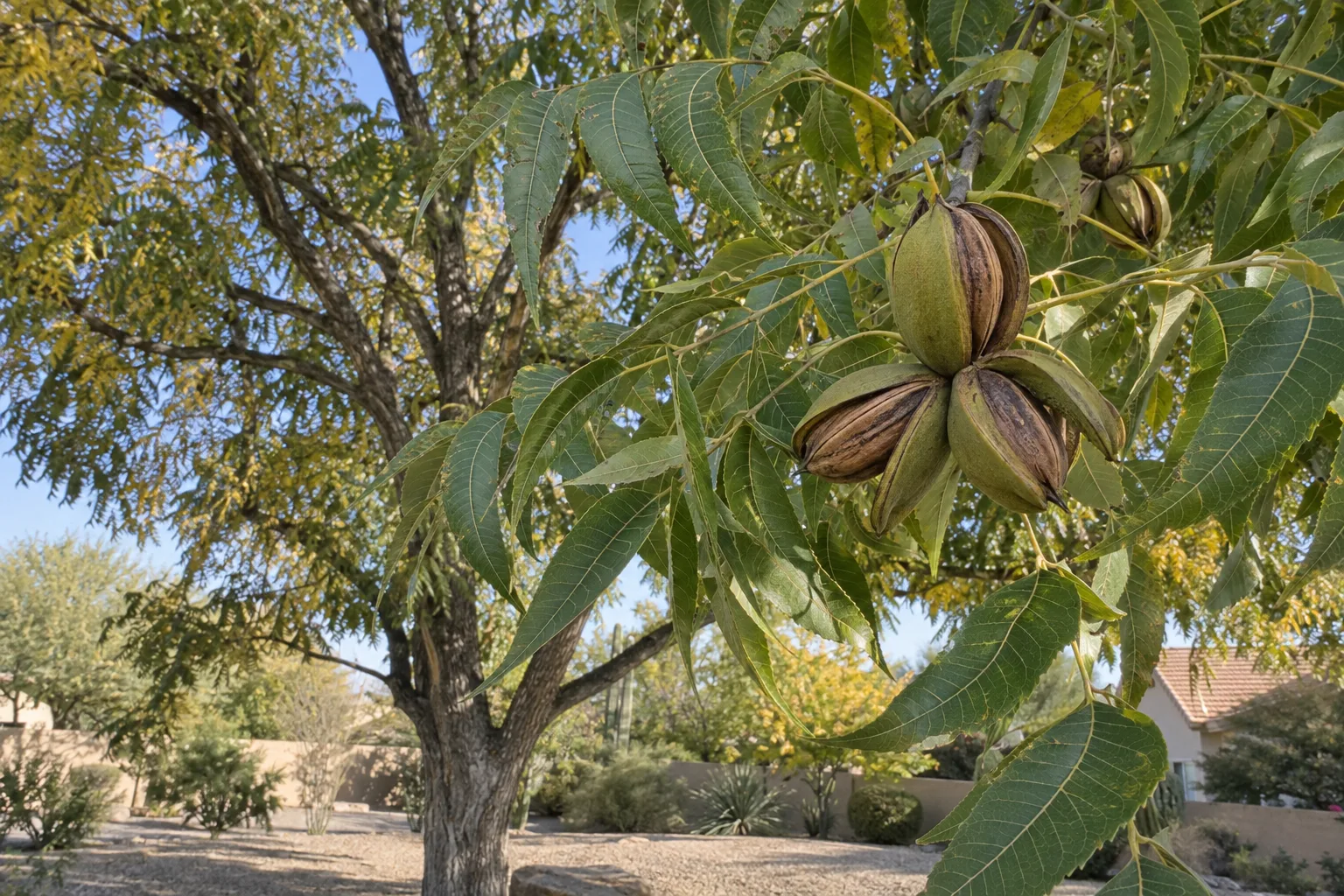
High water needs in Phoenix. Irrigate deeply across the expanding root zone, increasing frequency during extreme heat. Maintain consistent moisture during summer nut development without waterlogging; reduce watering after leaf drop.
Size
50-70 ft tall × 40-60 ft wide
Habit
Upright tree – single-trunk
Toxicity
Toxic — Pets
Description
A large, deciduous pecan cultivar widely grown in the Southwest, producing flavorful, thin-shelled nuts. Well suited to Phoenix heat when given ample irrigation and room to develop.
Bloom Time
Spring
Deciduous / Evergreen
Deciduous
Special Features
Edible
Growth Rate
Moderate to fast
Growth Habit
Upright tree – single-trunk
Mature Size
50-70 ft tall × 40-60 ft wide
Flower Color
Yellowish-green
Foliage Color
Green
Landscape Use
Desert / Xeriscape, Edible / Orchard
Garden Style
Desert / Xeriscape, Edible Garden
Soil
Alkaline Tolerant, Amended / Rich, Well-Drained
Companion Plants
Adequate spacing, Society garlic may be, Wichita pecan
Toxic — Pets
Nuts edible; moldy nuts and shucks toxic to dogs (tremorgenic mycotoxins).
Care Instructions
Light: Full sun; at least 8 hours of direct sunlight daily for good nut production.
Water: High water needs in Phoenix. Irrigate deeply across the expanding root zone, increasing frequency during extreme heat. Maintain consistent moisture during summer nut development without waterlogging; reduce watering after leaf drop.
Soil: Deep, fertile, well-drained soil; deep loam is ideal. Tolerates alkaline soil but may develop zinc or iron deficiencies. Avoid shallow soil, poor drainage, and salt accumulation.
Mature size: Typically 60–80 feet tall and 40–60 feet wide; potentially larger with age and favorable conditions.
Bloom: Inconspicuous flowers in spring, generally April–May; nuts typically mature in October–November in the Phoenix area.
Evergreen / deciduous: Deciduous.
Growth rate: Moderate to fast with adequate water and nutrition.