Low water once established. Water deeply but infrequently during hot, dry weather, allowing soil to dry between waterings. Reduce watering substantially in winter; newly planted specimens need more regular irrigation while rooting.
Size
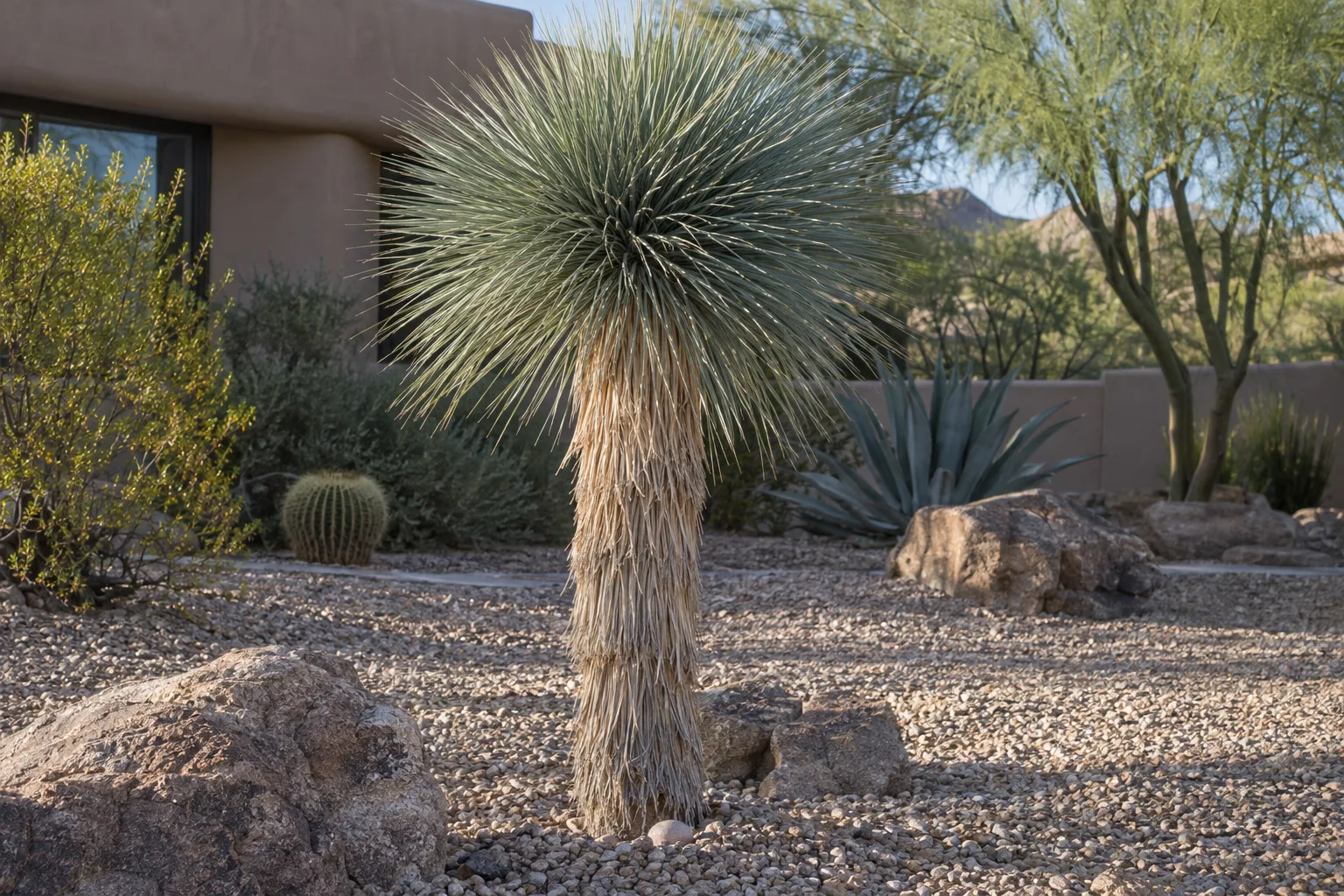
6-15 ft tall × 3-6 ft wide
Habit
Rosette succulent – tree-form
Toxicity
Toxic — Pets & Livestock
Description
A sculptural, trunk-forming yucca native to northeastern Mexico, with dense, rounded crowns of exceptionally narrow, blue-green leaves. Yucca linearifolia is the accepted spelling.
Blackfoot daisy, Desert spoon, Golden barrel cactus, Red yucca, Santa Rita prickly pear
Toxic — Pets & Livestock
Foliage and roots toxic to pets and livestock if ingested (saponins)
Care Instructions
Light: Full sun to light shade; some afternoon shade is helpful in Phoenix locations exposed to intense reflected heat.
Water: Low water once established. Water deeply but infrequently during hot, dry weather, allowing soil to dry between waterings. Reduce watering substantially in winter; newly planted specimens need more regular irrigation while rooting.
Soil: Very well-drained, sandy or gravelly soil. Tolerates alkaline conditions; plant on a raised mound if native soil drains poorly.
Mature size: Typically 6–10 feet tall and 3–5 feet wide over many years, excluding flower stalks; very old specimens may grow taller.
Bloom: Mature plants may bloom in late spring to early summer, though flowering is not necessarily annual. Unlike agaves, the plant does not die after flowering.