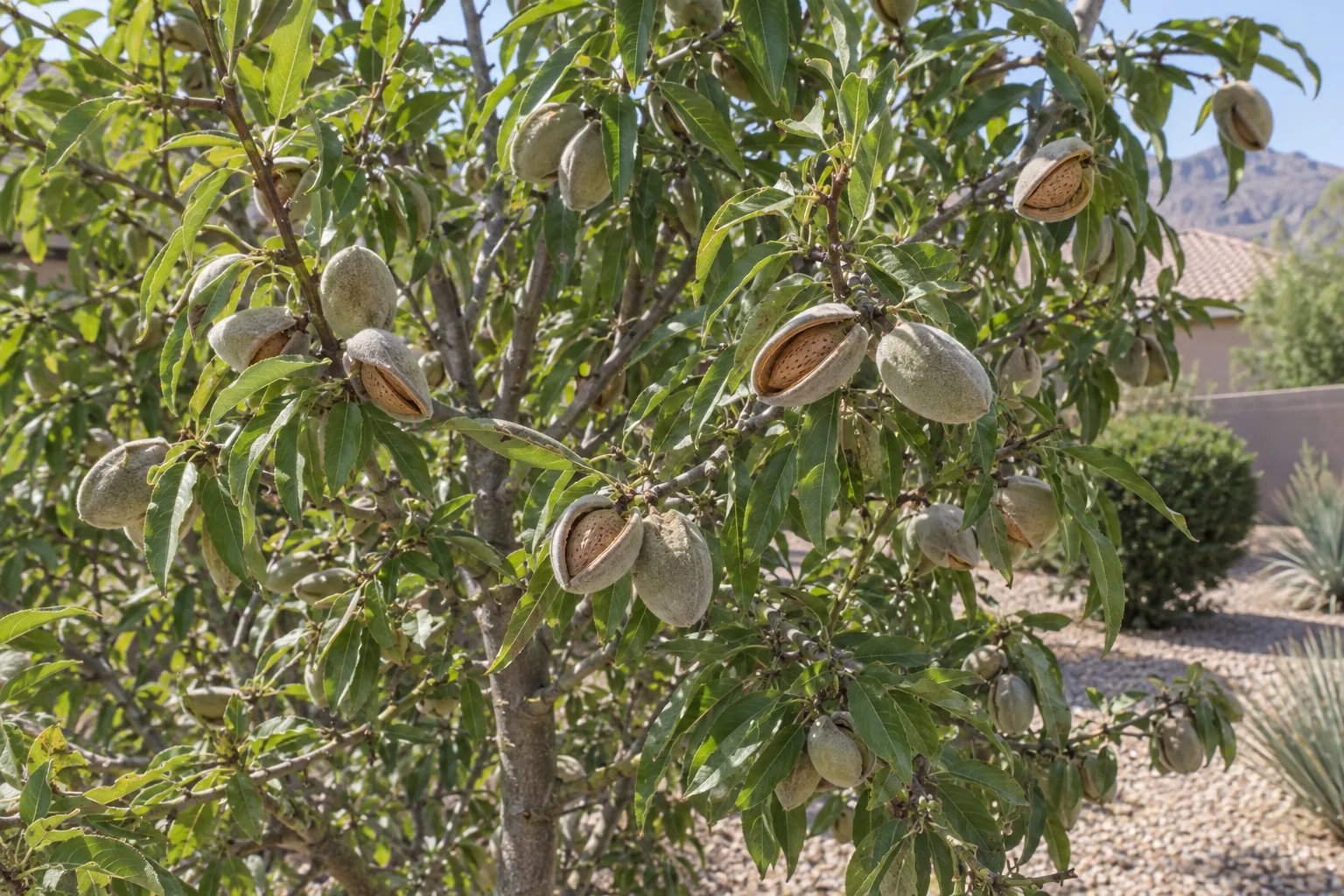
Deep, regular irrigation; not a low-water desert tree when grown for nuts. Increase watering during summer heat and nut development, allowing the upper few inches of soil to dry between irrigations. Reduce watering after leaf drop.
Size
15-20 ft tall × 15-20 ft wide
Habit
Upright tree – single-trunk
Toxicity
Toxic — Pets
Description
A compact, self-fruitful almond tree producing sweet, soft-shelled nuts and showy spring blossoms. Suitable for a carefully managed Phoenix garden, though warm winters can limit crops.
Bloom Time
Late winter to early spring
Deciduous / Evergreen
Deciduous
Special Features
Attracts Bees / Pollinators, Edible
Growth Rate
Moderate to fast
Growth Habit
Upright tree – single-trunk
Mature Size
15-20 ft tall × 15-20 ft wide
Flower Color
Pink to white
Foliage Color
Medium green
Landscape Use
Edible / Orchard, Shade Tree
Garden Style
Edible Garden, Pollinator / Wildlife
Soil
Sandy / Rocky, Well-Drained
Companion Plants
Autumn sage, Rosemary nearby, Yarrow
Toxic — Pets
Kernels edible; foliage, bark, and seed pits contain cyanogenic compounds, toxic if ingested.
Care Instructions
Light: Full sun, ideally 6–8 hours daily. In Phoenix, provide protection from intense reflected heat and consider light afternoon shade for young trees.
Water: Deep, regular irrigation; not a low-water desert tree when grown for nuts. Increase watering during summer heat and nut development, allowing the upper few inches of soil to dry between irrigations. Reduce watering after leaf drop.
Soil: Deep, well-drained loam or sandy loam. Avoid waterlogged clay and sites with restrictive caliche unless drainage is corrected. Keep the root flare above finished soil level.
Mature size: Typically 12–15 feet tall and 10–15 feet wide; rootstock, pruning, and growing conditions affect size.
Bloom: Late winter to early spring, usually February–March in Phoenix, depending on winter temperatures. Early flowers may be damaged by late frost.