

The petunias we commonly carry: compact ‘Limbo’ and ‘Dreams’ for beds; ‘Headliner’, ‘Crazytunia’, ‘Ray’, ‘Cascadias’, ‘Sweetunia’ and ‘Amore’; Proven Winners’ trailing ‘Supertunia’; and ‘SuperCal’, which carries color into June.
If the winter tables at Desert Horizon have a foundation, it is petunias. Planted from mid-October they bloom from November through May in every color there is, in beds, pots, window boxes and baskets, and they are cheap enough to plant by the flat. The series matter: compact ‘Limbo’ stays low and tidy in beds; ‘Supertunia’ and the ‘Headliner’ types trail from baskets; ‘SuperCal’, a petunia–calibrachoa cross, shrugs off heat and rain and is still blooming when everything else has quit in June.
We commonly carry more than thirty kinds, from ‘Limbo’ in a dozen colors to novelties like ‘Crazytunia Gingersnap’, ‘Ray Shadow’ and the starry ‘Headliner Sky’ series. Petunias are heavy feeders, hate soggy soil, and get budworm in spring — all manageable. The rest of the color tables are on our Annual Flowers & Foliage page.

These are the petunia varieties we commonly carry. Availability changes week to week and season to season, so call (480) 987-3308 or stop in to see what’s on the bench today.
6–8 inches, no stretching
‘Limbo’ is the bedding petunia we plant by the flat: genetically compact, so it never gets leggy in a warm spell, with big flowers on a plant six to eight inches tall. The colors we commonly carry:
A grandiflora bedding series with large flowers and good weather tolerance, in a pastel waterfall mix.
‘Dreams’ in rose, pink and white shades.
A soft yellow grandiflora with a deeper yellow throat — one of the better yellows for beds.
blooms into June
‘SuperCal’ is a petunia–calibrachoa hybrid (× Petchoa): petunia-sized flowers with calibrachoa toughness, no sticky foliage, and tolerance for heat and rain that keeps it blooming a month past ordinary petunias. See also our SuperCal ‘Bonfire Mix’ page.
The Proven Winners trailing petunia in lavender-pink with wine veining; vigorous, self-cleaning, three feet across in a basket.
‘Supertunia’ in deep velvet purple, the classic.
Burgundy flowers speckled white like a night sky — the speckling is strongest in cool weather. Mounding-trailing.
The ‘Headliner’ starry-sky types in mixed colors, sold as a finished hanging basket.
A novelty petunia in rusty orange-brown with dark veins. Mounding.
A mix of the ‘Crazytunia’ patterned and picotee novelties, sold as a finished hanging basket.
A compact trailing petunia in deep purple-black with a hint of silver — dramatic in a white pot.
‘Ray’ in clear golden yellow with a dark eye.
A trailing petunia in soft sky-blue with a white throat.
‘Cascadias’ in a shifting blend of apricot, coral and yellow — the color changes as the flower ages.
Magenta petals with a flame of black veining from the throat. Mounding-trailing.
The heart-patterned petunia: yellow flowers with five red hearts arranged like a star.
Looking for one that isn’t listed? Ask — we can usually suggest a close match or tell you when it tends to come around.
The care tag was written somewhere else. This is the Queen Creek version.
Set out petunias once daytime highs settle under about 95°F — usually the second half of October — and keep planting through March. Planted on time, a fall petunia blooms from November through May; ‘SuperCal’ and ‘Supertunia’ carry into June. Petunias set out in September stall or rot in the heat; those planted in April get six weeks. Most take light frost; cover on nights below 30°F.
Beds amended with compost and raised a few inches, or a quality potting mix in containers; petunias sulk and rot in heavy soil that stays wet after winter rain. Space bedding types 8–10 inches apart, trailing types one per 12-inch basket or three per 16-inch pot.
Petunias are heavy feeders on a short clock: a slow-release fertilizer at planting plus a liquid bloom fertilizer every two weeks, with iron for the trailing types in pots. When plants get leggy in February, shear them back by a third and feed; they refill in three weeks. Deadhead the grandifloras; ‘Supertunia’ and ‘SuperCal’ are self-cleaning.
Full sun through the cool months — the December sun is gentle and petunias in shade get leggy and bloom half as much. From April, morning sun and afternoon shade extends the season, especially for baskets against a west wall.
Every three to four days in beds and every two to three in pots through winter, stretching to weekly in the coldest weeks; daily for pots and baskets by April. Let the surface dry between waterings and water at the base — wet foliage and soggy soil are the two petunia killers. A saucer left full under a pot is the fastest way to lose one.
Tobacco budworm — a small green caterpillar that chews holes in buds so they open ragged or not at all — arrives in April. Look for black droppings on the leaves, hand-pick at dusk, or spray Bt weekly. Aphids and whiteflies in warm spells; hose them off. Petunias are non-toxic to cats and dogs.
Snap a photo of the spot — sun direction, wall color, pot size — and we’ll pick a season-correct combination with you. Advice is free.
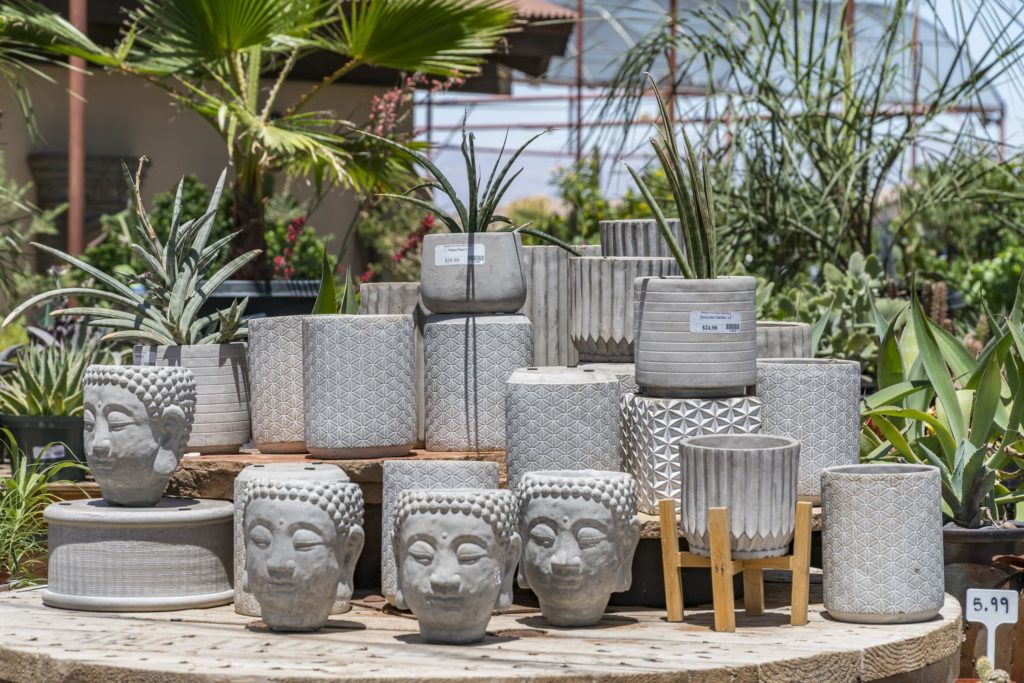
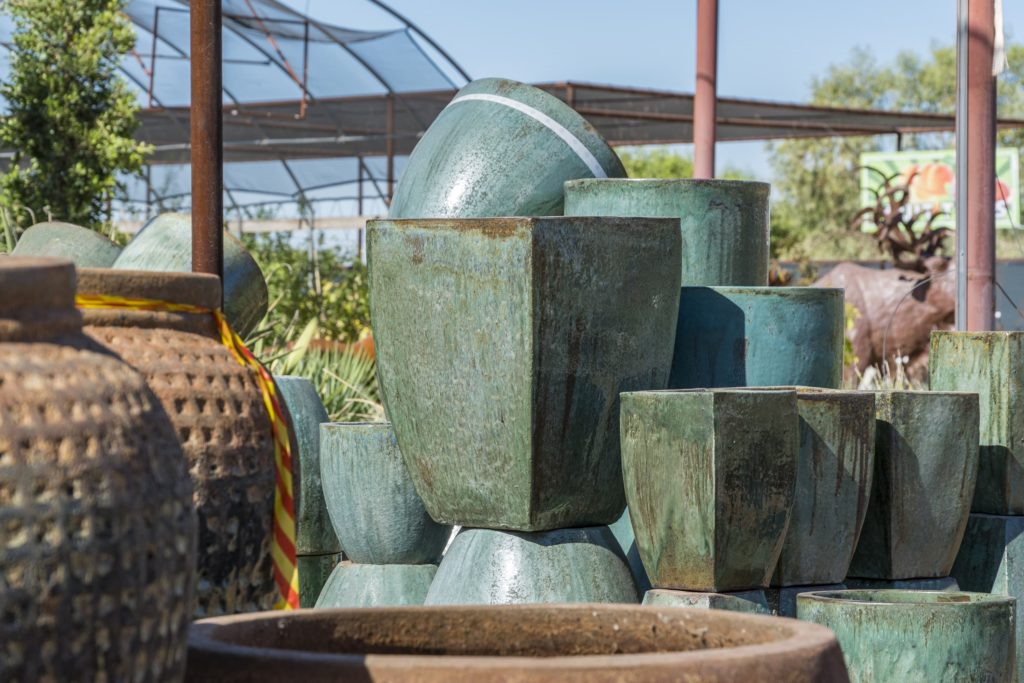
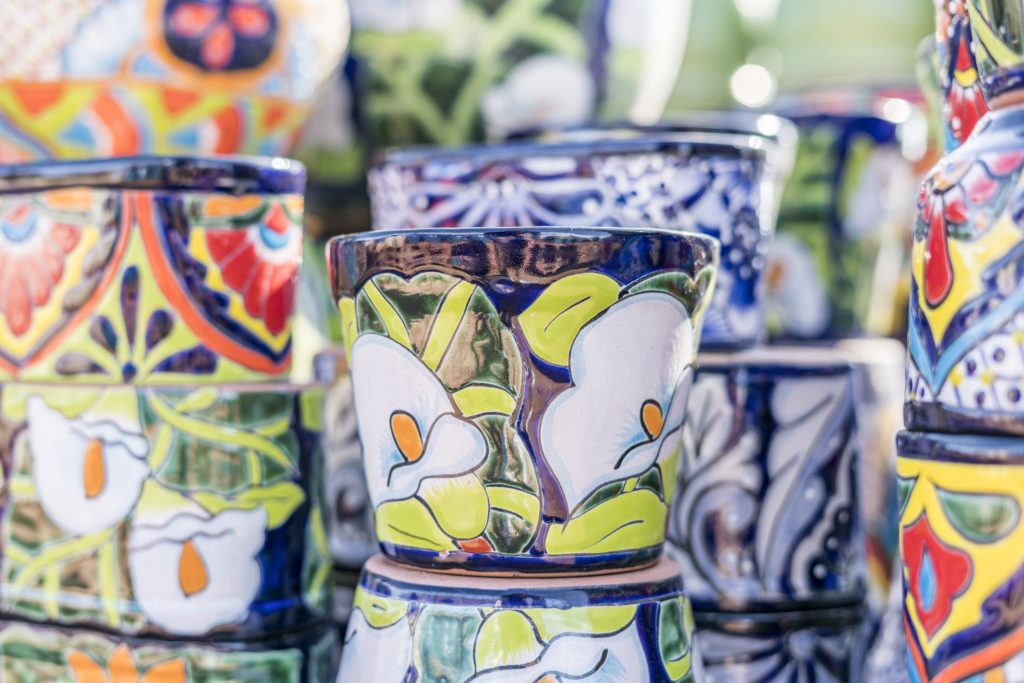
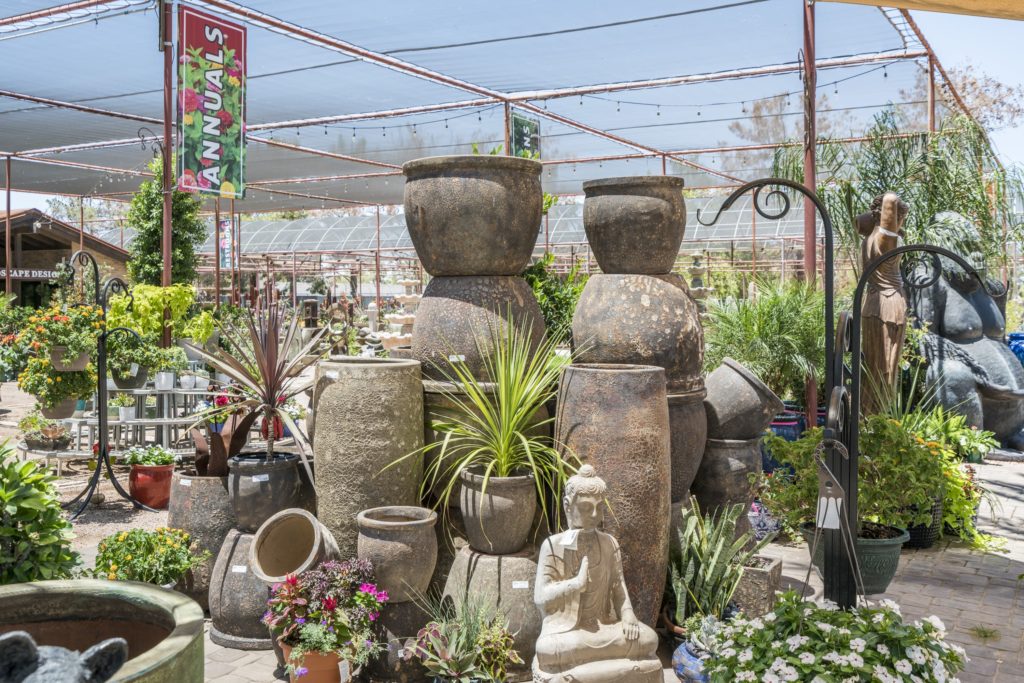
Annuals succeed or fail on what’s under them. We stock planting mix and compost for beds, potting mix for containers, bloom fertilizers including Tony’s Magic Mix and Magic Flower, starter fertilizer, drip fittings and frost cloth for the cold nights. The pottery yard has glazed and terracotta pots from 4-inch to whiskey-barrel size, window boxes and hanging baskets, and soil and mulch is sold by the bag or by the yard.
Mid-October through March, once highs are reliably under 95°F. A fall planting blooms from November to May, and ‘SuperCal’ into June.
They need a haircut and a meal. Shear them back by a third, feed a bloom fertilizer, and they refill in three weeks. ‘Limbo’ is bred not to stretch; other series do by February.
Tobacco budworm, a spring caterpillar. Look for black droppings, hand-pick at dusk, or spray Bt every week or so.
Every three to four days in beds and two to three in pots through winter, daily for pots by April. Let the surface dry between and never leave a saucer full.
‘SuperCal’ — the petunia–calibrachoa cross — followed by ‘Supertunia’. Both are still blooming in June when bedding petunias have quit.
Yes, petunias are non-toxic to cats and dogs.
Petunia live on the annuals tables; any staff member can point you to them. Locally owned, and a short drive from San Tan Valley, Gilbert, Chandler and Mesa.