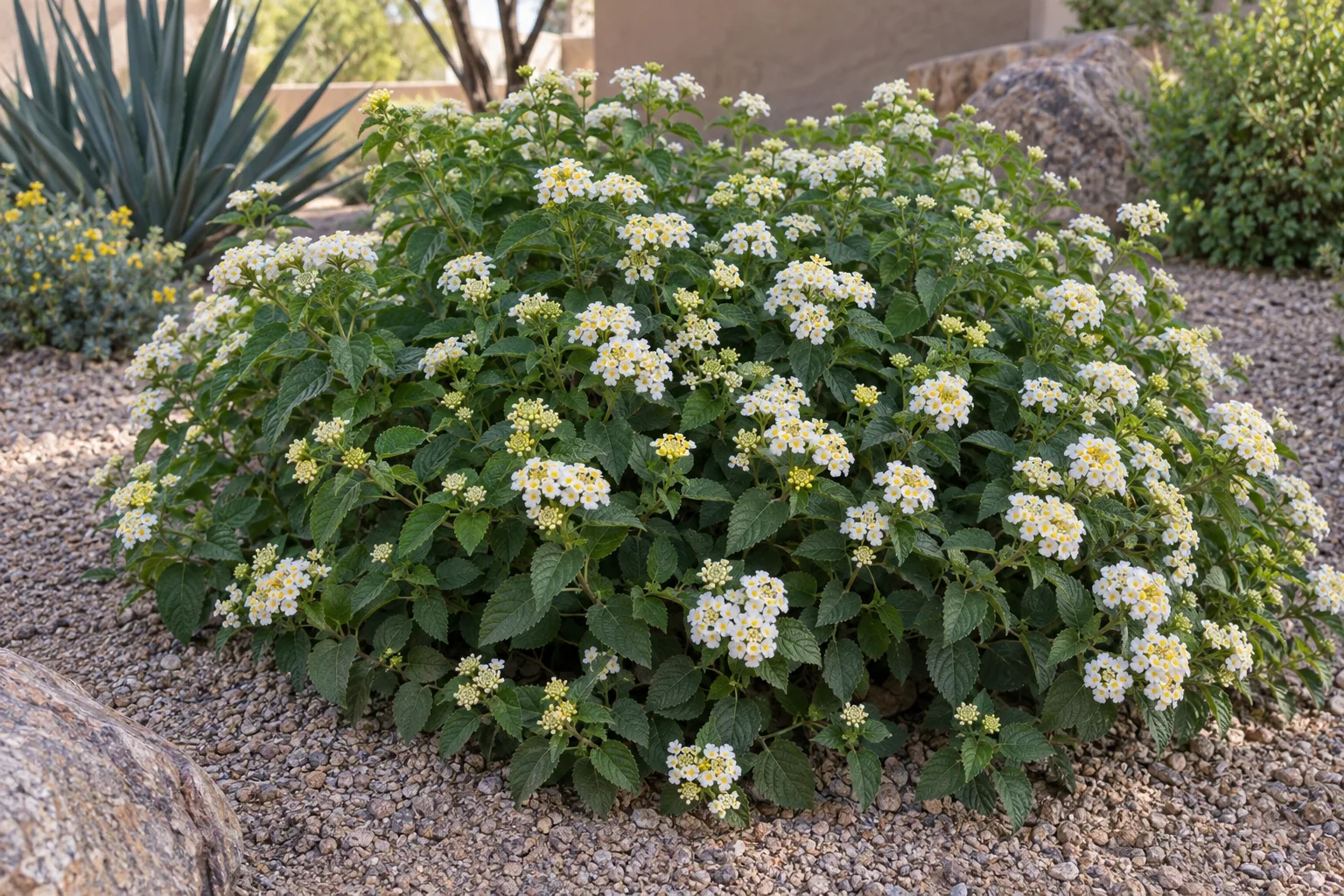
Silver Mound lantana forming a low mound of creamy-white flowers with pale yellow throats

Lantana Silver Mound

Lantana camara 'Silver Mound'
Categories:
Shrubs  ·  
Desert Shrubs
Light
Full sun
Water
Low to moderate water once established. Water deeply, then let the upper several inches of soil dry. Irrigate more frequently during establishment and extreme summer heat.

Size
2-3 ft tall × 2-4 ft wide
Habit
Mounded – spreading shrub
Toxicity
Toxic — Pets Humans & Livestock
Description
A low, mounding lantana with textured green foliage and clusters of creamy-white flowers with pale-yellow centers, well suited to Phoenix’s hot climate.
Bloom Time
Spring through fall; nearly year-round in frost-free years
Deciduous / Evergreen
Semi-evergreen
Special Features
Attracts Bees / Pollinators, Attracts Butterflies, Drought Tolerant, Heat Tolerant
Growth Rate
Moderate to fast
Growth Habit
Mounded – spreading shrub
Mature Size
2-3 ft tall × 2-4 ft wide
Flower Color
White with yellow throat
Foliage Color
Silvery green
Landscape Use
Border / Bed, Container / Patio, Groundcover, Pollinator / Wildlife Garden
Garden Style
Container / Patio, Pollinator / Wildlife
Soil
Alkaline Tolerant, Sandy / Rocky, Well-Drained
Companion Plants
Autumn sage, Blackfoot daisy, Desert marigold, Desert spoon, Red yucca, Trailing rosemary
Toxic — Pets Humans & Livestock
Toxic to pets, humans & livestock if ingested
Care Instructions

Light: Full sun for best flowering; tolerates light afternoon shade, especially near heat-reflecting walls.

Water: Low to moderate water once established. Water deeply, then let the upper several inches of soil dry. Irrigate more frequently during establishment and extreme summer heat.


Soil: Well-drained sandy, gravelly, or loamy soil. Tolerates alkaline soil; avoid persistently wet conditions.

Mature size: About 1–2 feet tall and 3–4 feet wide.

Bloom: Flowers from spring through fall, often continuing into winter in frost-protected Phoenix locations.

Evergreen / deciduous: Evergreen in frost-free conditions; may lose leaves or die back during Zone 9b freezes, typically regrowing in spring.

Growth rate: Fast during warm weather.