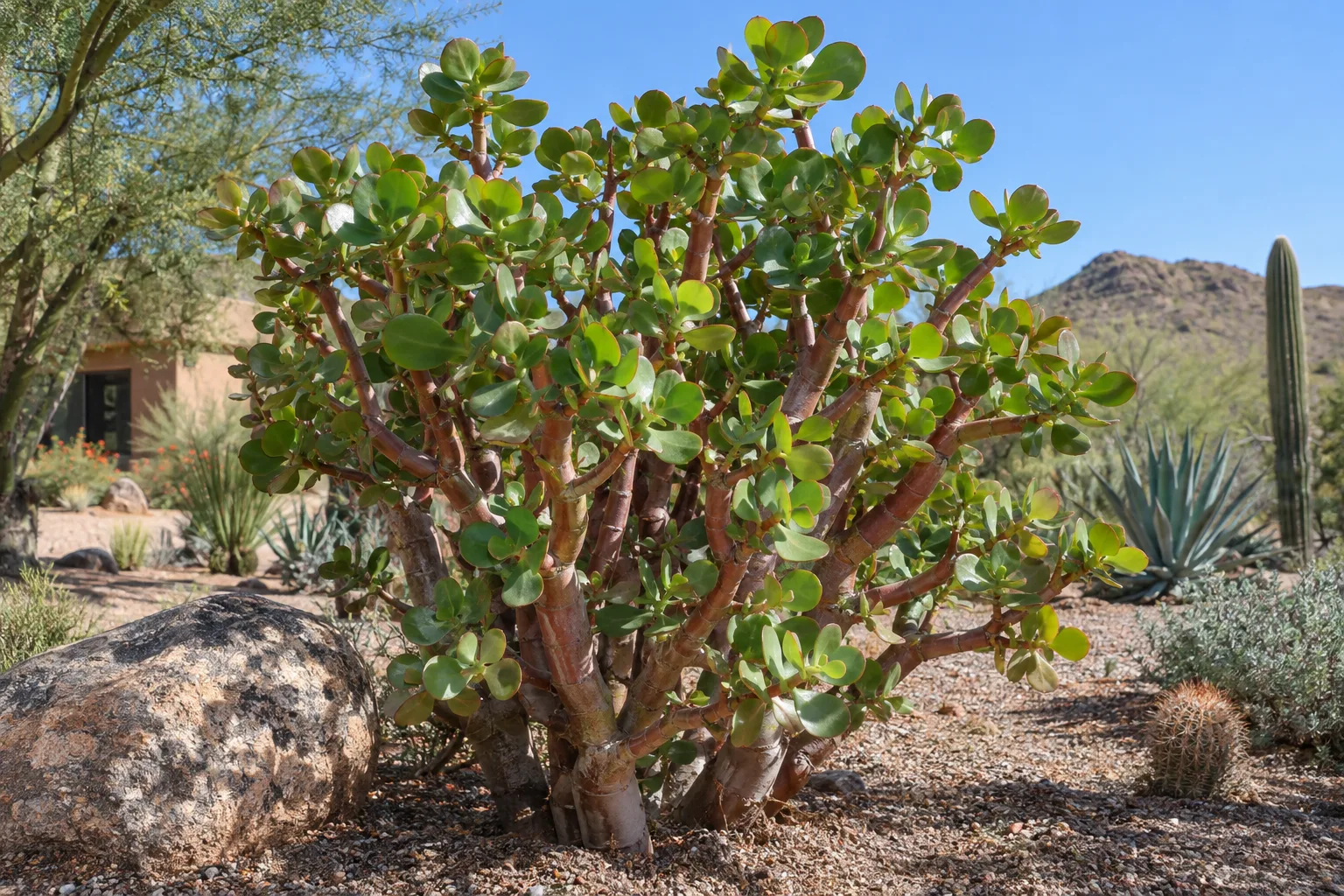
Low water once established. Water deeply, then let soil dry between waterings; irrigate more frequently during extreme summer heat and very sparingly in winter.
Size
6-12 ft tall × 6-10 ft wide
Habit
Upright shrub – succulent
Toxicity
Non-toxic
Description
A large-leaved form of elephant food, generally sold as Portulacaria afra ‘Mammoth’, with rounded, fleshy green leaves and thick reddish-brown stems.
Bloom Time
Spring to summer (blooms infrequently in cultivation)
Blue elf aloe, Elephant food, Golden barrel cactus, Medicinal aloe, Red yucca
Non-toxic
Non-toxic
Care Instructions
Light: Morning sun with afternoon shade is best in Phoenix. Tolerates full sun when gradually acclimated, but protect from intense western exposure and reflected heat.
Water: Low water once established. Water deeply, then let soil dry between waterings; irrigate more frequently during extreme summer heat and very sparingly in winter.
Soil: Very well-drained sandy or gravelly soil. Use a fast-draining cactus and succulent mix in containers.
Mature size: Approximately 6–10 feet tall and 4–8 feet wide in favorable, frost-protected conditions; easily maintained smaller with pruning.
Bloom: Small flowers may appear in late spring or summer on mature plants; flowering is uncommon in Phoenix landscapes and containers.
Evergreen / deciduous: Evergreen; may shed leaves during cold, drought, or other stress.
Growth rate: Moderate; faster with warmth and appropriate irrigation, slower under dry or cool conditions.