

Cascalote
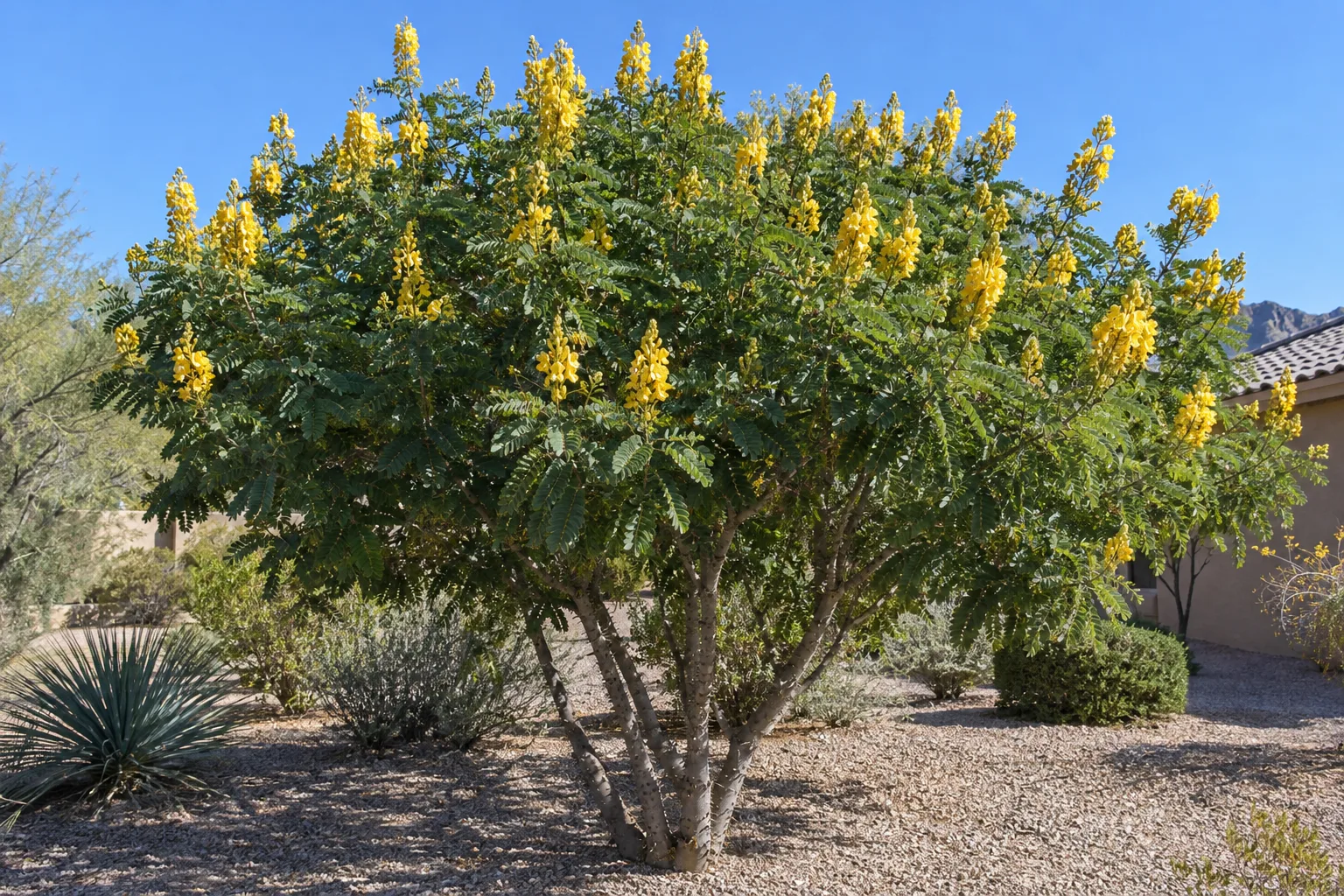
A small Mexican native tree with rounded, compound leaves, thorny branches, and showy yellow flowers during Phoenix’s cooler months. Special Features Heat and drought tolerant; provides cool-season flowers that attract pollinators. Prominent conical thorns add distinctive texture. Problems & Solutions Frost can damage foliage and tender growth, especially near or below 25°F; choose a warm, […]
Chandler Pummelo
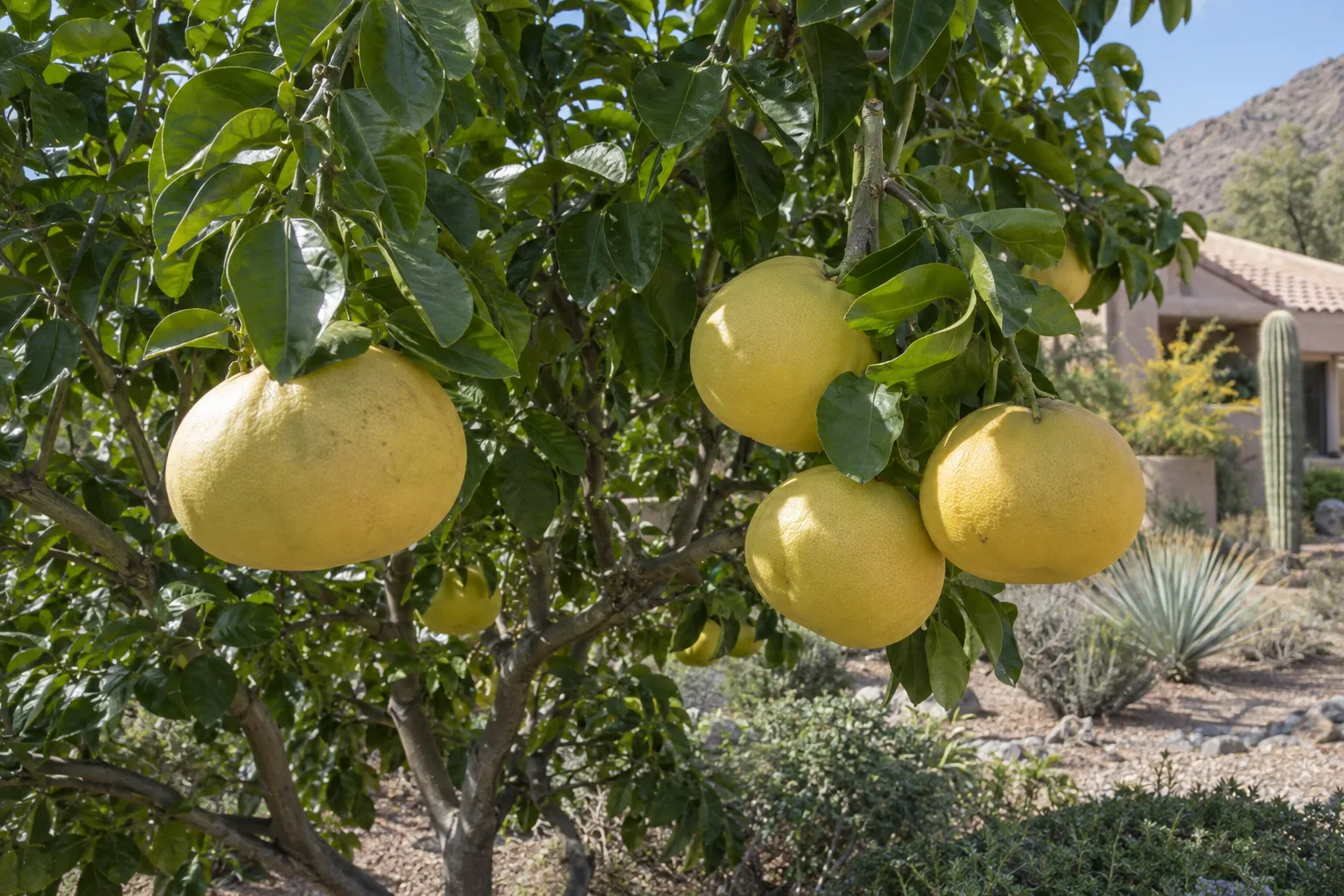
A large-fruited pummelo cultivar producing thick-rinded citrus with pink flesh and a sweet to mildly tart flavor. Well suited to Phoenix when provided regular irrigation, good drainage, and frost protection. Special Features Very large, pink-fleshed fruit; fragrant flowers; glossy foliage. Self-fruitful, though cross-pollination can increase seediness. Problems & Solutions Frost can damage foliage and fruit […]
Champagne Loquat
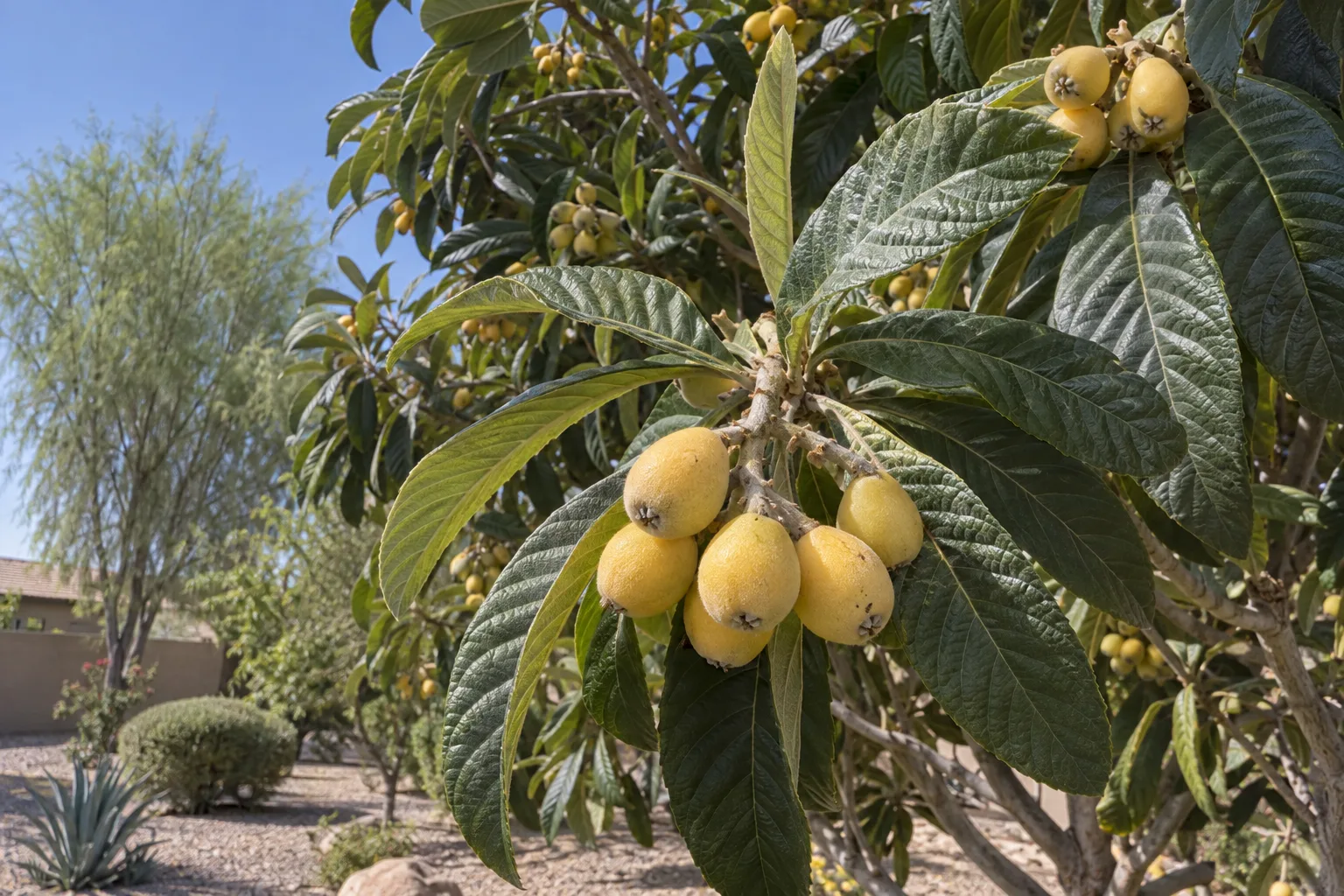
An evergreen fruit tree with large, textured leaves and yellow-skinned loquats with juicy, sweet, pale flesh. ‘Champagne’ benefits from protection against Phoenix’s intense summer heat. Special Features Edible, pale-fleshed fruit; fragrant flowers attract pollinators; bold foliage provides year-round screening. Generally self-fruitful, though another cultivar may improve fruit set. Problems & Solutions Summer sun and dry […]
Colombian Pink Guava
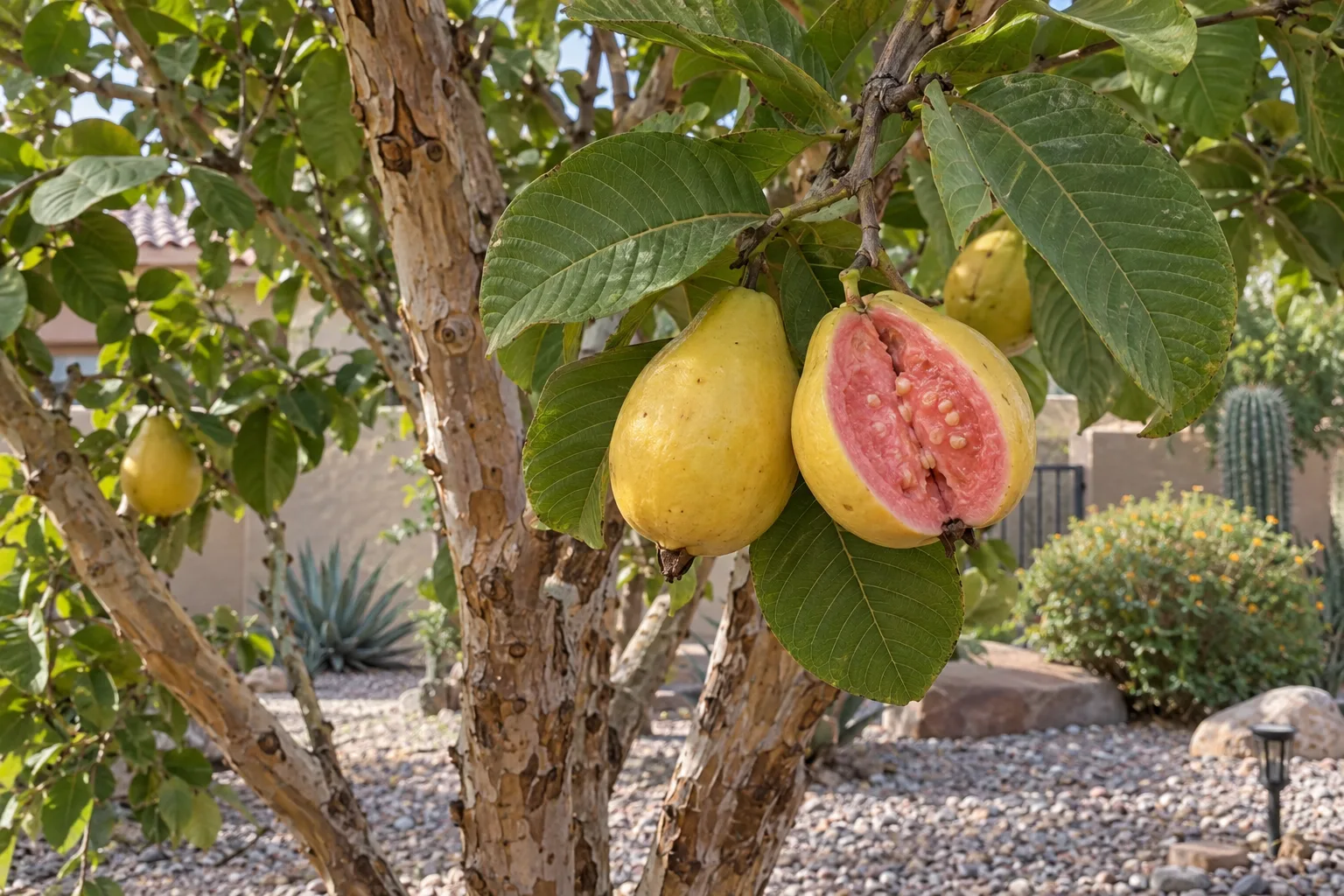
A tropical fruit tree grown for fragrant, yellow-skinned guavas with sweet pink flesh, attractive foliage, and peeling bark. Special Features Edible pink-fleshed fruit rich in vitamin C; aromatic fruit, ornamental peeling bark, and generally self-fruitful flowers. Problems & Solutions Frost can damage leaves and young growth, with serious injury possible in the upper 20s°F; choose […]
Crape Myrtle Dynamite (Red)
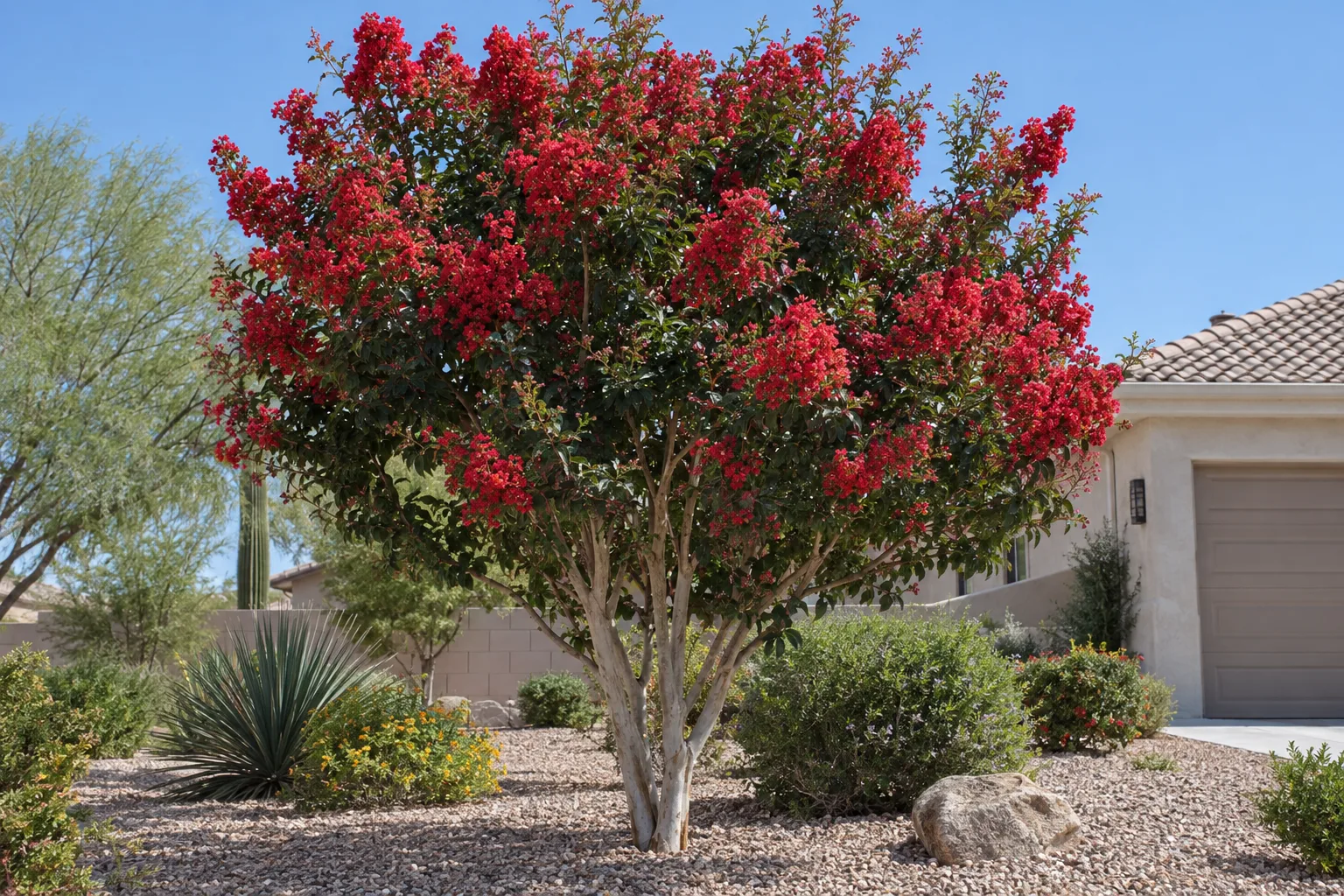
A deciduous ornamental tree or large shrub with brilliant red summer flowers, attractive peeling bark, and colorful new growth. Performs well in Phoenix with adequate irrigation and drainage. Special Features Showy red flowers, exfoliating bark, red emerging foliage, and orange-red fall color when conditions favor it. Heat tolerant and moderately drought tolerant once established, but […]
Crape Myrtle Biloxi (Pink)

A large, pale-pink-flowering crape myrtle with an elegant canopy and exfoliating bark. ‘Biloxi’ is a Lagerstroemia indica × fauriei hybrid suited to Phoenix landscapes with adequate irrigation. Special Features Attractive exfoliating bark revealing cinnamon-brown tones; good powdery mildew resistance; colorful fall foliage; tolerates heat with sufficient irrigation. Problems & Solutions Extreme heat and dry soil […]
Crape Myrtle (Biloxi)
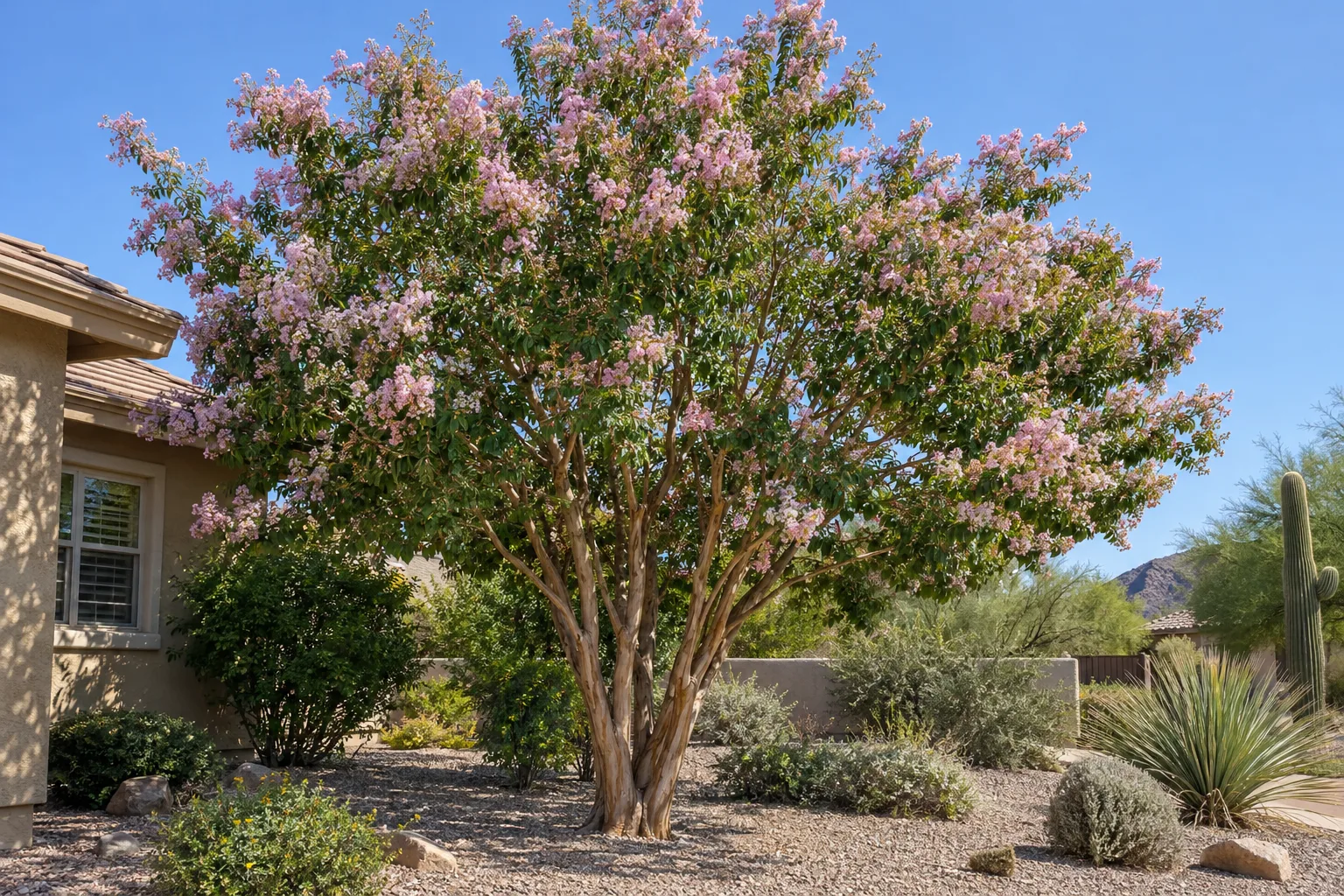
A tall, deciduous crape myrtle with pale pink summer flowers and attractive exfoliating bark. ‘Biloxi’ is a Lagerstroemia indica × fauriei hybrid suited to Phoenix with adequate irrigation. Special Features Exfoliating cinnamon-brown bark; good powdery mildew resistance; heat tolerance; orange-red fall color where conditions favor it. Problems & Solutions Aphids and honeydew-related sooty mold may […]
Donut Peach (Stark Saturn type)
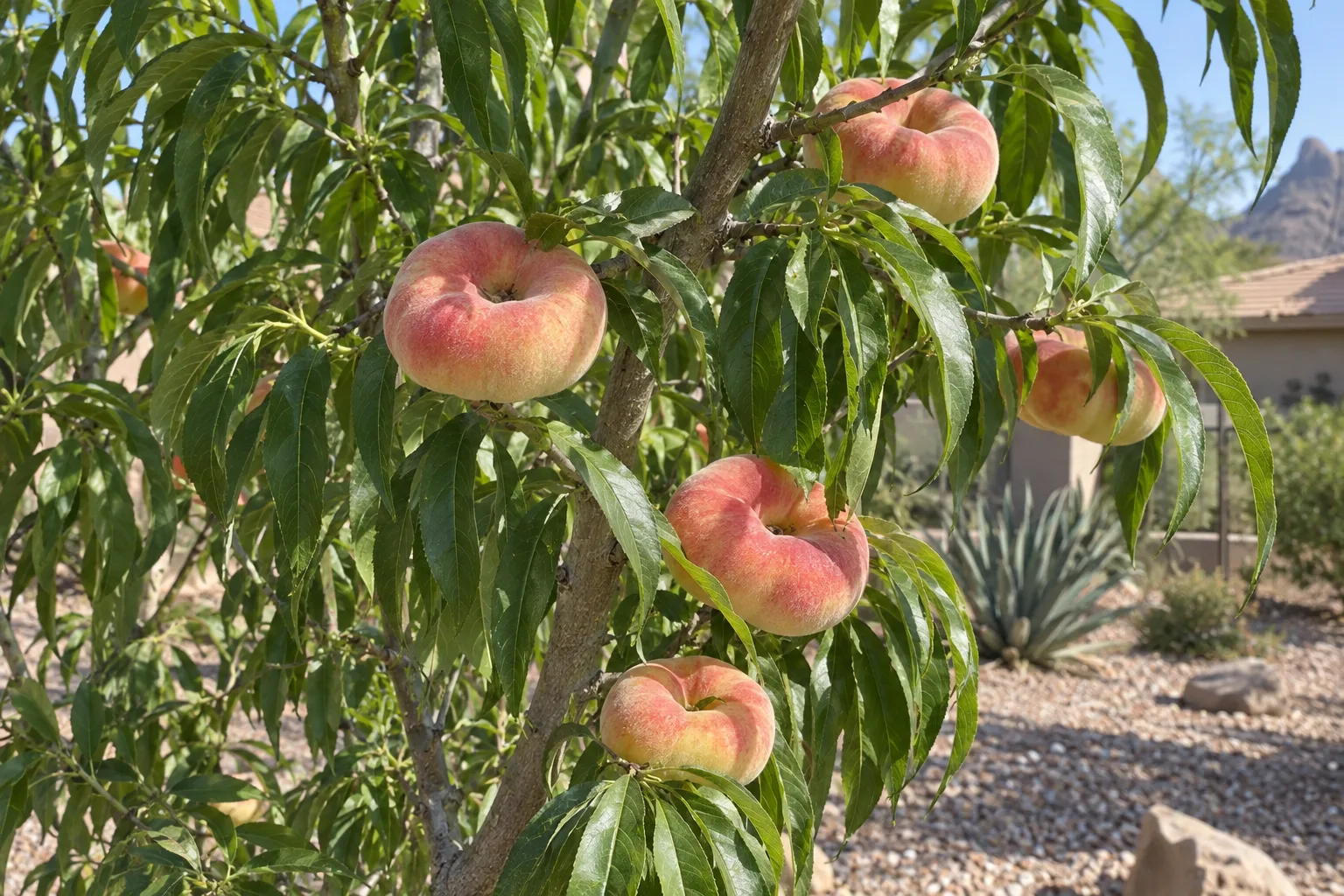
Deciduous fruit tree producing flattened, doughnut-shaped peaches with sweet, low-acid white flesh and red-blushed skin. Fruiting in Phoenix depends on sufficient winter chill. Special Features Distinctive flat peaches with small pits and sweet white flesh; self-fruitful, so a second peach tree is not required for pollination. Problems & Solutions Insufficient winter chill can cause irregular […]
Dorsett Golden Apple

A low-chill apple cultivar producing sweet, crisp, golden-yellow fruit, often with a pink blush. Well suited to Phoenix with adequate irrigation and protection from intense afternoon heat. Special Features Very low chilling requirement, commonly estimated at 100–200 hours below 45°F. Early harvest helps avoid peak summer heat. Partially self-fruitful, but an overlapping-bloom apple such as […]
Earligrande Peach
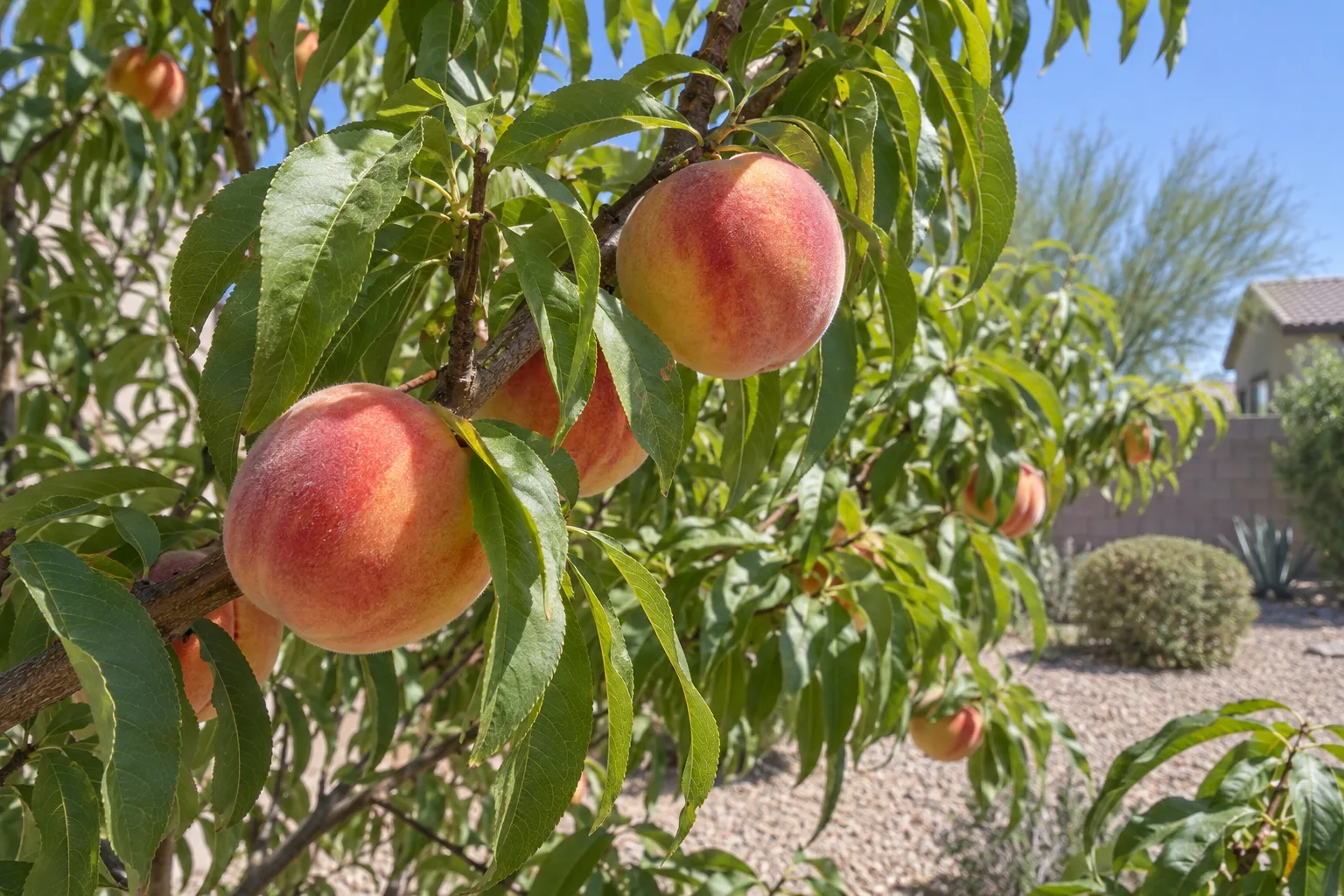
A low-chill peach variety well suited to Phoenix gardens, producing early-ripening, yellow-fleshed peaches with red-blushed yellow skin and sweet flavor. Special Features Self-fruitful; no second peach tree is required. Low chilling requirement, approximately 200–300 hours below 45°F. Early harvest helps avoid the worst summer heat. Problems & Solutions Trunk sunburn: protect exposed bark with diluted […]