

Dwarf Japanese Garden Juniper ‘Nana’
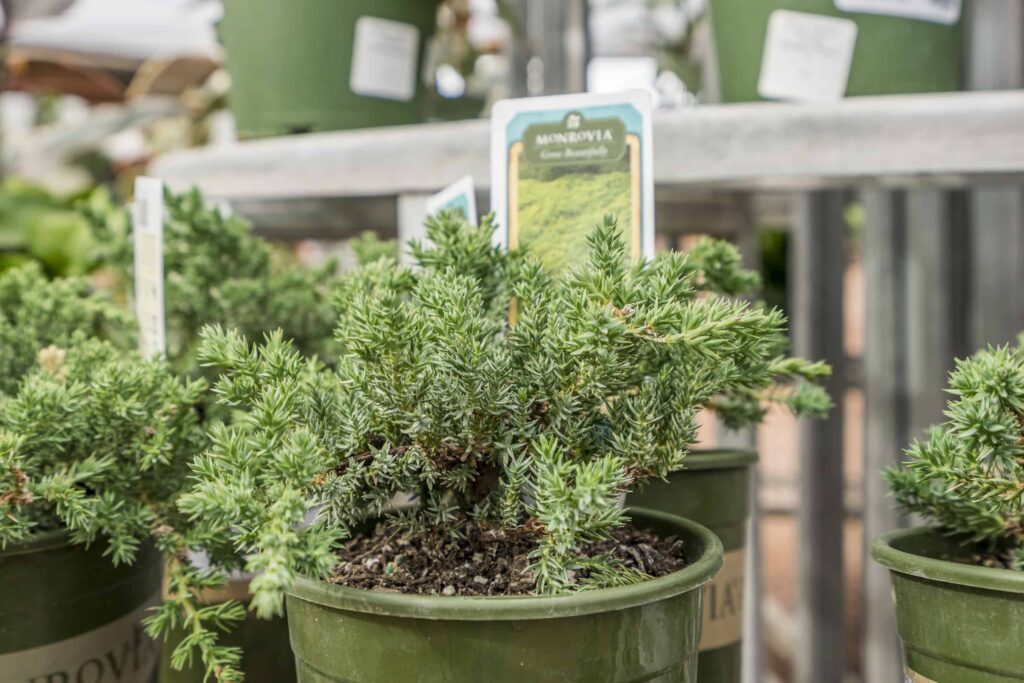
Compact, low-spreading dwarf juniper with dense, fine-textured blue-green foliage that mounds and layers over the ground. Useful as a low-water groundcover or foundation planting in desert landscapes. Special Features Low mounding, spreading form; fine-textured blue-green foliage; year-round color and texture; low maintenance once established Problems & Solutions Spider mites in hot, dry conditions (rinse foliage, […]
Ironwood

Long-lived Sonoran Desert native tree with dense, gray-green foliage, thorny branches, exceptionally hard wood, and showy spring flowers. Special Features Excellent heat and drought tolerance; attracts native bees and provides shelter and protective shade for desert wildlife and young desert plants. Problems & Solutions Overwatering and poor drainage can cause root rot; allow soil to […]
Jojoba

A tough Sonoran Desert native shrub with leathery, upright, oval leaves and seeds valued for their liquid wax, commonly called jojoba oil. Special Features Excellent heat and drought tolerance; native wildlife cover; thornless foliage; female plants produce oil-rich seeds when pollinated by a nearby male. Problems & Solutions Overwatering and poor drainage can cause root […]
Golden Barrel

A sculptural barrel cactus with a ribbed green body, dense golden-yellow spines, and a woolly crown. Special Features Striking golden spines, strong geometric form, and excellent drought tolerance once established. Problems & Solutions Root and crown rot from excess moisture: improve drainage and keep mulch away from the base. Sunburn: provide afternoon shade and acclimate […]
Mexican Fire Barrel

A striking barrel cactus native to Baja California, with a deeply ribbed green stem and dense, fiery red spines that often curve or hook. Special Features Brilliant red spines, strong sculptural form, and excellent drought tolerance; well suited to arid landscapes. Problems & Solutions Root rot from excess moisture (improve drainage and avoid frequent irrigation); […]
Parry’s Agave
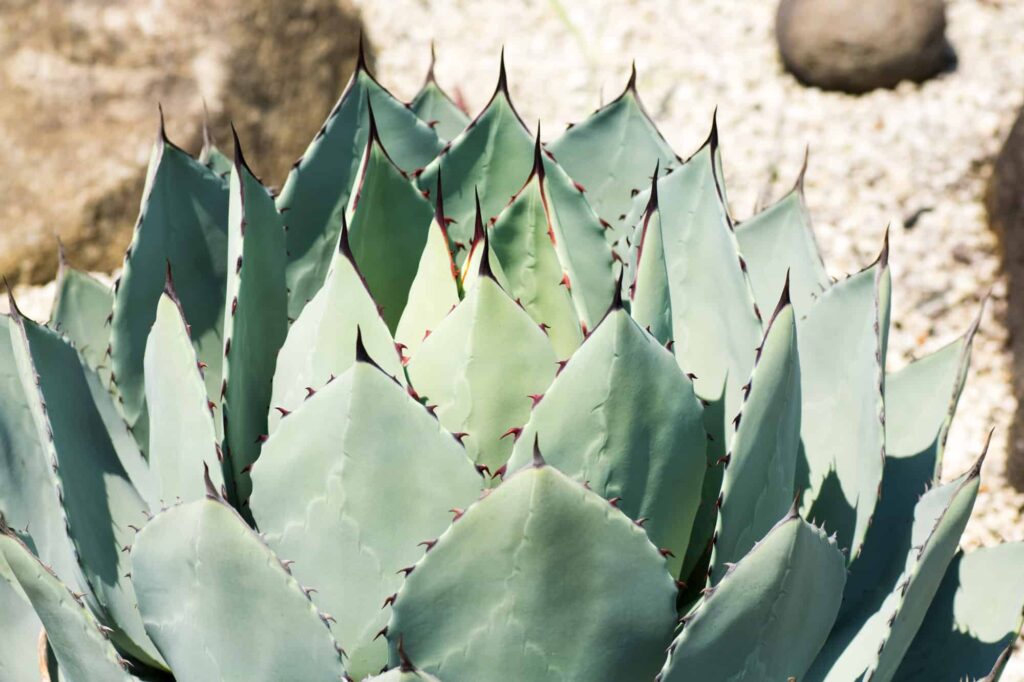
Parry’s agave (Agave parryi) forms compact, symmetrical rosettes of broad, rigid, blue-gray leaves edged with dark teeth and tipped with sharp terminal spines. Special Features Sculptural symmetry, attractive blue-gray foliage, strong drought tolerance, and excellent cold hardiness for Zone 9b; flowers attract pollinators. Problems & Solutions Root and crown rot: improve drainage and avoid frequent […]
Candelilla
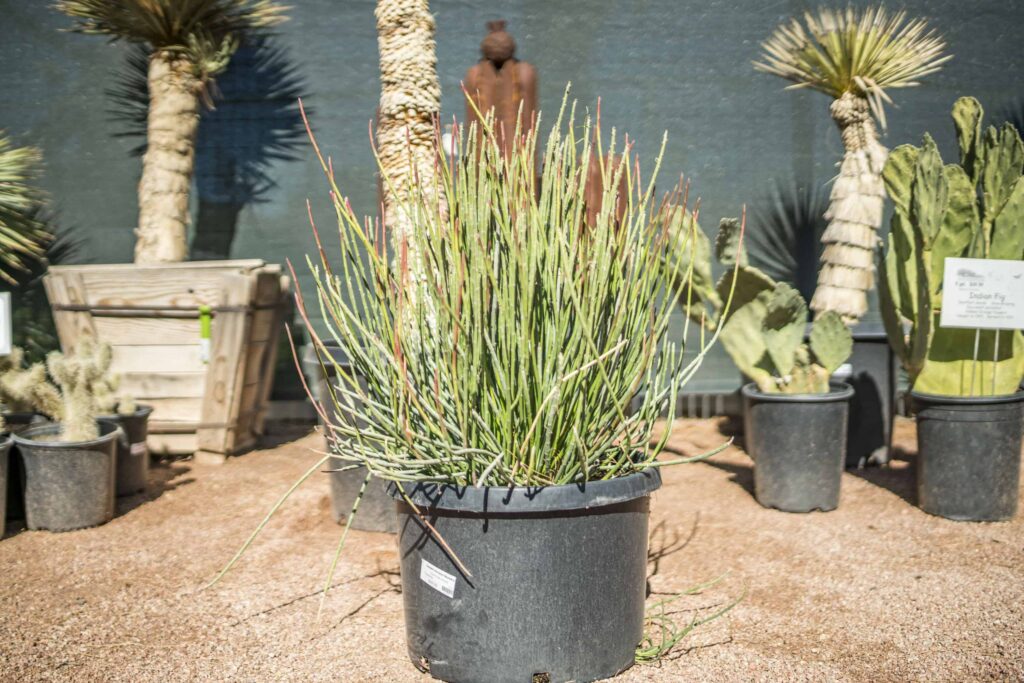
Candelilla is a sculptural desert succulent with slender, upright, wax-coated stems and tiny, short-lived leaves. Native to the Chihuahuan Desert, it thrives in Phoenix’s heat and dry conditions. Special Features Highly heat and drought tolerant; distinctive vertical texture; waxy stems are the commercial source of candelilla wax. Problems & Solutions Overwatering and poor drainage can […]
Dragon Toes Agave

A compact agave commonly sold as Agave pygmaea ‘Dragon Toes’, with broad, blue-green leaves, prominent reddish-brown marginal teeth, and dark terminal spines. Special Features Compact architectural form, striking teeth, and good drought tolerance; well suited to decorative containers. Problems & Solutions Excess moisture can cause root and crown rot; provide excellent drainage and avoid frequent […]
Agave Parryi Huachucensis
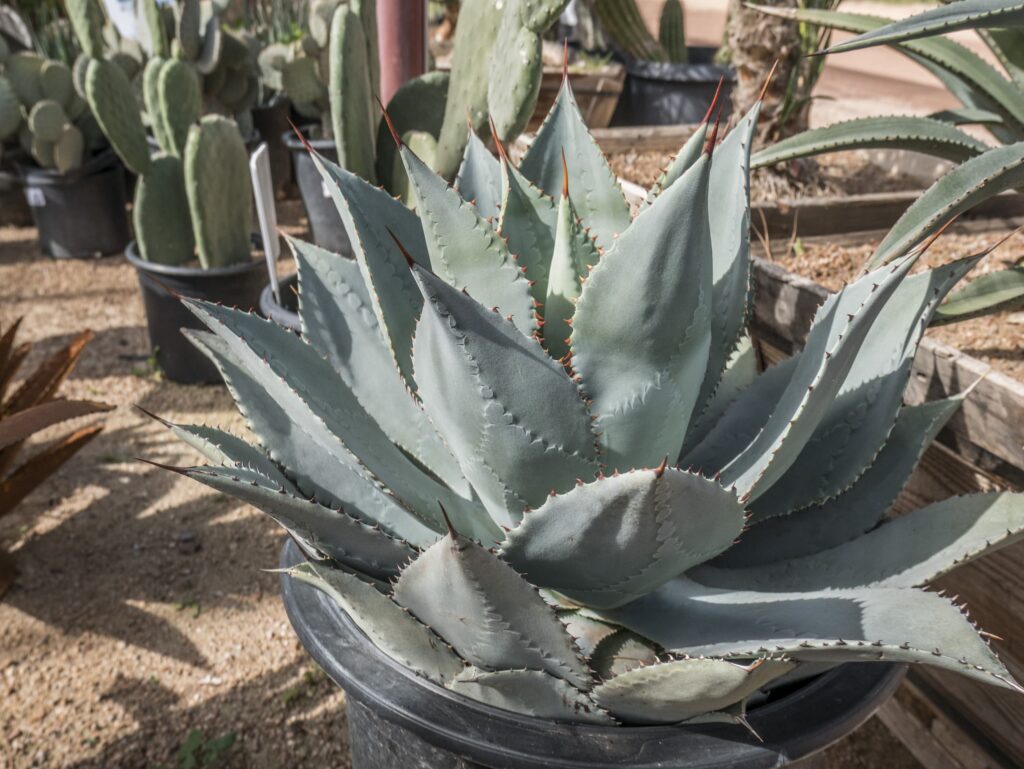
Agave parryi var. huachucensis, or Huachuca agave, forms dense, symmetrical rosettes of broad, blue-gray leaves with dark marginal teeth and sharp terminal spines. Native to southeastern Arizona and northern Mexico. Special Features Sculptural symmetry, attractive blue-gray foliage, strong drought tolerance, and excellent cold hardiness for Phoenix winters. Problems & Solutions Poor drainage and overwatering can […]
Artichoke Agave

Agave parryi var. truncata forms a compact, symmetrical rosette of broad, short, blue-gray leaves with dark marginal teeth and a sharp terminal spine, resembling an artichoke. Special Features Distinctive artichoke-shaped symmetry; drought tolerant and cold hardy in Zone 9b; striking blue-gray foliage. Problems & Solutions Poor drainage and excess irrigation cause root or crown rot. […]