

Indian Comb Cactus
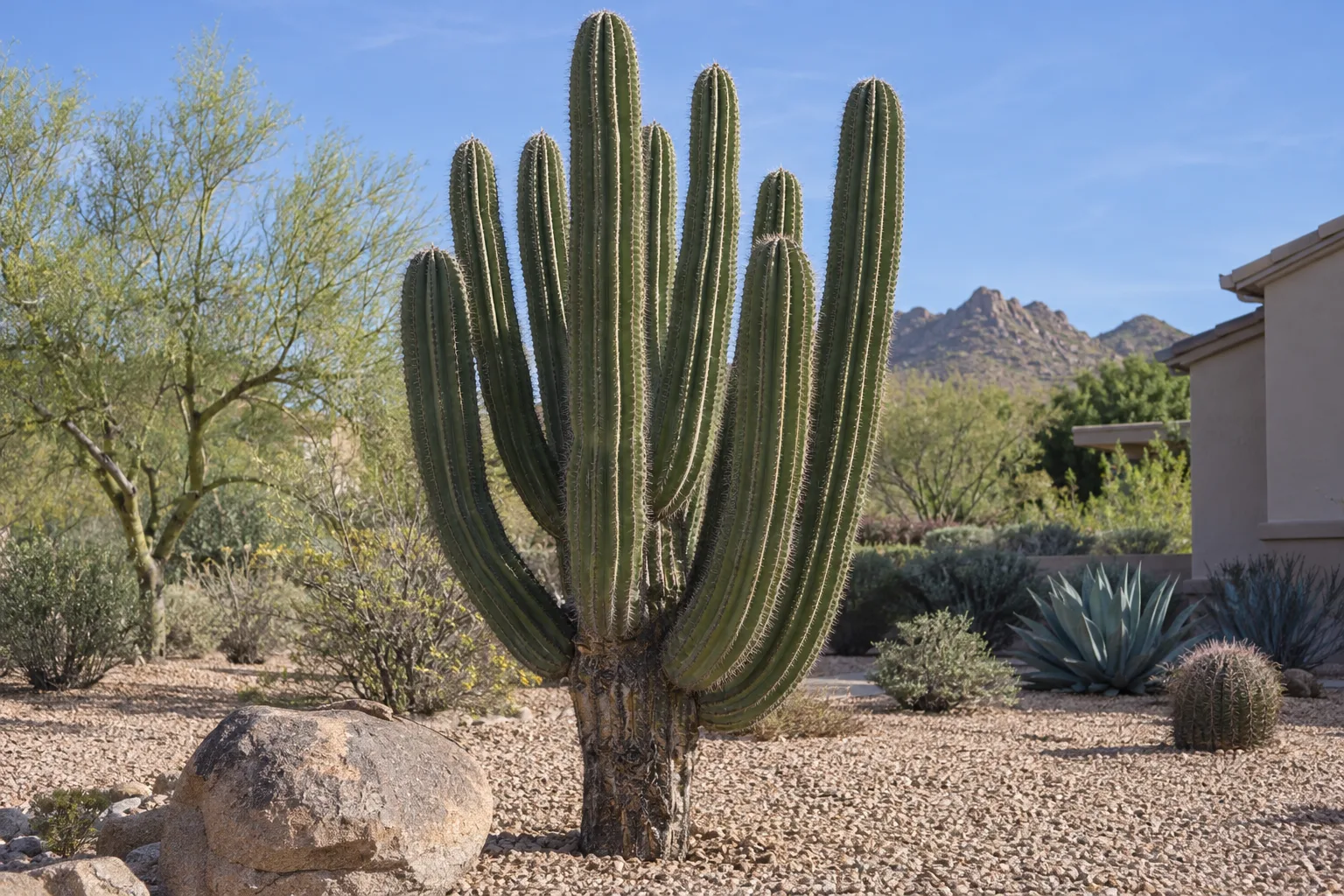
A large, tree-like columnar cactus native to northwestern Mexico and the Sonoran Desert. Forms tall ribbed columns and branches with age, with dense comb-like spine clusters. Bears white nocturnal flowers followed by spiny red edible fruit. Special Features Drought tolerant once established; edible fruit historically used by indigenous peoples; provides wildlife habitat and nesting sites […]
Mint Julep Juniper
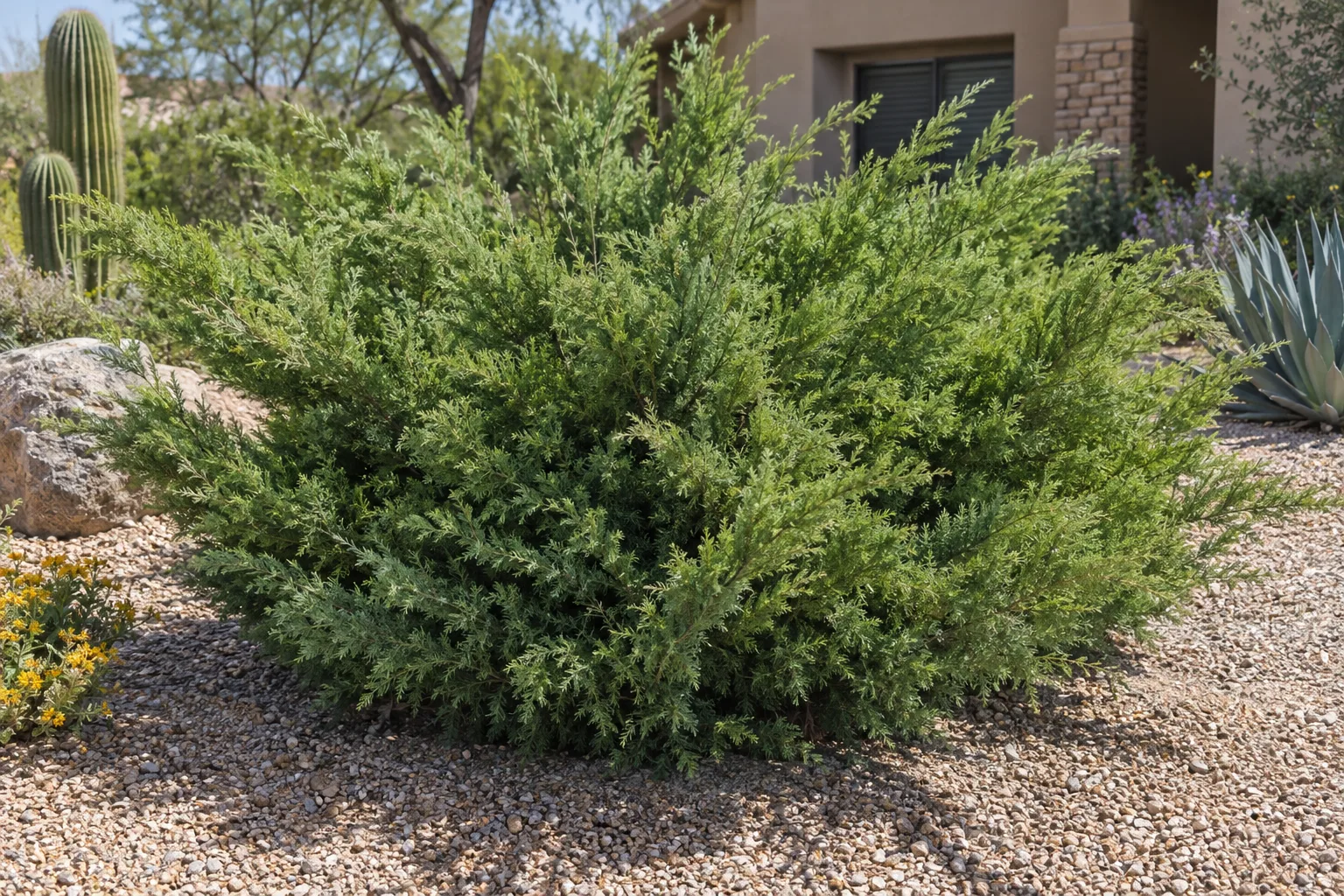
A spreading ornamental juniper with arching branches and feathery mint-green foliage. Tolerates heat and reflected sun once established. Works well as a foundation shrub or informal hedge. (‘Monlep’ is the trademarked Mint Julep selection.) Special Features Feathery mint-green foliage; drought tolerant once established; deer resistant; year-round color and texture Problems & Solutions Spider mites in […]
Makrut Lime (formerly Kaffir Lime)
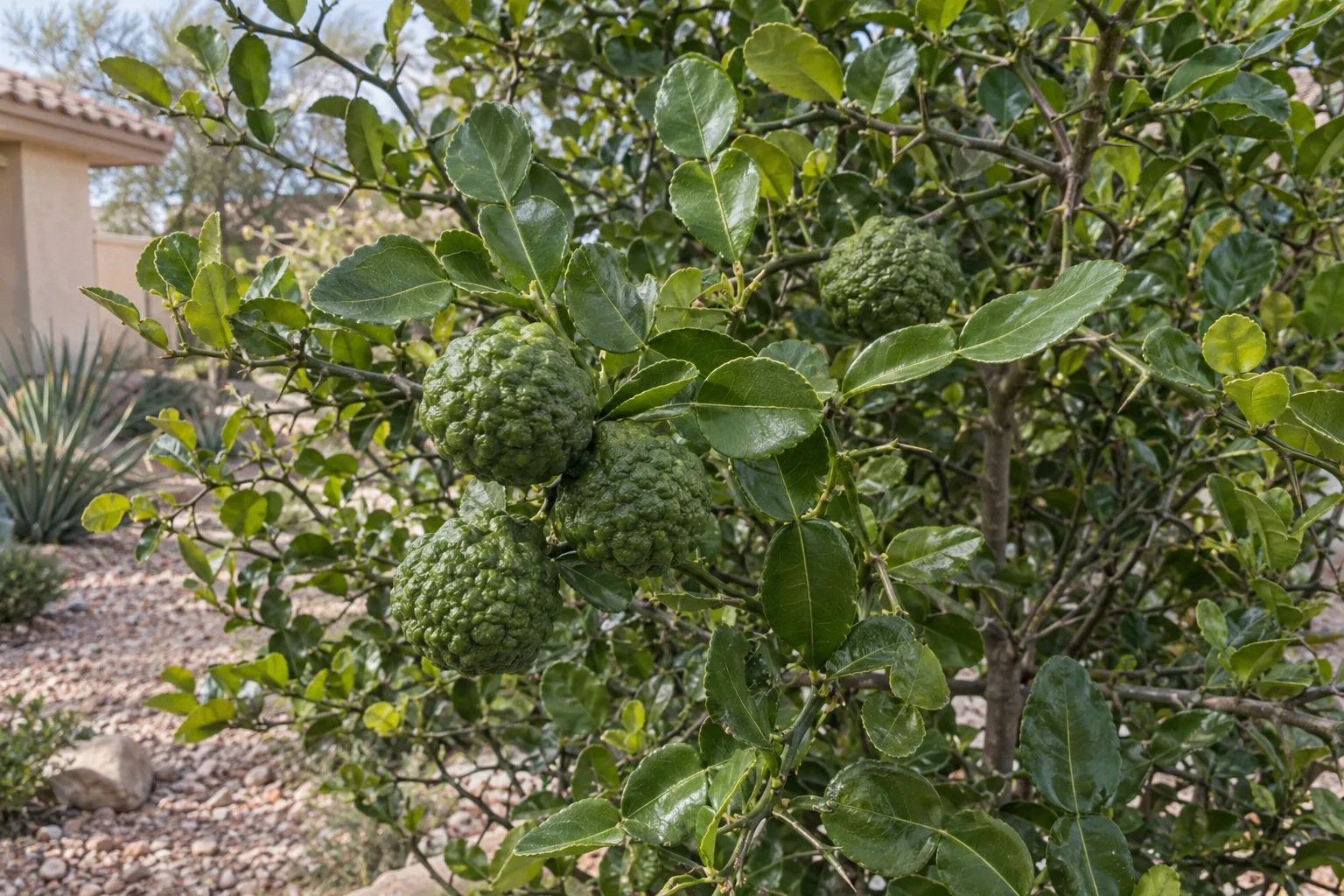
Makrut lime, also called kaffir lime, is a thorny citrus tree prized for its intensely aromatic, double-lobed leaves and bumpy green fruit. Leaves and rind are used in Southeast Asian cooking. Special Features Highly fragrant culinary leaves and fruit rind; suitable for containers. Fruit has little juice and is grown mainly for its peel. Problems […]
Meiwa Kumquat
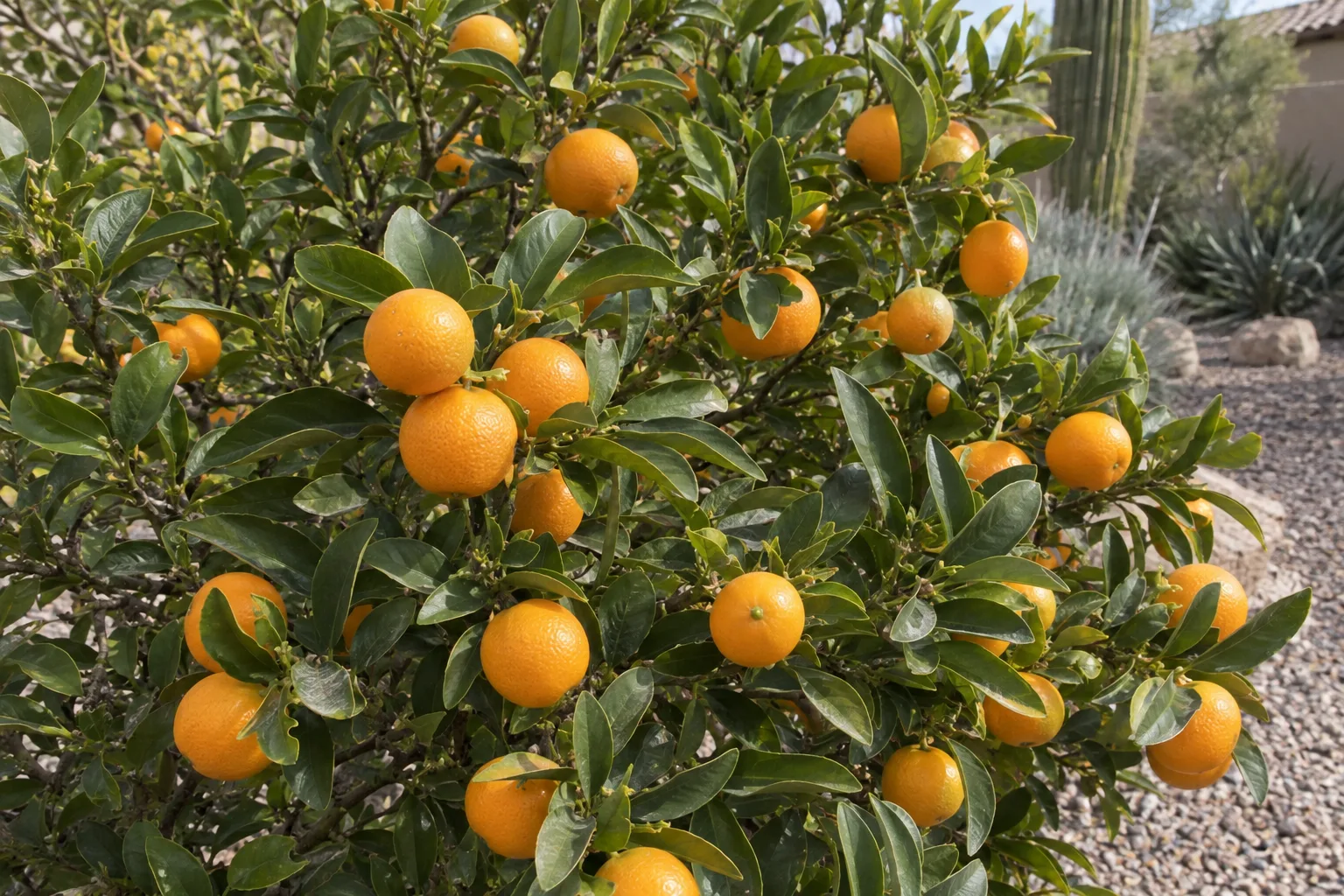
Compact citrus tree bearing round to oval, golden-orange kumquats with sweet edible peel and relatively sweet flesh; fruit is eaten whole or used in preserves. Special Features Sweet edible fruit, fragrant flowers, ornamental winter fruit, and relatively good cold tolerance for citrus. Self-fertile; one tree can produce fruit. Problems & Solutions Extreme heat and exposed […]
Nagami Kumquat
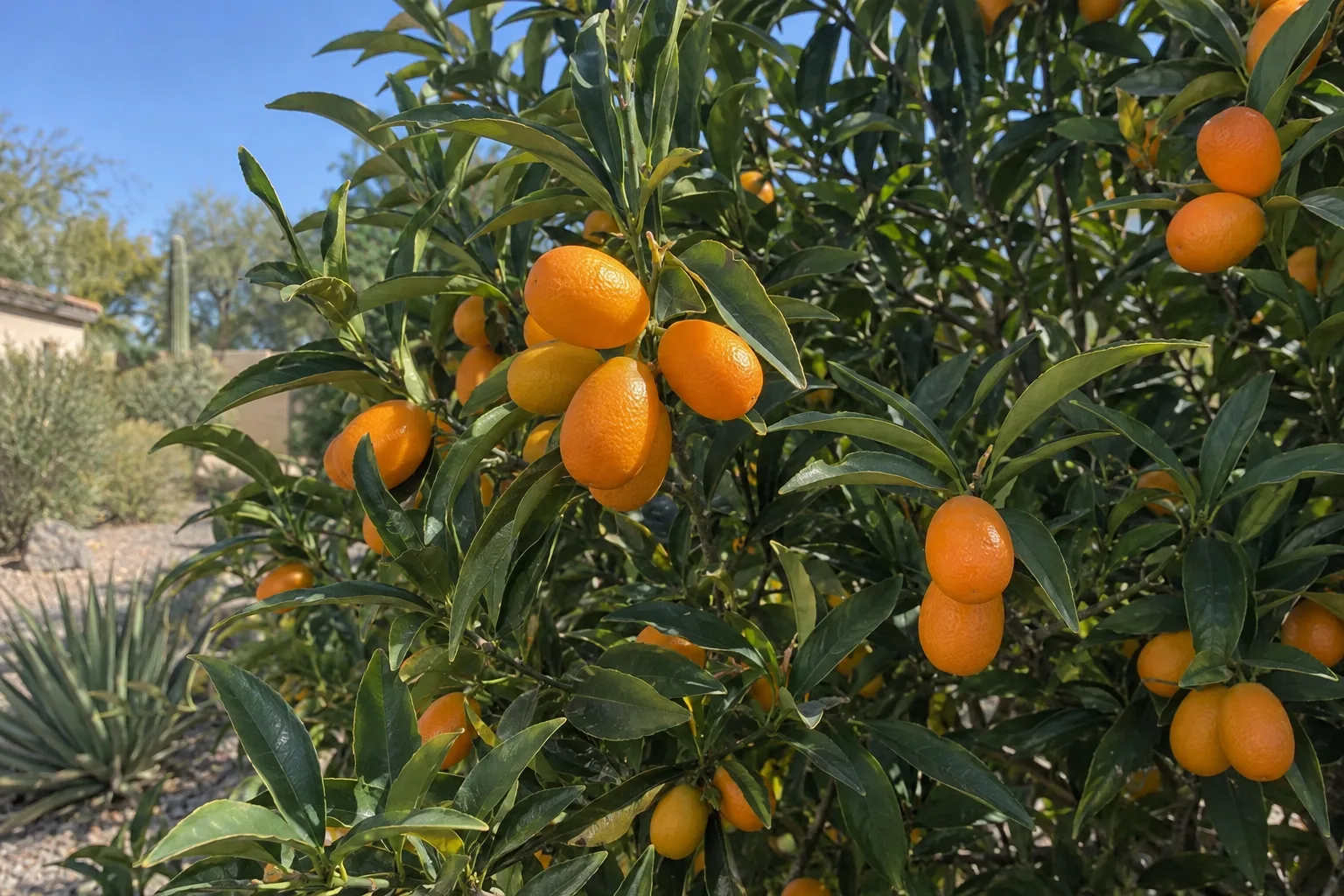
Compact citrus tree bearing oval orange kumquats with sweet edible peel and tart flesh. Nagami fruit is eaten whole or used in marmalade. Special Features Self-fertile; ornamental edible fruit; fragrant flowers; among the most cold-tolerant citrus trees once established, though flowers and fruit are more frost-sensitive. Problems & Solutions Phoenix heat and reflected sun can […]
Laredo Sage
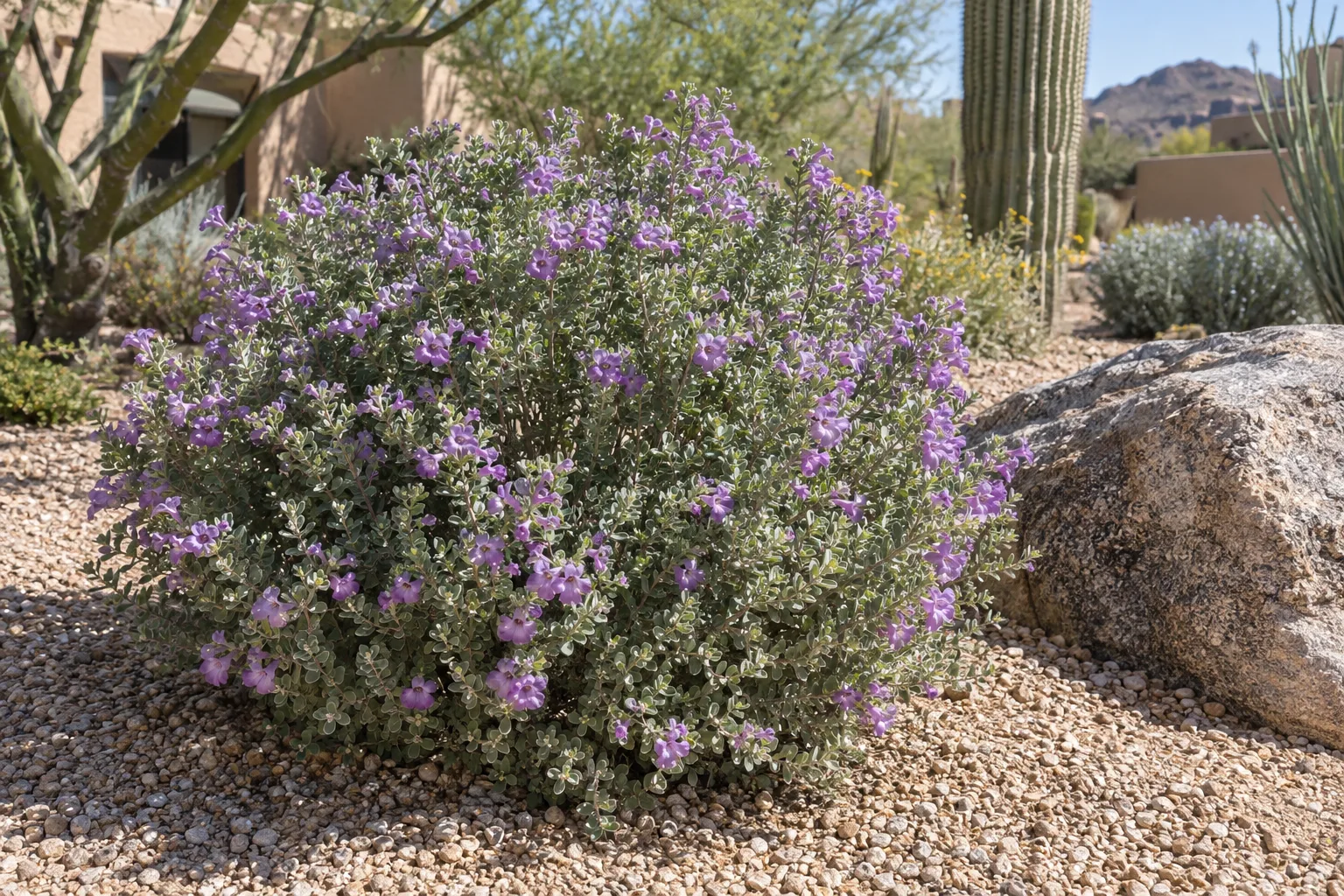
A compact Texas sage selection with small, cupped, silvery-gray leaves and abundant purple flowers following summer humidity and rain; well suited to Phoenix desert landscapes. Special Features Excellent heat and drought tolerance; tolerates reflected heat; attracts bees and other pollinators; generally unpalatable to deer. Problems & Solutions Poor drainage and frequent watering can cause root […]
Mastic
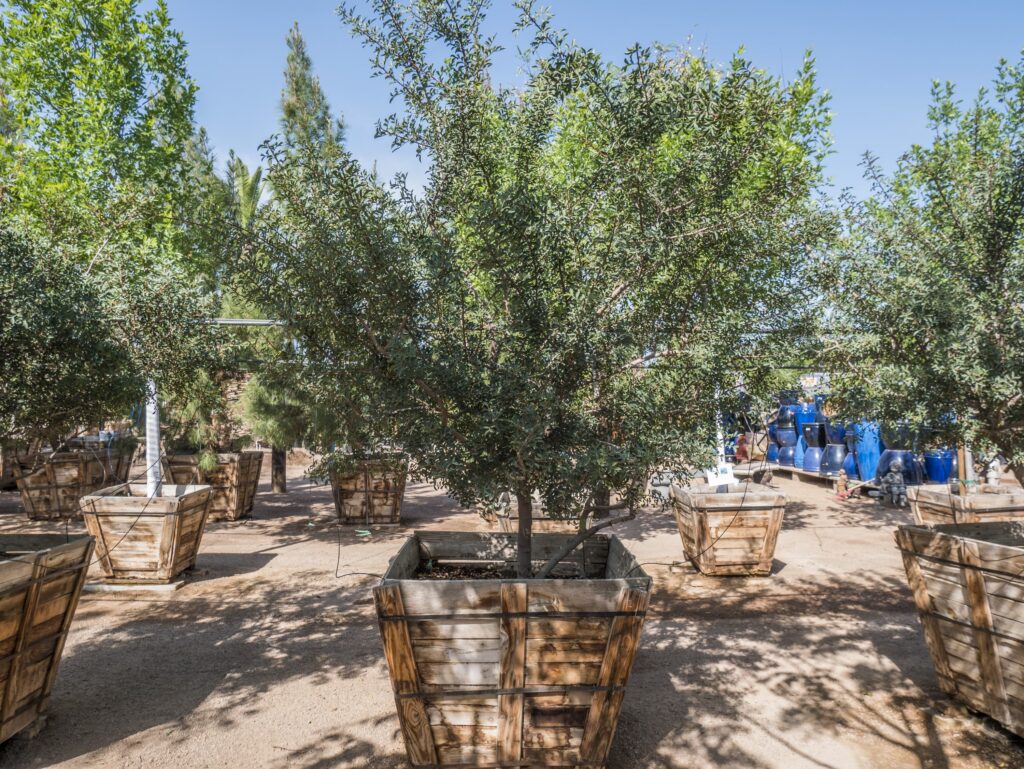
A Mediterranean evergreen shrub or small tree with dense, leathery foliage, aromatic resin, and excellent heat tolerance; well suited to Phoenix landscapes. Special Features Heat and drought tolerant; aromatic foliage and resin; dense screening foliage. Female plants produce small red fruits that ripen nearly black when a male plant is nearby. Problems & Solutions Poor […]
Medjool Date Palm
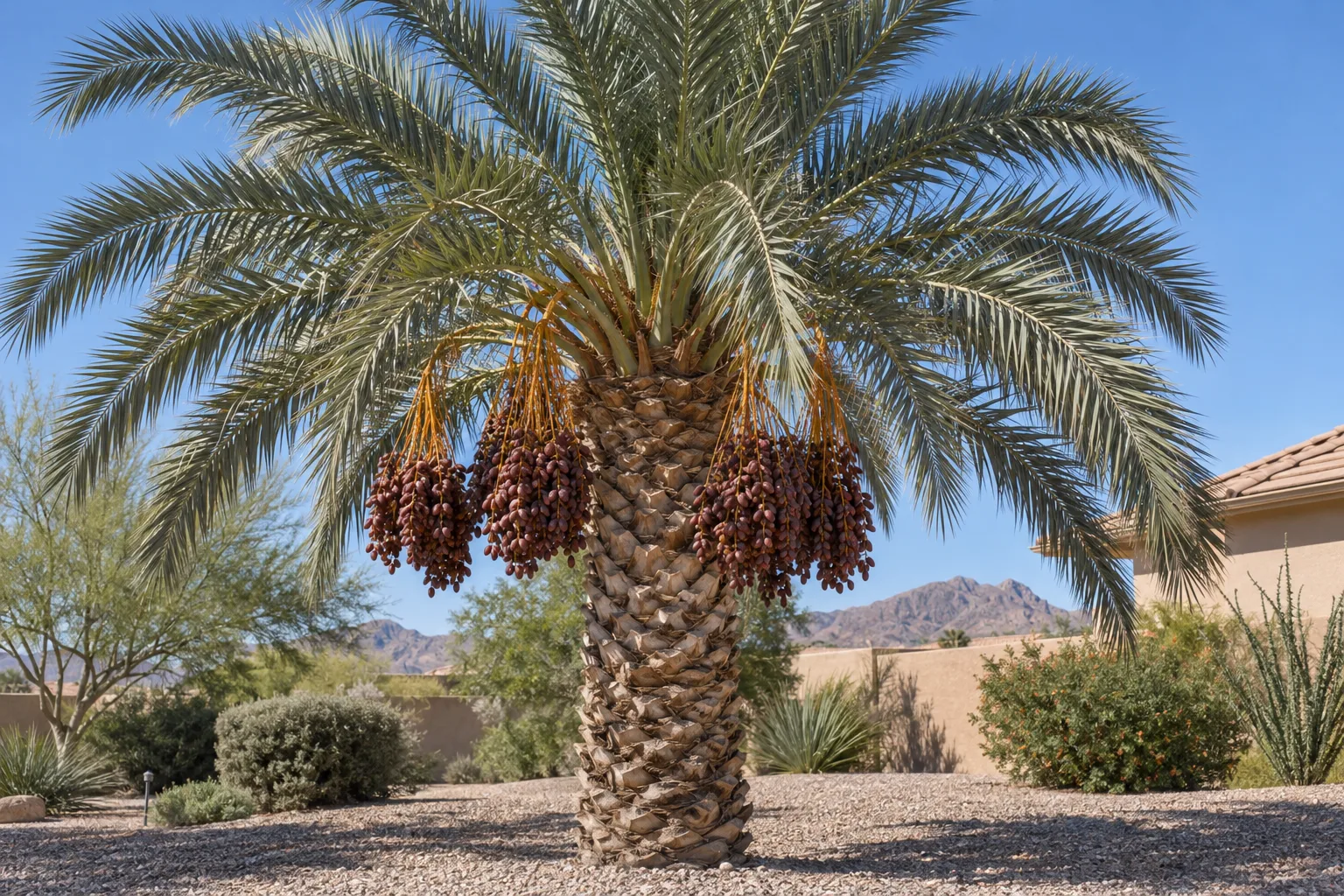
A stately date palm with a stout trunk and arching, featherlike fronds. Female Medjool palms produce large, sweet dates in Phoenix when properly pollinated and irrigated. Special Features Edible Medjool dates; dramatic architectural form; excellent heat tolerance. Named Medjool palms are propagated from offshoots or tissue culture, not seed. Problems & Solutions Poor drainage can […]
Paraguay Prickly Pear
Prickly pear from the Paraguay region with flat, paddle-shaped pads bearing spines and glochids. Heat and drought tolerant; suited to low-water desert landscapes. (Species identity unconfirmed in trade.) Special Features Drought tolerant; edible pads and fruit; wildlife food and habitat; tolerates reflected heat; informal barrier Problems & Solutions Glochids and spines irritate skin (handle with […]
Argentine Saguaro

A large, tree-like cactus native to South America, with thick, ribbed green stems, stout golden spines, and a branching silhouette resembling Arizona’s native saguaro. Special Features Bold architectural form; excellent heat and drought tolerance; generally cold hardy into the upper teens Fahrenheit when established and kept dry. Problems & Solutions Root and stem rot in […]