

Calamondin Citrus Tree

A compact citrus tree with glossy leaves, fragrant white flowers, and small orange fruits with tart flesh and edible peel; well suited to protected Phoenix gardens and containers. Special Features Fragrant flowers; ornamental, edible fruit useful for drinks, sauces, and preserves; self-fertile; relatively cold tolerant for citrus once established. Problems & Solutions Extreme heat and […]
Cara Cara Navel Orange
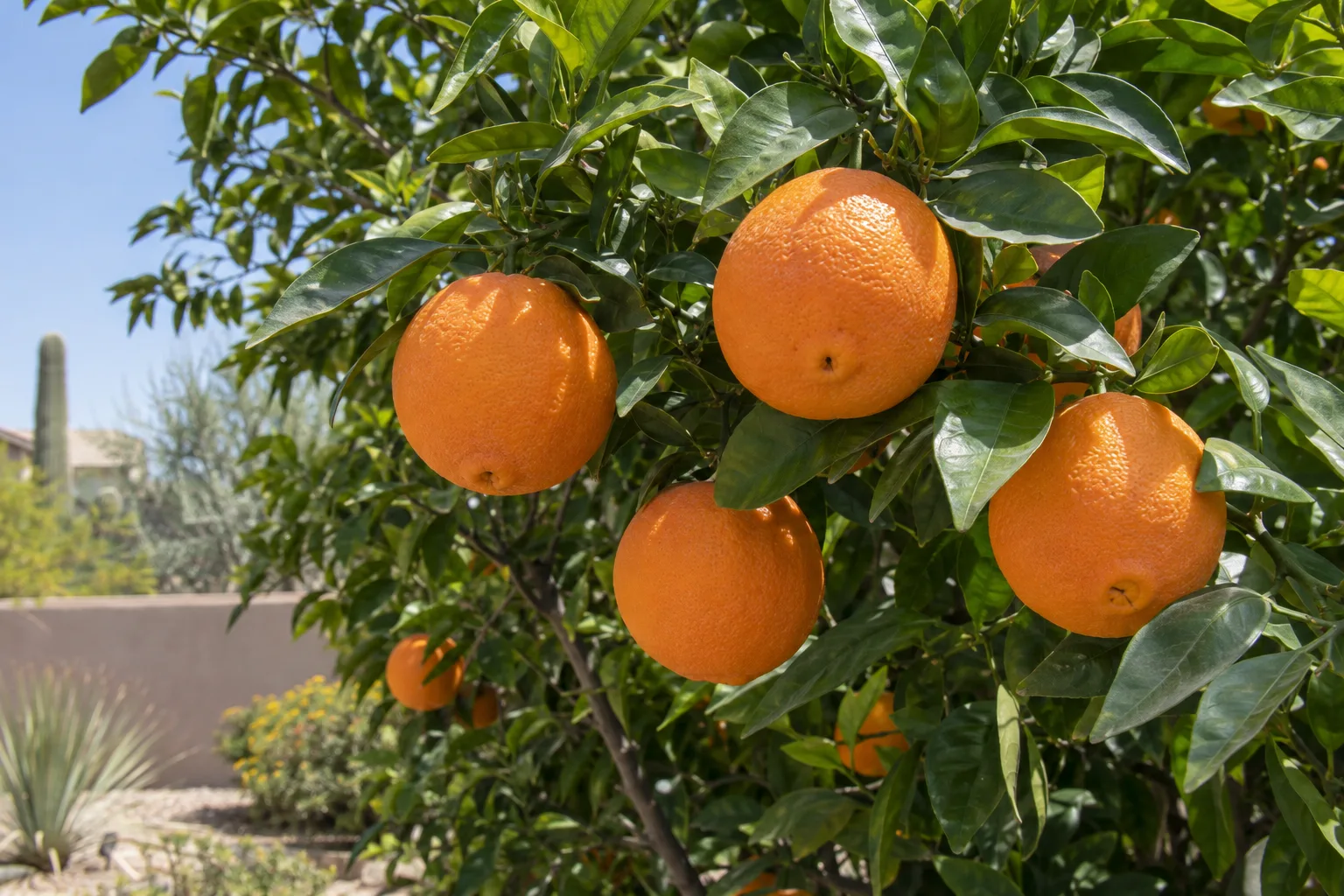
Sweet navel orange with distinctive pinkish-red flesh and low acidity, borne on a medium evergreen tree well suited to Zone 9b. Fruit ripens from winter into early spring. Special Features Pink-red, sweet low-acid flesh; high in lycopene and vitamin C; fragrant spring blossoms; good fresh-eating desert orange Problems & Solutions Iron chlorosis in alkaline soil […]
Carolina Cherry Laurel
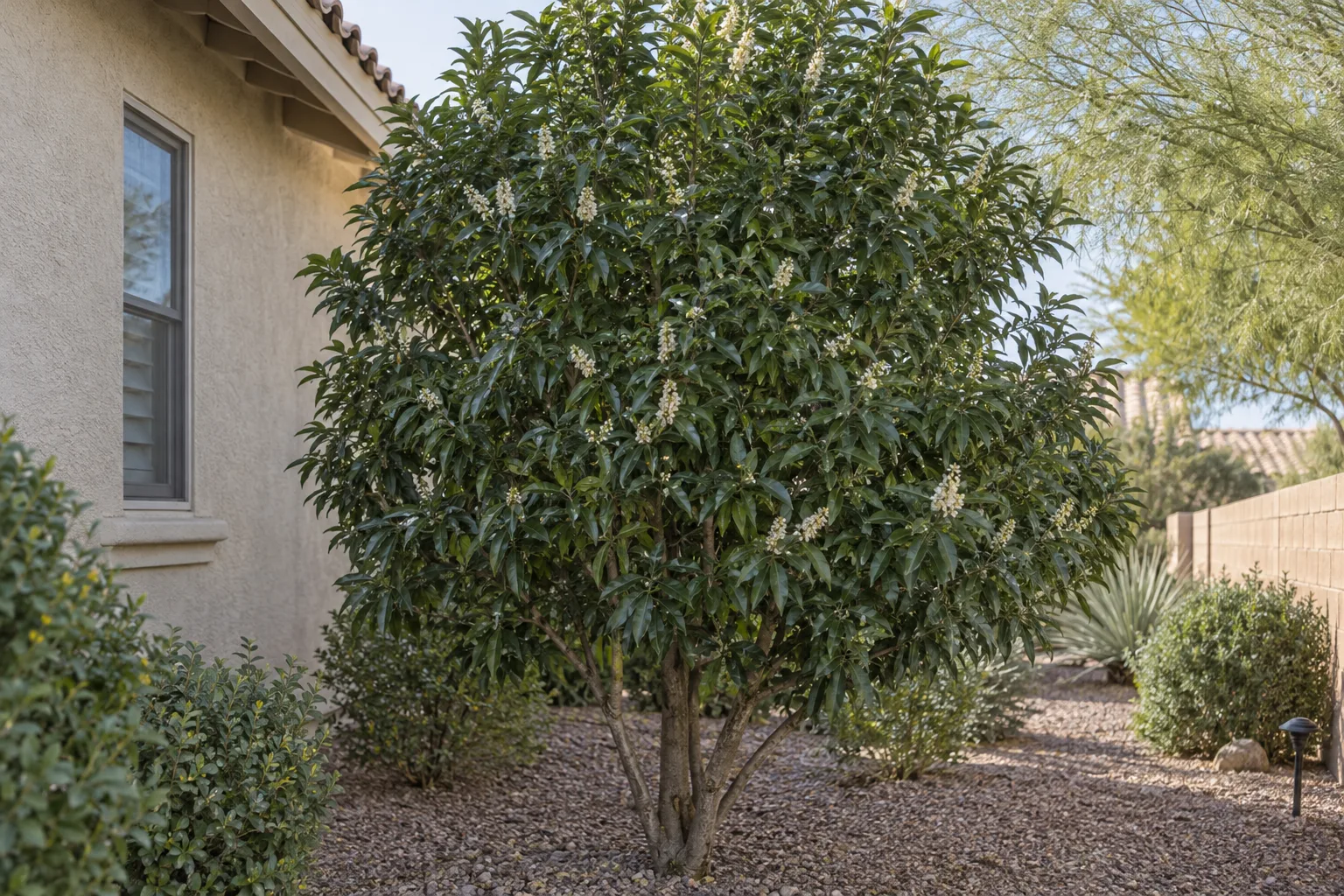
Carolina cherry laurel (Prunus caroliniana) is a dense, broadleaf evergreen shrub or small tree with glossy leaves and fragrant spring flowers. In Phoenix, it needs protection from extreme reflected heat and dependable irrigation. Special Features Dense screening foliage; fragrant flowers attract pollinators, and small black fruits attract birds. Leaves and seeds contain cyanogenic compounds and […]
Cartagena Guava
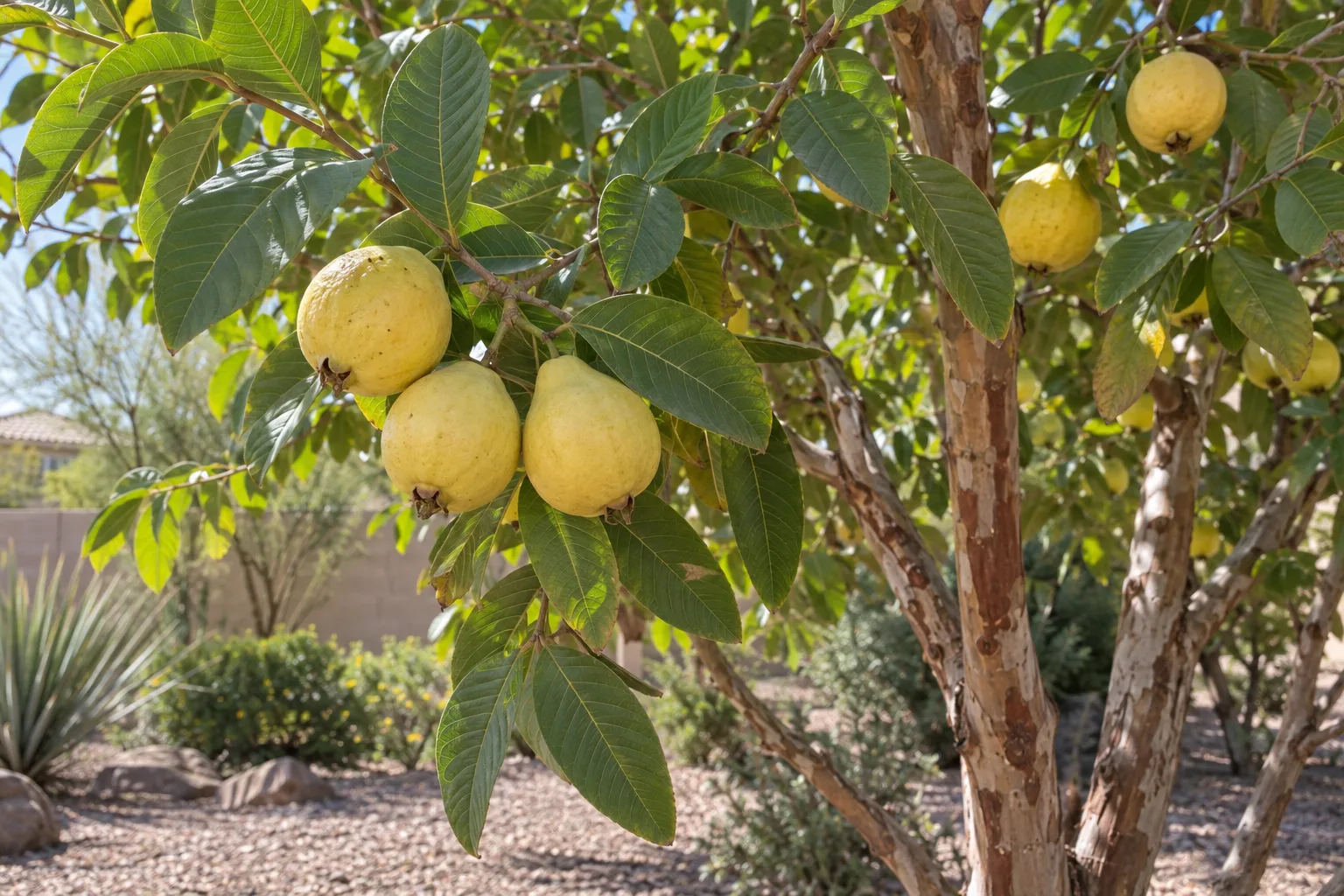
A tropical fruiting guava with aromatic, edible fruit, prominently veined leaves, and attractive peeling bark. Best grown in a protected Phoenix microclimate. Special Features Edible, fragrant fruit; attractive exfoliating bark; generally self-fertile, although cross-pollination can improve fruit set. Problems & Solutions Frost can damage foliage and young growth near or below freezing; use frost cloth […]
Chandler Pummelo
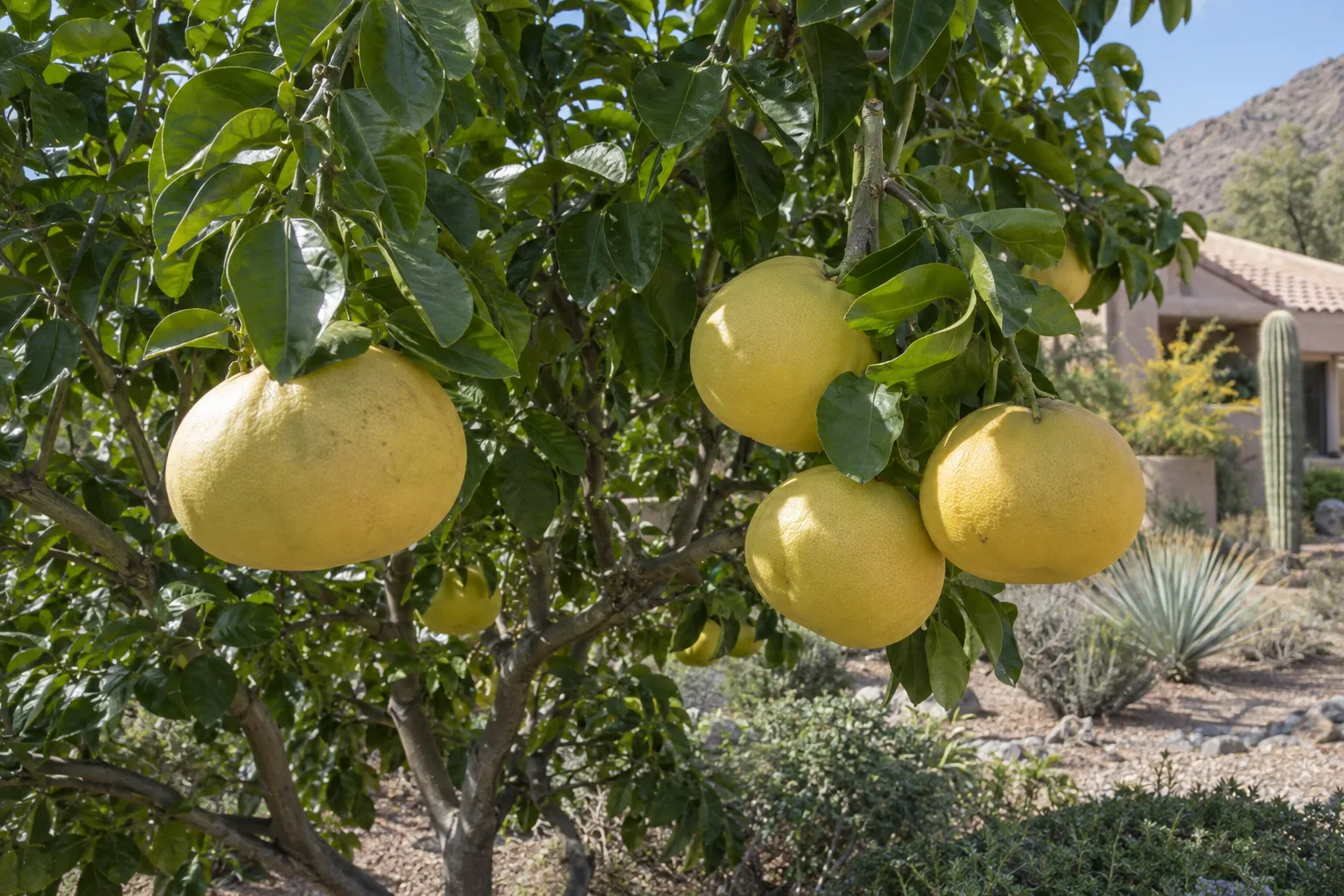
A large-fruited pummelo cultivar producing thick-rinded citrus with pink flesh and a sweet to mildly tart flavor. Well suited to Phoenix when provided regular irrigation, good drainage, and frost protection. Special Features Very large, pink-fleshed fruit; fragrant flowers; glossy foliage. Self-fruitful, though cross-pollination can increase seediness. Problems & Solutions Frost can damage foliage and fruit […]
Chinese Lantern
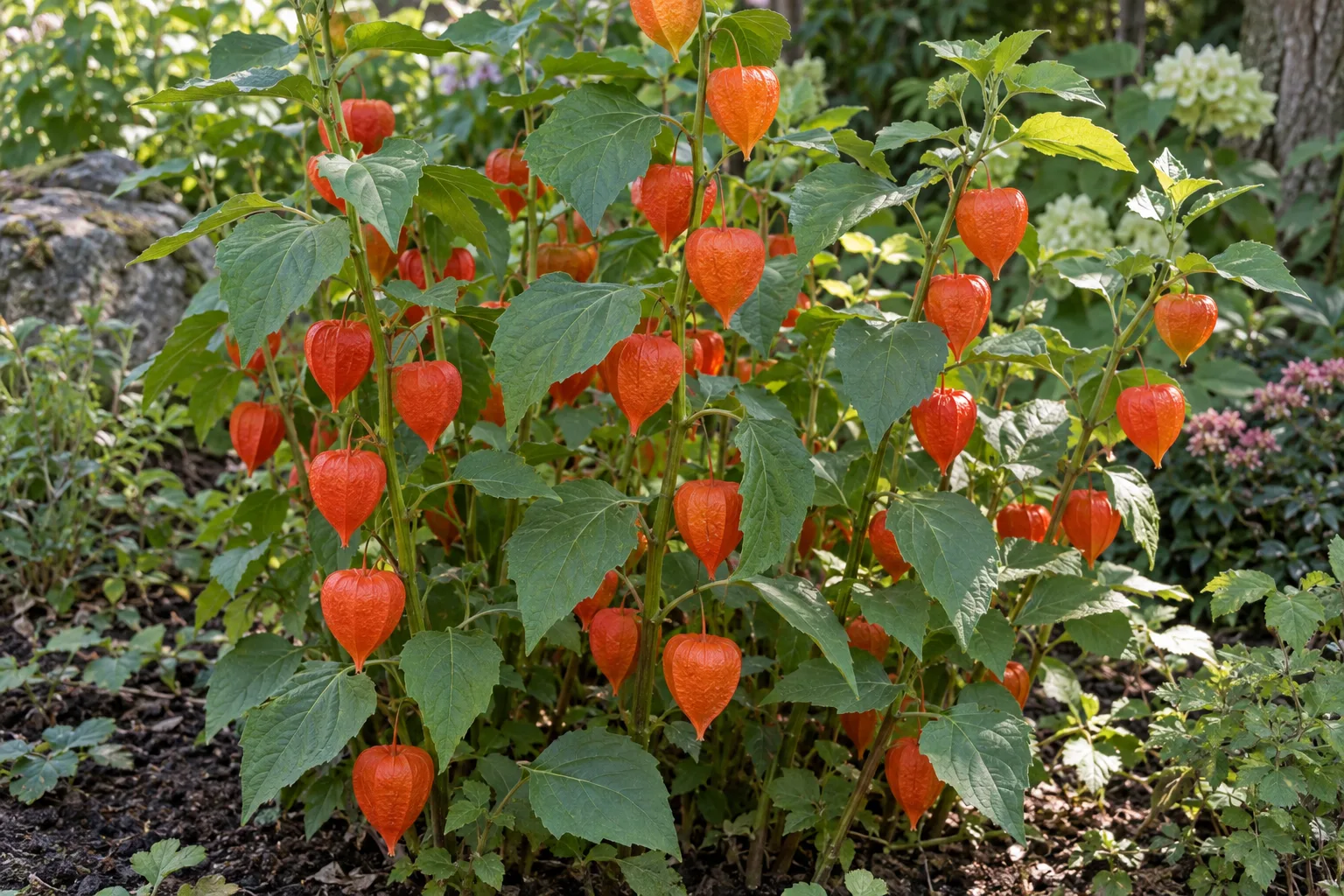
A spreading herbaceous perennial, also known as Alkekengi officinarum, grown for papery orange-red husks resembling miniature lanterns. Challenging in Phoenix because it prefers cooler summers. Special Features Showy orange-red husks persist after foliage declines and are excellent for dried arrangements. Problems & Solutions Phoenix heat can cause scorching and poor performance; provide afternoon shade, mulch, […]
Champagne Loquat
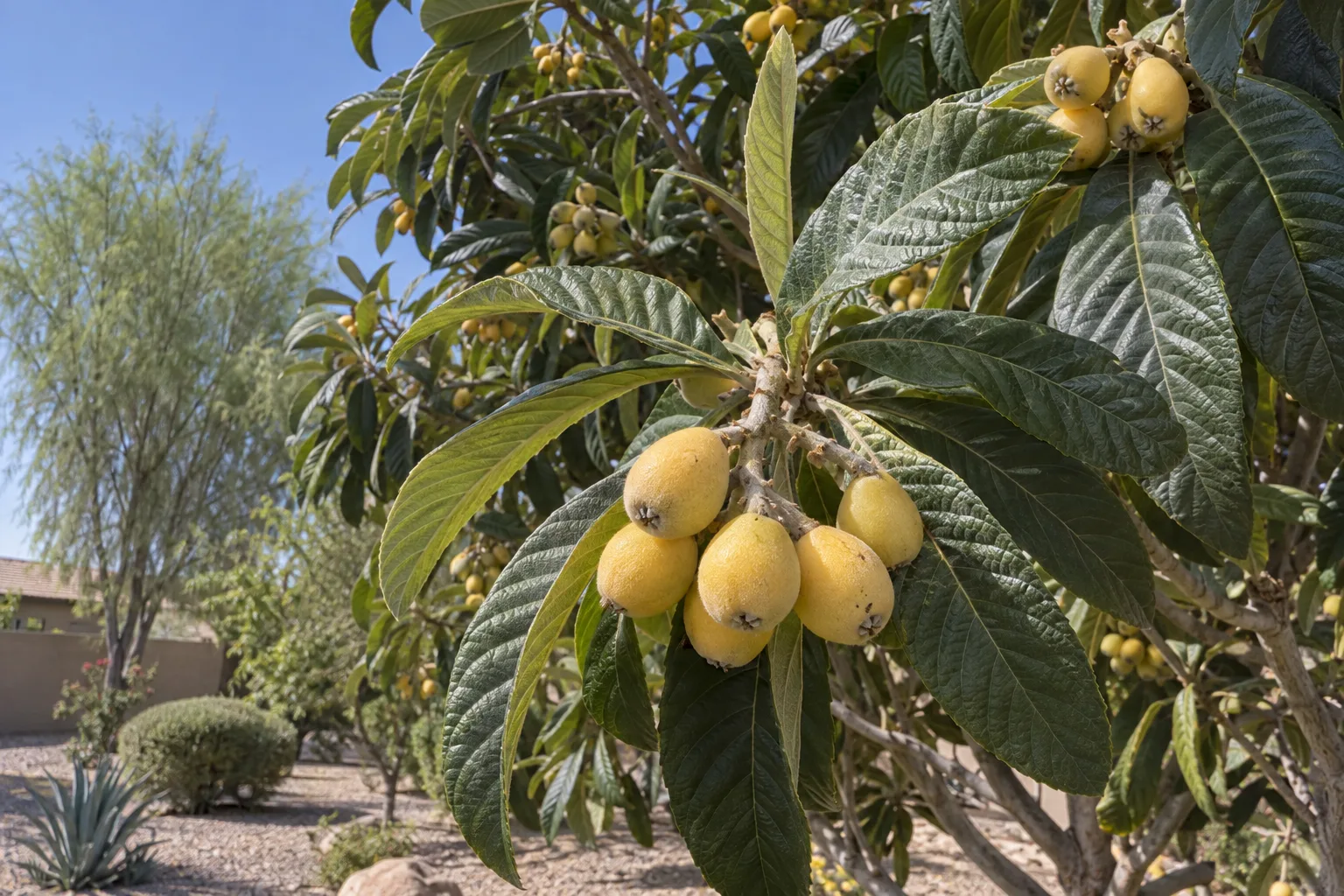
An evergreen fruit tree with large, textured leaves and yellow-skinned loquats with juicy, sweet, pale flesh. ‘Champagne’ benefits from protection against Phoenix’s intense summer heat. Special Features Edible, pale-fleshed fruit; fragrant flowers attract pollinators; bold foliage provides year-round screening. Generally self-fruitful, though another cultivar may improve fruit set. Problems & Solutions Summer sun and dry […]
Cocktail Citrus
Typically a multi-grafted citrus tree bearing several fruit varieties on one rootstock. Cocktail citrus is a nursery label, not a single species; Citrus sinensis identifies only its sweet-orange component, if present. Special Features Multiple fruit types on one tree, fragrant blossoms, edible fruit, and potentially extended harvest seasons. Most commonly grafted citrus varieties are self-fruitful. […]
Cordyline Baueri
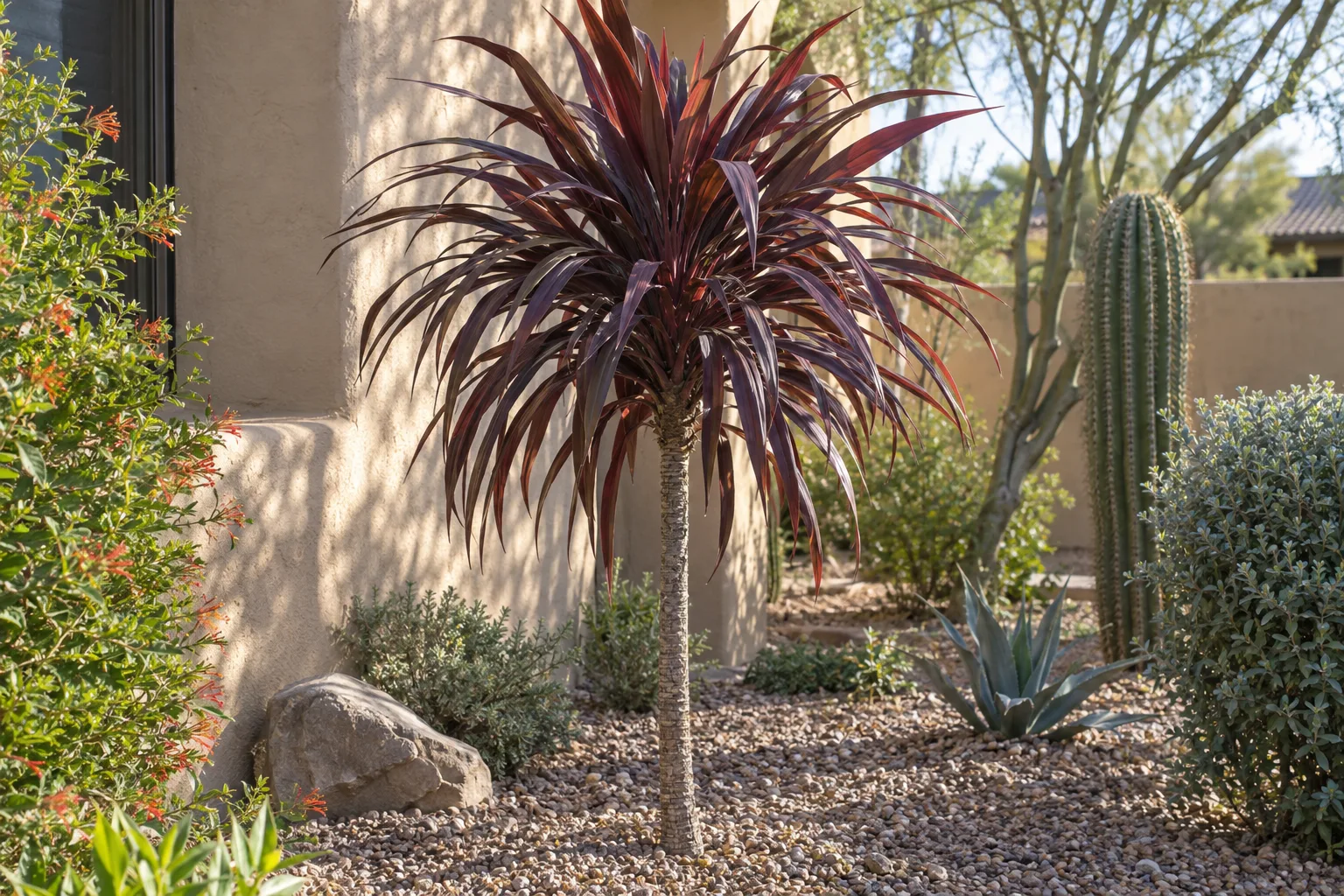
An evergreen, palm-like cordyline with arching, sword-shaped burgundy leaves and an upright woody trunk. Best grown in a sheltered microclimate in Phoenix. Special Features Rich burgundy foliage, strong vertical form, and a tropical appearance; useful as a container focal point. Not a true desert xeriscape plant. Problems & Solutions Phoenix heat and afternoon sun can […]
Colombian Pink Guava
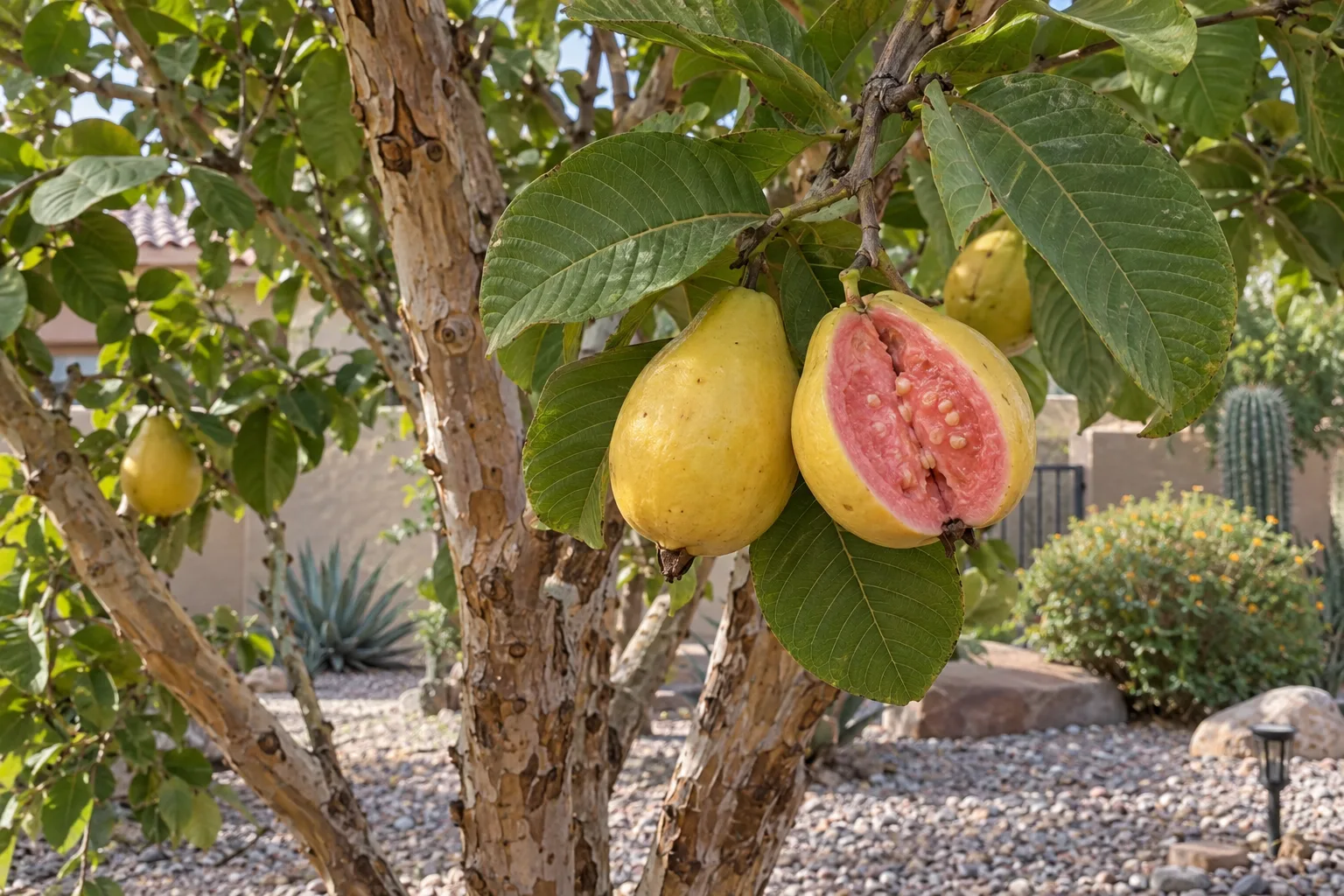
A tropical fruit tree grown for fragrant, yellow-skinned guavas with sweet pink flesh, attractive foliage, and peeling bark. Special Features Edible pink-fleshed fruit rich in vitamin C; aromatic fruit, ornamental peeling bark, and generally self-fruitful flowers. Problems & Solutions Frost can damage leaves and young growth, with serious injury possible in the upper 20s°F; choose […]