Arizona homeowners are switching to zero water landscaping to cut water bills, drop the mowing, and prepare for tighter water supplies. In Queen Creek, that means desert-adapted plants that live mostly on rainfall once established, usually after two to three years of careful watering.
Key takeaways
- Zero water landscaping relies on rainfall (roughly 8 to 9 inches a year in the East Valley) once plants have spent two to three years establishing roots.
- Plant from October through March so roots grow before summer highs above 110°F.
- Water new plants deeply every few days for the first two weeks, then weekly through the first summer, then taper off over the next one to two years.
- Test drainage first: fill a 12-inch hole with water, and if it is still standing after several hours, break through the caliche below it.
- Check your HOA rules and any city or water provider rebate rules before the grass comes out.
What does zero water landscaping mean in the East Valley?
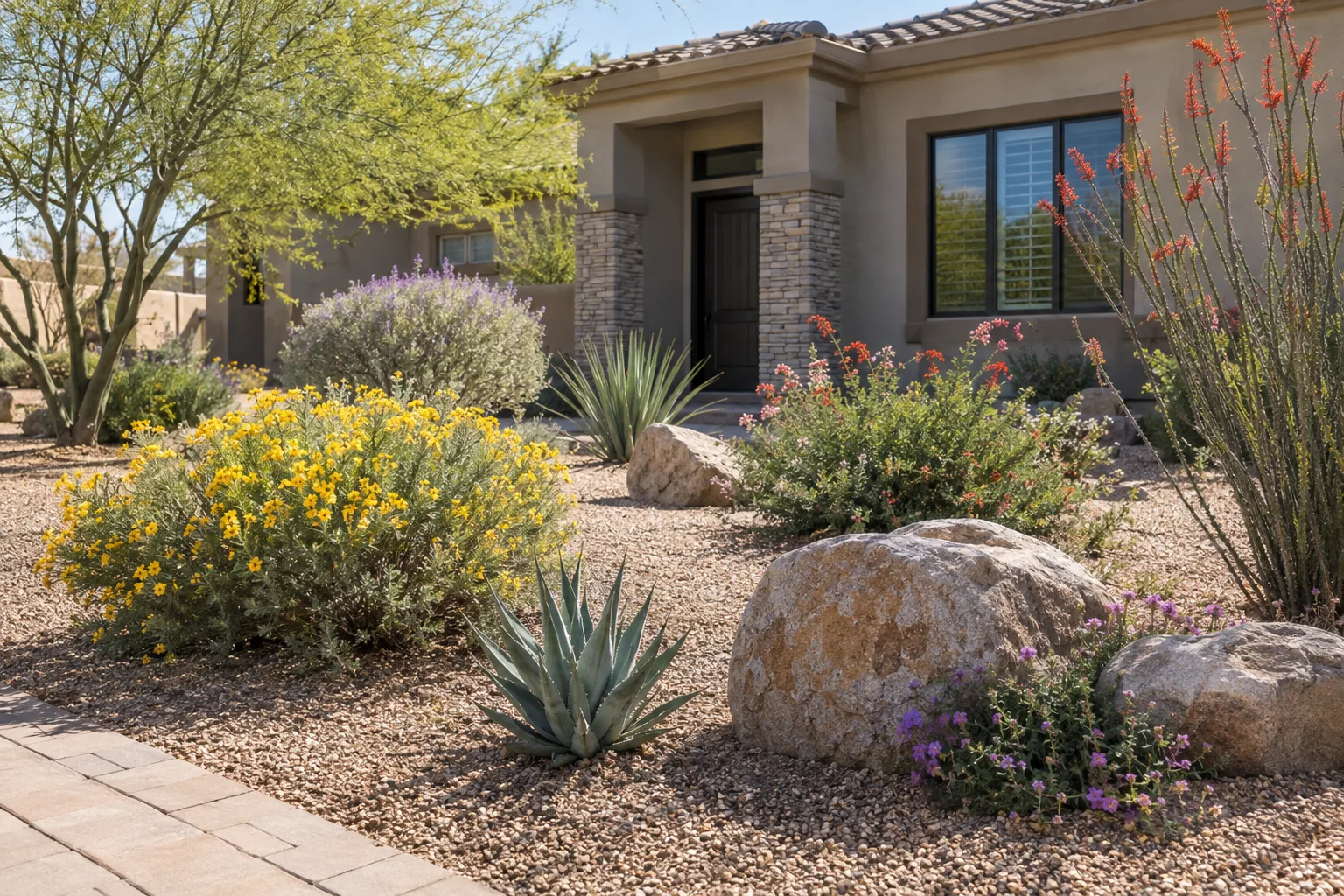
It means a yard planted with desert-adapted species that get most or all of their water from rainfall once their roots are established. Queen Creek averages roughly 8 to 9 inches of rain a year, and that is enough for plants that evolved in the Sonoran Desert. Every new plant still needs regular watering for its first two to three years, so the first stretch of the project looks like any other planting.
Standard xeriscape keeps a drip system running on a schedule. A zero water yard keeps the drip line as a backup for dry summers. Established plants need far less. Bare gravel with a few scattered plants soaks up heat and gives you no shade or bloom, so a good zero water yard is planted densely enough to cover the ground as the plants mature.
Why are Arizona homeowners giving up their lawns?
Most switch for three reasons: water supply, water cost and upkeep. Arizona draws on Colorado River water delivered by the Central Arizona Project canal, along with groundwater and local supplies, and shortage declarations on the river have reduced the state’s allotment in recent years.
Cost and upkeep are closer to home. A Bermuda lawn in the low desert needs frequent irrigation through summer, mowing nearly every week, fertilizer, and overseeding with winter rye each fall. Take the grass out and those chores and bills go with it.
Some cities and water providers have offered turf removal rebates, but programs change and many require approval before any grass comes out. Ask yours first.
Which plants live on little or no water in Queen Creek?
Native and desert-adapted trees, shrubs and wildflowers do. These are varieties we commonly carry in our plant department, though availability changes week to week and season to season, so call or stop by before you plan around one plant.

Desert Museum palo verde (Parkinsonia ‘Desert Museum’)
This thornless hybrid reaches 20 to 30 feet tall and wide and wants full sun. Once established it lives on rainfall with an occasional deep soak in a dry summer. It shades a west wall well. The drawback is litter, since it drops yellow petals in spring and branches can snap in monsoon wind. You can browse more shade choices on our desert trees page.
Velvet mesquite (Prosopis velutina)
Expect 20 to 30 feet in height and spread, full sun, and rainfall only after the first few years. It gives dense summer shade. The drawbacks are thorns, seed pods on the ground and a large footprint, so it suits a big yard better than a narrow side strip.
Brittlebush (Encelia farinosa)
Brittlebush forms a silvery mound 3 to 4 feet tall and wide in full sun. It covers itself in yellow flowers from late winter into spring and needs rainfall alone once established. The drawback is that it drops leaves and looks ragged in the driest part of summer.
Fairy duster (Calliandra eriophylla)
This airy shrub grows 3 to 5 feet tall and wide in full sun, with pink pom-pom flowers that draw hummingbirds. It lives on rainfall after establishment. Its drawback is a sparse, open shape and a bloom that peaks from late winter to spring.
Desert marigold (Baileya multiradiata)
A wildflower 1 to 2 feet tall and wide, it wants full sun and blooms for long stretches after rain. It reseeds on its own. The drawback is a short life and a tired look between flushes of flowers.
Prickly pear (Opuntia species)
Size runs from 2 to 6 feet depending on the species, and all of them want full sun and sharp drainage. Established plants live on rainfall. The drawback is glochids, the tiny barbed spines that are painful to remove, so keep them away from walkways and play areas.
When is the best time to convert a yard to zero water landscaping?
October through March is the best planting window, and fall is the strongest part of it. Cool air and warm soil let roots spread for two winters and one spring before the first full summer, and planting in the heat of June means watering new plants nearly every day when highs pass 110°F.
Summer is still useful for removal. Covering Bermuda grass with clear plastic for roughly 6 to 8 weeks in the hottest months (solarization) can weaken it before fall planting. Our gardening calendars lay out what to do month by month. Plan the removal in summer and the planting in fall.
How do I convert a lawn to a zero water yard?
Work in order: rules first, then removal, drainage, layout, planting and a taper-off watering plan. If you want help planning, our classes and events page lists what is coming up.
- Read your HOA rules and check any rebate requirements, since some programs want approval before removal.
- Note sun exposure, slopes and spots where rain pools.
- Remove the grass by solarizing or by cutting out the sod. Bermuda regrows from runners, so watch for it for a full season. If you use any herbicide, follow the label and your local rules.
- Test drainage with a 12-inch hole filled with water. Water still standing after several hours points to caliche.
- Lay out trees first, placing shade on the west and south sides of the house, then shrubs and groundcovers spaced for their mature size.
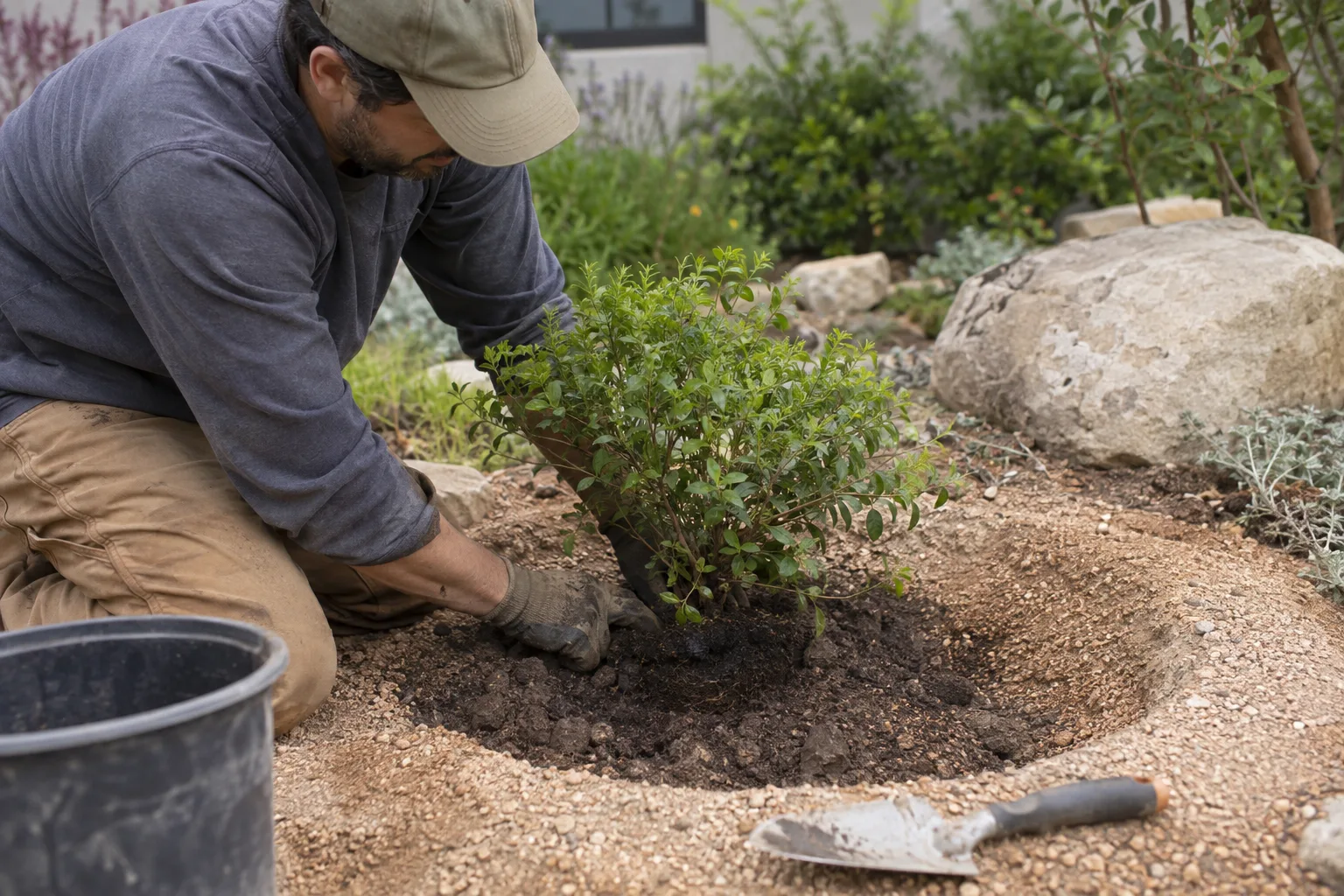
- Plant at or slightly above the surrounding grade, backfill with the native soil, and shape a shallow basin around each plant.
- Spread 2 to 3 inches of decomposed granite or gravel over the soil and keep it a few inches off trunks and stems.
- Water deeply every few days for two weeks, weekly through the first summer, then stretch the interval over the next one to two years.
- Cap the drip line instead of ripping it out, so you have a backup for a dry spell.
How do caliche and alkaline soil affect a zero water yard?
Caliche matters most because it blocks drainage, while alkaline soil suits desert plants well. Caliche is a hardened layer of calcium carbonate that can sit anywhere from a few inches to several feet below the surface in the East Valley.
Local soil usually tests alkaline, with a pH around 7.5 to 8.5, and desert natives are adapted to it. They also prefer lean ground, so heavy amendments do more harm than good. A planting hole that sits on caliche can hold water around the roots, and wet roots are what kill many desert plants. Break through the layer in each planting spot with a digging bar or a rented auger. You only need a channel for water to drain, not a removed layer.
Can the monsoon water my new plants?
It can help a great deal. The monsoon, roughly July through September, brings a large share of the year’s rain in short, heavy storms, and in most yards that water runs off to the street.
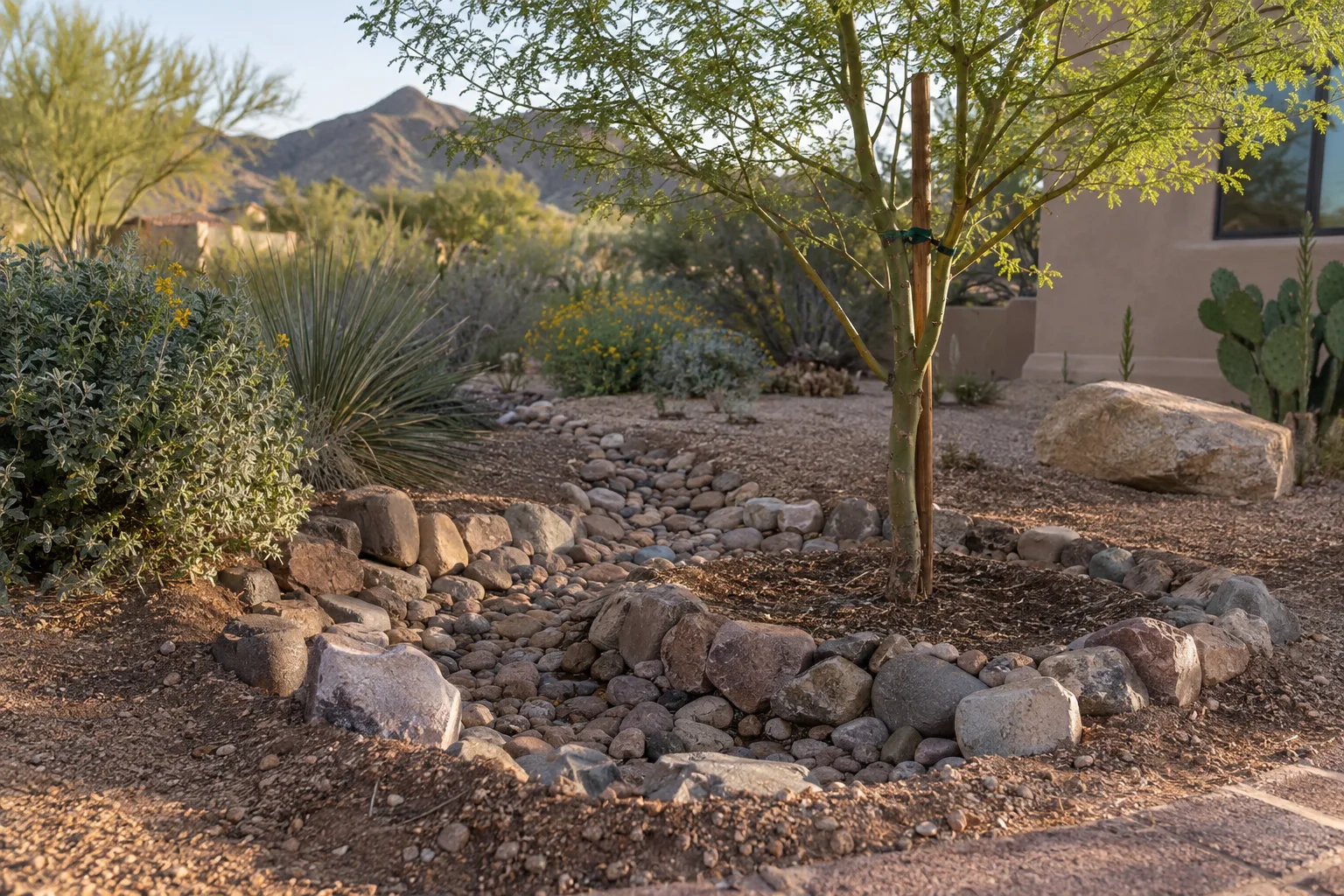
Shallow basins about 3 to 4 inches deep around each plant slow that runoff and hold it over the roots. Gentle swales can carry water from a roof downspout or paved area toward a tree. Check that each basin drains within a day, since standing water against a trunk causes rot. Plants set in fall are usually ready to use monsoon rain by their first or second summer.
What mistakes derail a zero water yard?
The most common are planting in summer, overwatering, skipping the drainage test and leaving too much bare ground.
- Planting in June or July means daily watering through highs above 110°F, and many new plants fail anyway.
- Keeping a summer irrigation schedule after plants are established leads to root rot in desert species.
- Skipping the drainage test means a plant can sit in a flooded hole for months before you notice.
- Spacing plants too far apart leaves bare ground that absorbs and radiates heat, and weeds fill the gaps.
- Choosing plants from wetter climates, even if they look desert-like, leads to losses in a Queen Creek summer.
Frequently asked questions
Will a zero water yard look brown in summer?
Not if you mix plants that behave differently in heat. Palo verde trees keep green bark all year, while brittlebush drops leaves and looks gray in dry stretches. Monsoon rain often brings new growth and bloom by late summer. Plan for some seasonal change and include evergreen shrubs for steady structure.
Can my HOA stop me from removing grass?
It might, since rules vary by community. Arizona statutes address some aspects of HOA landscaping rules, but whether a given rule applies to you is a question for your association or an attorney. Read your CC&Rs and submit a written plan before you start.
Are there rebates for removing a lawn?
Some Arizona cities and water providers have offered turf removal rebates. Amounts, deadlines and eligibility change, and many programs require approval before you remove anything. Contact the Town of Queen Creek or your water provider, get the current rules in writing, and photograph the lawn before you start.
How do I keep weeds down in a zero water yard?
A 2 to 3 inch layer of decomposed granite or gravel stops most seedlings. Pull weeds by hand before they set seed, and watch for Bermuda runners for a season after removing the lawn. Weeds also fade as plants fill in and the ground between them stays dry.
Can I keep a small lawn and still go zero water?
Yes. Many yards keep a small patch of turf near a patio for pets or kids and plant the rest with desert-adapted species. Put the grass on its own irrigation valve so you can water it without wetting the plants around it.
Is zero water landscaping right for your yard?
It suits you if you want lower water bills, no weekly mowing, and you can wait two to three years for plants to fill in. It suits you less if you want a lawn for daily play, a fully grown look in the first season, or a lush green look. In that case, keep a small lawn and convert the rest. Visit us in Queen Creek and we will help you pick plants for your yard.