
Seven habits help young trees get established in Arizona’s dry soil: checking drainage and caliche, matching the tree to the spot, planting in fall or early spring, watering deeply, mulching, backfilling with native soil, and shading the trunk. Most trees need about two years of this care.
Key takeaways
- Plant from October through November or from late February through April, and avoid June through August.
- Dig the hole 2 to 3 times as wide as the rootball and no deeper than the rootball is tall, with the root flare at or slightly above grade.
- Water deeply and less often, wetting the soil 18 to 24 inches down, and confirm with a probe.
- Spread 3 to 4 inches of mulch and keep it 3 to 6 inches away from the trunk.
- Shade or paint the south and west sides of the trunk for the first two summers.
How do I check drainage and caliche before planting?
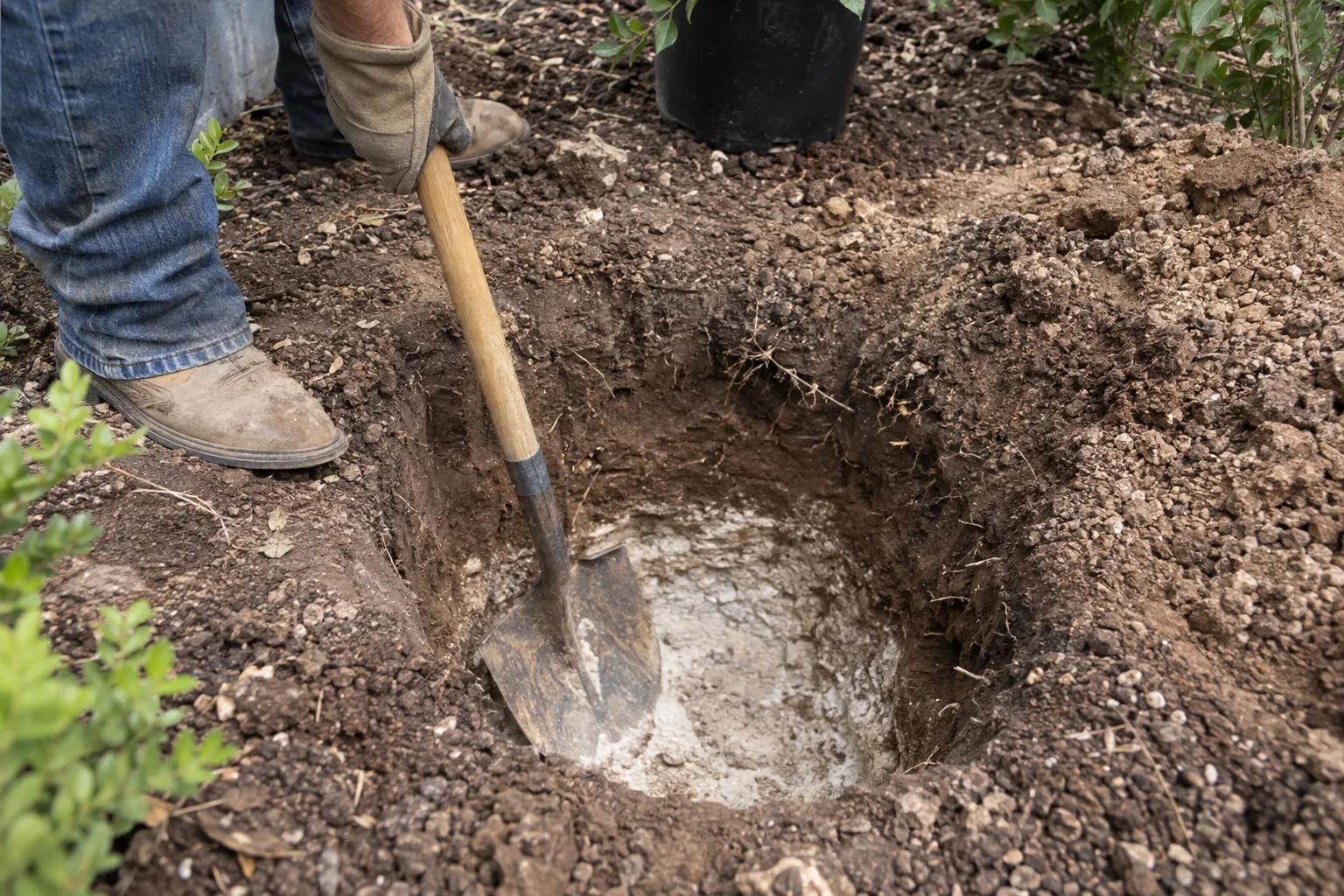
Dig the hole before the tree comes anywhere near it, then test what you find. Queen Creek soil is alkaline, often above pH 7.5, and many East Valley yards have caliche, a cemented layer of calcium carbonate that can start a foot or two below the surface and stop roots and water cold.
To test drainage, fill the hole with water, let it drain, then fill it again. If water is still standing after 12 to 24 hours, the spot drains poorly. Hard, whitish rock at the bottom is caliche. Break through it with a digging bar or auger so water can move down, or choose a spot where the soil is deeper.
Alkaline soil also ties up iron. Young trees here sometimes show yellow leaves with green veins, a sign of iron chlorosis, and it can appear even when the watering is right.
Which tree fits my spot in the East Valley?
Pick by mature size and by how much heat the spot gets. A tree that reaches 40 feet has no place eight feet from a foundation or under a power line, however small it looks in its nursery pot. South and west exposures take the hardest afternoon sun, and block walls, concrete and gravel hold heat well into the evening.
A common guideline is to plant at least half the mature canopy width away from a structure, and farther for species with aggressive surface roots. Our tree department sorts trees by type, so you can compare mature sizes before you commit. Measure first.
Desert-adapted choices such as desert willow (Chilopsis linearis), blue palo verde (Parkinsonia florida) and velvet mesquite (Prosopis velutina) are varieties we commonly carry, though availability changes week to week and season to season. You can browse desert trees for more. If you want shade in summer and sun through the windows in winter, look at deciduous trees.
When is the best time to plant a young tree in Arizona?
Plant in October through November or from late February through April. Fall gives roots four to five months of mild weather before the first summer, and the soil is still warm from the season behind it, which encourages root growth while the air cools.
Spring planting gives roots a few months of growth before afternoon highs pass 100°F. Summer is the hard season. A tree planted in June, July or August, when highs top 110°F and the monsoon runs from roughly July through September, spends its energy surviving heat instead of building roots. Our gardening calendars help you plan the month.
How should I water a young tree in dry soil?
Water deeply and let the surface dry between sessions. A long soak sends roots down into cooler soil, while a splash every day keeps them near the surface, where summer heat dries them out. Aim to wet the soil 18 to 24 inches deep, and check with a long screwdriver or soil probe instead of guessing.
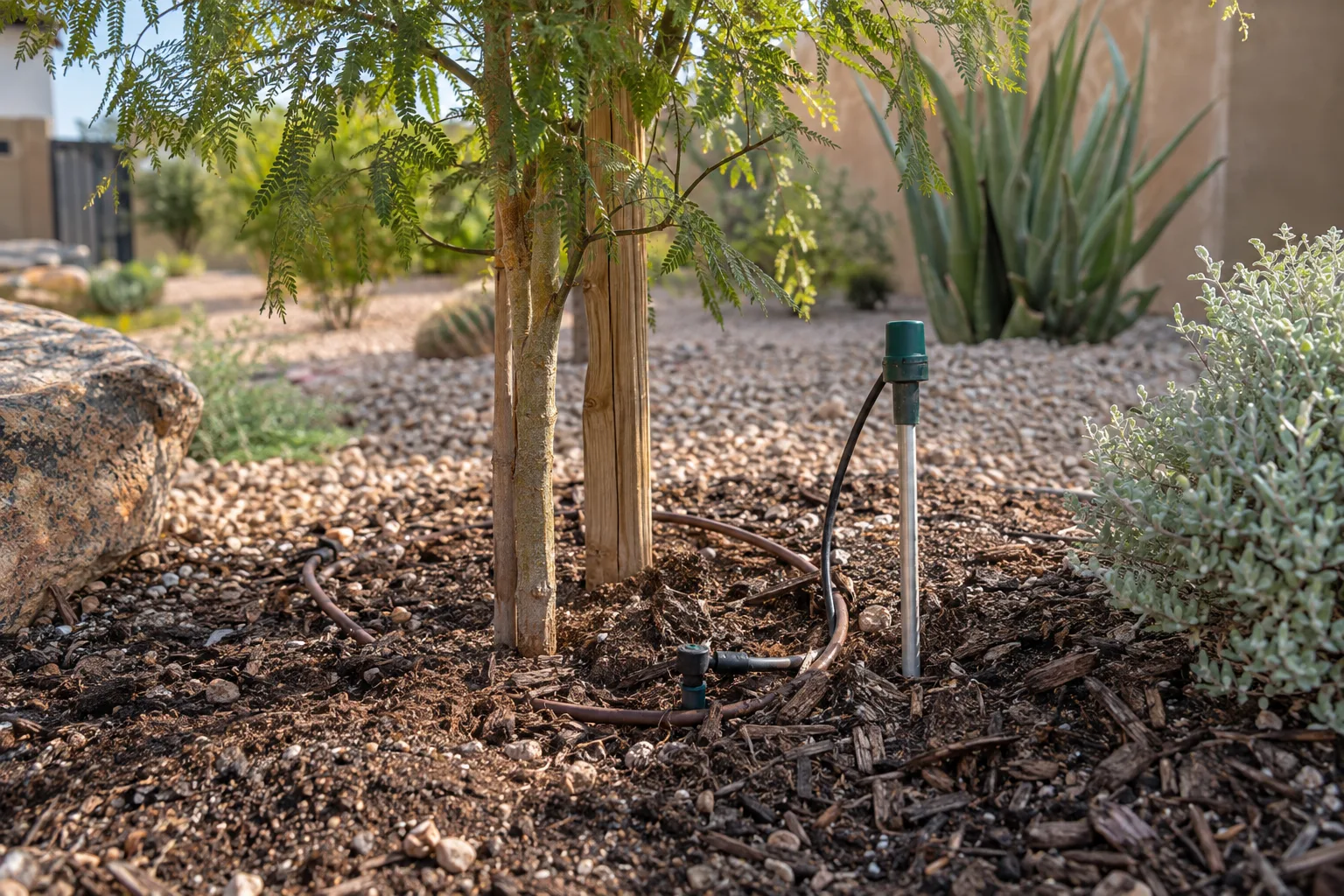
In the first weeks, the roots are still in the rootball, and it dries faster than the native soil around it. Place drip emitters near the rootball at first, four around the tree if you can, then move them outward as the canopy grows. Keep them a few inches off the trunk.
The table gives starting points for a tree in its first two to three years. Soil texture, species, rain and exposure all shift them, so probe before you water. A common rule of thumb is about one year of establishment for each inch of trunk diameter, and most trees need two to three years of extra attention.
| Season | Newly planted tree | Established tree (2 to 3 years or more) |
|---|---|---|
| Winter (December to February) | Every 10 to 14 days | Every 3 to 4 weeks |
| Spring (March to May) | Every 5 to 7 days | Every 10 to 14 days |
| Summer (June to September) | Every 2 to 4 days | Every 7 to 10 days |
| Fall (October to November) | Every 7 to 10 days | Every 2 to 3 weeks |
Skip a watering after a good monsoon storm, and check the soil before the next one.
Why does mulch matter for young trees here?
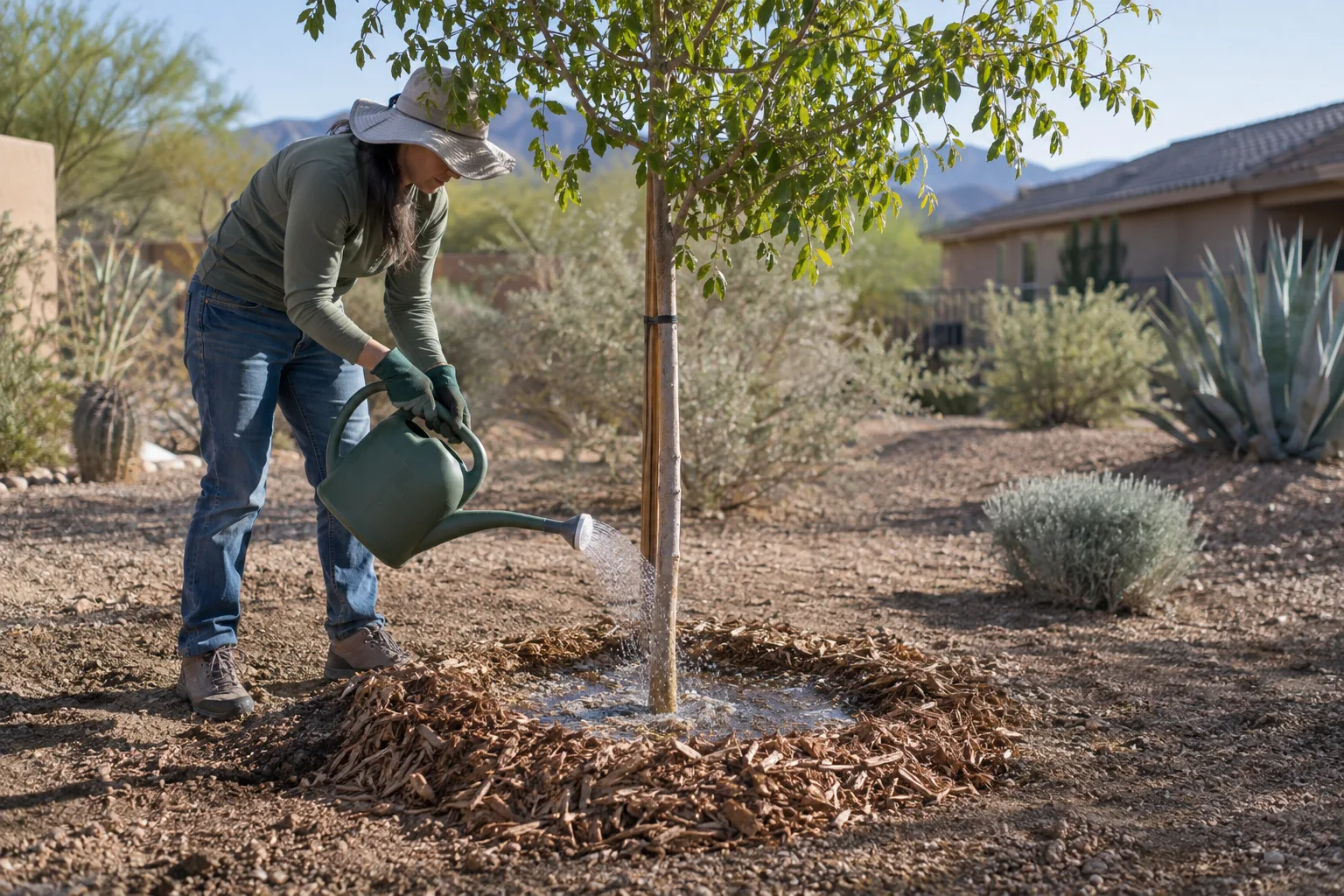
A 3 to 4 inch layer of wood chips or shredded bark cools the soil, slows evaporation and slowly adds organic matter to lean desert soil. Bare soil in full summer sun gets far hotter than the air, and mulch shields the shallow feeder roots from that heat. Mulch cools the soil.
Pull it back 3 to 6 inches from the trunk. Mulch piled against bark stays damp and invites rot, so shape it like a donut with an open center. Widen the ring as the tree grows. Organic mulch also stays cooler than decomposed granite, which radiates heat around young trunks.
How do I dig the hole and backfill it?
Dig the hole 2 to 3 times as wide as the rootball and no deeper than the rootball is tall, then backfill with the native soil you removed. A pocket of rich, loose soil can keep roots circling inside it instead of reaching into the surrounding ground, which leaves the tree poorly anchored and slow to handle drought.
- Dig the hole, then break through any caliche at the bottom so water can drain.
- Slide the tree out of its container and loosen or cut any circling roots.
- Set the tree so the root flare, where the trunk widens into the roots, sits at or slightly above the surrounding soil.
- Backfill with native soil, breaking up clods and watering as you go to settle air pockets.
- Build a 4 to 6 inch earthen basin around the rootball area to hold water.
- Soak the basin slowly and thoroughly.
- Add 3 to 4 inches of mulch, keeping it clear of the trunk.
- Set up drip emitters near the rootball and start your watering schedule.
Plant at the right depth. A buried root flare is a common planting error, and so is fertilizer in the hole, which can burn new roots. Stakes are optional and covered in the questions below.
How do I protect a young trunk from sunburn?
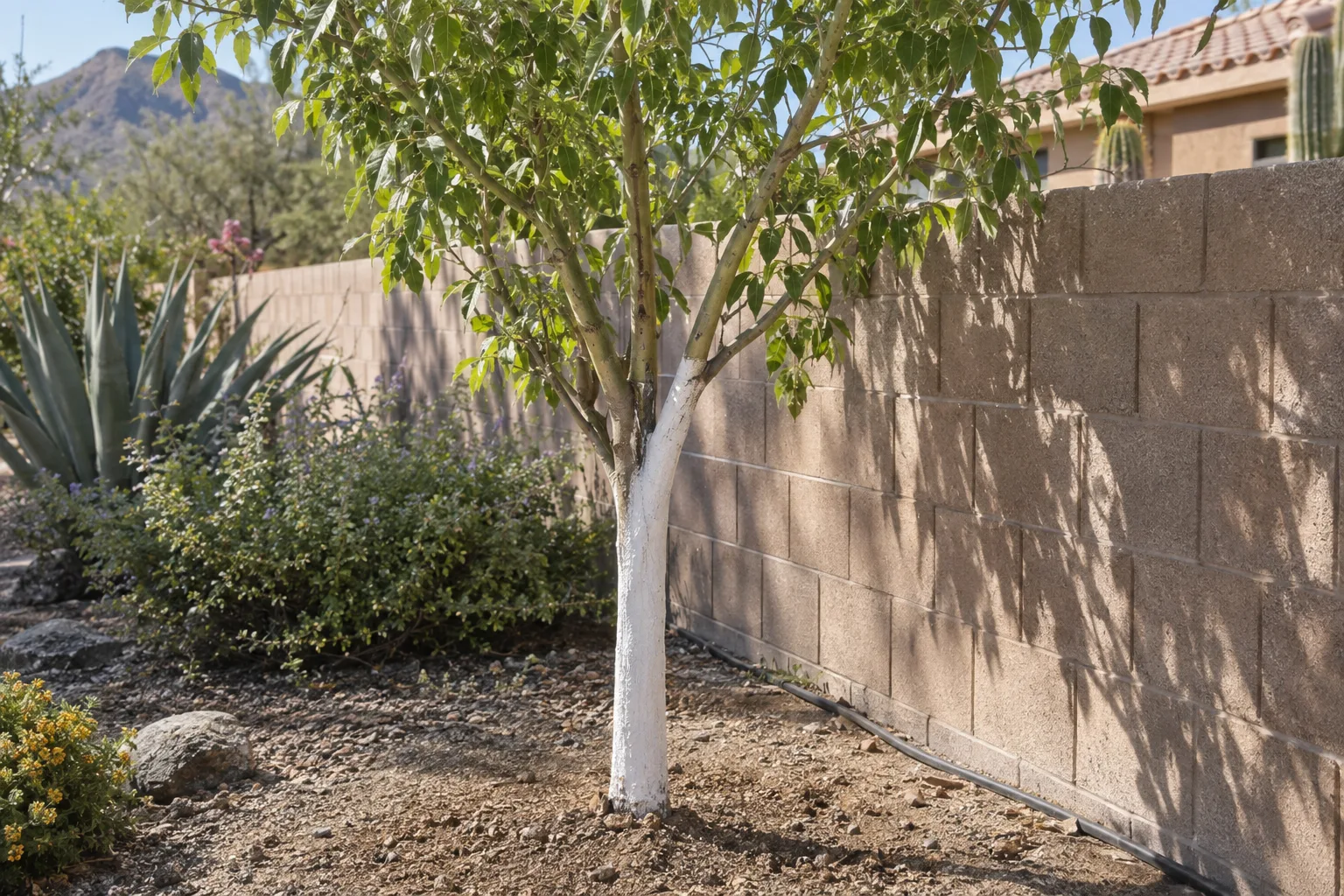
Shade the south and west sides of the trunk for the first two summers. Thin young bark can sunscald, which shows up as cracked, discolored or sunken patches facing the afternoon sun, and the damage can open the way for pests and disease.
White water-based latex paint diluted about half and half with water reflects sunlight and is a common remedy. Commercial tree wrap and light-colored trunk guards do the same job. For a tree in a hot southern or western exposure, a 30 to 40 percent shade cloth propped on those sides can ease the first summer. Paint is cheap.
Frequently asked questions
Should I fertilize a newly planted tree?
No, wait until the tree has settled in. Fertilizer in the planting hole can burn new roots, and young trees spend their early energy on roots. Once the tree is pushing steady new growth, a light feeding labeled for trees is reasonable, and high nitrogen rates tend to produce soft growth that stresses in heat. Check the product label for rates.
Why are my young tree’s leaves turning yellow?
Yellow leaves with green veins usually point to iron chlorosis, which is common in alkaline soil. Overall yellowing with drooping suggests too much water, and yellow, crispy edges suggest too little. Push a probe 8 to 12 inches into the soil to check moisture before changing anything. If the pattern looks like chlorosis, bring a leaf photo to us or reach out through our contact page.
Does a young tree need staking?
Stake only when the rootball cannot hold the tree upright. Use two stakes with wide, flexible ties set low on the trunk so the top can still sway, because movement builds a stronger trunk. Remove the stakes after about a year. Ties left on too long can girdle the trunk as it thickens.
What if I have to plant in summer?
Choose a desert-adapted species and plant early in the morning. Expect to water more often than the table above shows, probably every day or two at first in June through August, and shade the south and west sides with 30 to 40 percent shade cloth. Never let the rootball dry out completely. Fall planting is the easier path if you can wait.
Should I prune a newly planted tree?
Remove only broken or dead branches at planting. Leaving the lower branches on for the first year or so lets the leaves feed the tree and shade the trunk, and you can raise the canopy gradually later. Heavy pruning at planting removes leaf area the tree needs to build roots. Structural pruning is better done after the first growing season.
Is the extra work worth it for one tree?
Yes, if you can water on a schedule for two to three years. The steps cost little, and a tree that establishes well can shade a Queen Creek yard for decades. Skip the project if you need shade within a season, because young trees add size slowly while roots come first, or if nobody will be home to water through the first two summers. A shade sail or a potted plant fits those situations better. If you are ready to choose a tree, visit us at the nursery in Queen Creek.