
Keep young plants steady in Arizona heat by planting after 5 PM, watering slowly and deeply, laying 2 to 3 inches of organic mulch, and shading the west side for the first weeks. October through April is the easier planting window.
Key takeaways
- The easiest planting window in the low desert runs from October through April, and May through September needs extra protection.
- Plant after 5 PM and water slowly until the soil is moist about 12 inches down.
- Spread 2 to 3 inches of organic mulch over the root zone, and keep it 2 to 3 inches away from the stem.
- Shade the west and southwest side with 30 to 50 percent shade cloth for the first several weeks.
- Check soil moisture before every watering, because afternoon wilting alone does not mean a plant is thirsty.

When is it safe to plant in Arizona summer?
Plant in October through early April if you can, because roots grow well in warm soil while the air stays mild. Summer planting works, but it asks more of you.
If a plant has to go in during May through September, choose the evening, after about 5 PM. The plant then gets a full night of cooler air before the next afternoon pushes past 110°F. Check the forecast and avoid the first day of a heat streak. Our gardening calendars show which months suit which crops and plants, and the plants section lists the varieties we commonly carry, though availability changes week to week and season to season.
Plants adapted to the low desert settle in faster in summer than plants from milder regions. Tender, thin-leaved plants from cooler climates are better held until fall.
What do you need before you plant?
You need a few inexpensive supplies, and having them ready before you dig matters more than any single product. Gather them first so the plant is never sitting in the sun waiting.
- A shovel, and a tile bar or digging bar if your soil has caliche
- Compost for mixing into the native soil you remove
- Organic mulch such as shredded bark or wood chips
- A hose with a slow trickle setting, or a soaker
- A wooden dowel or long screwdriver to check soil moisture
- 30 to 50 percent shade cloth with stakes or a light frame
Skip fertilizer for now. A stressed transplant needs roots before it needs new leaves.
How do you plant in summer heat step by step?
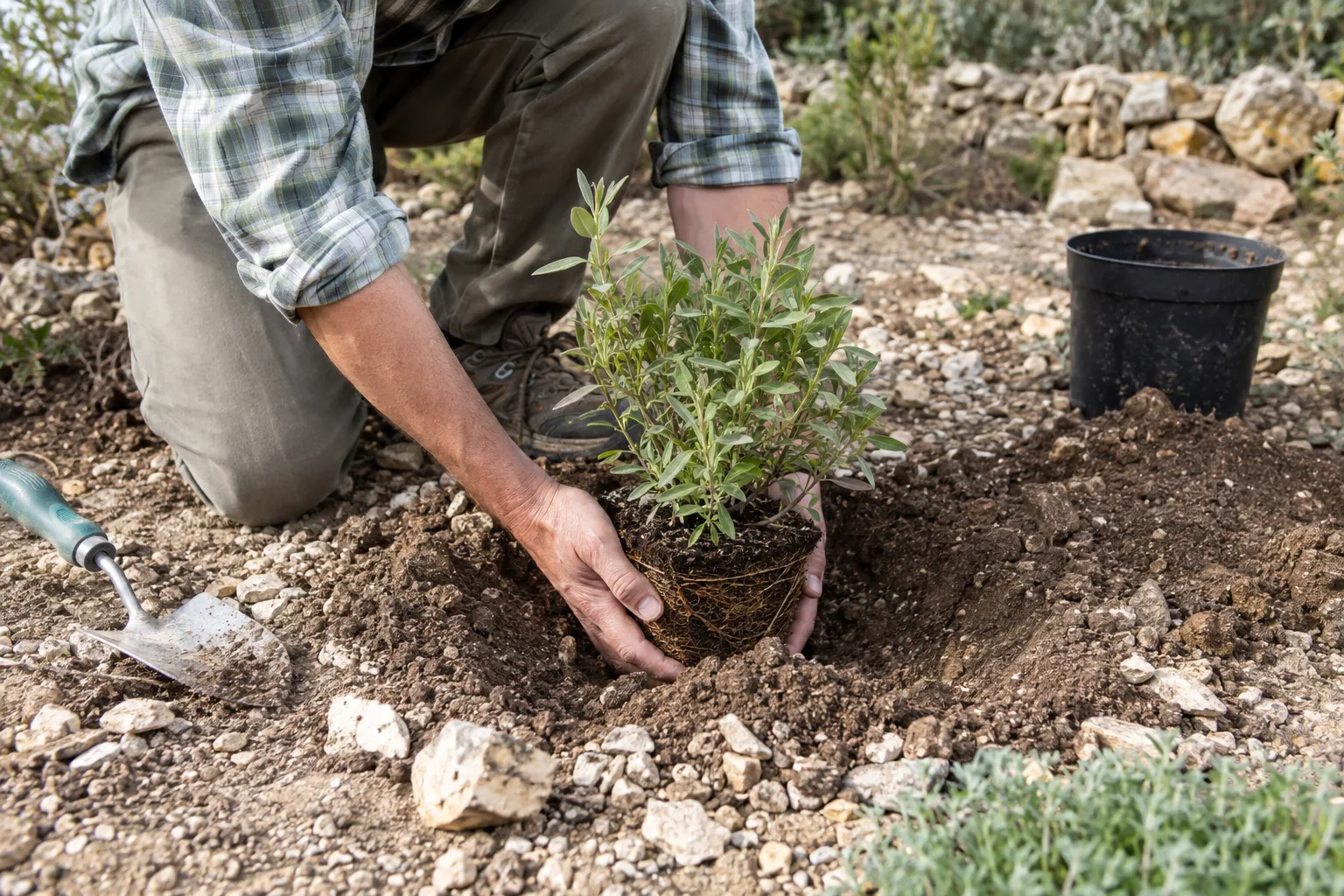
Dig a wide, shallow hole, set the plant level with the surrounding soil, water it in slowly, then mulch and shade it the same evening. The order matters, because the plant loses moisture fast once the container is off.
- Water the plant in its container an hour before planting so the root ball is moist.
- Dig the hole 2 to 3 times as wide as the root ball and no deeper than the root ball itself.
- If you hit caliche, break through it with a digging bar so water can drain, or move the planting spot.
- Mix the soil you removed with about 20 to 25 percent compost. Straight potting mix creates a pocket that roots are slow to leave.
- Slide the plant out of the container and tease apart any circling roots.
- Set the top of the root ball level with, or slightly above, the surrounding soil.
- Backfill halfway, water, finish filling, and water again to settle out air pockets.
- Build a low ring of soil about 18 inches from the stem to hold water over the roots.
- Spread mulch inside and just beyond that ring, then set up shade cloth on the west and southwest side.
Planting too deep is the error we would guard against most. A buried crown stays wet and can rot.
How often should you water young plants in summer?
Water young plants daily for the first two weeks in summer, then taper off while keeping each session slow and deep. The schedule below is a starting point, and the soil check overrides it.
| Stage | Summer planting | Cool-season planting |
|---|---|---|
| Weeks 1 to 2 | Daily | Every other day |
| Weeks 3 to 8 | Every 2 to 3 days | Every 3 to 5 days |
| After week 8 | 1 to 2 deep soakings a week | About once a week, less in winter |
Aim for water that reaches roughly 12 inches deep. A slow trickle at the base for 10 to 20 minutes does more than a quick blast that runs off across baked soil.
Push a dowel 6 inches into the soil before you water. If it comes out with damp soil clinging to it, wait a day. If it comes out clean and dry, water.

Afternoon wilt is common on new plants in 110°F weather even when the soil is wet. Look at the plant in the morning instead. Leaves that are still limp then, with dry soil, mean it needs water.
How much mulch and shade do young plants need?
Use 2 to 3 inches of organic mulch over the root zone and temporary shade on the west side for the first several weeks. Mulch cools the soil surface and slows evaporation, and it breaks down slowly into the soil.
Pull the mulch 2 to 3 inches back from the stem or trunk. Mulch piled against the base holds moisture there and can cause the crown to rot. Extend it out to 18 to 24 inches around small plants, or to the canopy edge on larger ones. Refresh it each spring as it decomposes.
Bare soil and rock can hold and radiate heat in summer, so organic mulch is a good choice directly around a new transplant. Gravel can go back on once the plant is established.
For shade, drape 30 to 50 percent shade cloth over a simple frame on the west and southwest side. Leave the top and east side open so the plant still gets light to make energy for root growth. Take the cloth down gradually once new leaves appear and the plant handles afternoon sun without scorching.
What changes during monsoon season?
Monsoon humidity eases water stress on leaves, but the rain is too uneven to replace your watering. The season runs roughly July through September.
A storm can drop an inch or more in under an hour, and much of it runs off hard, dry soil without soaking in. Then two weeks may pass with nothing. Keep your regular schedule, use the dowel check, and count any rain as a bonus. Wet, warm weather can also push soil toward staying damp for days in heavy clay, so check before you water instead of watering on a calendar.
Storm winds can rock young trees loose. Check them after every big blow.
What mistakes kill young plants in summer?
Most losses come from a short list of avoidable errors. Each one has a simple fix.
- Planting too deep. Keep the crown level with or slightly above the soil.
- Relying on a drip system set for established plants. New roots sit close to the root ball, so hand water or add temporary emitters until the plant grows into the system.
- Fertilizing too early. Wait about 60 days, until you see strong new growth.
- Watering on a fixed timer only. Soil type, plant size and weather change the need from week to week.
- Over-amending the hole. Too much compost makes a pocket that roots avoid. Stay near 20 to 25 percent.
- Planting tender, cool-climate plants in July. Hold those until October.
Alkaline soil often shows up as yellow new leaves with green veins. That points to iron that the plant cannot take up, and it is a soil chemistry issue rather than a watering one.
Frequently asked questions
How long does it take a young plant to establish?
Most shrubs and perennials need about 90 days of attentive care, and trees often need a year or more. A common rule of thumb is one year per inch of trunk diameter. You will know a plant has settled in when it puts out steady new growth and recovers from wilt by the next morning.
Why are new leaves turning yellow after planting?
Yellowing usually comes from overwatering, iron that alkaline soil locks up, or ordinary transplant shock. Check drainage first. If soil stays soggy for more than a day after watering, cut back. If drainage is fine and new leaves show green veins, a chelated iron product made for high pH soil may help.
Should I fertilize a new plant to help it through the heat?
Wait about 60 days before fertilizing. Nitrogen pushes leafy growth that a young root system cannot supply with water in 110°F weather. After that, apply a balanced slow-release fertilizer at half the label rate if the plant is growing well. Chelated iron is the exception for yellowing plants.
Do new trees need to be staked?
Stake only if the tree cannot stand on its own or sits in a windy spot. Use two or three stakes with soft, wide ties that leave some movement. Remove them after the first growing season so the trunk builds strength. Browse desert trees to see the types suited to our climate.
Can I plant a tree in July?
You can, but it needs daily attention. Choose a desert-adapted species, plant in the evening, mulch immediately, and shade the west side. Water deeply and slowly, checking soil first. If the tree is not urgent, waiting until October gives it far easier conditions and a stronger start.
Is summer planting worth the effort in Queen Creek?
Summer planting pays off when the plant is desert-adapted and you can check on it daily for the first two weeks. It is a poor fit if you travel in June or July, or if the plant comes from a cooler climate. In those cases, wait for October and enjoy an easier start. Either way, stop by our nursery in Queen Creek, and see our classes and events for hands-on help.