Xeriscaping is a smart choice for Arizona gardens because a well-designed low-water yard can use about half the water of a turf lawn or less and still hold color, shade and structure. It works best when you plan for our alkaline soil and set up irrigation before planting.
Key takeaways
- A well-designed xeriscape commonly uses roughly 50 to 75 percent less water than a conventional turf landscape, depending on how much grass you remove.
- Plant from October through November or February through March so roots settle in before summer highs pass 110°F.
- Dig test holes 18 to 24 inches deep before planting, because caliche can sit anywhere from 6 inches to several feet down.
- Put trees, shrubs and succulents on separate drip zones, and water deeply but less often.
- Spread 2 to 4 inches of mulch and keep it a few inches away from trunks and stems.
What is xeriscaping, and does it mean a yard full of gravel?
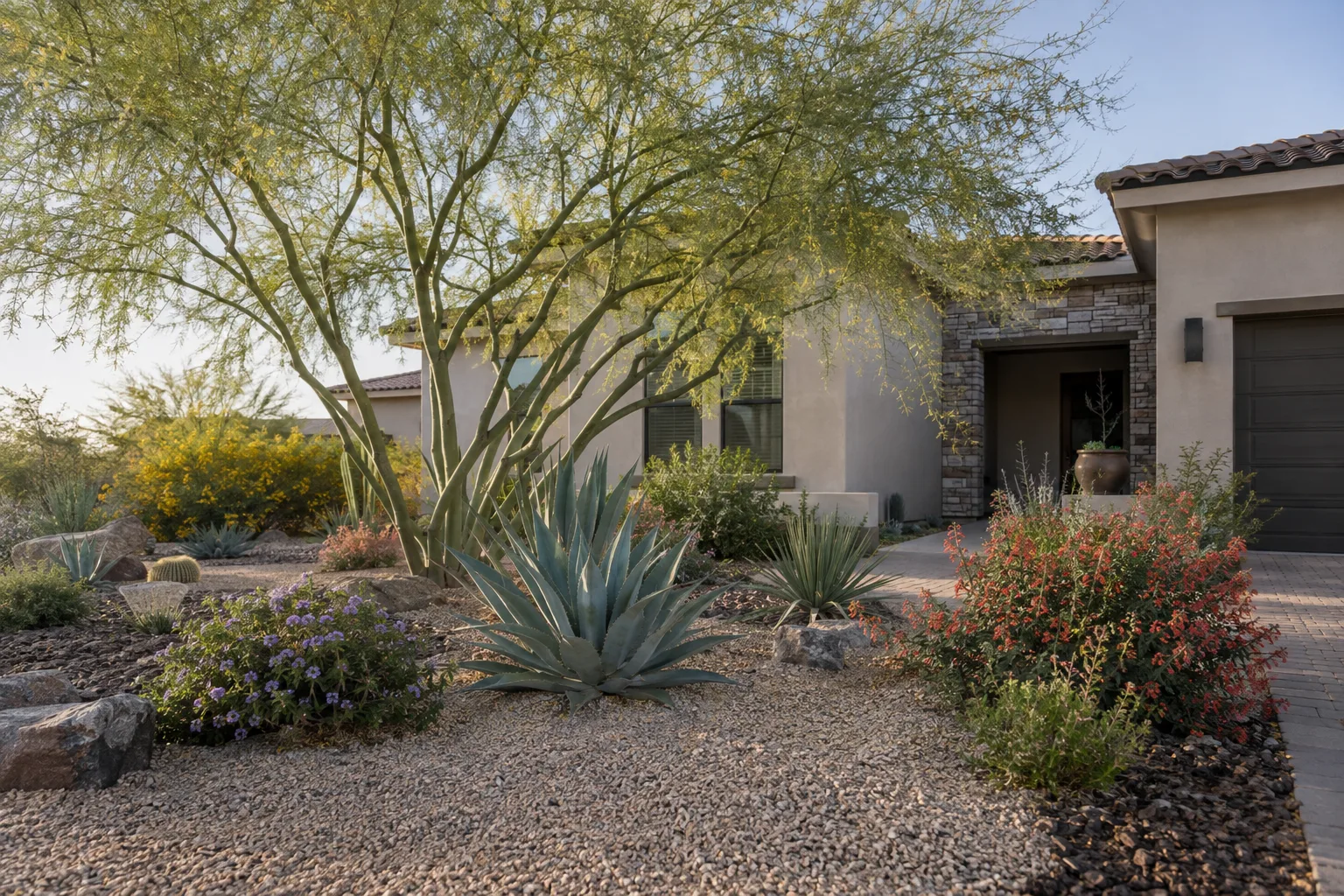
Xeriscaping is a way of designing a yard to need little supplemental water by choosing adapted plants, grouping them by thirst and irrigating efficiently. The term joins the Greek xeros, meaning dry, with the word landscape, and it came out of a Denver water conservation program in the early 1980s. Gravel is optional.
Many people believe a xeriscape means rock and a few cacti. That belief is wrong, because the same approach covers flowering shrubs, shade trees, perennials and even a small patch of turf. It follows seven principles: planning, soil preparation, limited turf, suitable plants, efficient irrigation, mulch and ongoing maintenance. Browse our plant department to see the kinds of shrubs and perennials that suit a low-water yard.
How much water can a xeriscape save in the East Valley?
A well-designed xeriscape commonly uses about 50 to 75 percent less water than a conventional turf landscape, although your savings depend on how much grass you remove and how carefully you irrigate what remains. Bermuda lawns need water all summer, and winter ryegrass overseeding adds irrigation through the cooler months.
Desert-adapted trees, shrubs and succulents need steady water only while they establish. Rebates come and go. Some cities and water providers have offered turf removal rebates, and many require approval before work starts, so check with yours before you pull anything out.
What do caliche and alkaline soil mean for a xeriscape?
They mean the planting hole needs more attention than the soil mix. Queen Creek soils are alkaline, often around pH 7.5 to 8.5, and many yards have caliche, a cement-like layer of calcium carbonate that can sit anywhere from 6 inches to several feet down. Most roots cannot push through it.
Caliche blocks drainage, so a hole dug into it can fill with water and hold it like a bowl while the roots rot. Before you plant, dig a test hole 18 to 24 inches deep, fill it with water and see whether it drains within about a day. For trees and large shrubs, break through the layer with an auger or digging bar so water can move below the root zone.
Desert-adapted plants tolerate alkaline soil without special amendments. A little compost in the backfill is optional.
How do I convert a lawn to a xeriscape?
Work in phases: map the yard, remove the turf, lay out drip lines, then plant and mulch. You can convert one section at a time, starting with the area that uses the most water.
- Map the yard. Mark full sun (6 or more hours), part shade and the spots where monsoon runoff collects after a storm.
- Find the caliche. Dig test holes 18 to 24 inches deep in several places and run the water test described above.
- Remove the turf. You can solarize it under clear plastic for 4 to 6 weeks in summer, smother it with cardboard and mulch, or rent a sod cutter. Bermuda grass regrows from runners and roots, so pull out what you find and check back for sprouts.
- Lay out drip lines before any plant goes in, with separate zones for trees, shrubs and succulents.
- Plant each shrub level with the surrounding soil and build a shallow basin around it to hold water.
- Cover bare soil with mulch.
- Water on a schedule while plants establish, then taper slowly over one to two years.
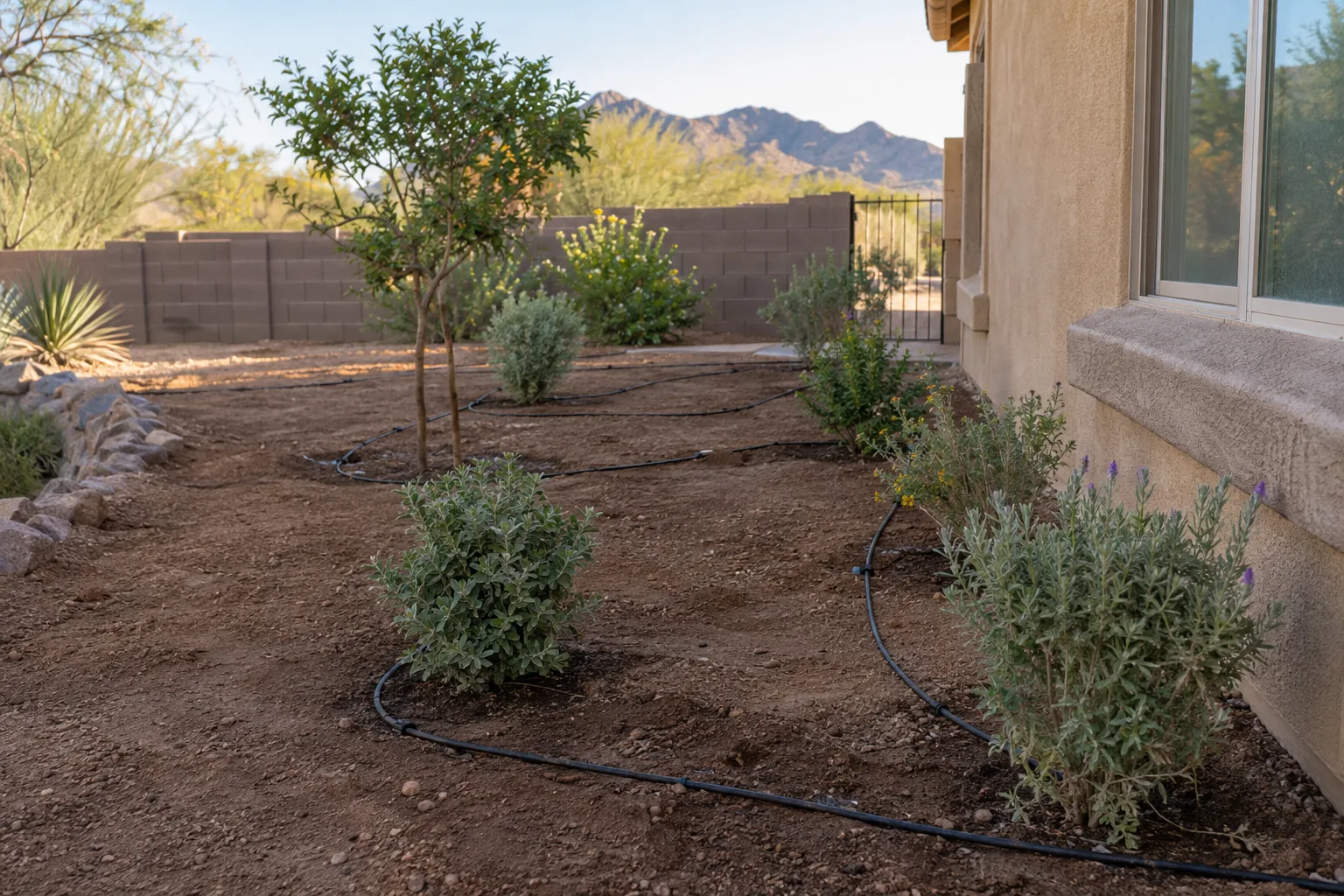
The best planting windows are October through November and February through March. Fall planting gives roots a mild winter and spring to grow before the first summer. Avoid planting from June through August. Our gardening calendars lay out the month-by-month timing, and our classes and events are a good place to ask questions about layout.
Which plants work well in a low-water Queen Creek yard?
Plants native to the Sonoran Desert, or from similar dry climates, handle our heat and alkaline soil best. These are varieties we commonly carry, though availability changes week to week and season to season. Sizes below are mature ranges, and every plant here needs regular water until it establishes.
Palo verde (Parkinsonia species)
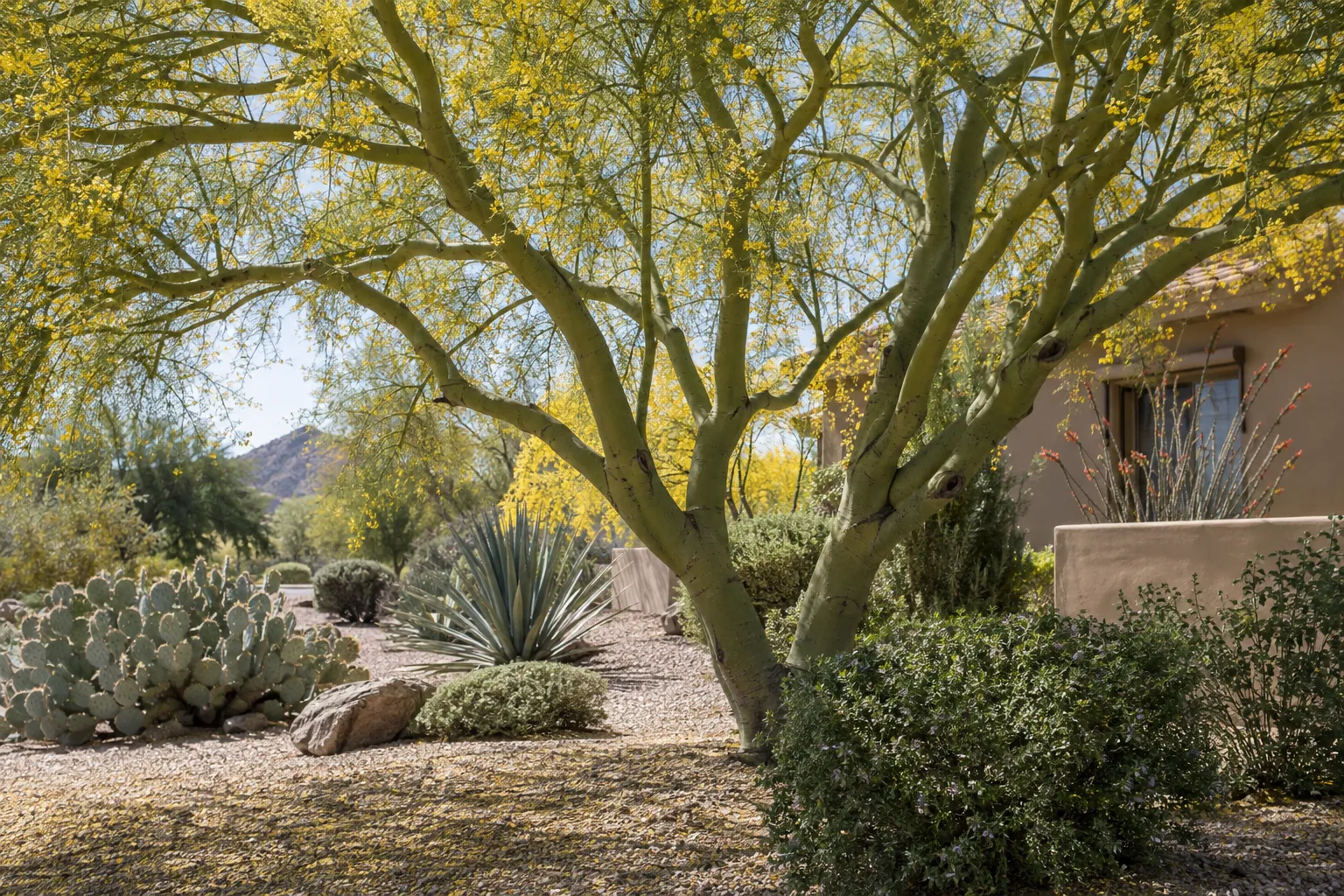
Expect a tree 15 to 30 feet tall and wide in full sun with low water once established. It gives green bark, yellow spring flowers and filtered shade. The drawback is litter from petals and tiny leaflets, and an overwatered tree grows fast and weak, then drops limbs in monsoon wind. See our desert trees for more shade options.
Desert willow (Chilopsis linearis)
This small tree reaches 15 to 25 feet tall and 10 to 20 feet wide in full sun, with low to moderate water. Trumpet-shaped flowers in pink, lavender or white appear from spring into fall and draw hummingbirds. It sits bare in winter and drops long seed pods.
Brittlebush (Encelia farinosa)
A mounding shrub about 2 to 4 feet tall and wide, brittlebush wants full sun and low water. Silvery leaves carry yellow daisy flowers from late winter into spring. It is short-lived and can look ragged and drop leaves during dry summers.
Red bird of paradise (Caesalpinia pulcherrima)
Plan for 5 to 10 feet tall and wide in full sun with low to moderate water. Orange-red flower clusters bloom from late spring through fall. A hard freeze can kill it back to the ground, and it can look bare in cold pockets until spring regrowth.
Autumn sage (Salvia greggii)
This perennial shrub grows 2 to 4 feet tall and wide in full sun to part shade with low to moderate water. Red, pink, coral or white flowers appear from spring to frost. It turns woody and sparse unless you cut it back by about a third in late winter.
Agave (Agave species)
Sizes range from about 1 foot to 6 feet or more across, depending on the species, in full sun to part shade with low water. Agaves anchor a design with bold form all year. The sharp leaf tips need a spot away from walkways and play areas.
How should I water and mulch a xeriscape?
Use drip irrigation on separate zones and soak deeply but less often. Drip delivers water at the roots and loses far less to evaporation than spray heads in our dry air. Running each zone longer on fewer days pushes roots deeper, and deep roots carry plants through summer highs above 110°F.
Plants need far less water in December than in July. If you have a manual timer, adjust it at least four times a year. Check emitters monthly, since hard water leaves mineral deposits that clog them.
Spread 2 to 4 inches of mulch over bare soil, which in July can reach well above 140°F at the surface. Shredded wood or bark insulates roots, holds moisture and needs topping up every year or two. Decomposed granite suits paths and open areas but holds no moisture, so plants in it may need slightly more frequent watering. Keep either one a few inches from trunks.
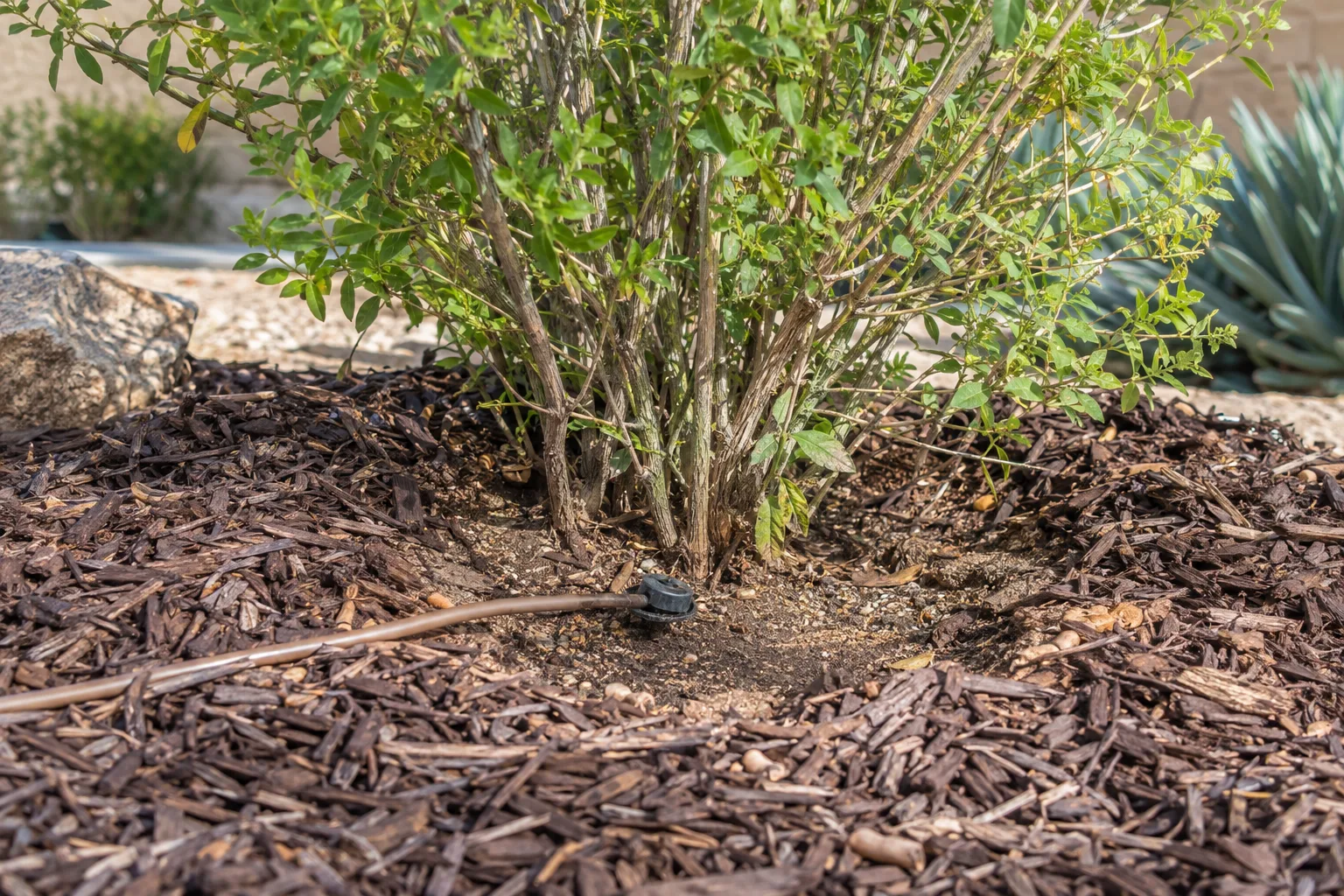
New plants need regular water for the first one to two years. Cut back gradually as they mature.
Which xeriscape mistakes cost the most plants?
Laying plastic sheeting under rock
Plastic blocks air and water exchange, heaves over time and tears into scraps within a few years. Skip it. A deep mulch layer smothers most weeds, and you can pull the rest by hand.
Ignoring monsoon drainage
Monsoon storms can drop an inch or more of rain in under an hour. Grade soil away from walls, and leave gaps where water can leave, because rock borders can act as dams that drown drought-adapted plants.
Mixing thirsty and dry plants on one zone
A zone set for a rose or a citrus tree will rot a nearby agave. Group plants by water need before you lay out drip lines.
Cutting off water too fast
Plants that look established may still have shallow roots. Stretch the time between waterings in small steps over a season or two instead of stopping all at once.
Planting for today’s size
A one-gallon palo verde looks small beside a wall, but it will spread 15 feet or more. Space plants for mature size, and fill gaps in the meantime with mulch or short-lived annuals.
Frequently asked questions
Can I keep some lawn in a xeriscape?
Yes, a small patch of turf fits a xeriscape when it serves a purpose, such as a play space for kids or pets. Keep it to the area you use, put it on its own irrigation zone, and keep runoff from hard surfaces off it. Cutting lawn area in half still removes a large share of summer irrigation.
How long does a xeriscape take to look full?
Expect two to three years for a layered, full look. Shrubs such as red bird of paradise and desert willow can add noticeable size within 12 to 18 months of a fall planting, while agaves and trees grow more slowly. Plan spacing around mature sizes so you are not pulling plants out in year four.
Do xeriscapes still need weeding?
Yes, but far less than a lawn or open bare ground. A 2 to 4 inch mulch layer blocks most seedlings, and pulling weeds before they set seed stops the next round. Hand-pulling is easiest after a monsoon storm or deep irrigation, when roots slide out of moist soil instead of snapping off in dry ground.
Can I grow vegetables in a xeriscape yard?
Yes, if vegetables get their own space and their own irrigation zone. Vegetables and herbs need regular water, so a raised bed or a few containers on a separate line keeps them from drowning neighboring desert plants. Browse our herbs, vegetables and berries page for ideas by season.
Is xeriscaping right for your yard?
For most Queen Creek yards, yes. If you water a large lawn in summer and rarely use it, converting even half of it to adapted plants lowers irrigation needs and gives you year-round structure and seasonal bloom. Xeriscaping is a poor fit if you want a play lawn across the whole yard, or if you will not set up drip irrigation and tend new plants for the first one to two years. Stop by the nursery in Queen Creek and we can talk through your yard.