Xeriscaping in Arizona means designing a yard around low water use: improve the soil, group plants by water need, irrigate by drip, and mulch. Done well, it cuts outdoor watering and still looks full and colorful.
Key takeaways
- Xeriscaping uses plants suited to the low desert, drip irrigation and 2 to 3 inches of mulch, and it still includes plants and some water.
- The best planting windows are roughly October through March, and spring and fall give roots months of mild weather before summer.
- New plants need regular water for the first 8 to 12 weeks or longer, then watering tapers off gradually.
- Alkaline soil and caliche are the main site problems in Queen Creek, so check drainage before you plant.
- Start with one bed instead of the whole yard.
What is xeriscaping, and does it mean a yard of rock?
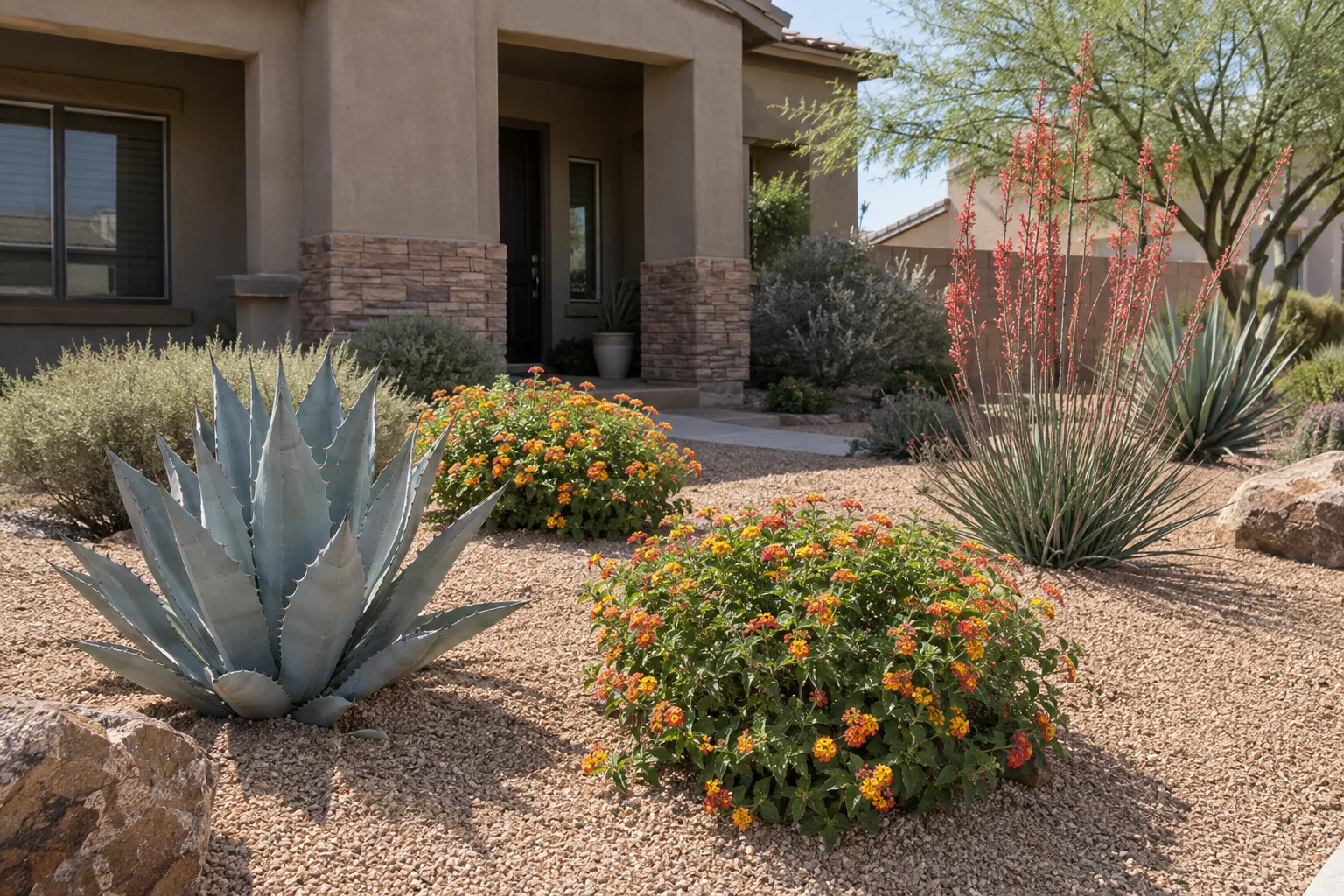
Xeriscaping is a water-conserving design method, and it does not mean gravel with a lone cactus. Some people picture a bare rock yard. A xeriscape is planted, layered and often colorful.
The method rests on a few steps: plan the layout, improve the soil where needed, choose suitable plants, keep any turf small, irrigate efficiently, mulch, and maintain. Because most of the savings come from irrigation, the design focuses on putting water only where roots can use it. Many East Valley homeowners cut outdoor water use by a large share this way, though savings depend on the yard and the starting point.
What should I know about Queen Creek soil and climate first?
Expect alkaline soil, possible caliche, summer highs above 110°F and a monsoon from roughly July through September. These conditions decide which plants work and how you prepare each bed.
Alkaline soil and caliche
Most low desert soil is alkaline, which can tie up iron and cause yellow leaves on plants not adapted to it. Caliche is a hardened, cement-like layer of calcium carbonate that can sit a few inches to several feet down. Water pools on top of it. Roots struggle to get through.
Monsoon and winter frost
Summer storms arrive fast and hard, so shape beds with shallow basins or berms to slow runoff. Winter frost is occasional, and tender plants in exposed spots may need cover on the coldest nights.
How do I plan a xeriscape layout?
Sketch the yard to scale, mark sun exposure, and group plants by water need. This grouping is called hydrozoning, and it keeps you from overwatering tough plants to keep thirstier ones alive.
Full sun means 6 or more hours of direct light. West and south walls reflect extra heat, so plants there must handle it. Put the plants that want a bit more water nearest the house, where you will see them and can adjust. Keep any remaining lawn on its own zone. Low spots where water collects make good places for plants that tolerate occasional extra moisture. See our plant selection for the range of shrubs, perennials and accents that suit this kind of design.
How do I prepare the soil for desert plants?
Loosen compacted soil and fix drainage, and amend lightly. Desert-adapted plants prefer lean, fast-draining ground, so heavy amending can do more harm than good.
Beds with non-native ornamentals or vegetables can take a few inches of compost worked into the top layer. For thin caliche, break through it with a pick or rented breaker bar and backfill with native soil. For thick caliche, build the planting area up into a raised berm of 12 to 18 inches instead. Test drainage by filling a hole with water. If it has not drained in an hour or two, solve that before planting.
How should I water a xeriscape?
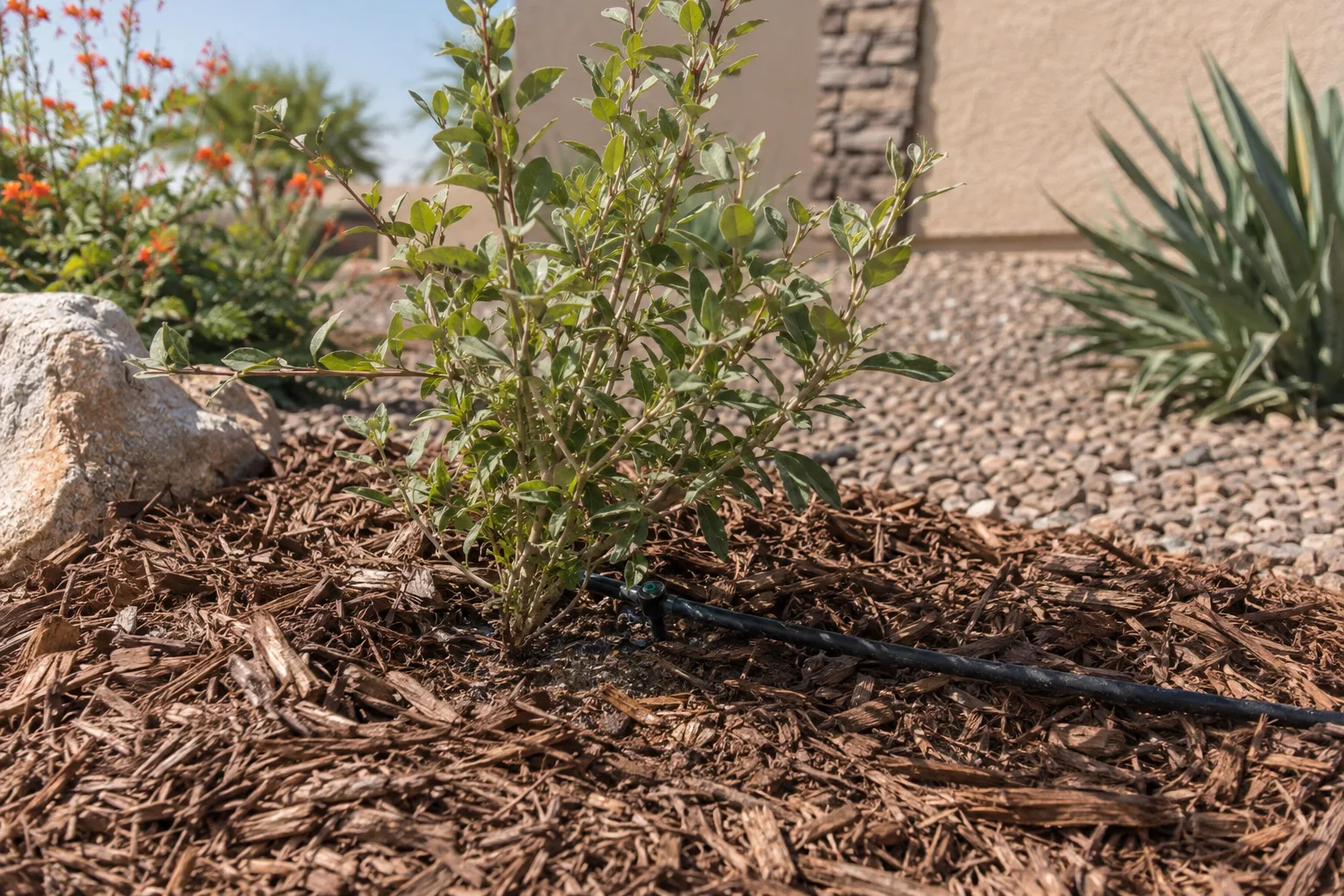
Use drip irrigation, with separate zones for trees, shrubs and groundcovers. Drip puts water at the root zone, while overhead spray loses a good share to evaporation and wind in desert heat.
Trees want deep, infrequent soakings, which build deeper roots. Shrubs and groundcovers need shorter, more frequent runs while establishing. A smart controller that adjusts for weather can trim waste further, and some local utilities offer rebates, so check with yours before buying. Check emitters weekly for the first month, since they clog and lines shift.
Drought-tolerant does not mean no water. New plants need regular irrigation through their first summer, often two to three times a week for the first 8 to 12 weeks, then backing off as roots spread. Watching the plants tells you more than any fixed schedule.
What mulch works best in the low desert?
Use 2 to 3 inches of decomposed granite in sunny areas and organic mulch such as wood chips under tree canopies. Mulch slows evaporation, cools the soil and suppresses weeds.
Organic mulch breaks down within a season or two and needs topping up, but it feeds the soil as it goes. Granite is more permanent and stays put better in storms. Keep either type 2 to 3 inches away from stems and trunks to prevent rot. Skip landscape fabric under planting beds, since it blocks organic matter and can surface over time. It works fine under gravel paths.
Which plants suit a beginner xeriscape?
Choose plants that handle full sun, reflected heat and alkaline soil. These are varieties we commonly carry, though availability changes week to week and season to season.
Shade and structure can come from a desert tree such as Desert Museum palo verde (Parkinsonia hybrid), which has bright yellow spring flowers and is nearly thornless. For mid-size color, try Texas ranger (Leucophyllum frutescens), which often blooms after humid monsoon weather. Red yucca (Hesperaloe parviflora) sends up coral flower spikes that hummingbirds visit. Lantana (Lantana camara) gives long color from spring into fall, though it needs a hard cutback in late winter. Agave adds sculptural form with very little care. Autumn sage (Salvia greggii) blooms in fall through spring and may look rough in peak summer heat.

| Plant | Type | Water once established | Main color season |
|---|---|---|---|
| Desert Museum palo verde | Tree | Low | Spring |
| Texas ranger | Shrub | Very low | After monsoon humidity |
| Red yucca | Accent | Very low | Spring to fall |
| Lantana | Groundcover | Low to moderate | Spring to fall |
| Autumn sage | Shrub | Low | Fall to spring |
Our gardening calendars help you time what goes in when.
How do I install a xeriscape step by step?
Do the heavy work between October and early March, so plants root in mild weather before their first summer. Follow these steps in order.
- Remove turf or weeds. Use a sod cutter, or solarize with clear plastic for roughly 6 to 8 weeks in summer.
- Test the soil through a lab or your local Cooperative Extension office.
- Loosen compaction and deal with caliche or build berms.
- Amend beds only where plants need it.
- Install drip lines and test the system before planting.
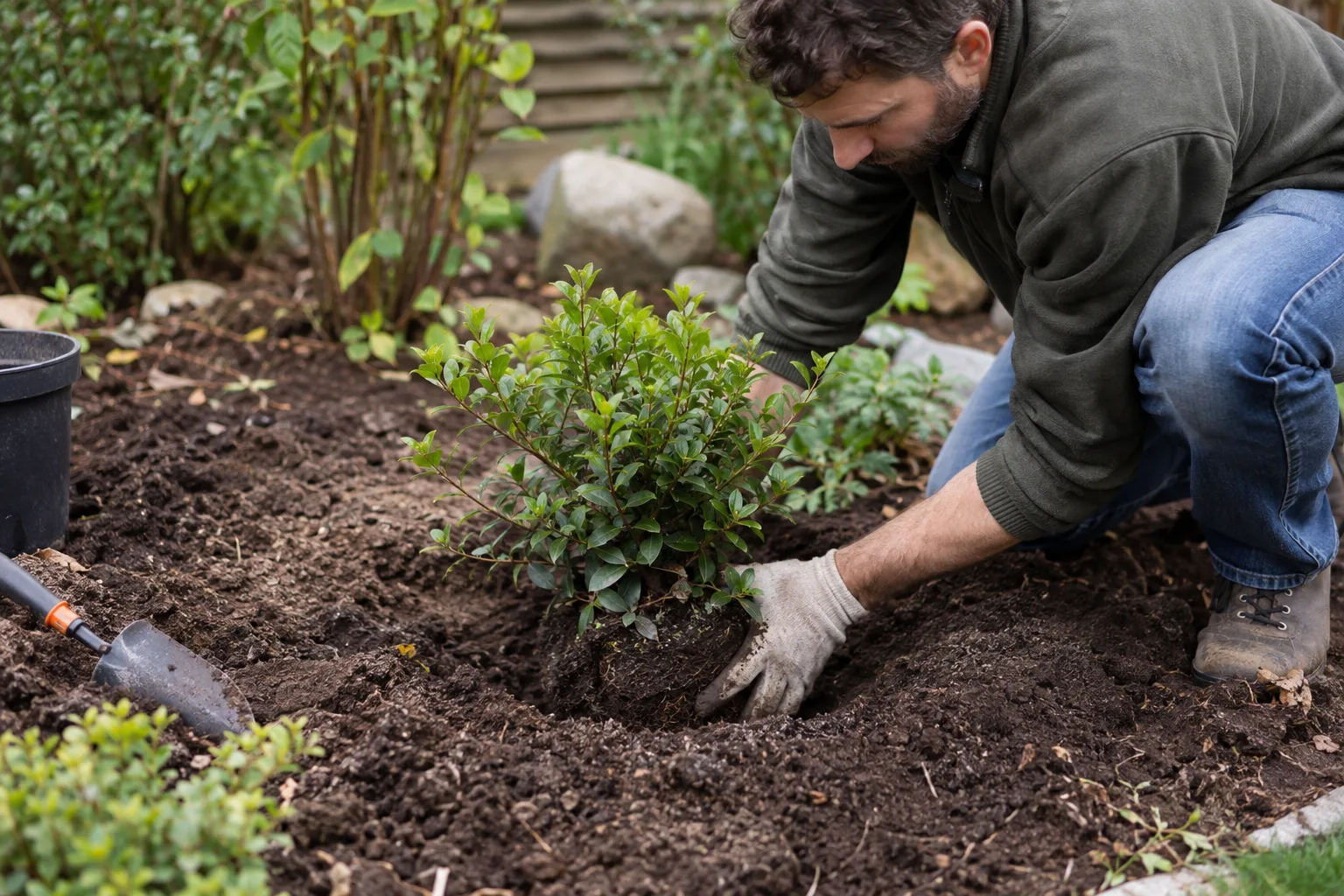
- Set trees first, then large shrubs, then small shrubs and groundcovers.
- Water each plant in well and shape a small basin around it.
- Spread mulch, keeping it off stems.
- Check emitters weekly and adjust run times as plants settle.
What mistakes should I avoid when xeriscaping?
Crowding, ending establishment watering too early, and planting only for summer cause most failures. Each is easy to avoid with a little planning.
- Check the mature spread on the tag. A Texas ranger can reach 5 to 6 feet wide.
- Keep watering new plants until roots are established, often through the first full year.
- Include cool-season bloomers such as penstemon and globe mallow so winter is not bare.
- Skip plants that need cooler summers or sharper drainage than most yards offer, such as lavender in some spots.
Frequently asked questions
How long until a xeriscape looks established?
Most xeriscapes look filled in after two to three growing seasons. Year one goes mostly to roots, so slow top growth is normal. By year two you will see more size and bloom. Avoid heavy fertilizer, which pushes weak, thirsty growth that struggles in summer.
Do I have to remove all my grass?
No, a small defined patch of turf can stay. Put it on its own irrigation zone so the rest of the yard is not overwatered. Many people keep grass only where it gets used, such as a play area. Some local water providers offer turf removal programs, so ask yours.
What is the difference between xeriscaping and desert landscaping?
Xeriscaping is a water-saving method, while desert landscaping is a look. A xeriscape can include Mediterranean, South African or Australian plants if they are low water in the low desert. Desert landscaping often uses cacti, rock and native plants, and it can be a part of a xeriscape.
Can I dig up native plants from the desert?
No, and you should check the rules first. Arizona protects many native plants, and collecting from wild land generally requires permission or a permit. Wild-dug plants also survive poorly because most of their roots stay behind. Nursery-grown plants establish far more reliably.
Is xeriscaping cheaper?
Over time it often lowers water and lawn care costs, but installation has upfront costs. Savings depend on yard size, plant choices and water rates. Some people recover costs within several years, while others mainly value the lower weekend workload.
Is xeriscaping right for your yard?
For most East Valley homes, yes. A xeriscape lowers irrigation needs, cuts mowing and gives color across seasons. It fits best if you will water new plants carefully for the first year and accept a slower start. It is a poor fit if you want a finished look in one season or need large lawn areas for daily use. Start with one bed and expand. Stop by our Queen Creek nursery to talk through your yard and see what is growing.