Arizona homeowners are choosing xeriscaping because outdoor watering is the largest part of a household water bill, and desert-adapted plants need far less of it. A well-planned xeriscape also cuts mowing, fertilizing and weekly upkeep.
Key takeaways
- Xeriscaping is a water-efficient design method with seven principles, and it includes plants, soil, irrigation and mulch, not just gravel.
- Outdoor irrigation commonly makes up more than half of household water use in the Phoenix metro area, so the lawn is the first place to save.
- Fall, roughly October through November, is the best planting window for most desert plants in Queen Creek.
- New plants need regular water for one to two growing seasons before you stretch watering to every 2 to 4 weeks in summer.
- Caliche within 2 feet of the surface is the most common reason a new desert planting struggles.
What is xeriscaping, and is it just rock and cactus?
Xeriscaping is a landscape design approach built around saving water. The word combines the Greek xeros (dry) with landscaping, and the concept was developed in Colorado in the early 1980s during a drought. It rests on seven principles: planning and design, soil improvement, practical turf areas, suitable plants, efficient irrigation, mulch, and ongoing maintenance.
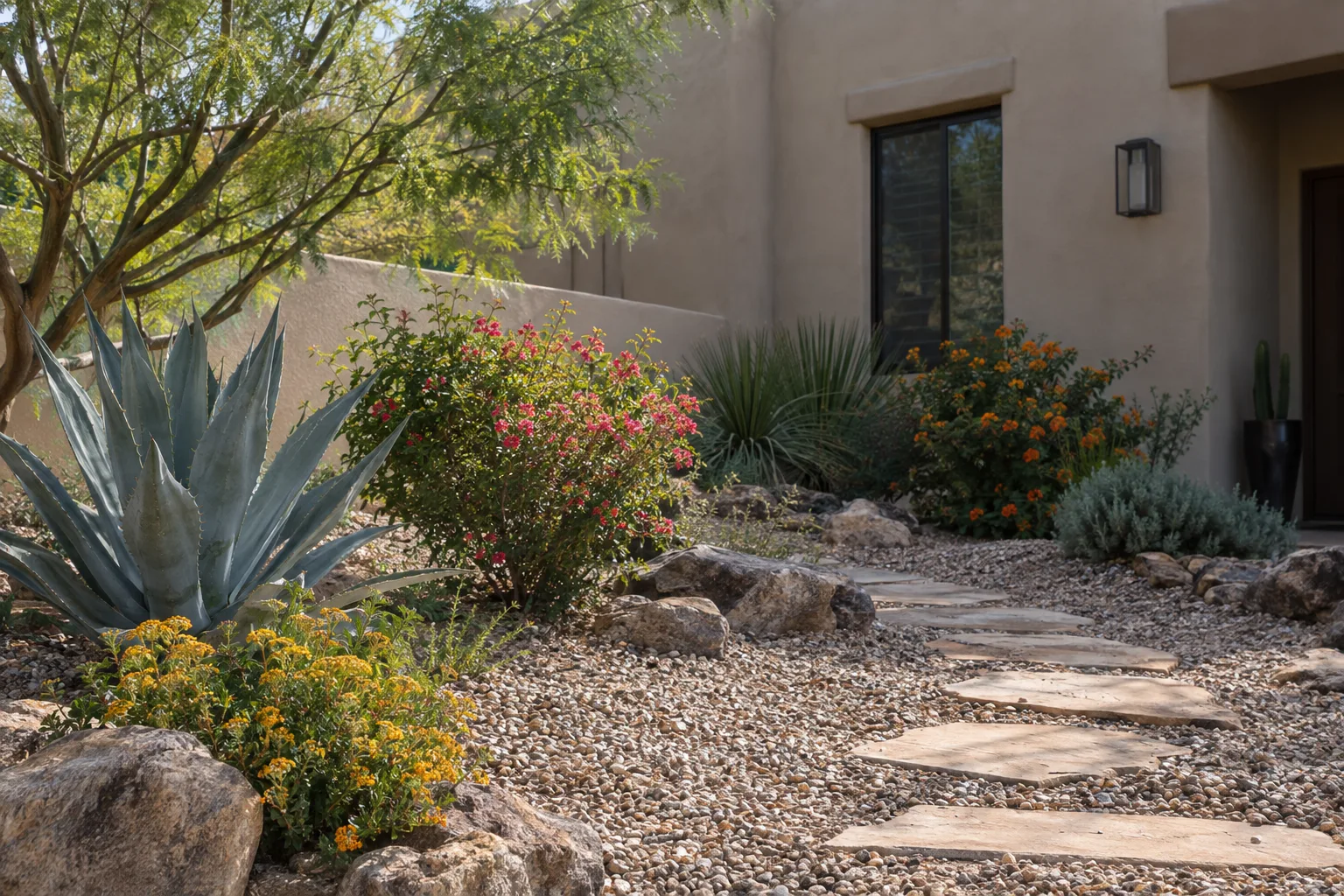
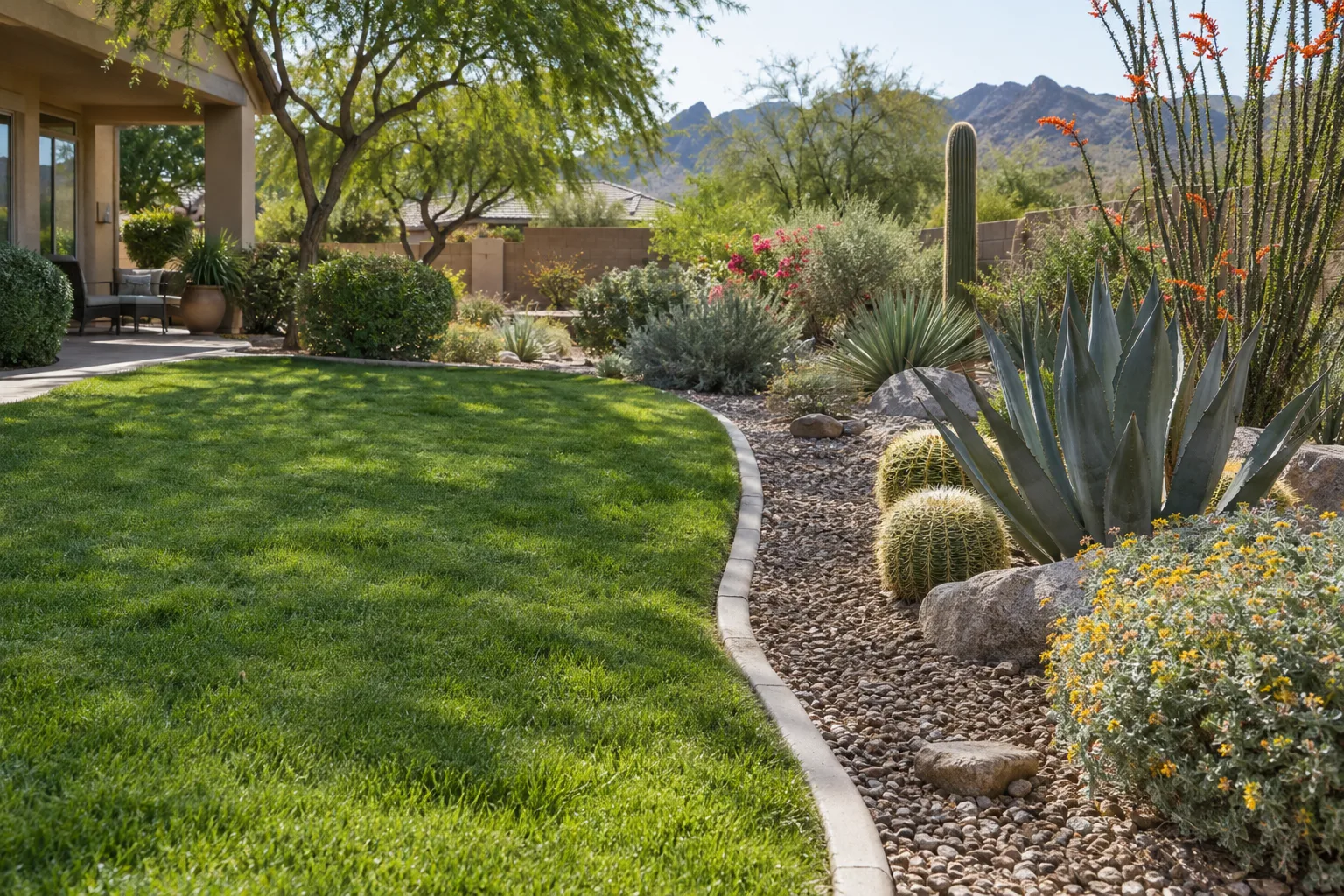
Many people picture white gravel and one barrel cactus. That picture is a poorly done conversion, not the method. A good xeriscape layers shrubs, groundcovers, accent plants and trees, and it blooms in several seasons.
Why are East Valley homeowners leaving lawns behind?
The main reasons are water supply, water cost and upkeep. Our region receives roughly 8 inches of rain a year, and a traditional lawn needs many times that to stay green through summers above 110°F. Bermuda grass, the common lawn here, needs steady irrigation nearly year-round.
Arizona has also faced Colorado River shortage declarations, and Valley cities have expanded conservation programs in response. Outdoor irrigation is often cited as 60 to 70 percent of residential water use in the metro area. Replacing a lawn with a properly designed xeriscape can cut outdoor water use by roughly half or more.
How much money does xeriscaping really save?
Savings depend on your lot, your water provider and what you plant, but the direction is consistent: less water, no mowing and fewer inputs. A lawn needs mowing, edging, overseeding and fertilizer. A xeriscape needs occasional pruning, a seasonal irrigation check and mulch top-ups.
The table below shows rough ranges for a 2,000-square-foot area. Treat them as planning estimates, since your rates and design will change the result.
| Landscape type | Summer water bill (monthly) | Approx. annual water use |
|---|---|---|
| Bermuda grass lawn | $150 to $250 | 55,000 to 65,000 gallons |
| Mixed xeriscape | $30 to $60 | 12,000 to 20,000 gallons |
| Mostly native xeriscape | $15 to $35 | 6,000 to 12,000 gallons |
Installation costs vary a great deal. Many homeowners recover the cost over several years, and rebates can shorten that.
How does xeriscaping help the environment?
It lowers water demand, cuts chemical runoff and gives wildlife food and shelter. Each benefit is specific and measurable.
Water and runoff
Desert plants grow in low-nutrient soil and rarely need fertilizer. That means less fertilizer reaching storm drains during monsoon storms, which run from roughly July through September.
Pollinators and birds
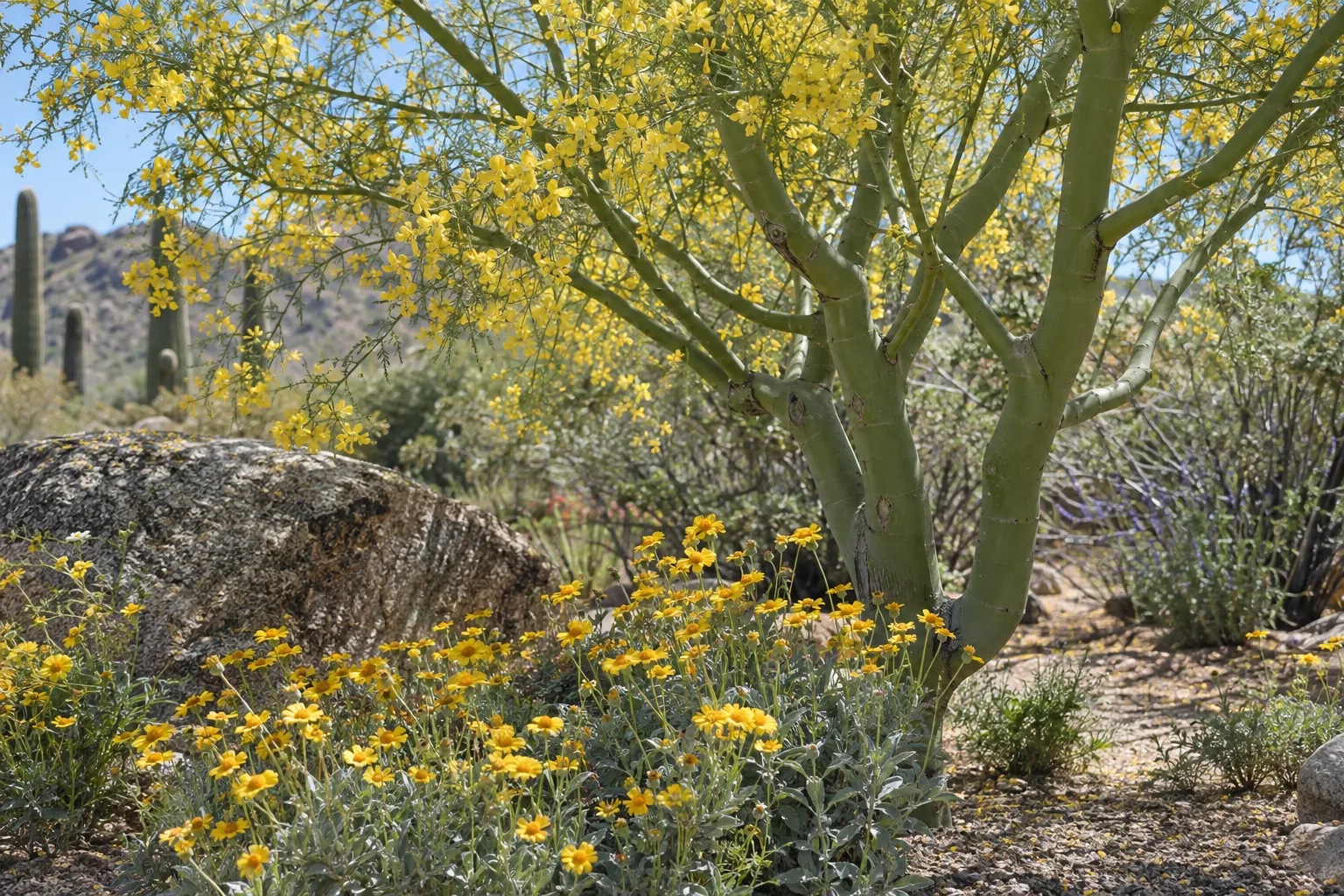
Plants such as desert marigold, brittlebush and desert willow offer nectar to native bees, butterflies and hummingbirds. A lawn offers almost none.
Heat around the house
Bare gravel absorbs and radiates heat, so replacing grass with rock alone will not cool a yard. Shade trees on the west and southwest sides of a home do. Our desert trees page shows the kinds of shade trees we commonly carry, though availability changes week to week and season to season.
Less powered equipment
Without a weekly mowing routine, gas mowers, edgers and blowers get little use. The air-quality gain is small, but it is real.
Which plants work best in a low desert xeriscape?
Choose plants that handle alkaline soil, reflected heat and little water once established. These are varieties we commonly carry, though availability changes with the season. You can browse the full range on our plants page.
- Blue palo verde (Parkinsonia florida) is a tree reaching roughly 20 to 30 feet with yellow spring bloom and green bark. It drops leaves in drought.
- Desert marigold (Baileya multiradiata) is a low perennial with yellow flowers over a long season that reseeds itself.
- Autumn sage (Salvia greggii) blooms in red, pink or white and benefits from afternoon shade in the hottest months.
- Agave (several species) gives bold structure with very low water needs. Check mature size before planting.
- Blackfoot daisy (Melampodium leucanthum) stays under about 18 inches, with white flowers in spring and fall.
- Desert willow (Chilopsis linearis) has orchid-like flowers in late spring and summer and loses its leaves in winter.
How do I convert my lawn to a xeriscape?
Start with a plan, remove the grass, fix the soil, install drip irrigation, then plant. Phasing the work over one to two years spreads out the cost.
- Note which areas get full sun, partial shade or afternoon shade.
- Sketch the yard and group plants by water need so each irrigation zone matches its plants.
- Remove the lawn. Solarizing under clear plastic in summer takes several weeks, while a sod cutter is faster.
- Probe for caliche and break through it where trees or large shrubs will go.
- Loosen the planting area and mix in some compost. Many desert natives prefer lean soil, so go lightly.
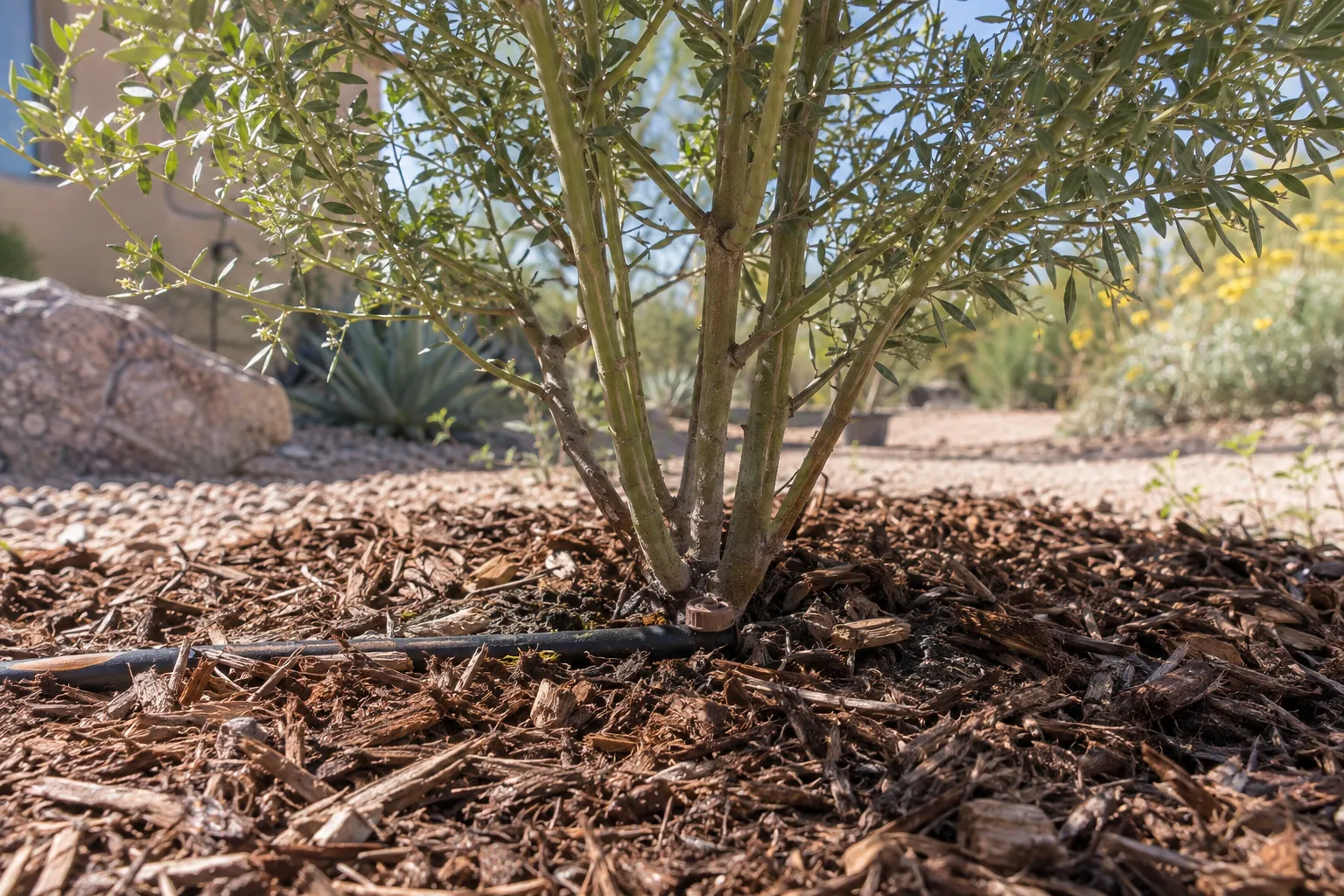
- Lay drip irrigation before planting, with emitters placed at each plant’s drip line as it grows.
- Plant in fall when you can.
- Add 2 to 4 inches of mulch or decomposed granite, keeping it a few inches off trunks and stems.
- Water new plants regularly for the first one to two years, then move to deep, infrequent watering.
What mistakes should I avoid when xeriscaping?
The most common mistakes are crowding plants, overwatering established plants and designing for one season. Each one is easy to prevent.
- Planting to current size. Many desert shrubs reach 6 to 8 feet wide or more. Space them for mature size.
- Watering too often. Established desert plants fail more often from soggy roots than from drought.
- Ignoring microclimates. A west wall in July is far harsher than a north-facing courtyard.
- Hand watering only. A timed drip system keeps moisture steady through the dry weeks before the monsoon.
- Plastic under gravel. It blocks water from reaching roots. Use mulch depth to control weeds instead.
Are there rebates for removing a lawn?
Some Valley water providers and cities have offered turf removal or conservation rebates, but programs, amounts and eligibility change. Check with your own water provider and city, whether that is Queen Creek, Gilbert, Chandler, Mesa or another, before you pull out any grass. Some programs require approval before work begins.
Frequently asked questions
How long until a xeriscape is established?
Most desert-adapted plants take one to two growing seasons to establish. Through that period they need regular watering, especially in the first summer. After that, deep watering every 2 to 4 weeks in summer is typical for many varieties, though it depends on the plant.
Can I keep some grass?
Yes. Xeriscaping keeps turf where it serves a purpose, such as a play area or a spot for pets. Keep it small, give it its own irrigation zone, and water it separately from your desert plants.
Does xeriscaping raise home value?
Possibly, but we cannot give a figure. Buyers in the Valley often ask about water use and upkeep, and a tidy, mature planting with working drip irrigation answers both. A neglected one does the opposite.
Do xeriscapes need fertilizer?
Most desert natives need little or none. Fruit trees and flowering annuals in the same yard have their own needs. Our gardening calendars show when to feed them.
When should I plant?
October and November are best for most plants, since roots grow through the mild winter. March and early April can work for smaller plants. Avoid planting from mid-May through August when soil and air temperatures stress new roots.
Is xeriscaping right for your yard?
For most Queen Creek homeowners, yes. It lowers water use, ends the weekly mowing and gives you a yard that handles 110°F summers. It will not suit you if you want a large lawn for daily play, or if you expect zero work, because new plantings need careful watering for the first two years. Start with a small area and expand. Come by the nursery in Queen Creek and we will help you choose plants that fit your space.