

Winter pruning protects plants from summer heat only when the cuts are modest. Between December and February, remove dead, crossing and weak wood, keep most of the canopy for shade, and wait on frost-tender plants until frost danger passes in the Arizona low desert.
Key takeaways
- Prune most deciduous trees and shrubs from December through February, after the leaves drop and before buds swell.
- Hold frost-tender plants such as lantana (Lantana camara), bougainvillea (Bougainvillea) and citrus (Citrus) until frost danger passes, usually late February to March.
- Remove no more than about 25 percent of a plant’s canopy in one season, and less on young or stressed plants.
- Keep leaves on the south and west sides of trunks and main limbs, because newly exposed bark can sunscald in summer heat above 110°F.
- Cut roses (Rosa) from mid-January to mid-February, and trim spring bloomers like penstemon (Penstemon) and brittlebush (Encelia farinosa) only after the flowers fade.
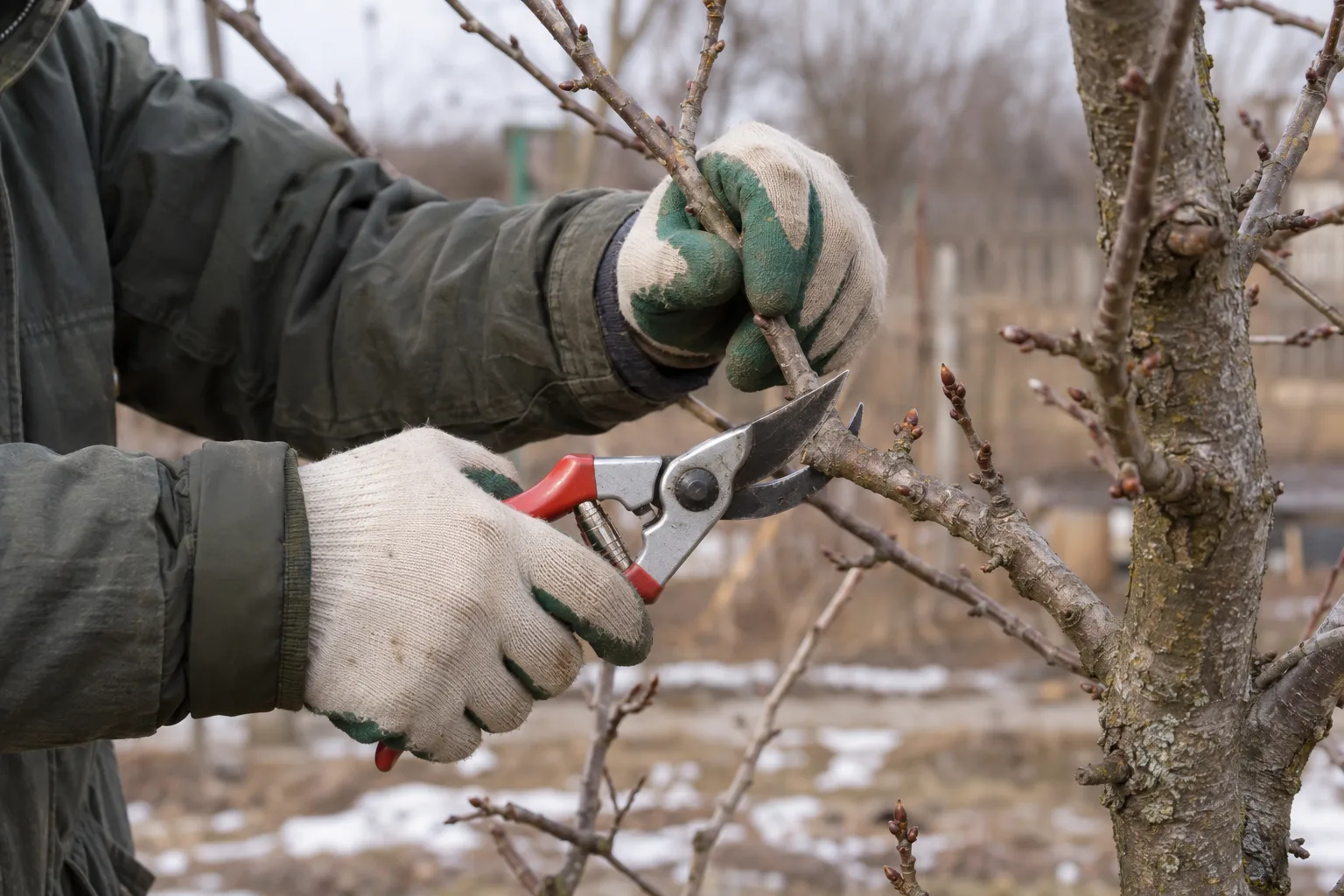
Does winter pruning really protect plants from summer heat?
Yes, in a limited way. Pruning removes dead wood, opens crowded branches to airflow and keeps a plant’s top growth in balance with its roots, but it cannot make a plant heat-proof. Summer survival depends far more on planting site, deep watering and soil than on any single cut.
Some gardeners believe a hard winter cut produces a tougher plant. It produces a plant with less shade over its own trunk and a flush of tender growth that meets the first 100°F days of late spring. With summer highs above 110°F and heat bouncing off block walls and stucco, bark that was once shaded can sunscald in a single season.
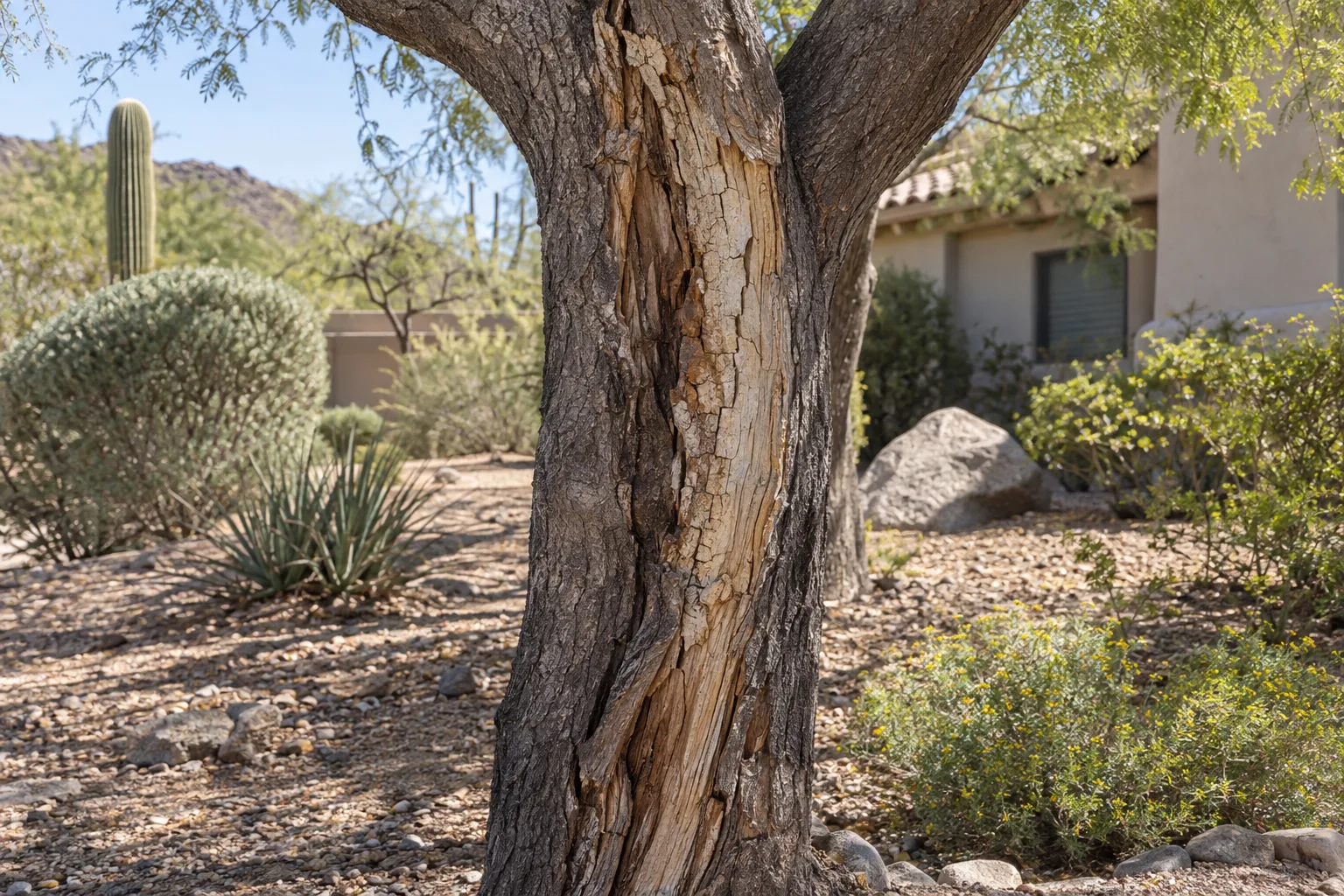
The goal is modest. Remove what is dead, damaged or rubbing, thin only enough to let air move through the canopy, and leave the leaves that shade trunks and main limbs. Young trees gain the most from early structural pruning, and you can look over the shade and flowering trees in our tree department if you are planning a new planting.
When is the best time to prune in the Arizona low desert?
December through February suits most deciduous trees and shrubs, once the leaves have dropped and before buds swell. Frost-tender plants and spring bloomers follow different schedules, so the table below sorts them by type.
Frost is the limiting factor. Pruning stimulates new growth, and soft new growth burns when temperatures fall to 32°F or lower. The East Valley’s last frost usually arrives around mid-February, and Queen Creek and San Tan Valley can run a few degrees colder than the middle of the metro area, so a warm January afternoon is not a reliable signal that cold nights are finished.
| Plant type | Typical pruning window | Notes |
|---|---|---|
| Deciduous trees and shrubs, such as desert willow (Chilopsis linearis) and vitex (Vitex agnus-castus) | December to February | Cut after full leaf drop and before buds swell |
| Roses | Mid-January to mid-February | Cut canes back by about one-third to one-half, leaving 3 to 5 healthy canes |
| Citrus | Late February to April | Light shaping only, after frost danger passes |
| Lantana and bougainvillea | Late February to March | Wait until the last frost has passed |
| Ornamental grasses, such as muhly and deer grass (Muhlenbergia) | Late January to February | Cut to about 6 to 8 inches before new growth starts |
| Spring bloomers, such as penstemon and brittlebush | Right after flowering | Winter cuts remove the flower buds |
Dates shift with the weather from one winter to the next. Our gardening calendars list monthly tasks for the low desert, and they make a handy reminder of when each plant’s window opens.
What tools do I need for winter pruning?
You need sharp bypass pruners, loppers, a pruning saw and something to clean the blades. Sharp tools make clean cuts that close quickly, while dull blades crush and tear bark and leave ragged wounds.
- Bypass hand pruners for stems up to about 3/4 inch thick.
- Loppers for branches from 3/4 inch to about 1.5 inches.
- A curved pruning saw for anything thicker than 1.5 inches.
- A pole pruner for reaching into a canopy without climbing a ladder.
- 70 percent isopropyl alcohol and a rag for wiping blades.
Wipe blades between plants when you are cutting anything that looks diseased, such as oozing sap, dark cankers or spotted bark. Healthy plants rarely need it. Wear leather gloves and eye protection, especially around roses and bougainvillea, whose thorns can cut through light gloves. A branch thicker than about 4 inches, or one hanging over a roof or power line, is a job for a certified arborist.
How do I prune a tree or shrub step by step?
Work from the biggest problems to the smallest, and stop before you reach a quarter of the canopy. This order keeps you from removing healthy wood you did not need to touch.
- Walk around the plant first. Spend a couple of minutes finding the main branches and any dead, broken or crossing wood.
- Cut dead and broken wood back to healthy tissue. Live wood is green or pale under the bark, and dead wood is brown and dry.
- Remove one branch from each pair that crosses or rubs. Choose the weaker or more awkwardly placed one.
- Take out suckers growing from the base and water sprouts, which are the straight vertical shoots on main limbs.
- Thin lightly inside the canopy by removing a few small, crowded branches so air moves through but shade stays.
- Shape the outside last, cutting back to a side branch or just above a bud rather than leaving stubs.
- Make each larger cut just outside the branch collar, the swollen ring where a branch meets its parent limb. Never cut flush with the trunk.
- Step back 10 to 15 feet and look at the whole plant before you cut anything else.
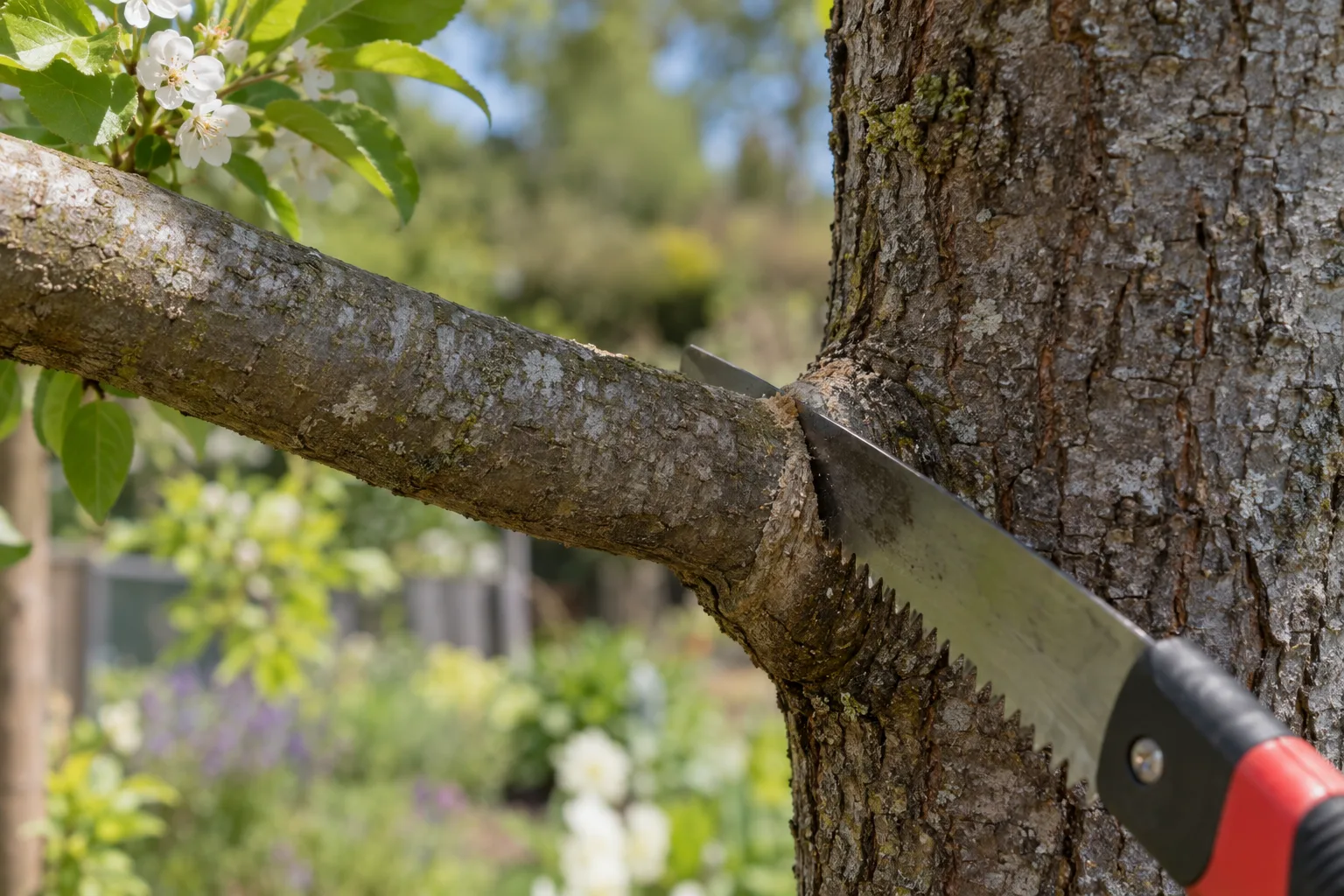
For limbs thicker than about 2 inches, use three cuts so the bark does not tear down the trunk. Start with an undercut about a foot out from the trunk, make a top cut a little farther out so the limb drops, then remove the stub with a final cut outside the collar. If you learn best by watching, check our classes and events page to see what is scheduled.
Which plants should I leave alone in winter?
Leave spring bloomers, cacti and succulents, and anything still at risk of frost. Cutting them in December removes buds or exposes new growth to cold.
- Penstemon sets buds through winter, so trim it after the spring bloom ends.
- Brittlebush flowers on the growth you would be cutting, so shape it lightly after it finishes.
- Aloes (Aloe) should lose flower stalks only after the blooms fade.
- Citrus is frost-tender, so skip heavy winter cuts and save light shaping for late winter to spring. You can see what grows well here in our citrus trees section.
Cacti and succulents rarely need winter pruning at all. Frost-damaged saguaro (Carnegiea gigantea) and prickly pear (Opuntia) can look mushy or discolored for weeks, and giving them time to show how far the damage goes keeps you from removing tissue that might recover.
How should I care for plants after pruning?
Keep watering on your normal winter schedule and add mulch. Pruning does not raise a plant’s water needs in cool weather, so check the soil 6 to 8 inches down before you turn the water on.
Spread 3 to 4 inches of wood chips out to the drip line, and pull the mulch a few inches back from the trunk. The layer cools the soil, slows evaporation and slowly adds organic matter to our alkaline, low-organic soil. Mulch piled against bark holds moisture there and invites rot.

Watch for sprouts on trunks and bare limbs as spring warms up. Rub them off while they are soft, and keep the canopy that is shading the bark. If a warm spell pushes a flush of new growth before the last frost, cover tender plants on cold nights.
Which pruning mistakes cause sunburn and dieback?
Four mistakes account for most of the damage: topping, lion’s-tailing, shearing and pruning too early.
Topping
Topping means cutting the main leader or large limbs back to stubs. It leaves large wounds that cannot close and triggers weak, fast regrowth that snaps in monsoon winds from roughly July through September.
Lion’s-tailing
Stripping all the interior branches and leaving tufts of growth at the tips moves weight outward. The long bare limbs lose their shade and the tufts become heavy enough to break.
Shearing shrubs into tight shapes
A dense, sheared outer shell blocks light from the inside of the shrub. The interior leaves drop, and the plant ends up hollow with all its foliage in a thin outer layer that burns in summer sun.
Pruning frost-tender plants too early
Cutting lantana, bougainvillea or citrus in December removes the frost-burned growth that was insulating the plant. A cold night in January can then reach the lower stems and even the crown.
Frequently asked questions
Can I prune in fall instead of winter?
Wait until at least late November for most plants. Warm days often last into October and sometimes later, and pruning in that weather pushes soft new growth that a cold night can burn. By December, growth has slowed and the frost risk is easier to read. Roses and grasses wait even longer, until January or February.
When can I cut back frost-damaged plants?
Wait until new growth appears in spring, usually March, then cut back to live wood. Frost-burned leaves and stems insulate the lower plant from the next cold night. To check a stem, scratch the bark with a fingernail: green underneath means the stem is alive, and brown means it can go.
Should I seal pruning cuts with wound paint?
No, leave clean cuts open. University of Arizona Cooperative Extension and most arborist organizations advise against wound dressings because they can trap moisture and rarely prevent decay. A sharp cut made just outside the branch collar lets the tree seal the wound itself. Put the effort into cut placement instead.
Can I make a palo verde smaller if it has outgrown its spot?
You can thin a palo verde (Parkinsonia), but heavy size reduction does damage. Remove whole branches back to where they start instead of shearing tips, which leaves stubs and weak regrowth. If the tree needs large cuts every year, it is wrong for the space, and a smaller choice from our desert trees may serve you better.
Should I fertilize after winter pruning?
Wait to fertilize until new growth appears in late February or March. Feeding right after a winter cut can push tender shoots that a late frost burns. Established desert natives generally need little or no fertilizer, while roses and citrus benefit from a feeding as spring growth starts.
Is winter pruning worth doing on every plant in your yard?
Winter pruning is worth it for deciduous trees, roses, ornamental grasses and any plant with dead or crossing wood. Skip it for cacti, spring bloomers and frost-tender shrubs until their own windows open, and skip it entirely for a healthy native shrub that already fits its space. Anyone facing limbs thicker than 4 inches or branches near power lines should hire a certified arborist. Stop by the nursery in Queen Creek and we will help you decide what to cut and what to leave.