
To water a vegetable garden in Arizona, irrigate deeply in the early morning, between 4 a.m. and 7 a.m., with drip lines at the base of each plant. Check the soil 3 to 4 inches down before you water, then adjust run times as the seasons change.
Key takeaways
- Run drip irrigation between 4 a.m. and 7 a.m. so water reaches the roots before the soil heats up.
- Push a finger or probe 3 to 4 inches into the soil and water only when it feels dry at that depth.
- Aim to wet the soil 12 to 18 inches deep so roots grow down where the soil stays cooler.
- Raised beds in full summer sun often need water daily, while cool-season beds in winter may need it only every 3 to 4 days.
- Spread 2 to 3 inches of mulch and flush drip lines monthly to cut evaporation and clear hard-water buildup.
When is the best time to water vegetables in Arizona?
Early morning is best, from about 4 a.m. to 7 a.m. Water soaks down before the sun drives surface temperatures up, and leaves dry off during the day, which lowers the risk of fungal disease.
Evening watering works in an emergency, but wet soil and foliage sitting overnight in monsoon humidity invite powdery mildew and damping off. If you have to water after sundown, apply it at the base of the plants and finish early enough that the surface dries before dark. Midday watering in summer loses a large share of the water to evaporation, so skip it.
Whatever time you choose, the goal is the same. Get moisture into the root zone while the air is still cool. You can browse our herbs, vegetables and berries to plan beds that group thirsty crops together, which makes timing much easier.
How does your soil change how often you water?
Soil type sets your schedule more than any other single factor. Native East Valley soil is alkaline and often sits on caliche, a cement-like calcium carbonate layer that can start anywhere from 6 inches to 3 feet down. Water pools on top of it instead of sinking.
Raised beds filled with compost-amended mix drain freely. You will water them more often, but the roots stay healthier because the water passes through instead of sitting. Native soil holds moisture longer once it absorbs, so deep, slow soaks work better than frequent short runs.
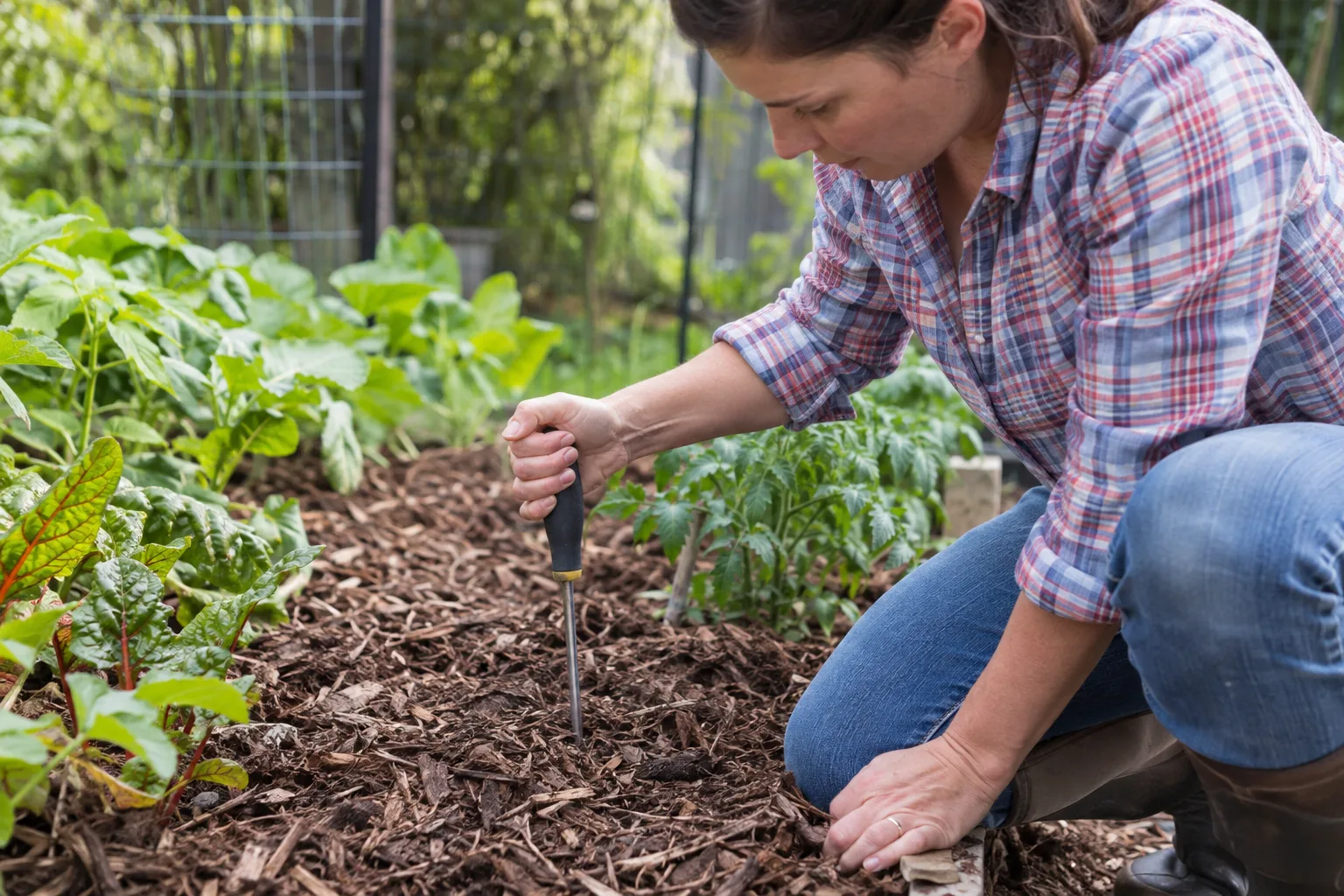
Check before every change. Push a finger or soil probe 3 to 4 inches down near the plant base, and water if it feels dry. To test depth, water normally, wait an hour, then push a long screwdriver into the soil. It should slide in easily to 12 inches or more. If it stops at 4 to 6 inches, lengthen the run time or split it into two shorter cycles an hour apart so the water has time to soak in.
What do you need for a drip irrigation setup?
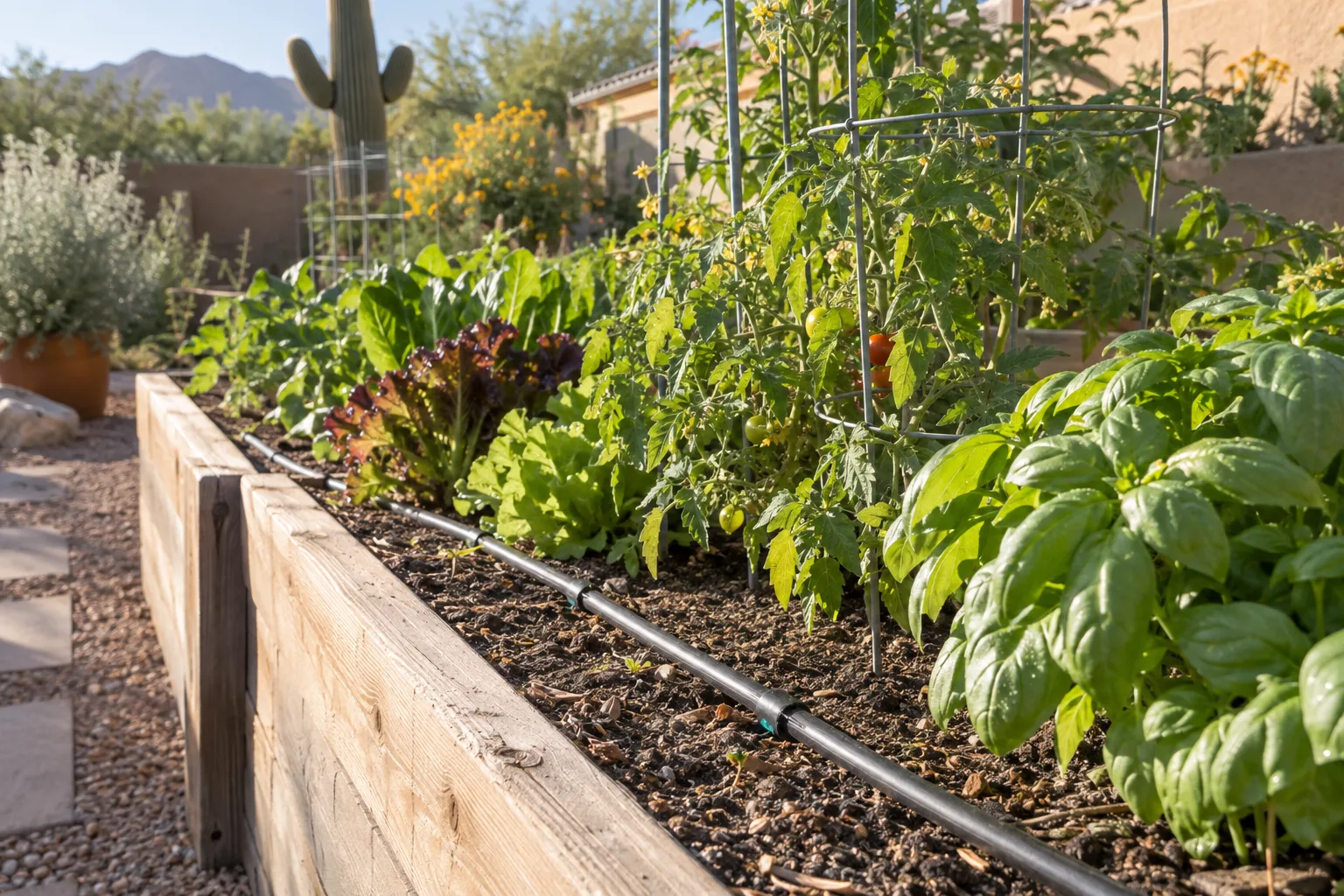
A basic drip system for a vegetable bed needs only a few parts. Drip is the most efficient way to water vegetables because it delivers water to the root zone with little loss to evaporation.
- Drip tubing with emitters or inline drippers at each plant
- An inline filter and a pressure regulator
- A timer that can run before sunrise
- End caps or flush valves for clearing the lines
- A soil probe or a long screwdriver for depth checks
Hard water leaves mineral deposits that clog emitters. A filter slows the problem, and flushing finishes the job.Check each emitter for a steady drip at least once a month.

How do you set up a vegetable watering schedule?
Start with a baseline, then let the soil tell you what to change. This process fits most low desert vegetable gardens.
- Decide whether each bed is native soil or a raised bed with amended mix. Raised beds need shorter, more frequent runs, and native soil needs longer, less frequent ones.
- Group plants by water need on the same drip zone. Tomatoes, squash and cucumbers drink heavily, while herbs such as oregano need less.
- Set the timer to start between 4 a.m. and 6 a.m.
- For a drip-irrigated raised bed in summer, begin with about 20 to 30 minutes once a day. Check moisture at 3 to 4 inches the next morning.
- Adjust in 5-minute steps until the screwdriver test reaches 12 to 18 inches.
- Open the end caps monthly and let water run for 2 to 3 minutes to flush out sediment and minerals.
- Revisit the timer every week or two. Temperatures in the East Valley can swing 10 degrees or more within a month, and run times should follow.
How should you adjust watering through the year?
Water more as temperatures climb and less as they fall. The table gives a starting point for established plants, and your soil check overrides it. For planting dates, the University of Arizona Cooperative Extension publishes a vegetable planting calendar for Maricopa County, and our gardening calendars lay out the year month by month.
| Season | Months | Typical watering |
|---|---|---|
| Cool season | October to February | Every 2 to 4 days; check seedlings daily |
| Spring warm-up | March to April | Increase gradually before plants show stress |
| Summer | May to June | Daily for raised beds; up to twice daily for containers and young transplants |
| Monsoon | July to September | Daily, but skip 1 to 2 cycles after 0.5 inch of rain or more |
By mid-April, summer highs near 95 to 100°F push cool-season crops such as lettuce and broccoli toward bolting. Shift your attention to the warm-season transplants you are establishing. Once daytime highs drop below about 95°F in October, trim run times by roughly 30 to 40 percent.
Monsoon storms are patchy. One neighborhood can get an inch while the next gets none, so read your own soil instead of the forecast. Summer highs above 110°F make June the hardest month, since humidity has not arrived yet and evaporation is at its peak.
How can you tell overwatering from underwatering?
Both problems cause wilting and yellow leaves, so the pattern matters. Look at when the plant wilts and where the yellowing starts, then confirm with the soil check.
Signs of too little water
- Wilting that is worst in the afternoon and recovers overnight
- Dry, crispy leaf edges starting at the tips
- Leaves that curl into tubes
- Soil pulling away from the bed or container wall
Signs of too much water
- Wilting that continues through the cool morning
- Yellowing that starts on the lower, older leaves and moves upward
- Soggy soil with a sour or musty smell
- Soft, dark stem bases, a warning sign of root rot
The top inch of soil can be dry while the root zone at 4 to 6 inches is still moist from the last cycle. That is why surface appearance misleads, and a probe does not.
What mistakes waste water in a vegetable garden?
The most common mistakes are shallow daily sprinkling, midday watering and running a timer unchecked through a heat wave or a rainy week. Shallow watering keeps roots near the surface, where summer soil can climb well past 100°F.
Bare soil is another leak. A 2 to 3 inch layer of straw, shredded wood or similar organic mulch slows evaporation noticeably, and you should keep it a few inches back from plant stems to prevent rot.
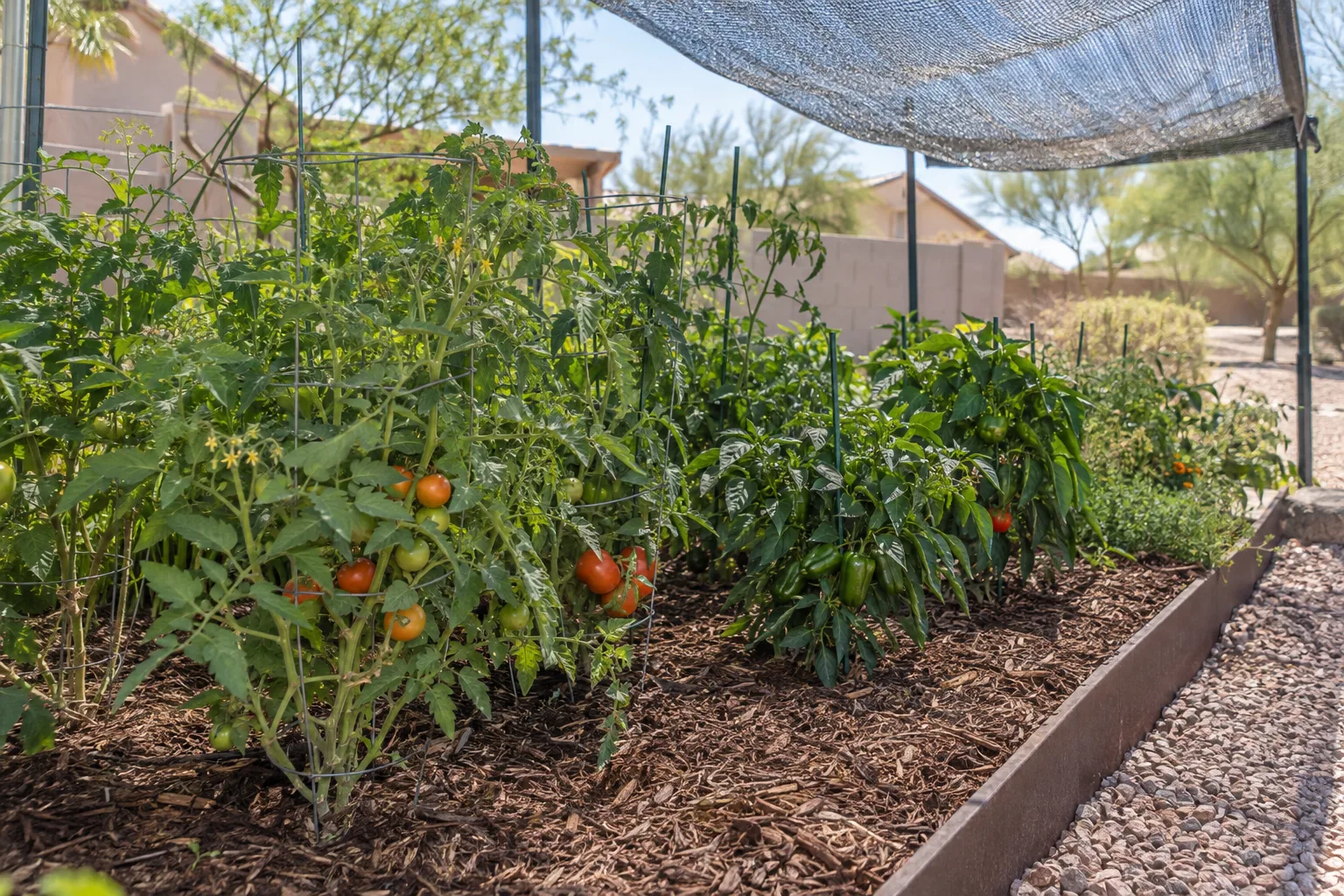
Summer shade cloth rated around 30 to 40 percent cools the soil and stretches the time between waterings. Container plants need extra attention because small volumes of soil dry quickly. Our pottery and planters come in many sizes, and larger pots hold moisture longer than small ones.
Frequently asked questions
Why do my tomatoes wilt in the afternoon when the soil is moist?
Tomatoes wilt in afternoon heat as a stress response, even with adequate moisture. When air temperatures pass 105°F, the leaves lose water faster than the roots can supply it. If the plants look fresh again by morning, leave the schedule alone. Wilting that lasts into the cool morning points to a real problem.
How deep should water go in a vegetable bed?
Water should reach 12 to 18 inches for most vegetables. Deep moisture encourages roots to grow downward, where the soil is cooler and more stable. Test an hour after watering by pushing a screwdriver into the bed. If it stops at 4 to 6 inches, extend the run time or split it into two cycles.
How much should I cut back after a monsoon rain?
After about 0.5 inch of rain or more, skip the next 1 to 2 irrigation cycles and check the soil before resuming. Showers under roughly 0.25 inch rarely soak deep enough to matter for established plants. Rain gauges in your own yard are more reliable than the forecast for your area.
How often should I water vegetables in containers?
In midsummer, containers in full sun often need water once or twice a day. The small soil volume heats and dries quickly. Check the top 2 inches each morning and again in the late afternoon during heat waves. In winter, every 2 to 4 days is usually enough.
Does hard water harm vegetables?
Hard water mostly causes mineral buildup in emitters and a gradual rise in soil alkalinity. High pH can limit iron and manganese uptake, showing up as yellowing between leaf veins. Flush lines monthly, add compost to your soil regularly, and watch for those symptoms rather than assuming the water is the cause.
Is drip irrigation worth it for your vegetable garden?
For most in-ground and raised-bed gardens in Queen Creek, yes. Drip puts water at the roots, runs on a timer before sunrise and uses less water than a hose or sprinkler. Skip it if you grow only a few pots on a patio, since hand watering at the base is easier there. Either way, check the soil before you trust the schedule. Stop by our nursery in Queen Creek, or see our classes and events, to talk through your setup.