

To water succulents in Arizona, soak the root zone deeply, then wait until the soil is dry 2 to 3 inches down before watering again. That gap runs from a few days for pots in June to several weeks in winter.
Key takeaways
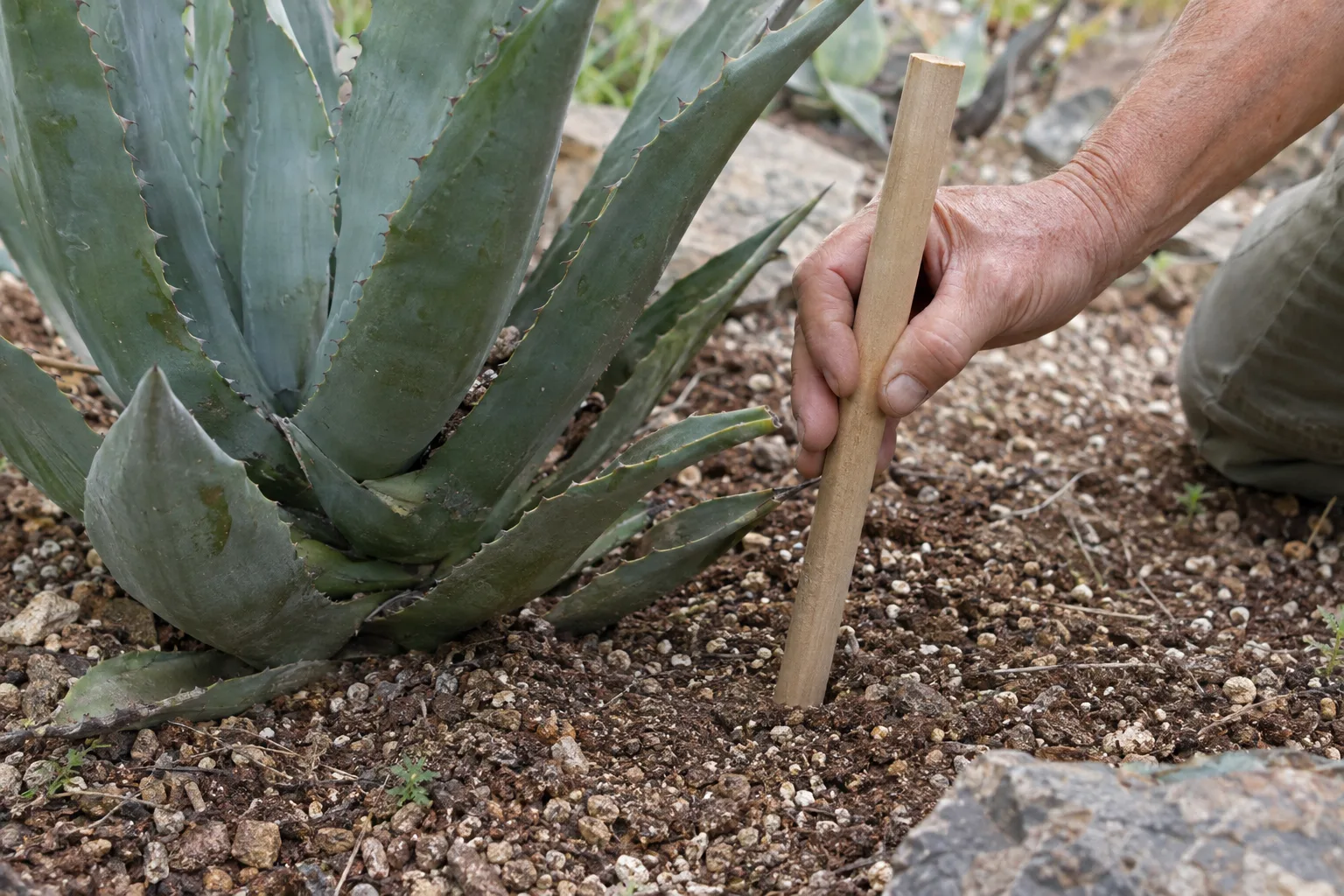
- Push a finger or wooden dowel 2 to 3 inches into the soil, and water only when it comes out dry.
- Established plants in the ground often need water every 3 to 4 weeks in winter and every 1 to 2 weeks in May and June, while pots dry out sooner.
- Water at the base of the plant in the early morning, and never mist the leaves.
- After half an inch or more of monsoon rain, pause drip irrigation for 5 to 7 days and check the soil before restarting.
- Flush pots with extra water about once a month to wash out minerals left by hard water.

How often should I water succulents in Arizona?
Water when the soil 2 to 3 inches down is dry, and let the season set how soon that happens. Summer highs above 110°F can empty a pot in under a week, while a cool January can stretch the gap to several weeks. Check before every watering.
The table gives starting points for established plants. Adjust from there based on what the soil and the plant tell you.
| Season | Months | In the ground | In pots |
|---|---|---|---|
| Winter | November to February | Every 3 to 4 weeks | Every 2 to 3 weeks |
| Spring | March to April | Every 2 to 3 weeks | Every 1 to 2 weeks |
| Early summer | May to June | Every 1 to 2 weeks | Every 5 to 7 days |
| Monsoon | July to September | Only as needed | Every 7 to 10 days (check soil) |
| Fall | October | Every 2 to 3 weeks | Every 1 to 2 weeks |
Newly planted succulents need water more often, commonly every 7 to 10 days in warm months until new growth appears, and they usually take 6 to 12 months to settle in.Our gardening calendars can help you line up planting and care month by month.
What do I need to water succulents well?
You need a gritty soil mix, a planting spot or pot that drains, and a way to check moisture. Everything else is optional.
- A wooden dowel or skewer, or a clean finger, to test moisture 2 to 3 inches deep.
- Cactus and succulent mix blended with about 30 to 40 percent coarse perlite or pumice for containers.
- Pots with drainage holes. Terracotta pulls moisture through its walls and dries fast, while glazed ceramic and plastic hold water longer. When you shop for pots, look through our pottery and planters and check for holes in the bottom.
- Low-flow drip emitters rated 0.5 to 1 gallon per hour for plants in the ground.
Start with succulents suited to the low desert, and browse our plants to see what fits your yard. Agave, Aloe and prickly pear (Opuntia) are types we commonly carry, and availability changes week to week and season to season. Established agaves and prickly pears need the least water, aloes like a little more in summer, and golden barrel cactus (Echinocactus grusonii) rots quickly in wet soil.
How do I water succulents step by step?
Test the soil, water slowly at the base until the root zone is soaked, then let it drain and dry. The steps below work for pots and for plants in the ground.
- Push a finger or dowel 2 to 3 inches into the soil. If it feels damp, wait a few days and test again.
- Water in the early morning, or in the evening during summer, and never at midday. Aim at the soil, not the leaves.
- Go slowly. For plants in the ground, water until moisture reaches 6 to 8 inches deep. For pots, water until it runs freely out of the drainage holes.
- Let the pot drain completely and empty any saucer so roots never sit in standing water.
- Look at the plant 1 to 2 days later. Leaves on a thirsty succulent should look plumper.
- Adjust for the weather. During a heat wave above 112°F, potted succulents may need water sooner than the table suggests.
- Once a month, water pots with extra volume to flush mineral salts out through the bottom.
Drip irrigation suits succulents when it is set up with care. Place low-flow emitters 6 to 12 inches from the base of the plant rather than at the crown, which encourages roots to spread outward. Run the timer in the early morning, and flush the lines and replace clogged emitters each spring and fall, since mineral-heavy water blocks them.
How can I tell overwatering from underwatering?
Mushy, translucent leaves point to too much water, and wrinkled, deflated leaves point to too little. Checking the roots settles most doubts.
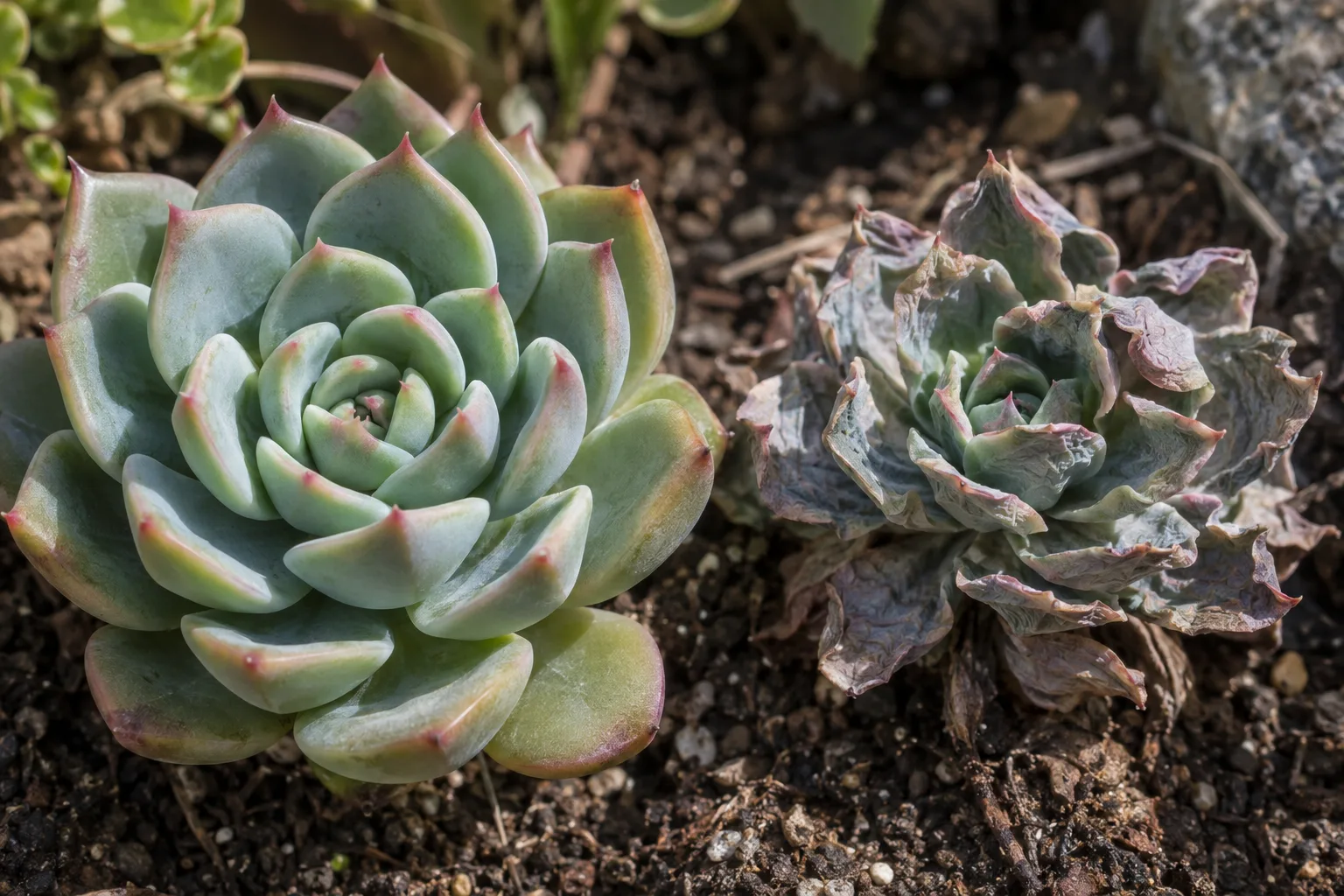
- Soft, translucent or mushy leaves: the plant holds more water than it can use. Cut back and check drainage.
- Yellowing lower leaves: possible root rot. Unpot the plant, since healthy roots are white or tan and rotted roots are brown and soft.
- Wrinkled or shriveled leaves: the plant is drawing on its reserves. A deep soak usually plumps the leaves within a day or two.
- Brown, dry leaf tips: can come from underwatering, very low humidity or mineral buildup. Flush the pot and review your interval.
- Bleached white or beige patches: sunscald, often on dry plants moved into full afternoon sun. Water well and add shade.
- Stretching and leaning: the plant needs more light, so move it somewhere brighter.
A plant that has rotted from overwatering often looks fine on top for weeks while the damage spreads from the roots upward, so soft leaves are a late warning.
How should I change watering during the monsoon?
Cut back or shut off irrigation for 5 to 7 days after half an inch or more of rain, then check the soil before restarting. The monsoon runs roughly July through September, and a single storm can drop an inch of rain in an hour, followed by humid days that keep soil wet.
Warm, wet soil favors the fungi that cause root rot. If a bed stays soggy more than 3 to 4 days after a storm, improve the drainage before next season. Keep the timer on manual.
Move pots under a covered patio during long wet stretches and confirm that the drainage holes are clear. Rainwater you catch is lower in minerals than tap water, so it suits containers well.
Do Queen Creek soil and hard water change how I water?
Yes. Alkaline soil, caliche and mineral-heavy irrigation water all affect how long moisture lingers around succulent roots.
Caliche is a hard calcium carbonate layer that can sit 8 to 18 inches below the surface and hold water like a shallow bowl. Before planting in the ground, dig a hole about 12 inches deep, fill it with water and time how long it takes to drain. If water still stands after 2 to 3 hours, plant on a mound, build a raised bed or use containers.
For in-ground plantings, dig wide rather than deep, mix decomposed granite or coarse sand into the native soil, and set the plant slightly high so water runs away from the crown. Thin caliche can be broken with a digging bar.

Hard water leaves a white crust on pots and drip emitters, and the same minerals build up around roots over time. The monthly flush and the spring and fall emitter check keep that in hand. If you would like to see these steps done in person, look at our classes and events page.
What watering mistakes should I avoid?
The common ones are a fixed year-round schedule, midday watering, misting and pots without drainage holes.
- Leaving the irrigation on its summer schedule through the monsoon, which soaks soil that is already wet.
- Watering at midday, when much of the water evaporates and hot soil can stress roots.
- Letting a pot sit in a full saucer, so the roots stay wet for days.
- Planting too deep, which holds moisture against the crown and invites rot.
- Skipping the soil check and watering by habit.
Most losses come from too much water at the wrong time rather than too little, and they are easy to avoid once you test the soil before every watering.
Frequently asked questions
Can succulents survive Arizona summers without irrigation?
Established in-ground agaves and prickly pears can often get by on rainfall with little help. New plantings, non-native succulents and all potted plants need water through summer. Even tough native types benefit from a deep soak every 3 to 4 weeks during the dry stretch of May and June, when temperatures are extreme and rain is rare.
Should I water differently in terracotta and plastic pots?
Yes, terracotta needs water more often. Its porous walls pull moisture out of the soil, so in summer it can need water nearly twice as often as glazed ceramic or plastic. Plastic holds moisture longer, which helps in heat but raises the risk of rot if you water on autopilot. Whatever the material, drainage holes are required.
Why are my succulent’s leaves still wrinkled after I watered?
Damaged or dried-out roots are the usual cause when leaves stay wrinkled 24 to 48 hours after a deep watering. Unpot the plant, trim soft brown roots with clean scissors, let it dry for 2 to 3 days and repot in fresh gritty mix. Very dry soil can also repel water, so a slow second soak sometimes fixes it.
Does misting help succulents in dry air?
No, misting does little for succulents in Arizona. The mist evaporates within minutes in low humidity and never reaches the roots, where the plant takes up water. Wet leaves in strong sun can also mark or scorch. Deep watering at the soil level gives mature plants all the moisture they need.
Are succulents the right low-water choice for your yard?
Succulents suit most Queen Creek yards because they need far less water than lawns or many shrubs, though they do need a few months of attention while they establish. If your yard holds water over caliche and you will not build a mound, a raised bed or use pots, succulents will rot there. If you want a plant that never needs checking, choose something else. Come by our nursery in Queen Creek and talk through your yard with us.