
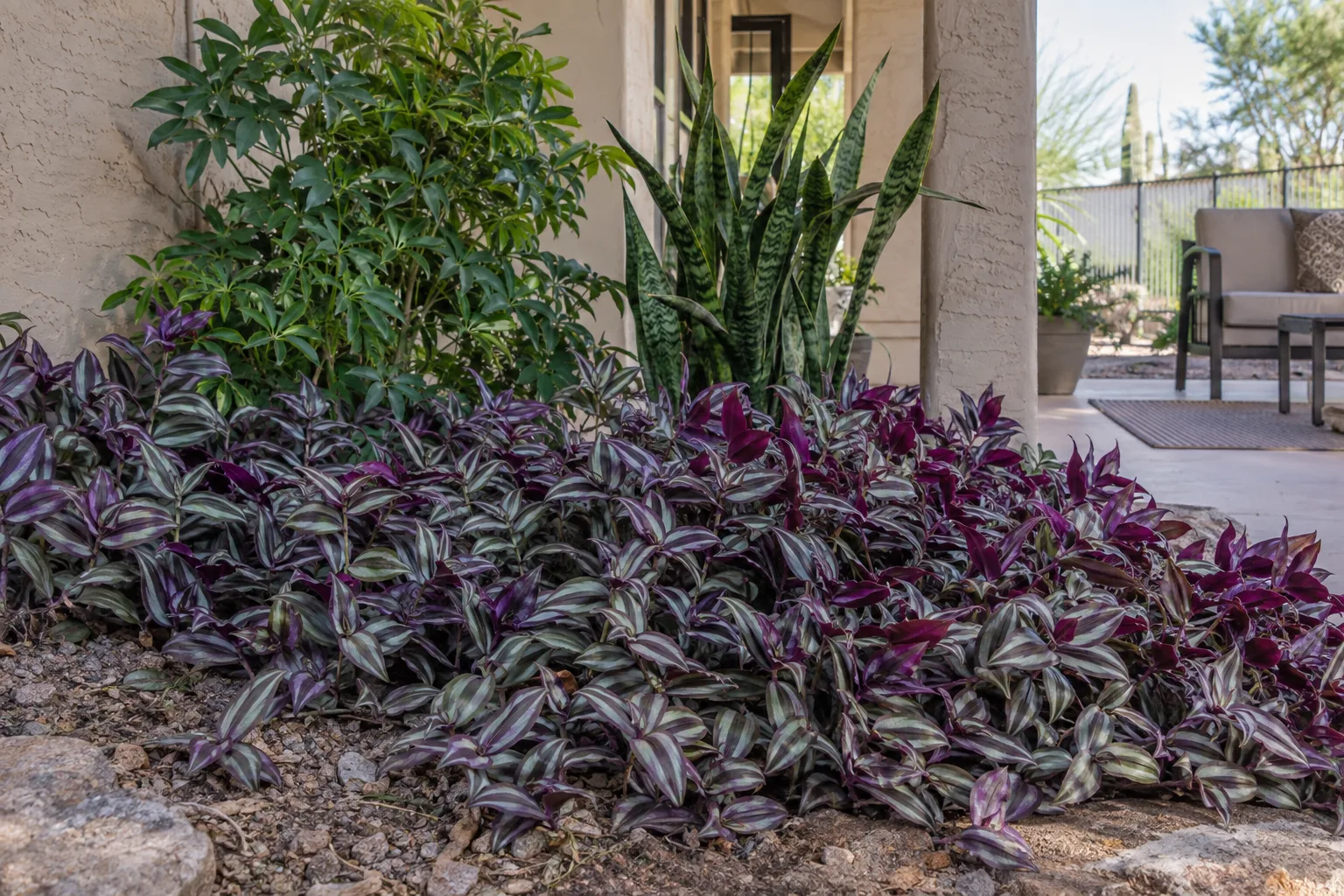
The best companion plants for Wandering Jew in Arizona are shade lovers with similar water needs, such as cast iron plant, coleus, caladium and impatiens. Plant them where the bed gets morning sun or filtered light, in amended soil that drains well.
Key takeaways
- Wandering Jew (Tradescantia zebrina) colors best in bright shade or morning sun and scorches in afternoon sun when summer highs pass 110°F.
- Pick companions that accept regular water. Cast iron plant, coleus, caladium and elephant ear fit best.
- Impatiens carry the bed from about October to April, while coleus and caladium cover roughly May through October.
- Mix 3 to 4 inches of compost into caliche-heavy native soil, and confirm a test hole drains within an hour.
- Trim the edge of the Wandering Jew every 3 to 4 weeks during the growing season so it does not smother its neighbors.
What conditions does Wandering Jew need in the low desert?
Wandering Jew wants bright shade or morning sun, regular water and protection from frost. It does well on the north side of a house, under a patio cover or beneath an open tree like palo verde. Afternoon sun in July and August bleaches the purple and silver leaves and crisps the stem tips.
Native soil here is alkaline and often sits on caliche, so water can pool around roots after a deep irrigation or a monsoon storm. A freeze near 28°F to 30°F kills the top growth. Established clumps usually resprout from the base once spring warms up.
The plants below pair well with it, and you can browse our annual flowers and foliage to see what is growing now. These are varieties we commonly carry, and availability changes week to week and season to season.
How do I choose companion plants for Wandering Jew?
Choose plants that tolerate the same shade and accept the same irrigation schedule, then vary the height and leaf shape. Wandering Jew stays low, usually 6 to 12 inches, so taller neighbors give the bed layers that a single groundcover cannot.
Skip true desert plants such as agave and brittlebush. They rot or sulk on the frequent watering that Wandering Jew needs, and the mismatch is hard to fix once everything is planted together. Texture matters too: pair its smooth, pointed leaves with strap-shaped, feathery or oversized foliage.
Which companion plants work best with Wandering Jew in Arizona?
Eight plants earn a place in a shaded bed here, each with a different job. Some supply height, some supply color, and a few cover the months when Wandering Jew looks tired. Each one has a drawback worth knowing before you buy.
1. Cast iron plant (Aspidistra elatior)
Cast iron plant reaches 18 to 24 inches tall and gives the bed dark, upright leaves. It prefers deep to bright shade and moderate water, and it tolerates alkaline soil. The drawback is slow growth. It takes a couple of seasons to fill in, and any direct afternoon sun burns the leaf edges.
2. Coleus (Plectranthus scutellarioides)
Coleus grows 12 to 24 inches tall and comes in burgundy, lime, orange and cream foliage that either blends with or contrasts against the purple of Wandering Jew. It likes morning sun or bright shade and regular water. The drawback is frost, which kills it outright, and it wilts fast if the soil dries. Pinch off flower spikes to keep it bushy.

3. Caladium (Caladium bicolor)
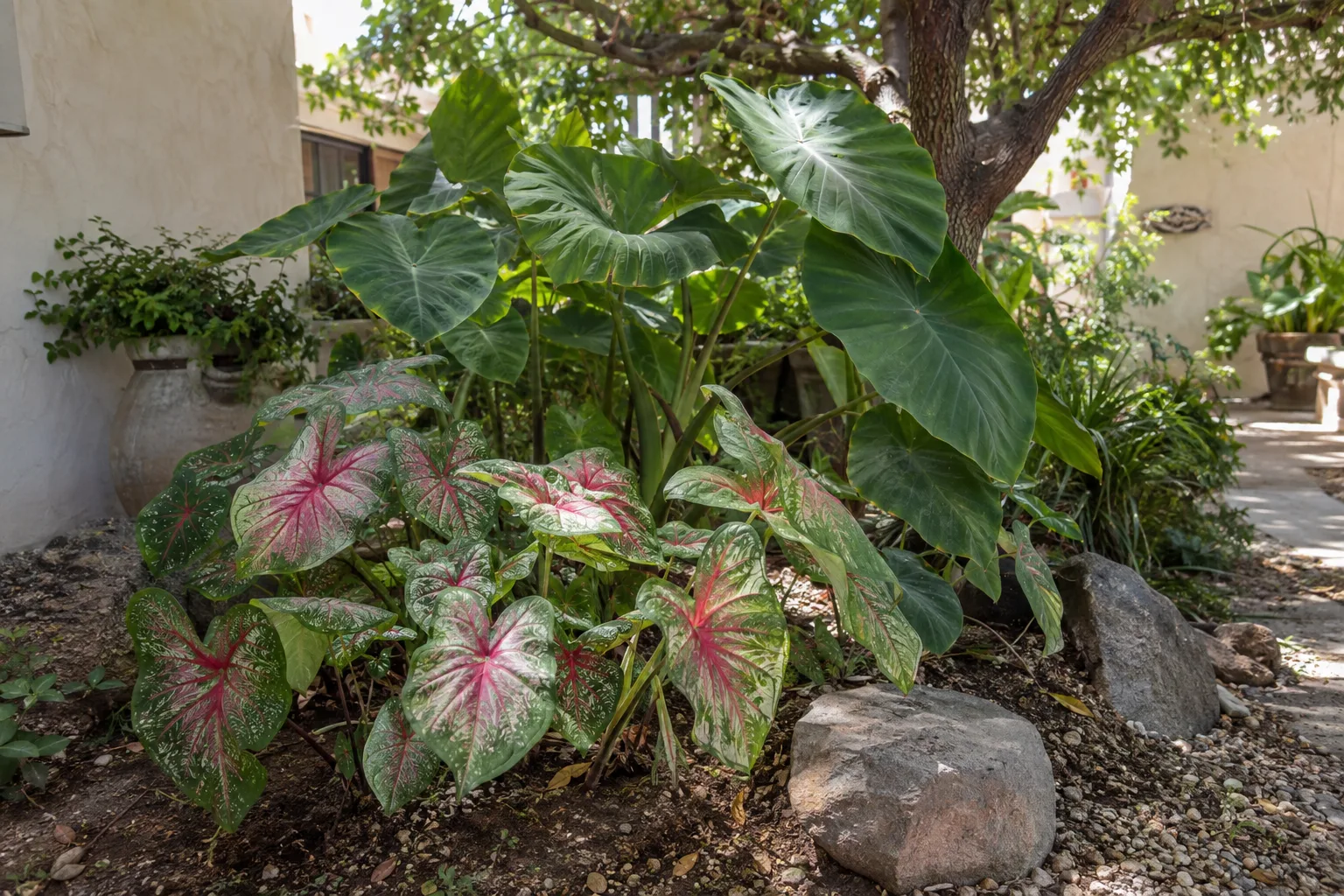
Caladium grows 12 to 24 inches tall with heart-shaped leaves in red, pink, white and green. It wants shade, warm soil and regular water, and it performs through the warm months. The drawback is dormancy. The leaves die back in fall, leaving a bare patch in winter that Wandering Jew has to cover.
4. Impatiens (Impatiens walleriana)
Impatiens stays 8 to 16 inches tall and covers the cool months with coral, magenta, white and pink flowers. It needs shade and steady moisture, much like Wandering Jew. The drawback is summer. It declines once highs climb past the upper 90s, so plan on replanting each fall.
5. Elephant ear (Colocasia esculenta)
Elephant ear reaches roughly 3 to 5 feet tall, with leaves that can span 2 feet or more. It wants bright shade, warmth and plenty of water, which suits a wet, shaded corner. The drawback is spread, since it sends up new shoots from the base, and the sap can irritate skin and mouths. Keep it away from curious pets.
6. Asparagus fern (Asparagus densiflorus ‘Sprengeri’)
Asparagus fern arches out to about 2 to 3 feet and adds fine, feathery texture to a bed of broad leaves. It grows in bright shade to morning sun and needs moderate water. The drawback is seed. The red berries sprout where they fall, and the berries and sap can irritate skin and pets, so wear gloves when trimming.
7. Bird of paradise (Strelitzia reginae)
Bird of paradise grows 3 to 5 feet tall and gives the back of a bed strong vertical structure. It wants morning sun or bright light and, once established, less water than Wandering Jew. The drawback is that mismatch. Plant it at the edge of the irrigation zone, and protect it from hard frost.
8. Bromeliads (Neoregelia species)
Neoregelia forms rosettes about 1 to 2 feet across, often streaked in red, pink or striped green. It prefers bright shade and moderate water, and it handles shallow soil. The drawback is cold. Bromeliads are tender in a freeze and rot in heavy, wet ground, so tuck them in raised spots with good drainage.
Can these plants share one irrigation zone?
Most of them can, as long as the soil drains well and you place the lower-water plants at the edge of the zone. Bird of paradise and bromeliads want the least water, and the rest sit close to Wandering Jew.
| Plant | Best season here | Water compared with Wandering Jew |
|---|---|---|
| Cast iron plant | Year round | Slightly less |
| Coleus | Spring through fall | Similar |
| Caladium | Warm months | Similar |
| Impatiens | Fall through spring | Similar or more |
| Elephant ear | Warm months | More |
| Asparagus fern | Year round | Slightly less |
| Bird of paradise | Year round | Less |
| Bromeliads | Year round, frost protected | Less |
Cut irrigation as nights cool in November, because roots sitting in cold, wet soil rot faster than roots that run a little dry. Hard water leaves salts behind, so flush the bed with a slow, deep soak now and then. Yellow leaves with green veins point to iron chlorosis in alkaline soil.
How do I plant a companion bed for Wandering Jew?
Check the light, fix the drainage, amend the soil, then plant tall to short. Doing the drainage work first saves you from replanting later, because caliche under a bed holds water around the roots.

- Watch the spot for two or three days and note how many hours of direct sun it gets. Under 2 hours suits all eight plants.
- Dig a hole about 12 inches deep and fill it with water. If it has not drained within an hour, break through the caliche with a digging bar.
- Mix 3 to 4 inches of compost into the top 8 to 10 inches of soil.
- Set taller plants at the back or center, mid-height plants in the middle, and Wandering Jew in front and between.
- Space Wandering Jew cuttings or starts 8 to 12 inches apart. Give elephant ear about 3 feet, and coleus 12 to 15 inches.
- Water deeply after planting and every day or two for the first couple of weeks.
- Add 2 inches of mulch and keep it off the stems.
Growing in a pot gets you the same effect on a patio. Our pottery and planters include wide, deep containers that hold moisture longer than small pots.
What does the bed need through the year?
The bed needs trimming in late winter, fresh color in spring and fall, and less water as nights cool. Our gardening calendars give month-by-month timing for the East Valley.
- February to March: Cut off frost-damaged Wandering Jew stems and begin feeding as growth resumes.
- April to May: Plant caladium and coleus once the soil is warm.
- June to August: Check moisture often, keep afternoon shade in place and watch for spider mites.
- July to September: During monsoon storms, check that the bed drains and cut irrigation on rainy days.
- October to November: Plant impatiens, and ease off watering as nights cool.
- December to January: Cover tender plants such as coleus remnants, bromeliads and bird of paradise with frost cloth when a freeze is forecast.
Is Wandering Jew a problem plant in Arizona?
It can spread fast in irrigated shade, but you should check the current state list yourself before planting. The Arizona Department of Transportation publishes the Arizona noxious weed list, which sorts regulated species into classes A, B and C.
Inside a bed with a hard edge, trimming keeps it in check. Keep it away from desert washes and open ground where runoff could carry stem pieces. Dispose of cuttings in the trash instead of dumping them over a wall.
Frequently asked questions
Can I grow Wandering Jew with companions in a container?
Yes, a pot at least 14 to 16 inches wide works well. Use a quality potting mix with added perlite for drainage, and pair it with coleus or caladium. Keep it in shade. Containers dry out much faster than beds, and in July and August you may need to water daily.
How do I propagate Wandering Jew to fill the bed?
Take 4 to 6 inch stem cuttings, strip the lower leaves and press them into moist soil. Roots usually form within a couple of weeks in warm soil. Spring and fall give the quickest results, and peak summer heat needs steady moisture and shade.
How do I keep Wandering Jew from overtaking companions?
Trim the bed’s edge every 3 to 4 weeks while it is growing. Use sharp shears and cut back to the border. Pull runners that start rooting around neighbors by hand. Leaving room at planting time also helps, because crowded beds make every plant compete.
Why is my Wandering Jew fading or turning brown?
Too much direct sun is the usual cause, especially afternoon sun after about 1 PM. Move it to deeper shade or hang 30 to 40 percent shade cloth over the bed. Frost also browns the stems, but new growth normally returns from the base in spring.
Can I keep Wandering Jew indoors instead?
Yes, it grows well as a houseplant in bright, indirect light, and cuttings root easily in water. It is a good way to protect a favorite plant from frost. Browse our houseplants for other indoor foliage that pairs with it.
Is a Wandering Jew companion bed right for your yard?
It suits you if you have a shaded courtyard, north-facing entry or covered patio and are willing to water regularly and trim every month or so. The payoff is a full, colorful bed that fills gaps through every season. Skip it if your spot gets full afternoon sun, if you prefer a low-water desert planting, or if you cannot trim a spreading groundcover. Come see our plants in person at the nursery in Queen Creek.