
Arizona gardeners use vinegar solutions on walkways in December because winter weeds are still seedlings, the weather is usually dry, and vinegar loosens hard-water crust. It burns top growth only, so it works on small weeds and stained paving, and established roots usually regrow.
Key takeaways
- Household white vinegar at 5% acetic acid burns the leaves of seedling weeds within about 2 to 4 days in December, but perennials such as Bermuda grass regrow from their roots.
- Horticultural vinegar sold at higher strengths can injure skin and eyes, so wear goggles and gloves and follow the product label.
- Spray on a calm, dry morning, with no rain or irrigation planned for at least 24 hours.
- A 50/50 mix of white vinegar and water loosens light hard-water crust on pavers after 10 to 15 minutes of dwell time, and natural stone needs a patch test first.
- Vinegar kills any green tissue it touches, so keep the spray at least 12 inches from plants you want to keep.
Why is December a good month for walkway weed control in Arizona?
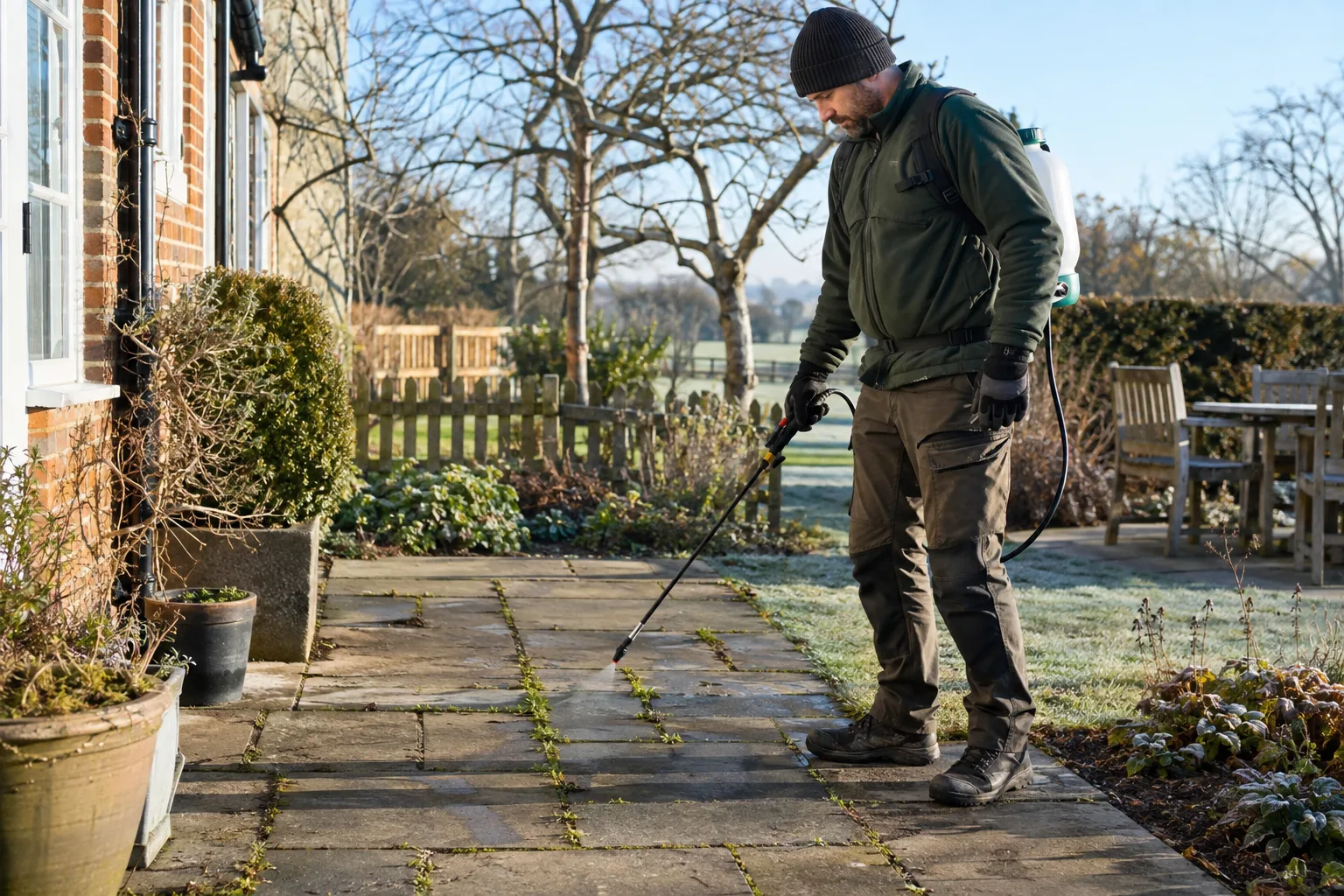
December works because the weeds are small and the ground is usually dry. Winter annuals such as London rocket (Sisymbrium irio) and other mustard-family weeds sprout in the cool months on the low desert, and a seedling with a few leaves burns back far more easily than a plant that has bolted by February or March.
Sun is weaker in December than in summer, so vinegar acts more slowly. Expect leaves to brown over two to four days instead of a few hours. Pick a dry day above roughly 60°F. Our gardening calendars list the other jobs that belong in the same month.
Clearing the joints also leaves bare ground that weeds will refill by spring. Low, spreading perennials fill that space instead, and you can browse them in our plant department.
What does vinegar clear from a walkway?
Vinegar burns the leaves of small weeds, loosens light mineral crust and lightens algae film. It does not reach roots, and it does nothing to stop new seeds from sprouting. The three jobs below call for slightly different handling.
Weeds in paver joints
Acetic acid is a contact burn, so it kills only the leaves and stems it touches. Annual seedlings often die after one or two sprays. Perennials such as Bermuda grass (Cynodon dactylon) and nutsedge regrow from rhizomes or tubers, so plan on repeat sprays every 7 to 14 days to wear them down.
White crust on pavers and flagstone
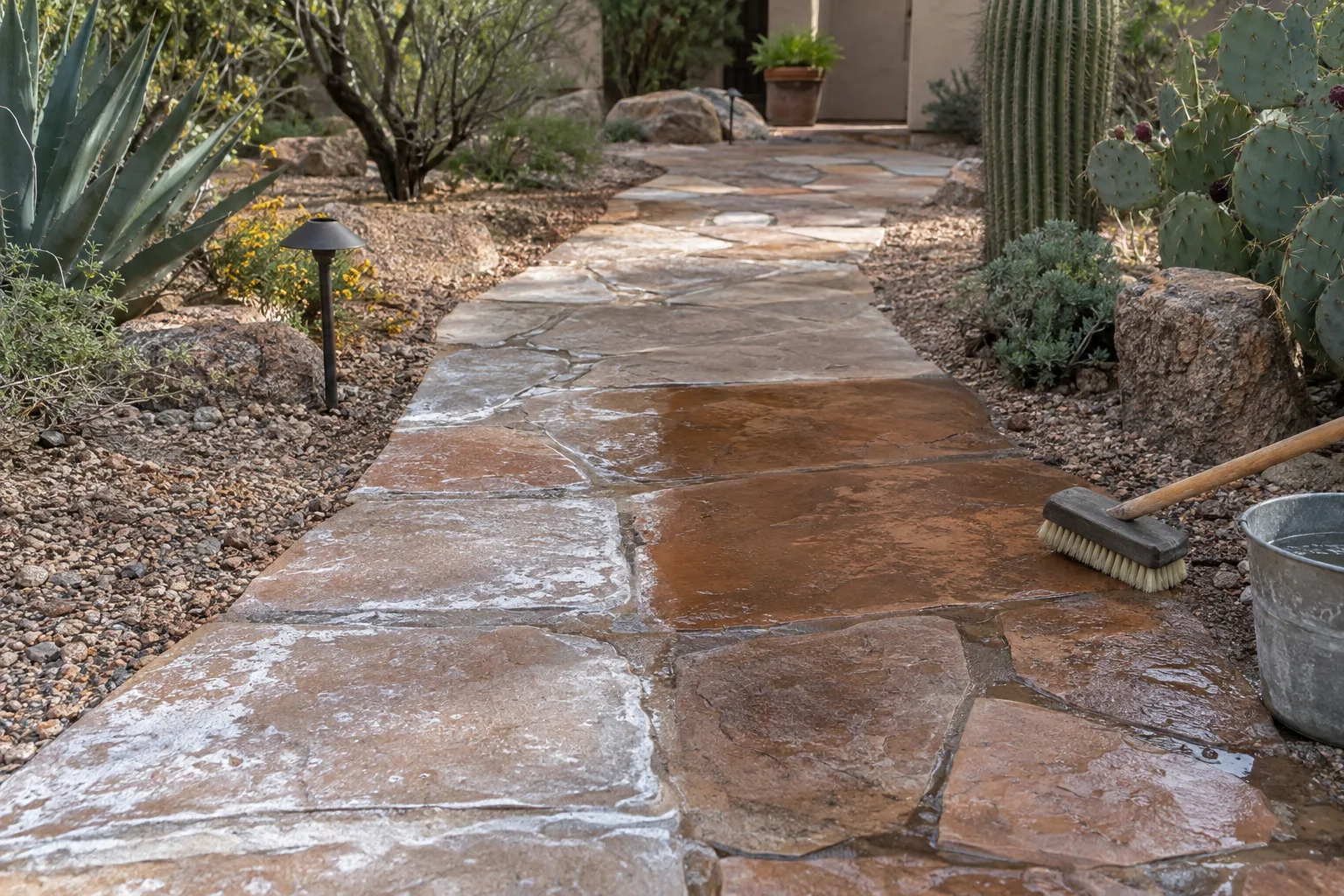
Hard irrigation water leaves a chalky white crust on pavers, block walls and flagstone as it evaporates, and acetic acid reacts with the calcium carbonate in that crust. Wet the area with a 50/50 mix of white vinegar and water, wait 10 to 15 minutes, scrub with a stiff brush and rinse with plain water. Heavy crust may need a second round.
Natural stone such as travertine, limestone and marble can etch under acid. Test first. Treat a hidden spot, wait a day, and look at it in daylight before you do the whole walk.
Green film on shaded paths
Damp, shaded spots on the north side of a house or beside a block wall can grow a slick green algae film that becomes a slip hazard. Spray undiluted white vinegar, wait about 30 minutes, then scrub and rinse. Results on thick algae are moderate, and a large area may go faster with a stiff broom and a hose.
Which vinegar strength should I use on walkway weeds?
Start with 5% white vinegar from the grocery store, which is enough for seedlings, light crust and algae film. Horticultural vinegar sold at higher strengths (commonly 10 to 30% acetic acid) burns weeds faster, but it can injure skin and eyes and calls for goggles, chemical-resistant gloves and long sleeves.
Vinegar sold as a weed killer carries a pesticide label, and the label directions on mixing, protective gear and where you may spray are the ones to follow. Skip table salt in the mix. It stays in the soil and can damage nearby plants for a long time. A few drops of dish soap helps the spray cling to waxy leaves.
How do I spray vinegar on walkway weeds step by step?
Spray on a calm morning, wet each weed until it drips, and give it a few days to brown. The steps below cover a small residential walkway.
- Check the forecast for light wind (under about 10 mph) and no rain for 24 hours. Turn off sprinkler or drip timers that reach the walkway.
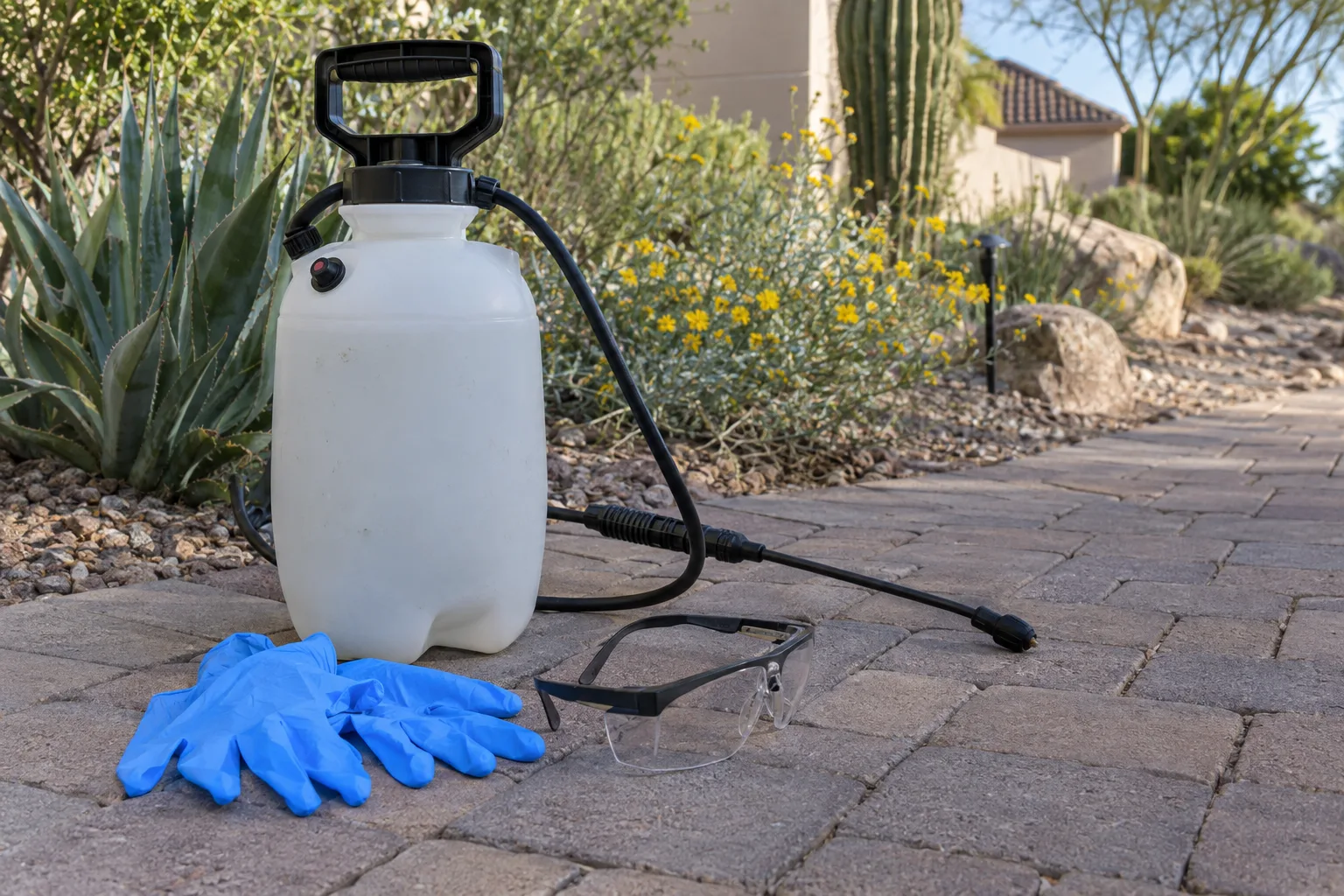
- Put on safety glasses, gloves and closed shoes, even with 5% vinegar.
- Fill a pump sprayer you will use only for vinegar. Add a few drops of dish soap and label the tank.
- Set the nozzle to a coarse stream and hold it low. Wet the leaves of each weed, and hold a piece of cardboard behind weeds that sit near plants you want.
- Wait two to four days. Brush or pull the browned weeds out once they are dry.
- Re-spray regrowth after 7 to 14 days, then rinse the sprayer with clean water.
What mistakes should I avoid with vinegar near plants?
Most vinegar problems come from drift, strength and expectations. Vinegar is non-selective, meaning it browns lavender, lantana and lawn as readily as it browns spurge.
- Spraying in a breeze. Droplets travel farther than you expect and can burn leaves several feet away.
- Soaking soil beside citrus, vegetables or young transplants. Keep sprays a foot or more from them and use cardboard as a shield.
- Skipping the patch test on natural stone or colored concrete.
- Expecting a permanent result. Perennial weeds regrow, so repeat sprays or pull them by hand.
- Spraying just before irrigation or rain, which rinses the vinegar away before it works.
What should I plant along a cleaned walkway edge?
Choose low, drought-tolerant perennials that handle reflected heat and alkaline soil, and plant them in cool weather so the roots settle in before summer highs above 110°F. These are groups of plants we commonly carry, and availability changes week to week and season to season.
Blackfoot daisy (Melampodium leucanthum) stays low and mounded with white flowers, though it dislikes overwatering. Damianita (Chrysactinia mexicana) forms a small, aromatic mound with yellow flowers and grows slowly. Globe mallow (Sphaeralcea ambigua) has orange blooms but can look rangy and self-seeds freely. Desert marigold (Baileya multiradiata) is short-lived but reseeds in gravel.

Where a path crosses solid paving with no soil, pots from our pottery and planters department soften the edge without creating more joints for weeds.
Frequently asked questions
Can I use apple cider vinegar instead of white vinegar?
Yes, apple cider vinegar at 5% acetic acid burns weeds in a similar way, but white vinegar costs less. Cider vinegar contains sugars and color that can leave a sticky film or a faint stain on light pavers. Keep it for the kitchen and use white vinegar in the sprayer.
Will vinegar kill Bermuda grass in paver cracks?
Vinegar burns Bermuda grass leaves, but the rhizomes underneath usually survive and send up new shoots. Repeated sprays every 7 to 14 days can weaken it, and pulling runners by hand after a spray helps. For current weed and soil topics, see our classes and events page.
Is vinegar safe for pets on the walkway?
Keep pets and children off any sprayed area until it is completely dry. Household 5% vinegar is milder than horticultural strengths, but wet vinegar can irritate paws and eyes, and stronger products can burn. Follow the label on any product sold as a weed killer, and ask your veterinarian about specific concerns.
How soon will I see results?
On a sunny December day above about 60°F, small weeds usually start to wilt and brown within a day or two and look fully burned in two to four days. Cloudy or cold weather slows the burn. If seedlings still look green after a week, they probably received too little spray.
What if it rains after I spray?
Rain within a few hours can wash vinegar off the leaves and weaken the result, so plan to re-spray. Winter rain on the low desert tends to come in short fronts, so check the forecast for 24 hours of dry weather before you start and reschedule if clouds are building.
Is a vinegar walkway treatment worth doing in December?
Yes, if your problem is seedlings in paver joints, light white crust or a thin algae film, since 5% vinegar is cheap and easy to apply on a calm, dry day. Skip it if the weeds are mature Bermuda grass or nutsedge, where pulling by hand or a labeled product works better, or if your walkway is polished or porous natural stone. Stop in at our Queen Creek nursery for edge plants that fill the gaps once the weeds are gone, or reach us through our contact page.