

The vegetables to sow in March in Arizona are bush beans, cucumbers, summer squash, melons and basil. Okra, sweet potatoes and eggplant should wait until April, when soil and nights are warmer.
Key takeaways
- Sow bush beans, cucumbers, summer squash, melons and basil in March once soil 2 inches deep reads 60°F to 70°F, depending on the crop.
- Wait until April for okra, sweet potato slips and eggplant, which stall in cool soil and in nights below about 55°F.
- Frost can still show up in early March in Queen Creek, so cover seedlings on any night forecast near 36°F.
- Work 2 to 3 inches of compost into the top 6 to 8 inches of soil before sowing to loosen clay and alkaline ground.
- Expect beans, cucumbers and squash to slow down once highs stay above 105°F, usually by June.

Which vegetables should I sow in March in Arizona?
Bush beans, cucumbers, summer squash, melons and basil suit a March start in the low desert because each one needs several weeks of growth before summer highs pass 105°F. We commonly carry herb and vegetable varieties for spring planting in our herbs, vegetables and berries department, and availability changes week to week and season to season. The University of Arizona Cooperative Extension vegetable planting calendar for Maricopa County shows the full planting windows for each crop.
Bush beans (Phaseolus vulgaris)
Bush beans are the easiest March sowing, since they sprout in soil at 60°F or warmer and need no staking. Sow seeds 1 inch deep and 2 to 4 inches apart in full sun. Pods usually arrive 50 to 60 days later. Water lightly until seedlings emerge, because heavy clay stays wet for days and soggy soil rots seed. Sow in early to mid March so the harvest wraps up before highs stay above 95°F, when blossoms tend to drop. Keep the bed damp, not wet.
Cucumbers (Cucumis sativus)
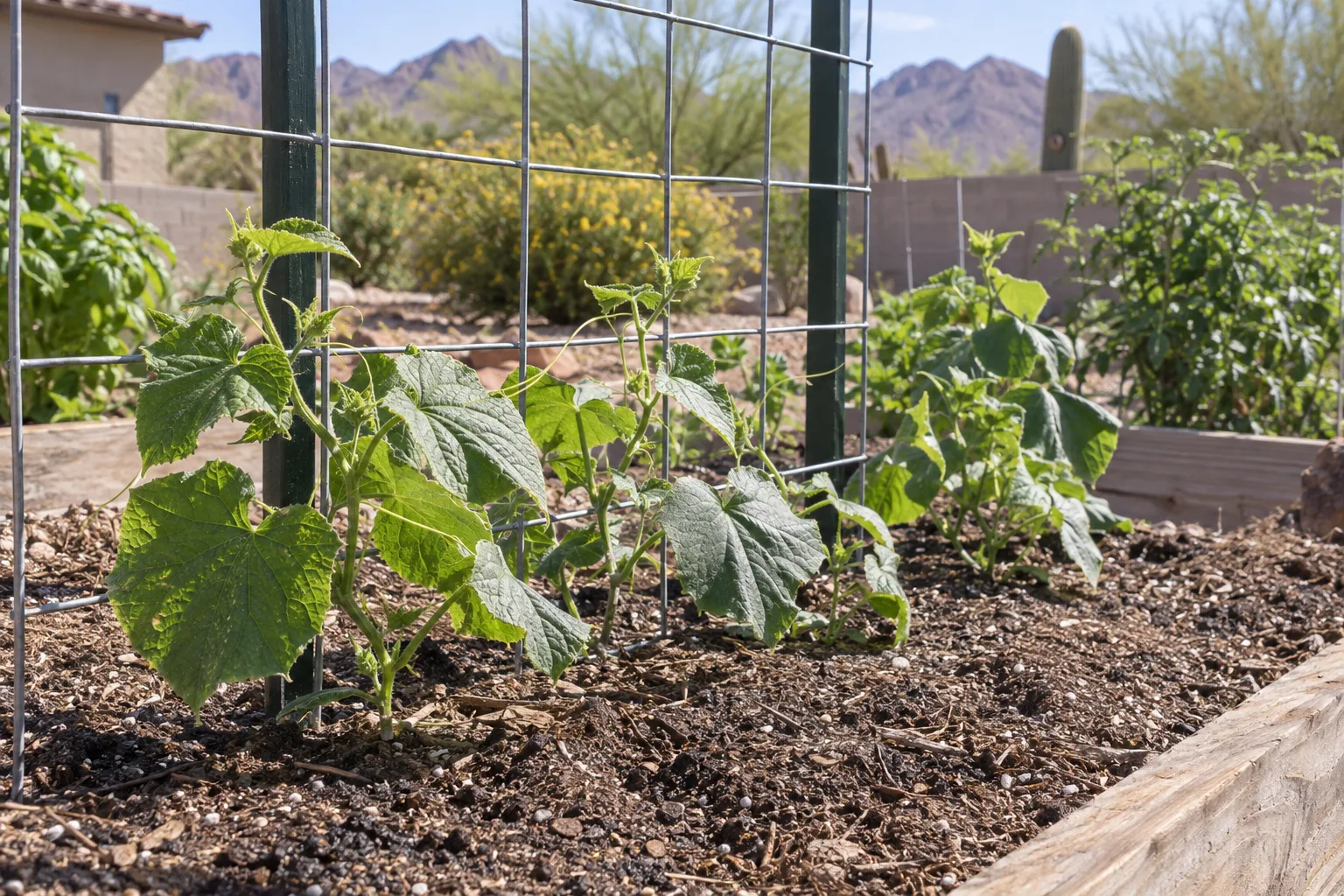
Cucumbers go in once soil reaches 65°F to 70°F, usually by mid-March here. Sow seeds half an inch deep at the base of a trellis, which saves ground and keeps the vines drier and less prone to mildew. First fruit comes in about 55 to 70 days. Production slows when highs hit 105°F to 110°F, so treat cucumbers as a spring crop. Harvest often.
Summer squash (Cucurbita pepo)
Zucchini, yellow squash and pattypan sown in March can produce by late April or May. Sow 2 or 3 seeds per hill, about 1 inch deep, then thin to the strongest seedling and give each hill roughly 3 feet of room. Powdery mildew, a white dusty film on the leaves, shows up as spring warms, and good spacing plus watering at the soil line instead of the leaves helps limit it. Plants get big fast.
Melons (Cucumis melo and Citrullus lanatus)
Cantaloupe and watermelon need 70 to 90 days, so a mid to late March sowing gives them time to ripen before the worst heat. Wait for soil closer to 70°F, because seed in cool ground sits and rots. Give cantaloupe about 3 to 4 feet and watermelon 5 to 6 feet or more, and water deeply instead of often. Ripe fruit can arrive from late June into July. Give them room.
Basil (Ocimum basilicum)
Basil is frost-tender, so sow it in the second half of March, once nights stay above about 50°F. Press seed about a quarter inch deep, keep the soil evenly moist, and expect sprouts in 5 to 10 days. Pinch the top pair of leaves once plants have four to six leaves, then repeat every couple of weeks, to keep them bushy and delay flowering. Sow again every 3 to 4 weeks through April. It likes heat.
Which three vegetables should wait until April?
Okra, sweet potatoes and eggplant should wait until April, because all three stall when soil is cool and nights drop below roughly 55°F. Stalled plants sit idle, and weak plants attract more pests and disease than vigorous ones, so a few weeks of patience usually produces a bigger harvest later. Waiting costs little.
Okra (Abelmoschus esculentus)
Okra wants soil near 70°F or warmer, and March soil rarely holds that. Seed sown into cool ground sits for weeks and often rots. Sow from April on, and the plants will keep producing through summer highs above 110°F that slow or stop most other vegetables in the garden. Be patient.
Sweet potatoes (Ipomoea batatas)
Sweet potatoes are planted from slips, which are rooted shoots, and slips set out in March mostly stall in cool soil. Plant them from April into early summer, once nights are reliably warm. They need roughly 90 to 120 days to mature and loose soil a foot deep or more so the roots can bulk up. Caliche blocks the roots, so a raised bed works well on hard ground.
Eggplant (Solanum melongena)
Eggplant transplants belong in the ground once nights stay above about 55°F, usually in April. Cool nights stunt them, and a stunted plant rarely catches up. Planted on time, eggplant keeps setting fruit from late spring into the fall, long after the cucumbers and squash planted in March have faded for the year.
How warm does the soil need to be before I sow in March?
Beans, squash and basil seed need soil of at least 60°F, while cucumbers and melons do better at 65°F to 70°F, measured about 2 inches deep in the morning. An inexpensive soil thermometer settles the question. Air temperature misleads, since an 80°F afternoon can follow a cold morning over cold soil.

Frost is the second check. Queen Creek can still see a light frost in early March, and tender seedlings blacken at 32°F. Watch the forecast, and cover young plants with frost cloth or an old sheet on any night forecast near 36°F.
Stagger your sowings two to three weeks apart. A first batch in early March and a second in late March spreads the risk from a cold snap and stretches the harvest.
How do I prepare Queen Creek soil for March sowing?
Work 2 to 3 inches of compost into the top 6 to 8 inches of the bed before sowing, which loosens clay and gives roots a better start in our alkaline soil, often pH 7.5 to 8.5. Check for caliche by digging a hole about 18 inches deep. A solid white or gray layer that resists a shovel will block roots and hold water.
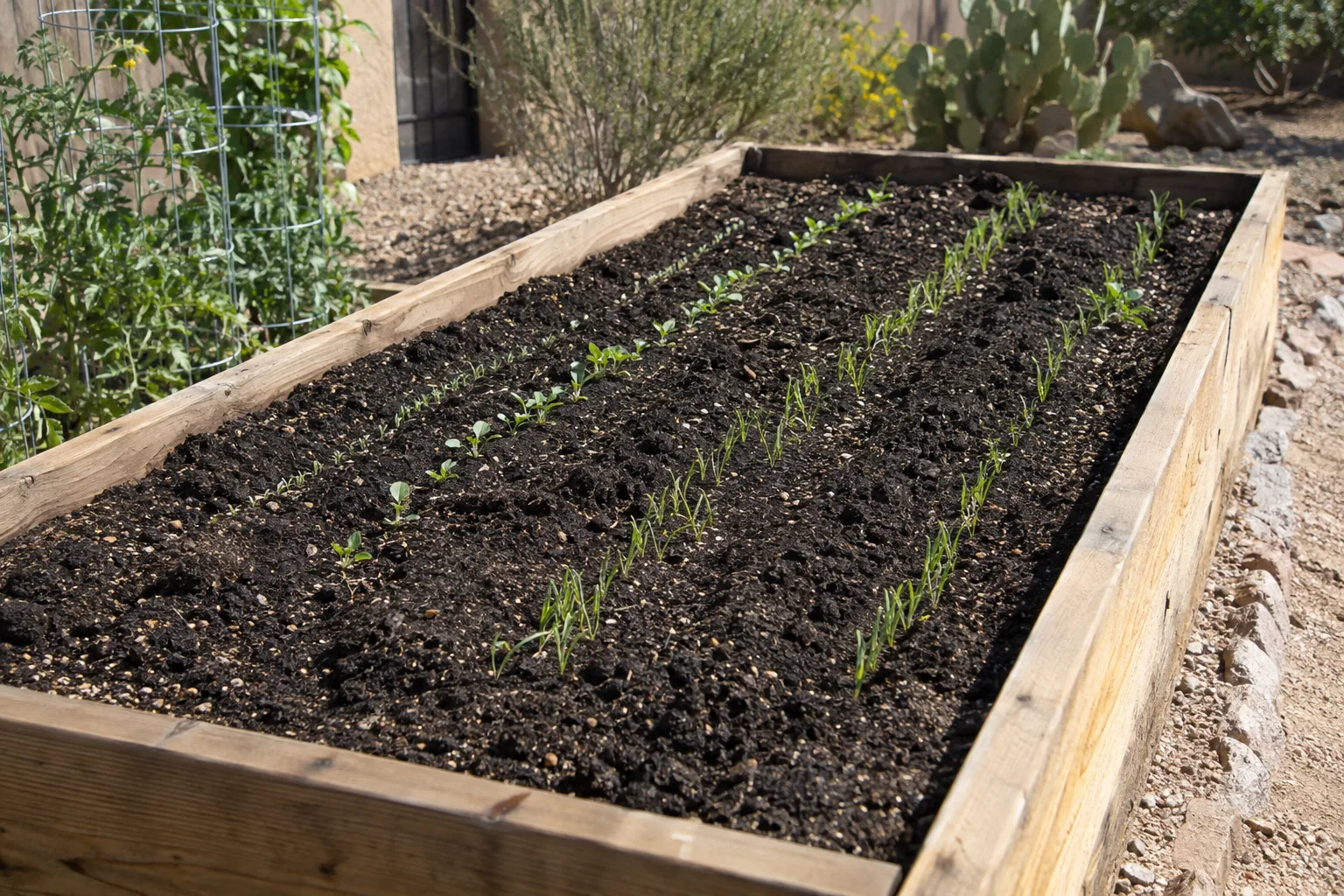
If you hit caliche, a raised bed or a large pot from our pottery and planters keeps roots above it. Hard irrigation water leaves mineral salts at the soil surface, so water deeply enough to push them below the root zone. Pots dry fast.
How often should I water newly sown seeds in March?
Keep the seed zone evenly moist until sprouts appear, which can mean a light watering every day or two in March sun and wind. Once seedlings have two sets of true leaves, switch to deeper watering every few days so roots grow down instead of staying near the surface. Press a finger 2 inches into the soil first. If it feels damp, wait.
Add 2 to 3 inches of straw or wood chip mulch once seedlings are up, keeping it an inch or two back from the stems. Mulch slows evaporation and keeps soil temperature steadier through the swings of March.
What does the March planting calendar look like?
Five crops go in during March and three wait for April, as the table shows. Soil decides the date, because a cool spell can push every window back a week or more.
| Crop | When to start | Soil or night temperature | Days to first harvest | Method |
|---|---|---|---|---|
| Bush beans | Early to mid March | Soil 60°F or warmer | 50 to 60 | Direct sow |
| Cucumbers | Mid-March | Soil 65°F to 70°F | 55 to 70 | Direct sow at a trellis |
| Summer squash | March | Soil 60°F to 65°F | 45 to 55 | Direct sow in hills |
| Melons | Mid to late March | Soil near 70°F | 70 to 90 | Direct sow |
| Basil | Late March | Nights above 50°F | 30 to 45 for first leaves | Seed or transplant |
| Okra | April | Soil near 70°F | 50 to 60 | Direct sow |
| Sweet potatoes | April to early summer | Warm soil and warm nights | 90 to 120 | Slips |
| Eggplant | April | Nights above 55°F | 70 to 90 after transplanting | Transplant |
What other garden jobs belong on the March list?
March is also the month to finish cool-season harvests, set up trellises and test irrigation before the heat arrives. Pull lettuce and spinach as they bolt and replant that bed with a warm-season crop. Put cucumber trellises in before sowing so you do not disturb roots later. Run each drip line and look for clogged emitters, since hard water leaves deposits that cut flow to thirsty plants.
Hold off on heavy fertilizer until seedlings have several true leaves, because the compost in the bed feeds them early on. Our gardening calendars give month-by-month timing, and our classes and events page shows what is scheduled if you want hands-on help.
Frequently asked questions
Can I still plant tomatoes and peppers in March?
Tomato transplants can go in during early March, but peppers do better in April. Tomatoes set fruit poorly once nights stay above about 75°F, so earlier is better. Peppers stall in nights below roughly 55°F. Buy tomato transplants instead of starting seed in March, since seedlings started then will not be ready until May.
Is it too late to sow sweet corn in March?
Early March is the tail end of the sweet corn window in the low desert, so sow in the first week or two if you want ears. Plant a block of several short rows instead of one long row, which improves pollination. Later sowings meet heat during pollination, and that hurts kernel set.
Should I sow directly or start seeds indoors?
Sow beans, cucumbers, squash and melons directly in the garden, because their roots resent being moved. Basil is the exception and transplants well. If you buy transplants, give them 3 to 5 days of gradual outdoor exposure first, starting with morning sun only, to prevent sunscald.
Will March vegetables survive the summer?
Most will finish before summer ends them. Beans, cucumbers and squash usually slow or fade by June as highs stay above 105°F, while melons and basil carry on a few weeks longer. For vegetables that produce through July and August, plant okra, sweet potatoes and eggplant in April. Pull spent plants and rest the bed until the fall planting window.
Is a March vegetable garden worth starting in the low desert?
Yes, if you can water new seed every day or two for the first two weeks and your bed gets at least 6 to 8 hours of direct sun. Beans, cucumbers and squash repay that effort with harvests from late April through May. Skip March sowing if the bed is shaded most of the day or you travel often in spring, since a fall garden suits that schedule better. Stop by our nursery in Queen Creek and ask us what is ready to plant.
