
Add useful plants to your Arizona garden by choosing herbs, fruit trees and vegetables that suit the low desert, planting them in the right season, and watering through drip irrigation. Start with two or three tough perennials, then add seasonal crops.
Key takeaways
- Plant cool-season herbs and vegetables from about October through February, and warm-season crops from late February through April.
- Start with perennials such as rosemary, Mexican oregano and a fig tree before adding seasonal vegetables.
- Give edibles at least 6 hours of direct sun, with afternoon shade from July through September for leafy crops and basil.
- Fill a 18-inch hole with water and check it the next day; standing water means caliche or poor drainage, and a raised bed at least 12 inches deep is the easy fix.
- Spread 2 to 3 inches of mulch and water through drip irrigation to cut evaporation when highs pass 110°F.

When is the best time to plant useful plants in Arizona?
Plant cool-season herbs and vegetables from about October through February, and warm-season crops from late February through April. The low desert has two growing seasons, and a plant set out in the wrong one spends its energy surviving instead of producing.
The University of Arizona Cooperative Extension vegetable planting calendar for Maricopa County lists the planting window for each crop, and it is worth keeping nearby while you shop for seed and transplants. Pair it with our gardening calendars for month-by-month reminders.
Trees and perennial herbs follow a different rhythm. Fall and late winter to early spring give their roots months of mild weather before the first 110°F afternoon. A fig planted in July can survive, but it needs shade cloth and far more attention.
Which useful plants are easiest to start with in the low desert?
Rosemary, Mexican oregano, figs and pomegranates are the most forgiving starters, because all four handle heat, alkaline soil and dry spells once their roots are established. Browse our herbs, vegetables and berries department to see what is in season. These are varieties we commonly carry, and availability changes week to week and season to season.

Perennial herbs
Rosemary (Salvia rosmarinus) grows 3 to 5 feet tall and wide in full sun and needs little water once established. Its drawback is root rot in soil that stays wet, so plant it on a slight mound and keep it away from lawn sprinklers.
Mexican oregano (Lippia graveolens) reaches 3 to 4 feet, tolerates reflected heat and flowers for pollinators, but it can freeze back in a hard winter. Thyme (Thymus vulgaris) stays under a foot tall and makes a tidy edging. It needs sharp drainage.
Fruit trees
Fig (Ficus carica) grows 10 to 20 feet tall with a wide, shade-giving canopy, and its drawback is size, so it needs room away from walls and pools. Pomegranate (Punica granatum) reaches 8 to 12 feet and handles heat well, though fruit can split when watering swings between dry and soaked.
Our fruit trees page shows the range we work with. Citrus also grows in the East Valley, but young trees need frost protection on cold winter nights.
Vegetables
Plant leafy greens, carrots, beets and broccoli from October on. Swiss chard (Beta vulgaris) tolerates light frost and keeps producing into spring. Cherry tomatoes go in around late February so they can fruit before the heat of June.
Okra (Abelmoschus esculentus), sweet potato and Armenian cucumber keep growing through summer. Cilantro, dill and parsley bolt once weather warms, so treat them as cool-season crops.
Where in the yard should useful plants go?
Pick a spot with at least 6 hours of direct sun, and favor one that gets shade after 2 p.m. from July through September. Most edibles need that sun to fruit. Afternoon shade keeps leafy crops and basil from scorching when highs pass 110°F.
A west wall reflects heat and suits rosemary, Mexican oregano and fig. The east side of the house is gentler and works for chard, lettuce and parsley. Put the plants you harvest most within a few steps of the kitchen door and near a drip line, because a bed that is hard to reach gets ignored.
Shade can also come from trees. Desert trees such as mesquite and palo verde cast dappled shade that can keep a raised bed productive through the hottest weeks, as long as the tree has room and the bed sits outside its trunk’s immediate root zone.
What do you need before you start planting?
You need a shovel, a digging bar, compost, mulch, drip irrigation parts and frost cloth, plus a quick drainage test of your soil.
The drainage test matters most. Dig a hole about 18 inches deep, fill it with water, and check it the next day. Standing water means caliche or compacted clay is holding the water, and you have three choices: break through the layer with the digging bar, plant on a low mound, or build a raised bed at least 12 inches deep.
Most East Valley soil is alkaline, with a pH often above 7.5, and our irrigation water is hard. Compost worked into the top 6 to 8 inches of a vegetable bed improves structure and feeds soil life. For trees, backfill with the native soil you dug out and spread compost on top as mulch, since a rich pocket of amended soil can hold water around the roots.
How do you add useful plants step by step?
Prepare the soil, lay drip irrigation, plant at the right depth, mulch, and water often at first. Do these in order.
- Choose the site using the sun guide above and mark where drip lines will run.
- Run the drainage test and decide between breaking caliche, mounding or a raised bed.
- Mix 2 to 3 inches of compost into the top 6 to 8 inches of a vegetable bed, or fill a raised bed with a quality planting mix.
- Lay drip tubing with several small emitters across a vegetable bed, or a ring of emitters near the edge of a tree’s canopy.
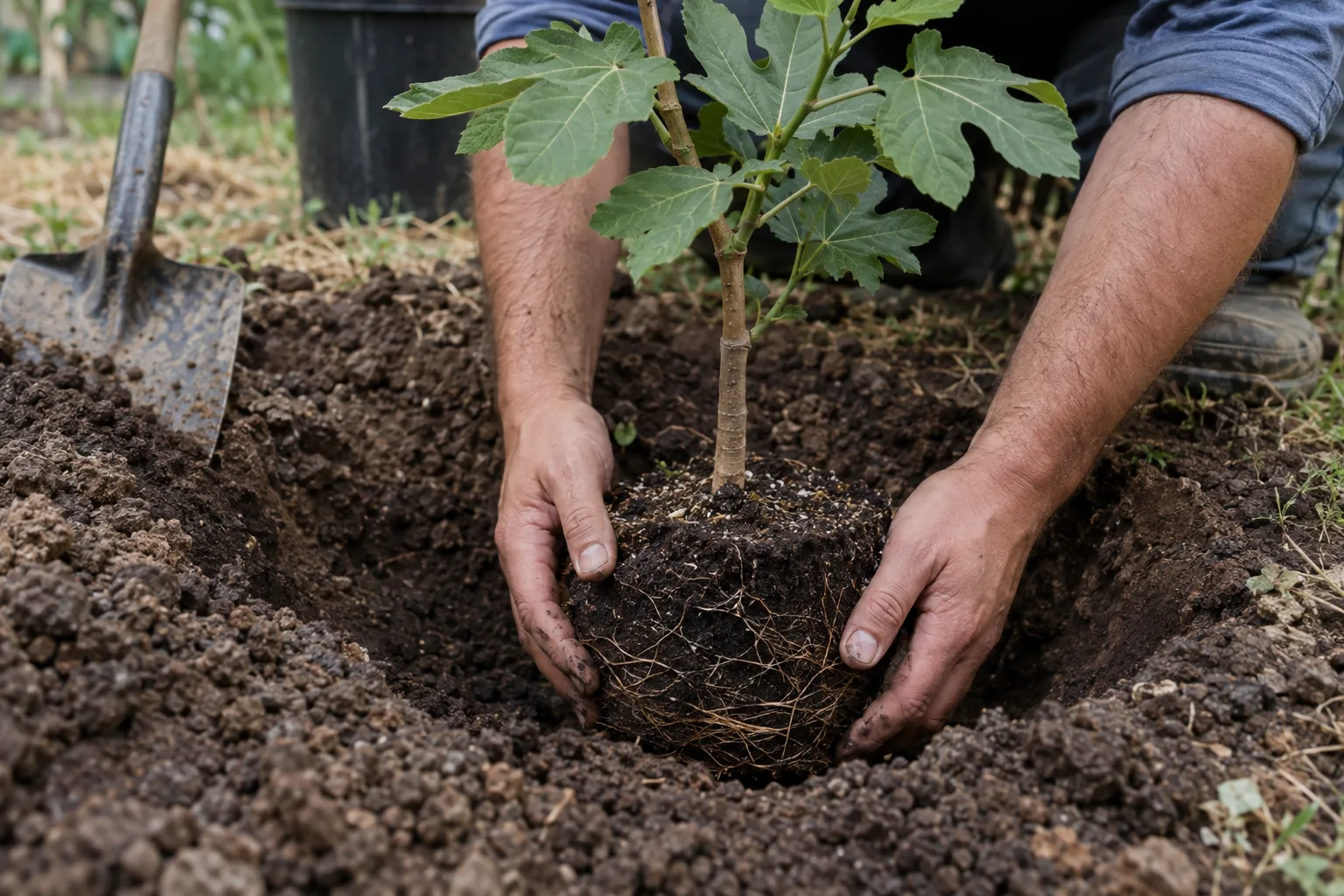
- Dig each hole 2 to 3 times as wide as the root ball and no deeper. Set the top of the root ball level with or slightly above the soil, firm it in, and water well.
- Mulch 2 to 3 inches deep, keeping it a few inches away from stems and trunks.
- Water new plants every day or two for the first few weeks, then stretch the gap as roots spread.
- Harvest early and often. Snip herb tips to encourage branching, and pick vegetables as they ripen.
Hard water leaves mineral deposits that can clog emitters, so check them every few weeks and rinse or replace any that run slowly.
How often should you water new edible plants?
Water new plants every day or two at first, then taper to deep, less frequent soaks as roots establish. Check the soil 2 to 3 inches down with a finger before you irrigate, and wait if it feels damp. The ranges below are starting points, since sandy and clay soils drain at different speeds.

| Plant type | Summer | Winter |
|---|---|---|
| Vegetable beds on drip | Every 1 to 2 days | Every 3 to 5 days |
| Established rosemary, oregano, thyme | Every 7 to 10 days | Every 2 to 3 weeks |
| Established fig and pomegranate | Deep soak every 7 to 10 days | Every 2 to 4 weeks |
| Containers | Daily | Every 2 to 4 days |
During the monsoon, roughly July through September, storms can supply much of the water, so shorten drip run times and check the soil before each cycle. Every few weeks, give beds and pots a deep watering so salts from hard water move below the roots.
What mistakes should you avoid when adding useful plants?
Five mistakes are easy to avoid and cost plants.
- Planting in midsummer. A transplant set out in July meets 110°F afternoons with roots that have not spread. Wait for fall or late winter unless you can give shade cloth and daily checks.
- Watering rosemary, thyme and oregano like vegetables. They want the soil to dry between waterings, and constant moisture invites root rot.
- Piling mulch against trunks and stems, which holds moisture against the bark.
- Feeding heavily with nitrogen in July and August, which pushes soft new growth that scorches.
- Leaving tender plants uncovered on frost nights.
Frequently asked questions
Do herbs survive Arizona summers?
Rosemary, Mexican oregano and thyme usually survive East Valley summers in full sun with sharp drainage. Basil also grows in the heat but often needs afternoon shade when highs pass 110°F. Cilantro, dill and parsley bolt as temperatures climb, so treat them as cool-season crops and replant them in October.
When should I fertilize vegetables and herbs?
Feed vegetables lightly every 4 to 6 weeks while they are actively growing, using a balanced organic fertilizer, and skip heavy feeding in July and August. Rosemary, oregano and thyme need little or none, because rich feeding gives soft growth with weaker flavor. Follow the rates on the product label.
Can I grow useful plants in containers?
Yes, and containers are a good answer when caliche or poor soil is a problem. Choose a pot with drainage holes and room for roots, since small pots dry out within a day in summer. Browse our pottery and planters for sizes that suit herbs, peppers and dwarf fruit trees.
Should I start from seed or transplants?
Transplants are the easier route for tomatoes, peppers and perennial herbs, because they skip the slow early weeks. Seed works well for beans, carrots, beets, cucumbers and leafy greens, which sprout quickly in the right season. Check the extension calendar above for the sowing window of each crop.
What should I do when frost is forecast?
Cover tender plants when the forecast shows lows near 32°F. Drape frost cloth or an old sheet over a frame so it does not press on the leaves, and remove it the next morning. Water the soil the day before, since moist soil holds more heat overnight than dry soil.
Are useful plants worth adding to your yard?
Yes, if you have a spot with 6 hours of sun and are willing to run drip irrigation. Start with rosemary or a fig, then add one seasonal bed and see how much you harvest. If your yard is mostly shade, or you travel through summer with no one to check the irrigation, vegetables will frustrate you, and a few perennial herbs are the better fit. Visit us at the nursery in Queen Creek and we will help you match plants to your yard.