
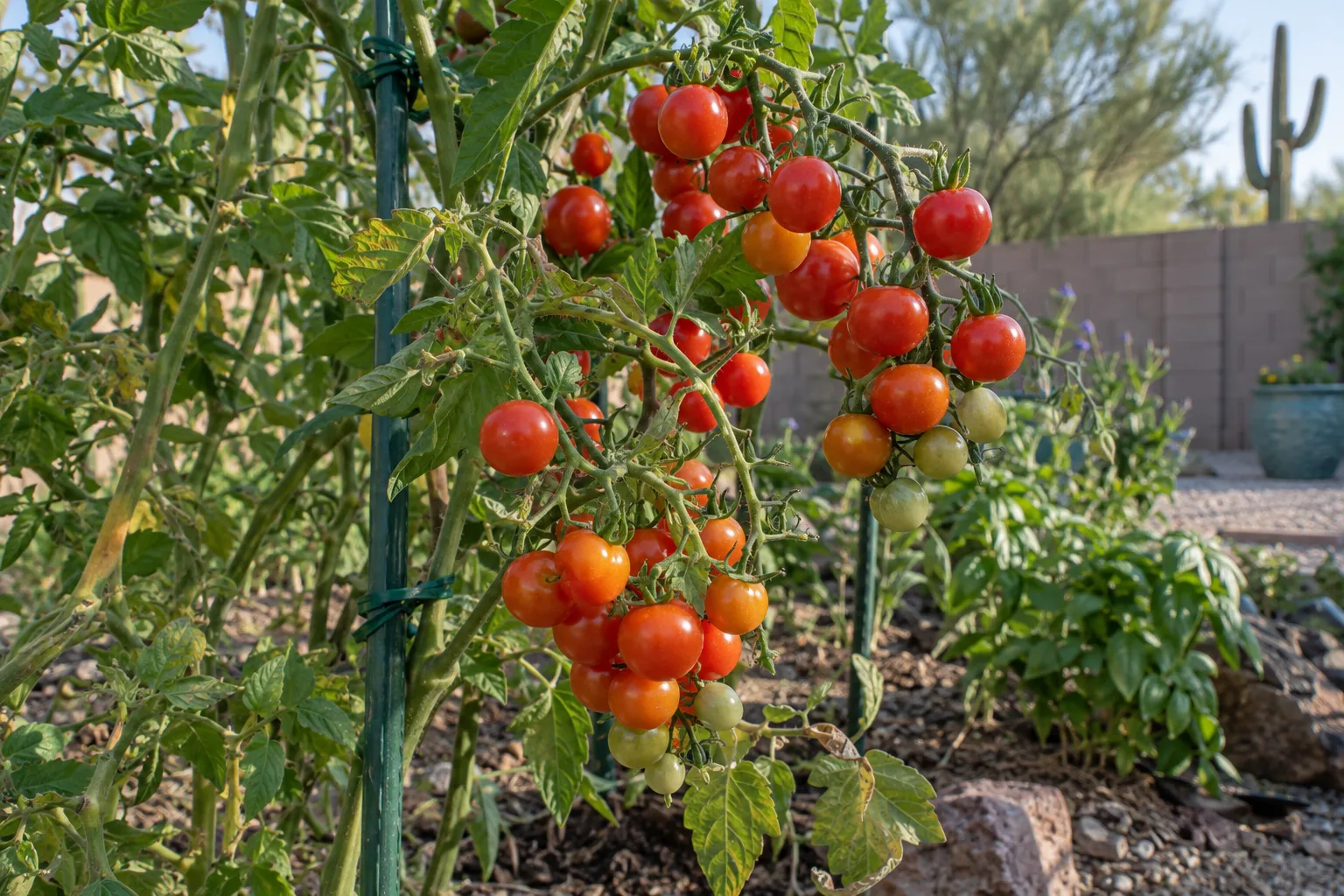
The best tomato varieties for Arizona are the ones that keep setting fruit in heat, including Solar Fire, Heatmaster, Celebrity, Sweet 100, Sun Gold, Arkansas Traveler, Juliet and Early Girl. Plant them in February or March, or again in late summer.
Key takeaways
- Plant spring transplants from early February to mid-March and fall transplants from mid-August to early September.
- Tomato blossoms tend to drop when days stay above roughly 90 to 95°F and nights stay above about 75°F, so every variety slows down by late May.
- Cherry and grape types usually keep setting fruit longer into heat than large slicers.
- Mulch 3 to 4 inches deep and put 30 to 40 percent shade cloth over the afternoon sun side to carry plants past 100°F.
- Even watering prevents most splitting and blossom end rot, so put plants on drip irrigation.
Which tomato varieties handle Arizona heat best?
The eight below set fruit in warm weather better than most. Size matters here. Cherry and grape types usually keep going longest, medium hybrids come next, and big heirloom slicers struggle most. Many of these are varieties we commonly carry, though availability changes week to week and season to season, so browse our herbs, vegetables and berries department to see what is on hand.
1. Solar Fire (Solanum lycopersicum ‘Solar Fire’)
Solar Fire is a determinate hybrid bred for heat, so it stays compact at roughly 3 to 4 feet tall and ripens medium red fruit over a few weeks. It wants 8 or more hours of sun in spring and deep watering two to three times a week once highs pass 90°F. The drawback is a concentrated harvest instead of a long trickle, which suits sauce and canning better than steady salad picking.
2. Heatmaster (Solanum lycopersicum ‘Heatmaster’)
Heatmaster is a hybrid selected to set fruit in hot weather, and it grows about 4 to 6 feet tall on a sturdy cage. Give it full sun until May, then afternoon shade, with deep watering two to three times a week in spring. The fruit are medium, round and red. The drawback is size, since you will not get the big slices a beefsteak gives.
3. Celebrity (Solanum lycopersicum ‘Celebrity’)
Celebrity is a determinate hybrid about 3 to 4 feet tall that carries a broad disease resistance package, listed as VFFNT on many plant tags. That covers verticillium, fusarium, root-knot nematodes and tobacco mosaic virus. It needs full sun and deep, regular watering. The drawback is moderate heat tolerance, so it has to go in the ground early, in February, to finish before May.
4. Sweet 100 (Solanum lycopersicum ‘Sweet 100’)
Sweet 100 is an indeterminate cherry tomato that can climb 6 feet or more and carries long clusters of small, sweet red fruit. It does well in full sun in spring, with afternoon shade from May on and deep watering a few times a week. The drawback is sprawl. The vines flop over weak supports, so start with a heavy cage or trellis.
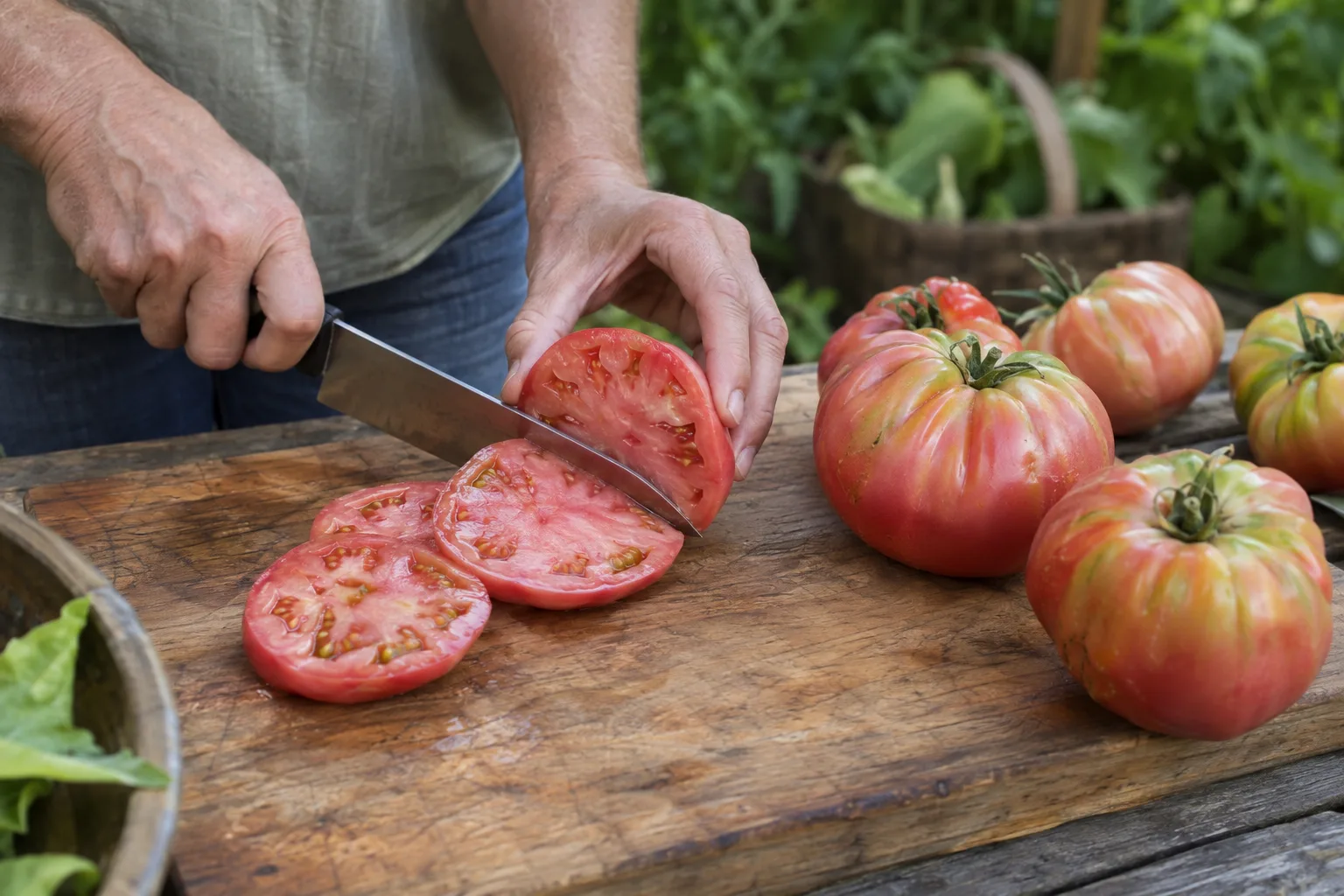
5. Sun Gold (Solanum lycopersicum ‘Sun Gold’)
Sun Gold is an orange cherry type with a fruity, sweet flavor, and the indeterminate vines reach 6 feet or more. It wants full sun in spring and steady moisture from a drip line. The drawback is thin skin that splits when watering swings between dry and wet, so a timer on your drip system matters more here than with sturdier varieties.
6. Arkansas Traveler (Solanum lycopersicum ‘Arkansas Traveler’)
Arkansas Traveler is an open-pollinated heirloom with pink, medium fruit and a mild, old-fashioned flavor. The indeterminate plants grow 5 to 6 feet tall and have a reputation for tolerating heat and resisting cracks. Plant in full sun, shade it in the late afternoon from May on, and water deeply. The drawback is that heirlooms lack the disease resistance codes of modern hybrids, and yields run lower.
7. Juliet (Solanum lycopersicum ‘Juliet’)
Juliet is an indeterminate grape-style tomato, around 5 to 6 feet tall, with small, oblong red fruit in clusters. It is known for resisting cracks and for holding up in warm weather. Give it full sun in spring and consistent deep watering. The drawback is fruit size. You pick a lot of tomatoes to fill a bowl, which some gardeners enjoy and others find tedious.
8. Early Girl (Solanum lycopersicum ‘Early Girl’)
Early Girl is an indeterminate hybrid, roughly 4 to 6 feet tall, that produces medium red fruit about 50 to 60 days after transplanting. Early ripening lets it set a crop before the worst heat. It needs full sun and regular deep watering. The drawback is timing. Plant it after mid-March and it may reach heat before it has built enough plant to carry fruit.
How do the eight varieties compare?
Cherry and grape types give the longest season, while Celebrity and Early Girl need the earliest planting. Use the table to match a variety to the job you have in mind, whether that is snacking, slicing or sauce.
| Variety | Fruit | Best use | Planting window |
|---|---|---|---|
| Solar Fire | Medium red | Sauce and canning | Spring |
| Heatmaster | Medium red | Slicing | Spring, fall |
| Celebrity | Medium red | All-purpose | Early spring |
| Sweet 100 | Small red cherry | Snacking | Spring, fall |
| Sun Gold | Small orange cherry | Snacking | Spring, fall |
| Arkansas Traveler | Medium pink | Slicing | Spring |
| Juliet | Small red grape | Salads | Spring, fall |
| Early Girl | Medium red | Early slicing | Early spring |
If you have room for only two plants, pair one medium hybrid with one cherry type. You get slices early in the season and snacks that keep coming into warmer weather.
When should I plant tomatoes in Queen Creek?
Set out spring transplants from early February to mid-March and fall transplants from mid-August to early September. The UA Cooperative Extension vegetable planting calendar for Maricopa County lays out these windows for the low desert.
Spring plants need those weeks to root and flower before highs pass the mid 90s in April and May. Frost can still arrive in February, so keep a frost cloth handy and cover young plants on cold nights. A tomato planted in late April rarely catches up. Fall plants face the opposite problem, because August air can still top 105°F and the young plants need afternoon shade for their first few weeks.
How do I prepare alkaline soil for tomatoes?
Dig a wide planting area and mix in 3 to 4 inches of compost, because native soil here is alkaline, compacted and often sits on caliche. Break up any hard layer under the hole, or build a raised bed so roots have loose soil to grow into.
Bury the stem deep when you plant, up to the lowest set of leaves. Roots form along the buried stem and make a sturdier plant. Then add mulch such as straw or wood chips 3 to 4 inches deep, keeping it a few inches from the stem. Mulch cools the soil and cuts water loss.
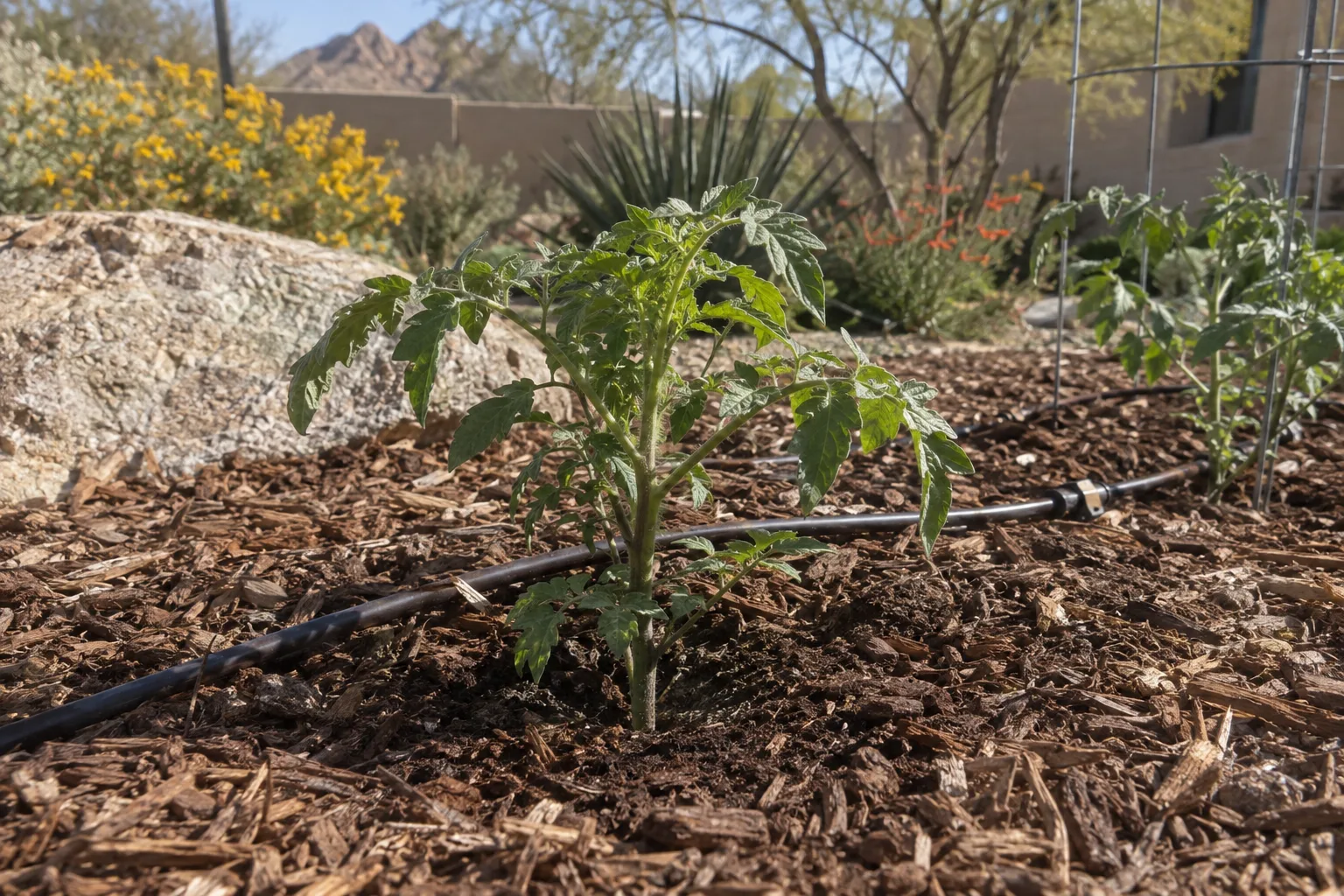
Alkaline soil locks up iron, so new leaves may turn yellow between the veins. A chelated iron product applied to the soil according to its label can help. Hard irrigation water leaves salts behind, which is another reason to water deeply and let a good soak push them below the roots.
How often should I water tomatoes in the desert?
Water deeply two to three times a week in March and April, then more often as highs climb past 95°F. Containers may need water every day. Deep soaks send roots down to cooler, steadier soil, while shallow daily sprinkles keep roots near the surface where they overheat.
Drip irrigation with two emitters per plant is the easiest way to keep moisture even. Uneven watering causes blossom end rot, the dark, sunken patch on the bottom of the fruit, and it splits thin-skinned varieties like Sun Gold. Fixing the watering schedule usually helps more than adding calcium products. Check soil 2 to 3 inches down before you adjust the timer.
How do I keep tomatoes producing as highs pass 100°F?
Shade cloth, mulch and steady water extend the season by a few weeks, but they cannot stop the heat limit on fruit set. Hang 30 to 40 percent shade cloth 12 to 18 inches above the plants, not draped on them, and aim it at the afternoon sun.
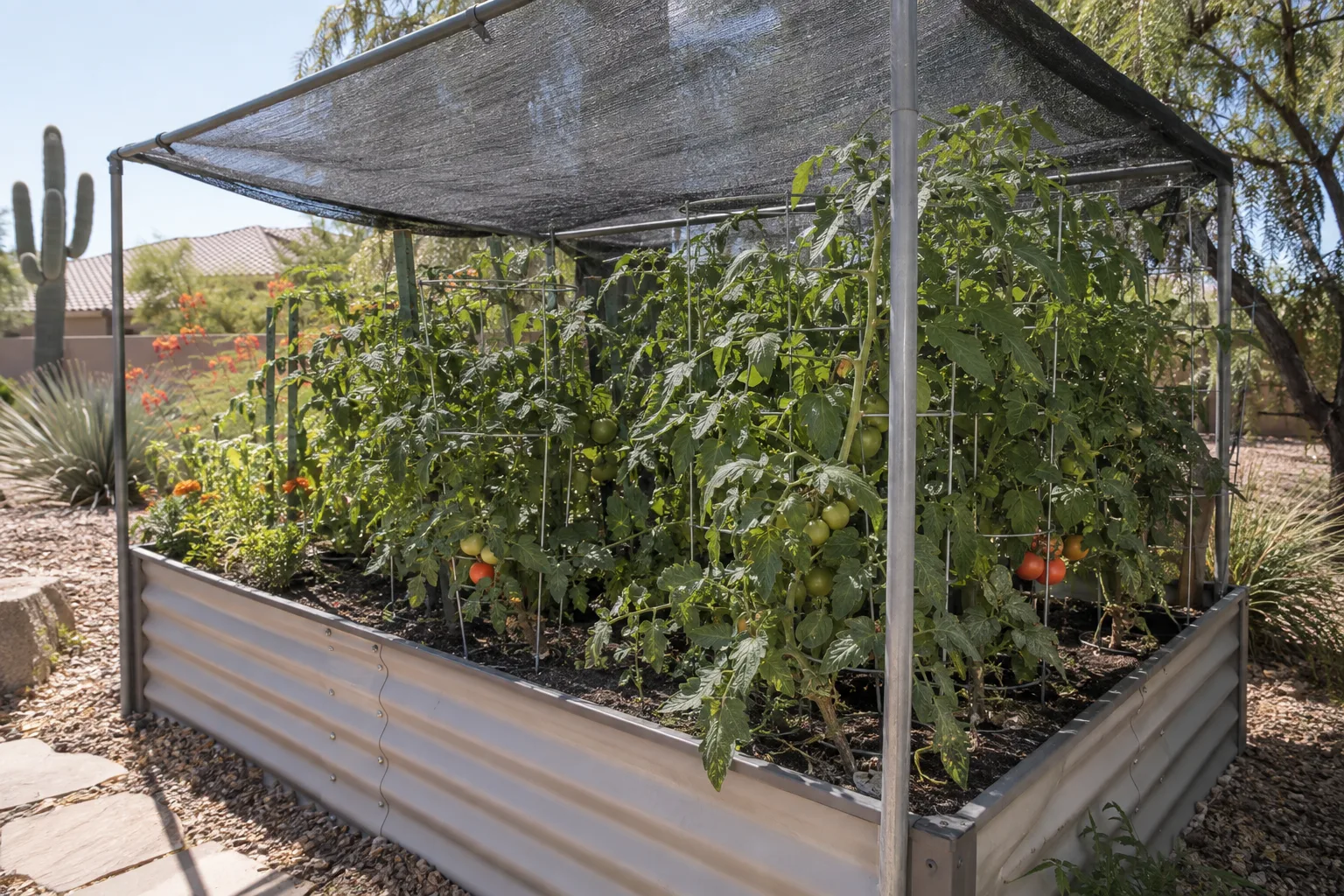
West sun from about 2 PM to 6 PM does the most damage, so a spot with full morning light and afternoon shade from a block wall or tree is ideal. Pale mulch reflects more heat than dark mulch. Bare soil in direct summer sun gets hot enough to injure shallow roots.
When nights stay above about 75°F, blossoms drop no matter what you do. Keep healthy plants watered and shaded anyway, since some will fruit again once nights cool in fall.
What should I do with tomatoes during the monsoon?
Use the monsoon, roughly July through September, to prepare the fall crop rather than to expect fruit from spring plants. Humidity brings early blight and other fungal problems, so water at the base in the morning and leave space between plants for airflow.
Staking matters because monsoon winds can topple tall cages. Raised beds drain well when storms drop a lot of rain at once, and tomatoes sitting in soggy soil can develop root rot. Our gardening calendars list what to do each month, including when to start fall tomato transplants.
Frequently asked questions
Can I grow tomatoes in containers in Queen Creek?
Yes, tomatoes grow well in large containers, and a 15 to 20 gallon pot suits most varieties. Containers dry out faster than beds, so expect to water daily once highs pass 95°F. Light-colored pots and planters stay cooler than dark ones, and a thick mulch layer on top slows evaporation.
Should I pull my tomato plants in June?
Healthy plants can stay through summer if you keep watering and shading them, but most stop setting fruit between late May and September. Some resume in fall once nights drop below about 75°F. Many gardeners find fresh fall transplants more productive than tired spring plants, so treat any late fruit from old plants as a bonus.
Are heirloom tomatoes worth growing here?
Some are, but large heirlooms such as Brandywine often drop blossoms early in the desert and crack with uneven watering. Arkansas Traveler is one exception worth a try. Plant heirlooms in early February, give them afternoon shade, and expect a smaller harvest than from the hybrids on this list.
How do I prevent sunscald on tomatoes?
Keep leaf cover thick, because sunscald shows up as pale, papery patches on fruit exposed to direct sun after leaves are lost to disease, heavy pruning or heat. Avoid stripping lower foliage in summer, use 30 to 40 percent shade cloth, and pick fruit at the first blush of color to reduce exposure time.
Where can I get help choosing varieties?
Ask our staff in Queen Creek, and check the classes and events page for any upcoming workshops. Bring a note on how many hours of sun your bed gets and whether you plan to plant in the ground or in pots, so we can point you toward varieties that fit.
Which tomato variety should you plant first?
For most East Valley gardeners, start with Heatmaster or Celebrity and add a cherry such as Sweet 100 or Sun Gold. That pairing gives you early slices and snacks that keep coming into the heat. Skip tomatoes if you cannot water on a steady schedule or have no afternoon shade, and do not plant after April expecting a big harvest. Stop by the nursery in Queen Creek and we will help you pick varieties that match your yard.