

Tiny red bugs in Arizona yards are usually clover mites, spider mites or velvet mites. Clover mites and velvet mites are harmless to plants. Spider mites are the ones that damage them, especially from May through September.
Key takeaways
- Clover mites show up on walls and patios in February to April and again in October and November, and they leave once temperatures pass roughly 85°F.
- Spider mites cause stippled, dusty-looking leaves and fine webbing, and they multiply fastest in summer heat above 90°F.
- Bright red, velvety mites after the first monsoon storms are velvet mites, which are harmless and eat other pests.
- Tap a branch over white paper: moving specks on the page mean mites, and webbing points to spider mites.
- Start with a water spray or insecticidal soap before any stronger product, and repeat every 5 to 7 days.
How do I tell which tiny red bug I have?
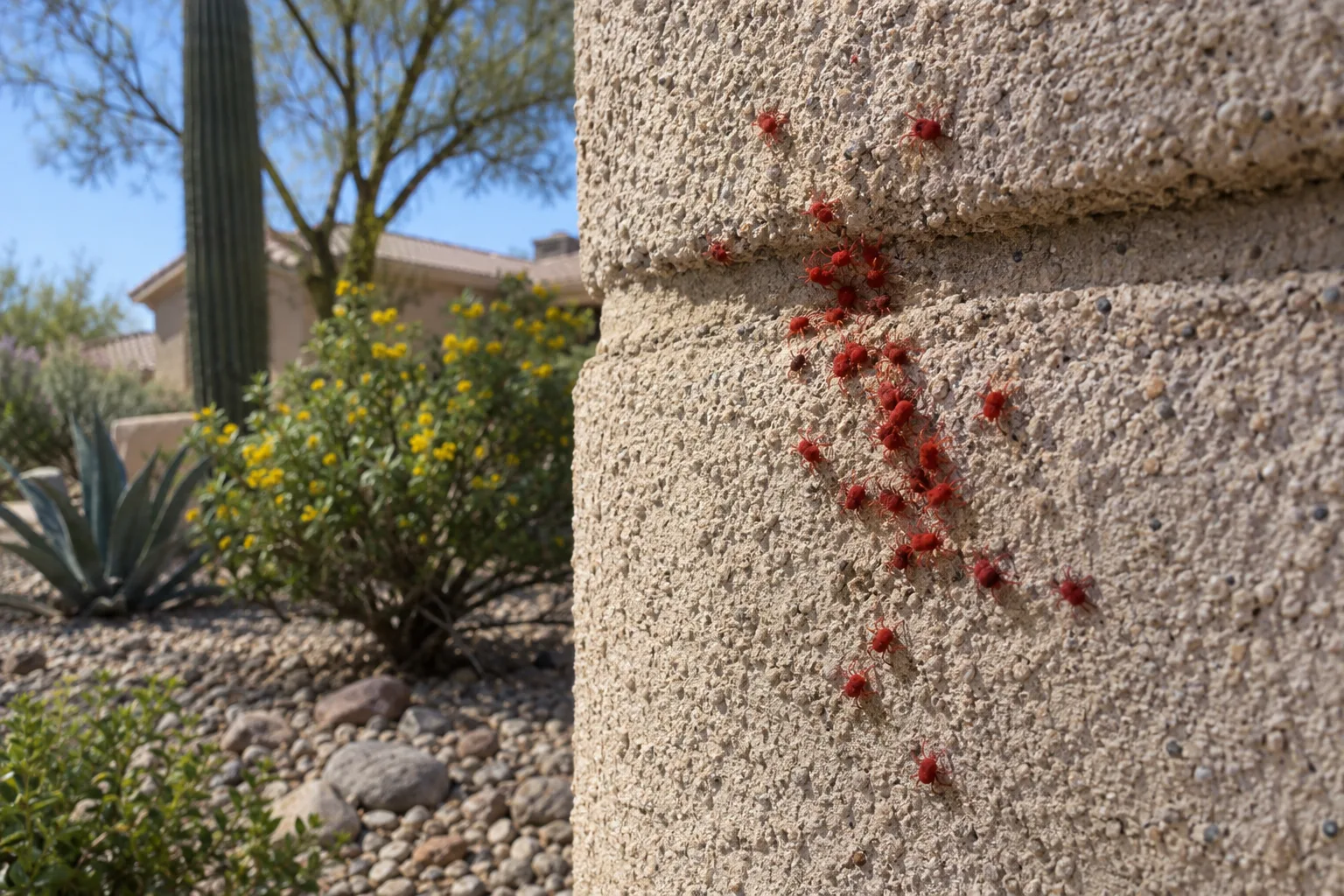
Match the bug to the season and the place you found it. Mites on walls and pavement in cool months are clover mites. Specks on leaves in summer are spider mites. Velvet mites turn up on bare soil after rain.
All three are mites, which are arachnids with eight legs, and most are smaller than a pinhead. A magnifying glass helps. Time of year and location usually settle the question faster than a close look does.
What are clover mites, and are they a problem?
Clover mites (Bryobia praetiosa) are reddish, oval mites that feed on grasses and weeds. They do not bite or sting, and they do not breed indoors. The only real trouble is the crowd of them crossing your patio and sneaking in around windows.
Look for slow-moving groups of dozens to hundreds on sunny walls and fences in the morning. Their front legs are longer than the others. Crushed mites leave a red smear, which is just body pigment. Heavy feeding can leave lawn patches looking silvery, though established plants rarely die from it.
To keep them out of the house, vacuum them up rather than crushing them. Seal gaps around windows and doors. Keep a strip of bare soil or gravel about 12 to 18 inches wide along the foundation, so there is no grass or dense planting next to the wall. Weeds and overwatered winter grass feed their numbers, so pull weeds from November through March.
How do I know if spider mites are damaging my plants?
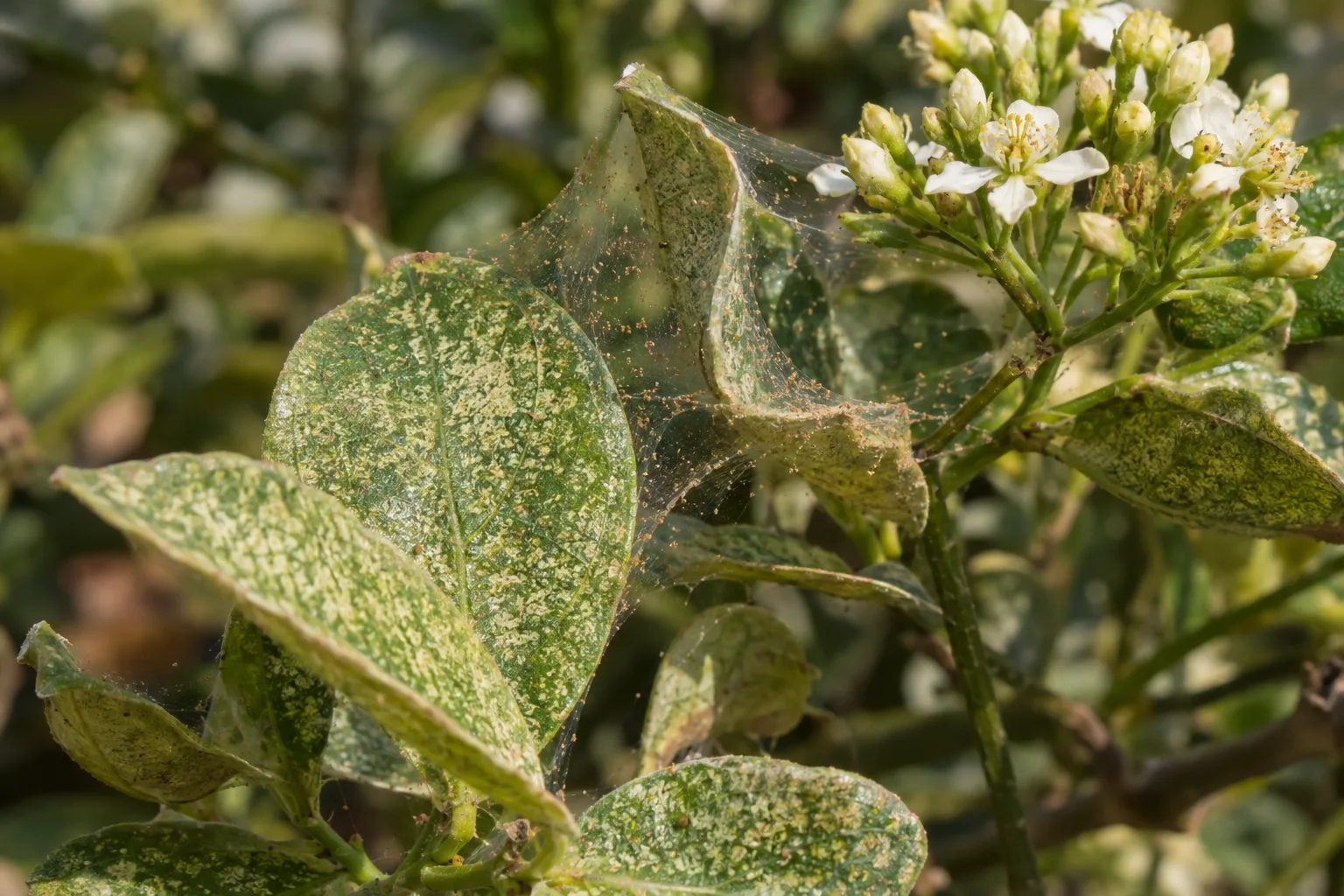
Check the undersides of leaves for fine webbing and a pale stippling of yellow or white dots. Spider mites (Tetranychus urticae is one common species) pierce leaf cells and drink the contents. Leaves turn dusty, bronzed or silvery, and heavily hit plants drop foliage.
Hot, dry weather speeds them up. In summer heat a generation can finish in about a week, so a few mites in late May can become a real infestation by mid-June. Plants already stressed by heat or uneven watering suffer most. Citrus, roses, vegetables and many shrubs are common targets.
The white paper test
Hold a sheet of white paper under a suspect branch and tap the branch firmly. Tiny specks that start crawling are mites. Specks plus webbing on the leaves mean spider mites. Specks with no webbing, found on a wall in winter, are probably clover mites.
Are the red mites after a monsoon storm harmful?
No. Bright scarlet, velvety mites on soil or rock after rain are velvet mites (family Trombidiidae). They are larger than clover mites and move quickly. They feed on small insects and insect eggs, so you should leave them alone.
They appear when the first heavy storms of the monsoon wet the ground, usually sometime from July through September. The sight can be startling, but it is a normal desert event rather than an outbreak. Nothing needs spraying.
How do I get rid of spider mites without making things worse?
Begin with water, then move to soap if needed. Broad-spectrum sprays can wipe out the predatory mites and lacewings that keep spider mites in check, and populations often rebound higher afterward. Read the label of any product you use and confirm it lists your plant and mites.
- Confirm spider mites with the white paper test and a look for webbing.
- Spray the plant with a strong stream of water in the early morning, reaching the undersides of leaves, so foliage dries before night.
- If mites remain, apply insecticidal soap or horticultural oil in the evening, when temperatures are below about 90°F, covering the leaf undersides.
- Repeat every 5 to 7 days for at least two or three rounds, since eggs hatch after each treatment.
- Prune and bag the worst of the webbed growth.
- Review your watering. Deep, infrequent irrigation builds roots and cuts the stress that invites mites.
Predatory mites are sold for persistent problems in vegetable beds. Their results vary with heat, so treat them as a helper rather than a cure.

What yard conditions make red mite outbreaks more likely?
Heat stress, dust, shallow watering and heavy pesticide use all favor mites. Summer highs above 110°F stress plants, and dusty, dry foliage suits spider mites. Alkaline, caliche-heavy soil that drains poorly can weaken roots, and weak plants attract more damage.
A layer of organic mulch 3 to 4 inches deep keeps soil cooler and holds moisture for deeper roots. Pull it back a few inches from trunks and stems. Keep the soil beneath it evenly moist rather than soggy.
Overwatered winter lawns and weedy corners feed clover mites. Hosing dusty plants down once in a while also washes off mites and dust. Hardy, well-adapted desert plants usually hold up better. You can browse the plants we offer for low desert yards when you are choosing replacements for a plant that struggles every summer.
Quick comparison of red mites in the low desert
| Mite | Usual season | Harms plants? | What to do |
|---|---|---|---|
| Clover mite | Feb to Apr, Oct to Nov | Minor | Vacuum, seal gaps, bare strip at foundation |
| Spider mite | May to Sep | Yes, can be severe | Water spray, soap or oil, repeat |
| Velvet mite | After monsoon rain | No, beneficial | Leave alone |
Frequently asked questions
Do tiny red bugs bite people or pets?
Clover mites, spider mites and velvet mites do not bite people or pets. Chiggers are a different red mite that can cause itchy welts, though they are uncommon in the low desert. If you get unexplained itchy bites after yard work, ask your doctor rather than assuming the cause.
Why do red bugs appear on my block wall?
Clover mites gather on sunny walls and fences in cool months, looking for warm, protected spots. A wall that faces south collects the most heat in late winter. They are usually passing through from nearby lawn or weeds, and they leave when the weather warms.
Will red mites kill my plants?
Spider mites can defoliate shrubs, weaken citrus and ruin vegetable plantings over several weeks, especially on plants already stressed by heat. Clover mites rarely kill anything. Velvet mites do no harm. Catching spider mites early, starting in May, keeps damage small.
Should I spray pesticide on tiny red bugs?
Usually not at first. Water sprays and insecticidal soap handle most spider mite problems and spare predators. Clover mites are best handled by vacuuming and sealing gaps. If you need a miticide, choose one labeled for mites and your plant, and follow the directions on the label.
Is diatomaceous earth worth using for clover mites?
It may slow mites crossing a foundation when dry, but it loses effect when wet and is a dust you should not breathe. Vacuuming and sealing gaps work more reliably. If you use it, wear a dust mask and follow the product label.
Do I need to treat tiny red bugs at all?
Often not. Clover mites and velvet mites pass on their own, so vacuuming and patience cover them. Treat only if you find spider mite webbing and stippling, and act early. If your plants are healthy, well mulched and watered deeply, you may rarely need to treat anything. Stop by our nursery in Queen Creek and bring a leaf in a sealed bag if you are unsure what you have.