

Tiny red bugs clustering on walls, patios and lawn edges in Arizona are usually clover mites, which do not bite people or pets. They surge in cool weather, February through April and again in fall. Red bugs on plant leaves are more often spider mites.
Key takeaways
- Clover mites measure about 1 millimeter, look red to reddish brown, and gather on sunny block walls, stucco and patios.
- They are most active in cool weather, roughly February through April and again October through November, and fade once summer heat settles in.
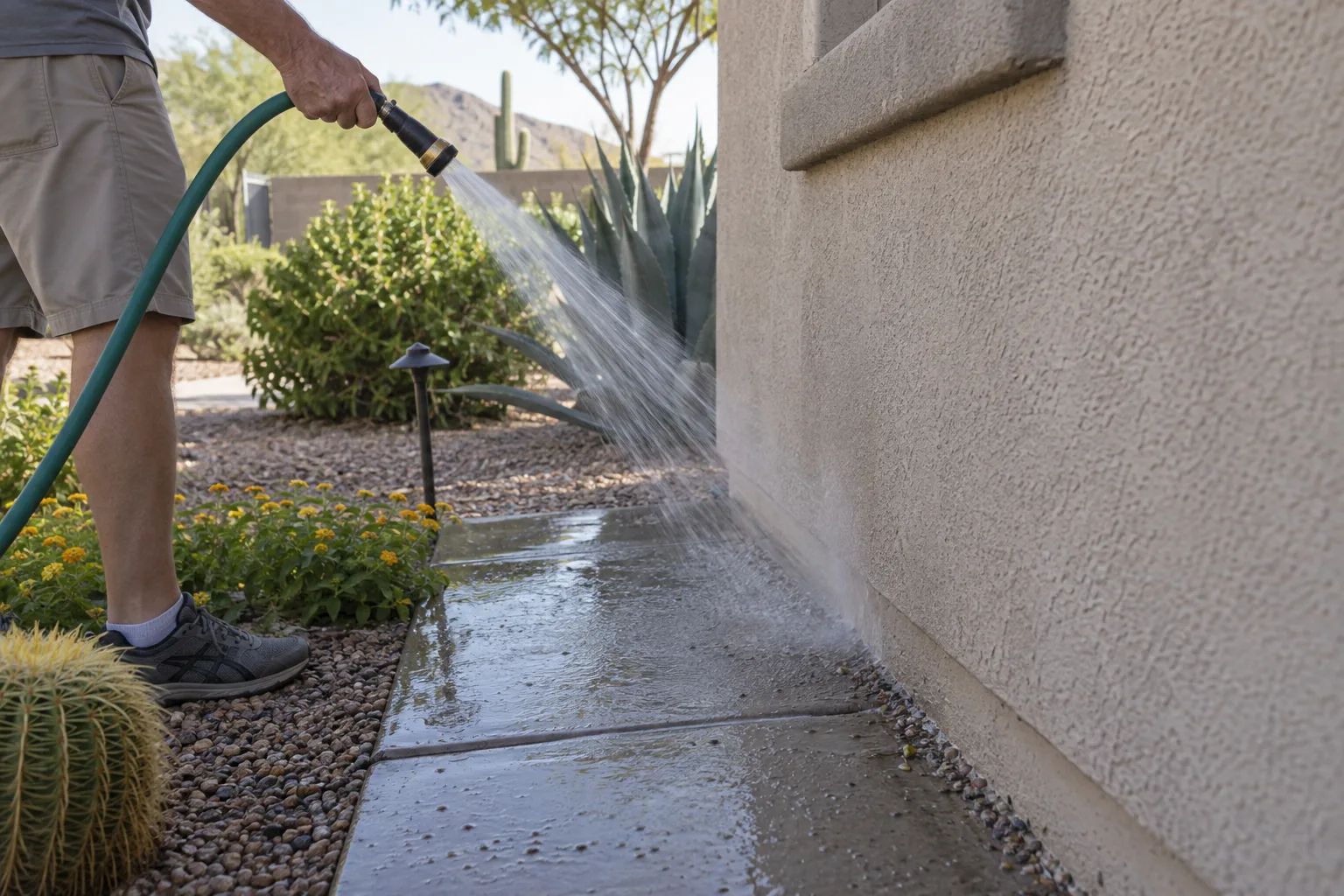
- Crushed clover mites leave a red stain, so rinse them off outdoor surfaces with a hose and vacuum any that get inside.
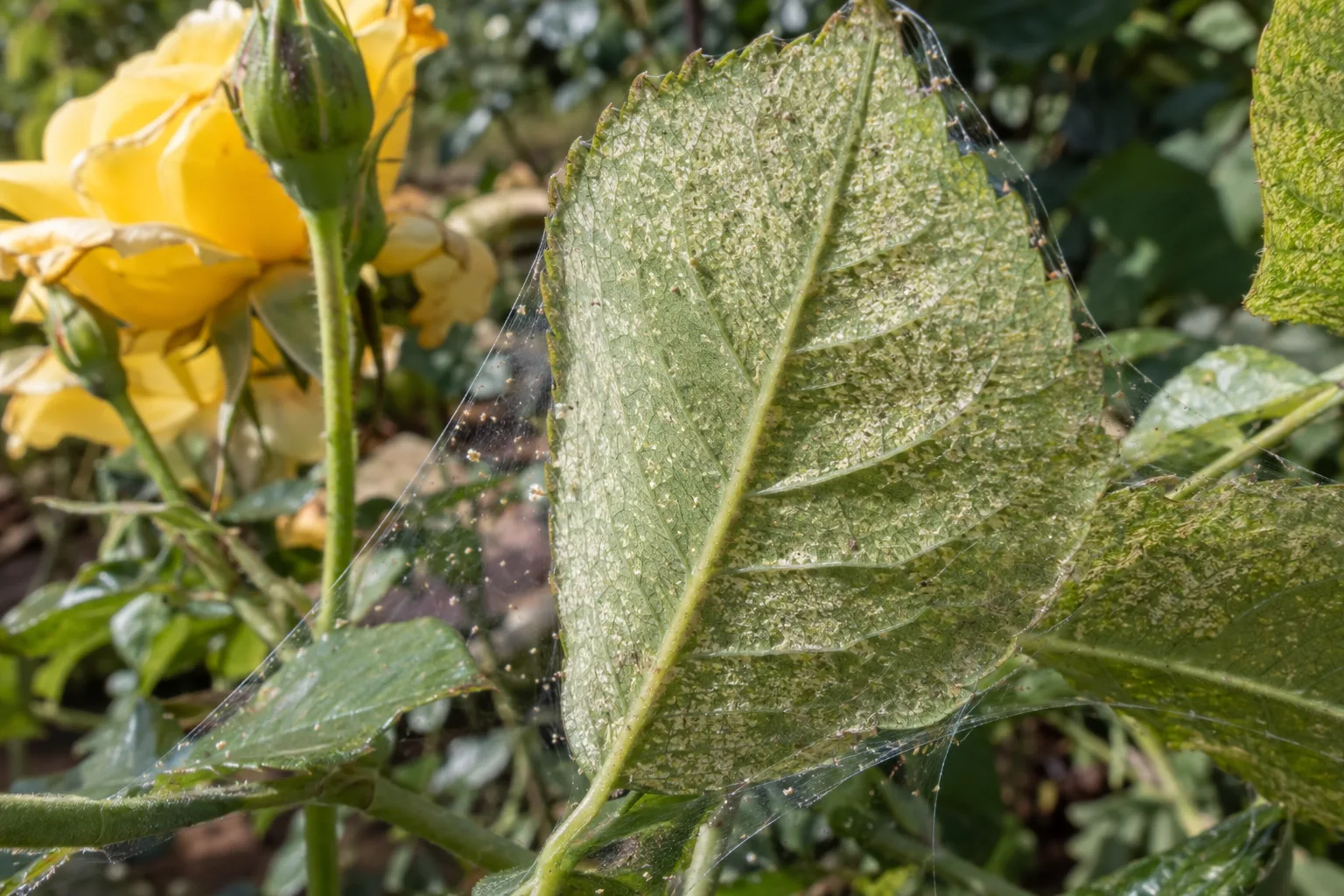
- Red bugs on leaves with fine webbing and yellow stippling are spider mites, which damage plants and build up in hot, dry weather.
- Large, velvety red mites that appear after monsoon rain (July through September) are harmless and need no treatment.
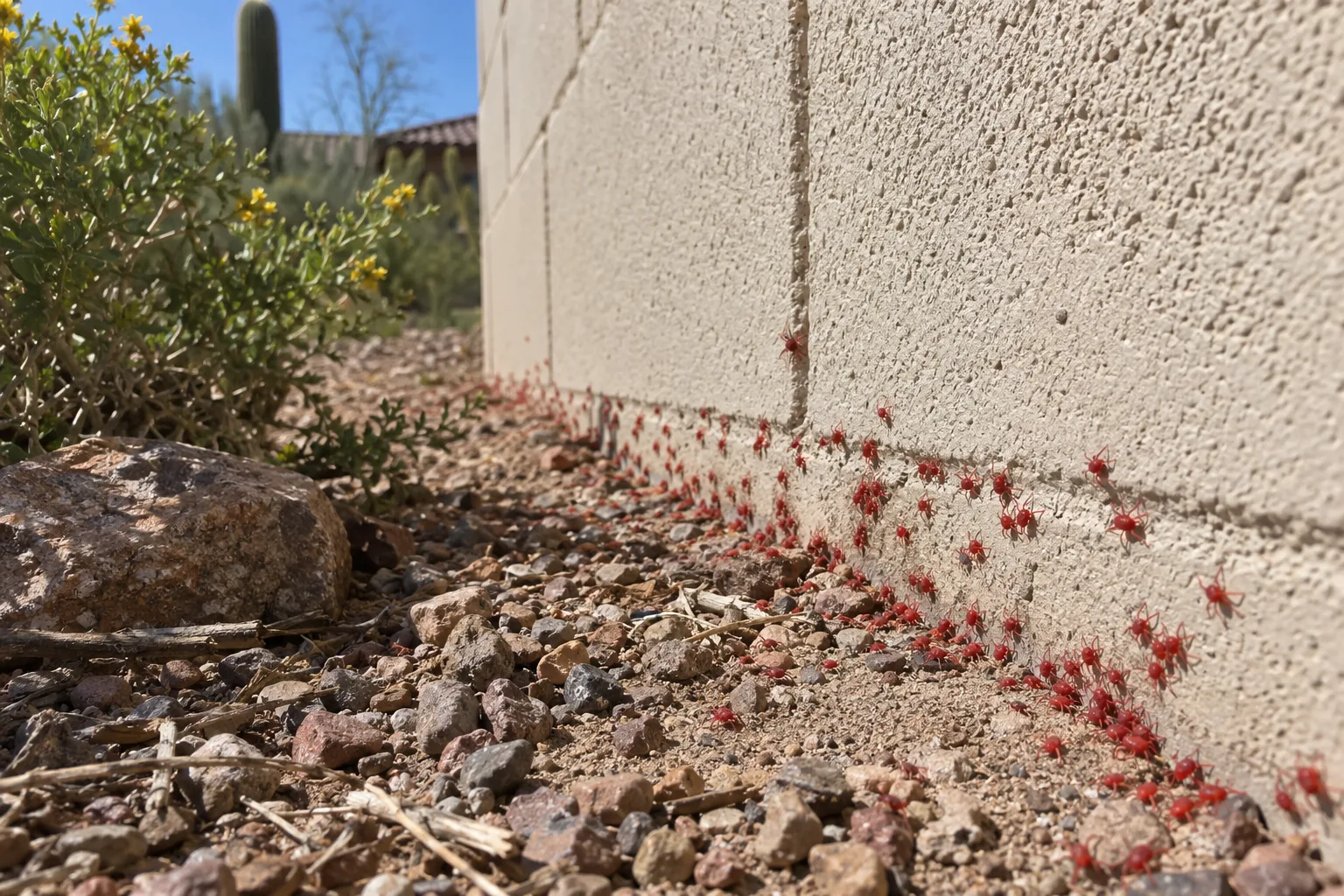
What are the tiny red bugs in my Arizona yard?
Most are clover mites, spider mites or red velvet mites, and the spot where you find them is the fastest clue. Bugs on concrete, block walls and window sills point to clover mites, while bugs on leaves point to spider mites. Start with where they are. A magnifying glass or a zoomed phone photo settles most doubts.
Clover mites
Clover mites (Bryobia praetiosa) are arachnids, related to spiders and ticks, so adults have eight legs. They look red to reddish brown and hold a long front pair of legs forward like antennae. They feed on grass, clover and other low plants. They do not bite people, but crushing one leaves a red smear on paint, fabric and light concrete.
Spider mites
Spider mites, such as the twospotted spider mite (Tetranychus urticae), are smaller than clover mites and live on the undersides of leaves. Look for fine webbing, pale stippling on the leaf surface and leaves that yellow and drop. They feed on many plants, including roses, annual flowers, vegetables and citrus, so check the plants growing nearest the problem. If you want replacements better suited to the low desert, browse our plants department.
Red velvet mites
Red velvet mites are much larger, roughly one eighth to one quarter inch, with a fuzzy, velvety look. They usually show up on bare soil and pavement after monsoon rain. They are generally considered harmless and feed on small insects and insect eggs. Leave them alone.
| Red bug | Size | Where you find it | Harms plants? | Most active |
|---|---|---|---|---|
| Clover mite | About 1 mm | Walls, patios, lawn edges, window sills | Minor, mostly to grass | February to April, October to November |
| Spider mite | Under 1 mm | Leaf undersides, with fine webbing | Yes, can defoliate | Hot, dry weather |
| Red velvet mite | 1/8 to 1/4 inch | Bare soil, pavement | No | After monsoon rain |
Why are the red bugs clustering on my walls and patio?
Clover mites gather on warm, sheltered surfaces, and a sunny south or west wall that holds afternoon heat is exactly that. They move out of nearby grass and low plants, then bunch up along stucco, block fences, door thresholds and window frames. Some of those spots are also where they find cracks to slip indoors.
Lawn management plays a part. Bermudagrass that is watered often and pushed with heavy nitrogen fertilizer grows soft, lush blades, and that supports larger mite populations. Grass, mulch or dense shrubs planted right against a foundation give them a continuous path from the lawn to the wall.
Frequent broad-spectrum sprays can also clear out the predatory insects and mites that would otherwise hold numbers down.
When are tiny red bugs most active in Arizona?
Clover mites are most active from roughly February through April and again from October through November, when temperatures are mild. In summer they are generally understood to pass the hottest months as dormant eggs, which hatch when the weather cools. That is why a spring outbreak can return in fall.
Spider mites follow the opposite pattern. They build up in hot, dry, dusty conditions, so late spring and early summer, before monsoon humidity arrives, is when leaf damage tends to show. Heat-stressed plants make it worse.
Red velvet mites appear during and after monsoon rains, roughly July through September, then disappear again. Seeing them just means the soil got wet.
How do I get rid of clover mites around the house?
Rinse them off with water, clear a bare strip along the foundation and adjust your lawn care, because that combination removes the mites and the conditions that bring them. Chemical sprays are rarely needed for a pest that does not bite and does not damage structures. Work through these steps in order.
- Confirm the identification. Zoom in on a few bugs with your phone and look for the long front legs and the hard-surface location.
- Rinse outdoor walls, patios and window sills with a firm stream of water. Do this in the morning when mites are clustered.
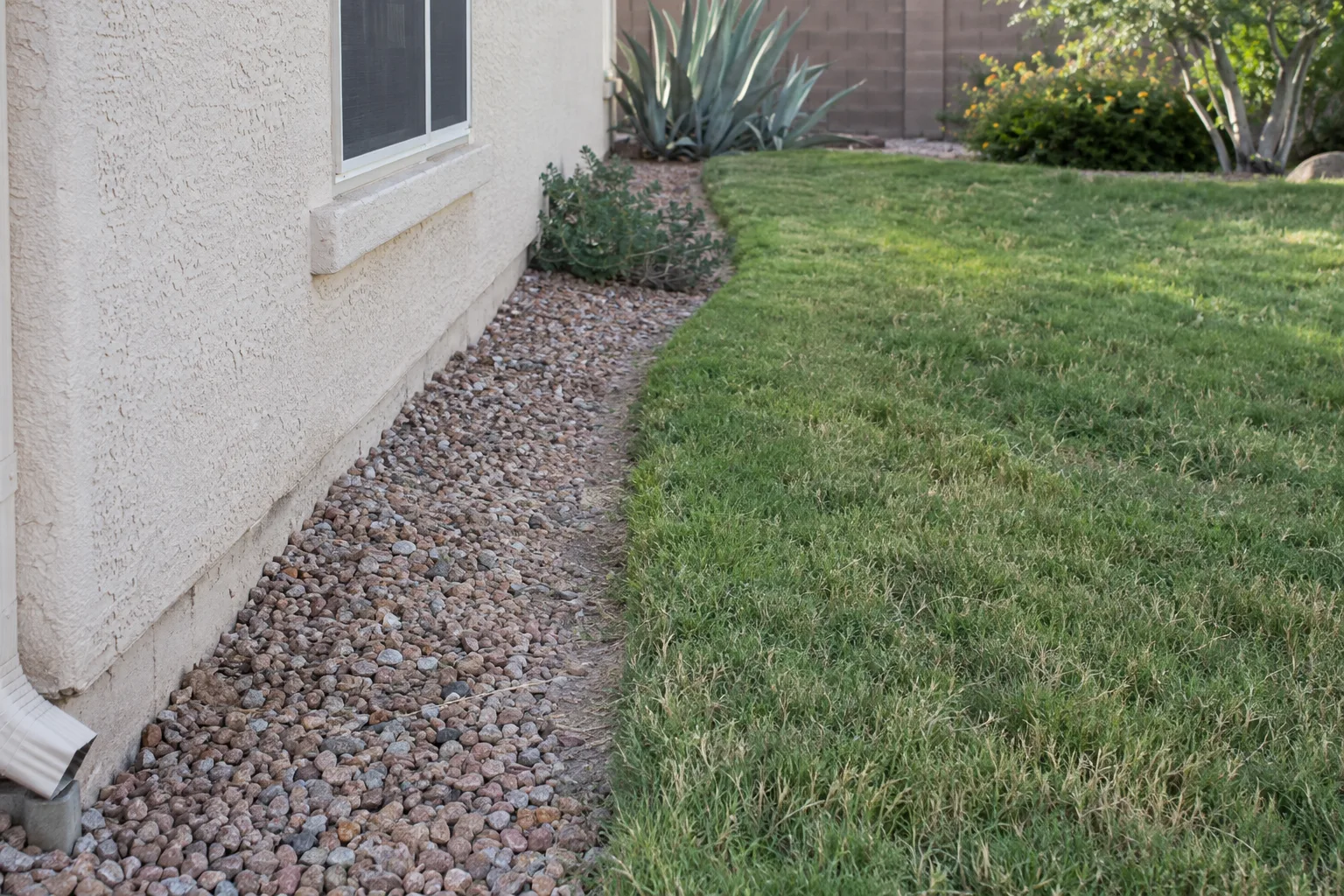
- Rake back mulch, plants and grass from the foundation to leave a bare strip of soil or gravel about 12 to 18 inches wide.
- Vacuum any mites indoors with a hose attachment, then empty the vacuum outside. Do not wipe or press them, because that stains.
- Cut back lawn watering in winter and early spring, and choose a balanced, slow-release fertilizer over a high-nitrogen one.
- Seal gaps around window frames, door sweeps and utility openings with caulk and weatherstripping. October is a good time, before the fall wave.
- If you still need extra help, dust a thin line of food-grade diatomaceous earth along dry thresholds and wall bases. Wear a dust mask while applying it, keep it off flowering plants, and reapply after rain or irrigation.
Skip spraying general-purpose insecticides on walls and soil as a first move. They can kill beneficial insects, and a hose does the same job on the mites you can see. If you do decide to use a pesticide, read the label, confirm it lists clover mites and the surface you are treating, and follow every direction on it.
How do I treat spider mites on plants?
Start with water. A strong spray on the undersides of leaves, repeated every few days in the morning, knocks mites off and breaks up webbing. Many plants recover from light infestations this way. It costs nothing and harms nothing around it.
If spraying water is not enough, insecticidal soap or horticultural oil labeled for mites can help, but coverage on leaf undersides matters and so does timing. Many soaps and oils can burn leaves in high heat, so check the label for temperature limits and apply early in the day. Test on a few leaves first.
Keep stressed plants on a steady, deep watering schedule, because drought-stressed foliage is easier for mites to colonize. Citrus gets spider mite pressure in dry weather, so watch the leaves of your citrus trees for stippling in late spring. Miticides exist for heavy infestations, and the University of Arizona Cooperative Extension is the place to confirm which products are appropriate and legal for your plant.
How can I keep tiny red bugs from coming back?
Keep the area next to your house dry and bare, keep lawn growth moderate, and match plants to the low desert. Mites favor the soft, lush growth that comes from overwatering and heavy nitrogen, so slower growth gives them less to feed on.
Do not plant turf or dense groundcover right up against stucco. A strip of gravel or bare soil does more to keep mites off your walls than any spray. Water lawns deeply and less often, and dial the schedule back in winter when bermudagrass slows down.
Timing helps too. Do wall sealing and foundation cleanup in early February and again in early October, ahead of the two clover mite waves. Our gardening calendars lay out what to do month by month in our area.
Choose plants that suit alkaline soil, summer highs above 110°F and occasional winter frost, and water them correctly. We do not claim any plant repels mites, but healthy, well-placed plants tolerate a few pests far better than stressed ones.
When should I get help with tiny red bugs?
Get help if people in your home develop itchy welts after time in the yard, if mites are stripping leaves despite repeated treatment, or if red bugs inside the house do not match clover mites. Chiggers and stored-product pests are uncommon causes, and a pest professional or the county extension office can identify them.
Bring a few bugs sealed in a bag, or a clear close-up photo, and a leaf if plants are affected. You can contact us with questions before you visit. Check our classes and events page for upcoming workshops as well.
Frequently asked questions
Will clover mites bite my dog or my kids?
Clover mites are not known to bite people or pets. They do not carry disease and do not feed on blood. The main risk is a red stain if they are crushed on skin, clothing or carpet. If someone is itching, look for another cause such as chiggers, fleas or a plant reaction.
Why do red bugs come inside my house?
Clover mites enter homes through tiny gaps around windows, doors and foundation cracks, usually in spring and fall. They are looking for shelter and warmth, not food. They do not reproduce or damage furniture indoors, and they die off quickly. Vacuum them up and seal the entry points.
Does diatomaceous earth work on red bugs?
Diatomaceous earth can kill some mites on contact with dry dust, but it works best as a light line along dry entry points. It loses effect when wet and can irritate lungs if inhaled, so wear a mask. Use food-grade product only, and keep it away from flowers where pollinators feed.
Are red velvet mites dangerous?
Red velvet mites are generally considered harmless to people, pets and plants. They show up on soil and pavement after monsoon rain and disappear within days or weeks. They feed on small insects and insect eggs, so treat them as neutral or helpful and do not spray them.
Will the red bugs go away on their own?
Clover mites usually taper off as summer heat arrives, and they are generally understood to return in fall as eggs hatch. A spring outbreak that ends in May can reappear in October. Spider mites do not clear up on their own while plants stay hot, dry and stressed.
Do tiny red bugs in the yard need treatment?
Usually not. Clover mites on walls need a hose, a vacuum and a bare strip along the foundation, not a pesticide. Red velvet mites need nothing at all. Spider mites on valuable plants deserve prompt action, starting with water and good watering habits. If you are unsure which bug you have, get it identified before you spray anything. You are welcome to visit us in Queen Creek and talk it through.