Sustainable gardening in Arizona means desert-adapted plants, drip irrigation, compost, mulch and captured monsoon rain. It is growing because water costs are climbing and summer highs pass 110°F. Start in fall with one change, such as converting a spray zone to drip.
Key takeaways
- Fall planting, from roughly October through the cooler months, gives roots several mild months before summer highs above 110°F.
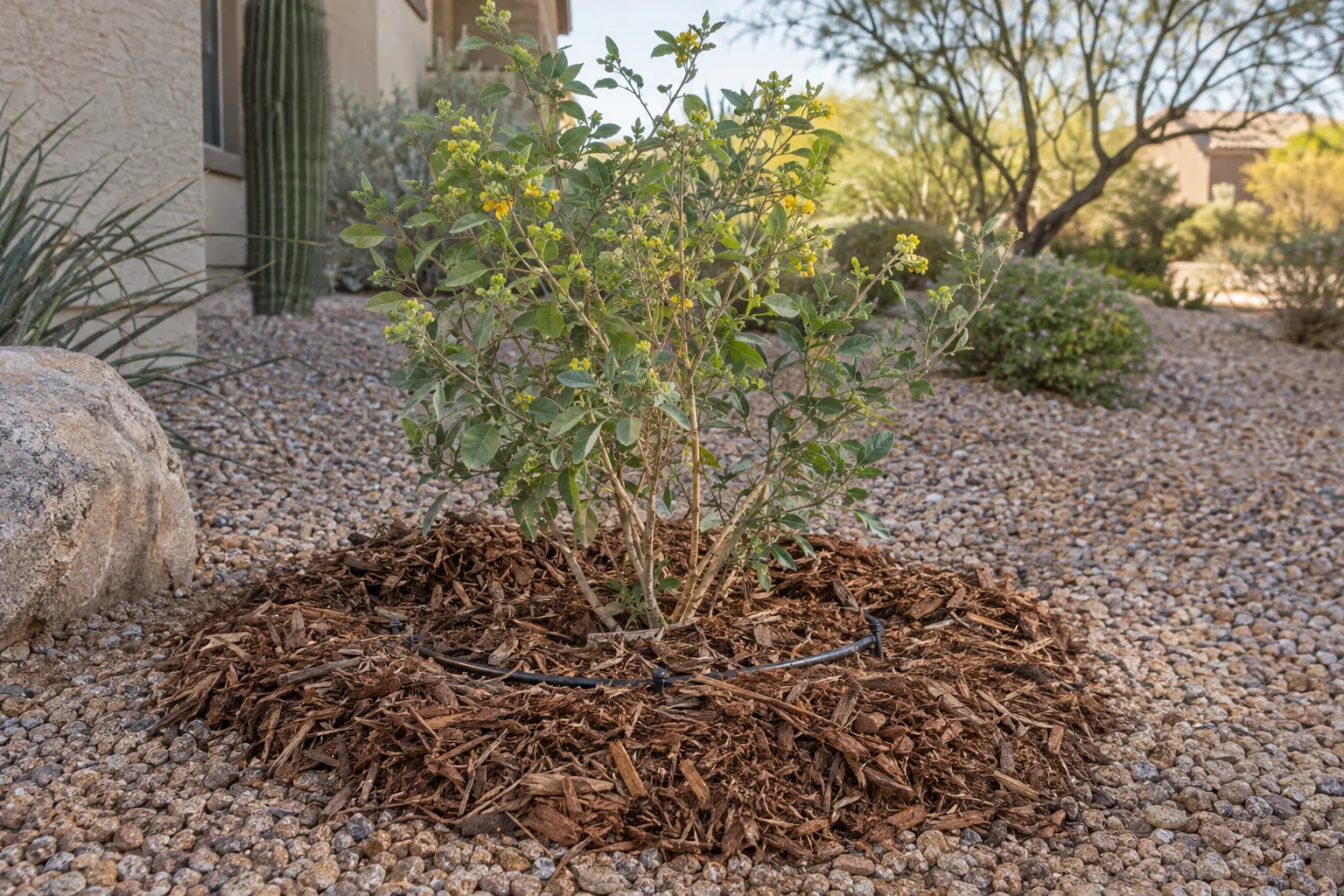
- Drip irrigation puts water at the roots and loses far less to evaporation than spray heads, and 3 to 4 inches of mulch slows evaporation further.
- Dig a test hole 18 to 24 inches deep before planting so you know where caliche sits.
- Group plants by water need so each irrigation zone serves one kind of plant.
- Most yards convert in stages over about 3 to 5 years, starting with the highest water users.
Why is sustainable gardening growing in Arizona?
Rising water costs and summer heat are the two main reasons. Many East Valley cities price water in tiers, so each added block of gallons costs more, and the Colorado River supplies a large share of the Phoenix metro’s water at a time when that supply is under strain.
Heat adds to the pressure. Summer highs above 110°F stress plants that were never suited to the low desert, and replacing them every two or three years adds up. Desert-adapted plants, once their roots are established, usually need far less water and attention through July and August.
Practical gains matter too. Compost and mulch cut down on bagged amendments, and flowering natives feed bees, butterflies and hummingbirds. Replacing dead plants gets old fast.
When is the best time to start a sustainable garden in Arizona?
Fall is the best time to start, from roughly October through the cooler months, with February to early March as the next window. Roots grow through mild weather and have months to settle in before the first summer above 110°F.
Spring planting works but asks more of you, because new plants face rising heat before their roots reach deep. Avoid putting trees and shrubs in the ground between May and September. Summer is for planning.
Use the warm months to map your yard, review water bills and gather supplies. Our gardening calendars lay out tasks month by month, and our plants department is the place to browse the desert-adapted options we commonly carry, though availability changes week to week and season to season.
What do I need to get started?
You need a handful of basic tools and materials, and most of them cost far less than the water you save over two or three summers of reduced irrigation. Keep the list simple.
- Drip supplies: tubing, emitters, a filter and a pressure regulator
- A timer or weather-based smart controller
- A shovel and a digging bar for caliche
- Finished compost for top-dressing
- Mulch, either organic or decomposed granite
- A notebook for water bills and yard observations
Drip parts are sold at irrigation suppliers, and a single zone can often be converted in an afternoon.
How do I start a sustainable garden step by step?
Work through these eight steps in order, and spread them over a season or two rather than doing everything in one weekend.
- Pull 12 months of water bills and find your highest months. Outdoor irrigation is often a large share of summer household use, so that gap shows how much a yard conversion can save.
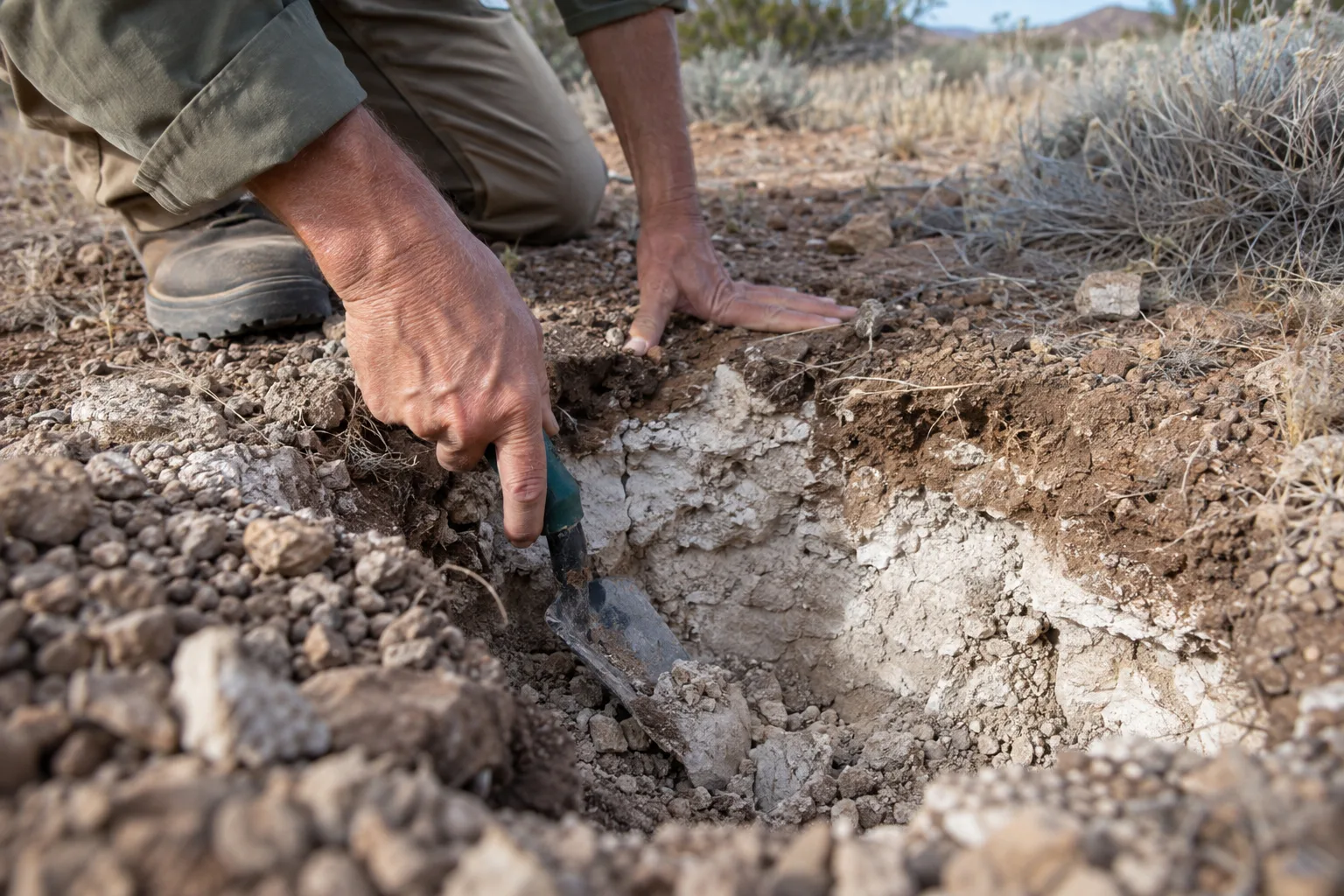
- Dig a test hole 18 to 24 inches deep in two or three spots. Note the soil texture and whether you hit caliche, a white or gray layer of cemented calcium carbonate that blocks drainage and roots.
- Map sun and heat. Walk the yard at 8 a.m., noon and 4 p.m. and mark where afternoon western sun and reflected heat from walls and pavement fall.
- Convert spray zones to drip, starting with trees and shrubs. Drip delivers water to the root zone and loses much less to evaporation in summer heat.
- Reduce turf in stages. Bermuda grass uses several times more water than a comparable area of desert planting, so removing even one section helps, and it is worth asking your city’s water department about turf rebates before you tear anything out.
- Plant in fall, set each plant slightly high, and build a shallow basin around it. Water deeply at planting and keep a regular schedule through the first year.
- Spread 3 to 4 inches of mulch over planted areas, keeping it a few inches back from trunks and stems.
- Review every quarter. Compare water bills, note which plants need constant coddling and replace them with better matches.
Which plants work in a sustainable garden here?
Plants native to the Sonoran Desert or to similar dry climates handle heat, alkaline soil and low water best once their roots are established. These are varieties we commonly carry, though availability changes week to week and season to season, so check with us before you plan a planting around one. Our desert trees are a good place to start for shade.

Palo verde (Parkinsonia species) is Arizona’s state tree, with yellow spring flowers and light shade. Thornless hybrids such as ‘Desert Museum’ are widely planted. Expect leaf and flower litter under it.
Desert willow (Chilopsis linearis) opens orchid-like blooms from late spring into summer and draws hummingbirds. It sheds seed pods and can get leggy without a light trim.
Brittlebush (Encelia farinosa) covers silvery leaves with yellow daisies in spring. It tends to be short-lived, so plan to replace it every few years.
Autumn sage (Salvia greggii) blooms most heavily in spring and fall, in red, pink, coral and white. It looks best with a little afternoon shade where walls throw reflected heat.
Texas ranger (Leucophyllum frutescens) has silver foliage and purple flowers that often follow humid weather or monsoon rain. Overwatering and shearing it into tight balls leaves it sparse.
Agave (Agave species) gives bold structure and needs very little water once established. Tips are sharp, so keep it back from walkways.
How do I handle alkaline soil, caliche and hard water?
Loosen the planting area, top-dress with compost and flush the soil on a schedule. Queen Creek soil is alkaline, and many yards have caliche somewhere below the surface.
If your test hole hit caliche, break through it with a digging bar or auger at each planting spot so water can drain. Where the layer is too thick, plant in a raised bed or a mound instead. Water pooling above caliche can suffocate roots.
Spread 1 to 2 inches of finished compost on beds each fall and let mulch and soil life work it in. Skip heavy tilling after the first year. Avoid high-nitrogen fertilizer in summer, since it pushes soft growth that struggles through 115°F afternoons.
Hard irrigation water leaves minerals behind. A few times a year, run a long, slow soak so accumulated salts move below the root zone, especially in drip-irrigated beds.
Can I catch monsoon rain in my yard?
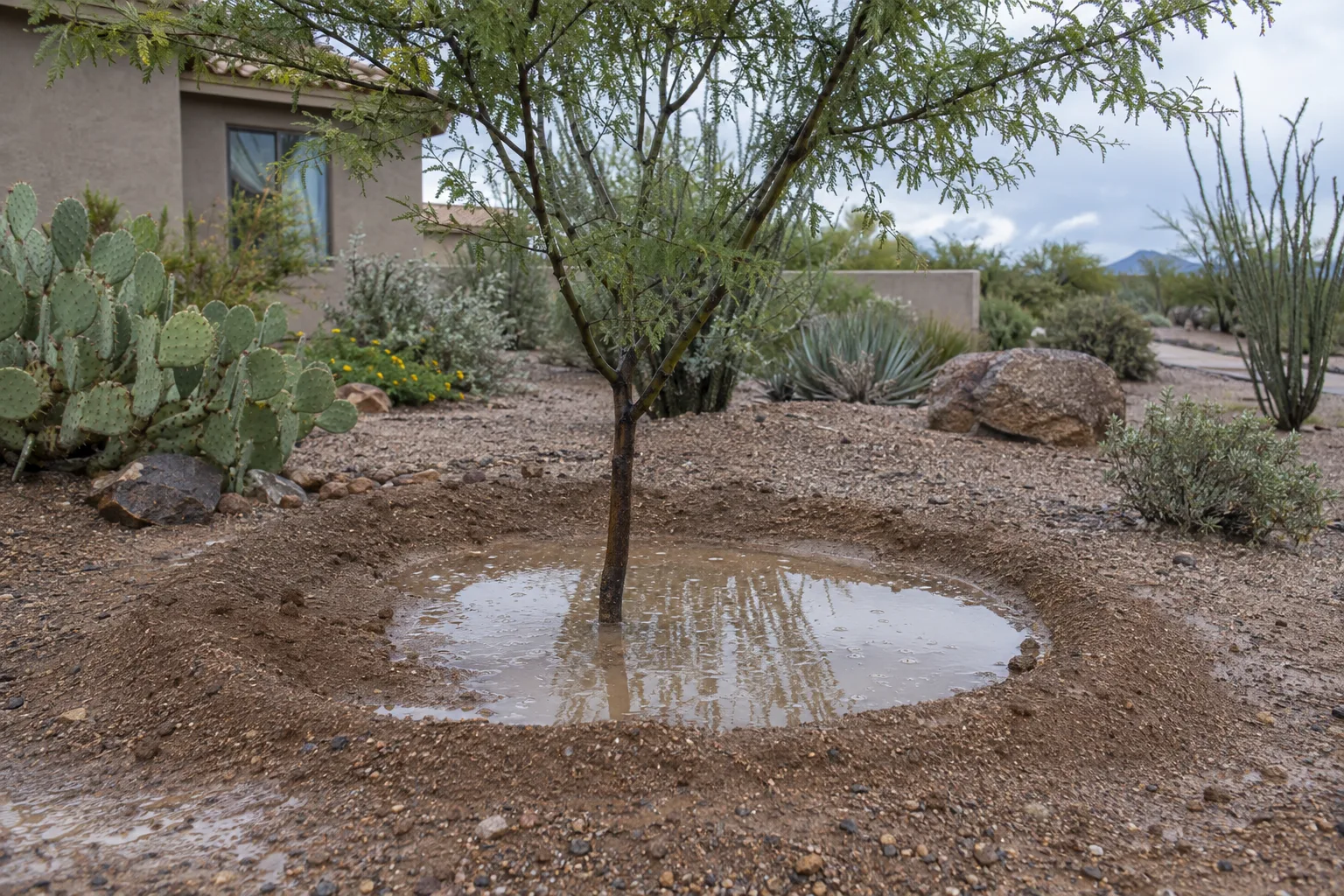
Yes, and the cheapest method is shaping the ground to hold it. Shallow basins around trees, low berms and gentle swales slow runoff from July through September storms so it soaks in where roots can use it.
A basin about 6 inches deep around a young tree or shrub is a good start. Keep runoff pointed away from foundations and block walls. Plan for overflow, because a heavy storm can fill a basin in minutes.
Rain barrels and cisterns can store roof runoff for later drip irrigation. The Arizona Department of Water Resources publishes guidance on residential rainwater harvesting, so read it before you buy a tank, and check any HOA rules that apply to your lot.
What mistakes should I avoid when starting out?
The four most common errors are planting at the wrong time, overwatering, skipping soil prep and changing too much at once.
Planting woody plants in summer
Trees and shrubs set out in June or July face heat above 110°F before their roots spread. Wait for fall.
Overwatering desert plants
Palo verde, agave and Texas ranger can develop root rot in soggy soil. Learn each plant’s needs and water deeply but infrequently instead of applying one daily schedule to the whole yard.
Skipping soil prep
A drought-tolerant plant dropped into unbroken caliche still needs loose, draining soil to build roots. Breaking the hardpan and backfilling with native soil mixed with some compost speeds establishment.
Converting everything at once
Pulling out a whole yard in one season leaves bare, hot ground and a big bill. Convert one irrigation zone at a time, and let each planting settle in before starting the next.
Frequently asked questions
How much water can a sustainable garden save?
It depends on what you replace, and turf conversion usually saves the most. Bermuda lawns need several times more water than desert planting of the same size, and drip lines lose less to evaporation than spray heads. Compare summer water bills before and after a change to see your own numbers, since savings differ by yard and city.
Can I compost in summer heat?
Yes, but the pile dries out quickly above 110°F. Keep it in shade, cover it with a lid or burlap, and moisten it until it feels like a wrung-out sponge. Chop woody material and palm fronds small, since whole pieces break down slowly and can sit in the pile for months.
Can I grow vegetables sustainably here?
Yes, with the cool season doing most of the work. Lettuce, kale, broccoli, carrots and peas go in from roughly October into winter, and drip lines, mulch and shade cloth keep water use down. The University of Arizona Cooperative Extension vegetable planting calendar for Maricopa County gives dates by crop, and our herbs, vegetables and berries section covers each season.
Are rebates available for sustainable landscaping?
Some cities and utilities have offered rebates for turf removal or smart irrigation controllers, but programs and amounts change often. Check your city’s water department and your water provider before you remove grass or buy equipment, since some programs require approval first. Do not count on a rebate until you have confirmed the current rules for your address.
Do I have to remove all my existing plants?
No, you can convert in stages. Begin with the highest water users, such as turf, spray zones and plants that struggle every summer, then add desert-adapted plantings each fall. Many yards take 3 to 5 years to change fully. Check our classes and events page for upcoming sessions.
Is a sustainable garden right for your yard?
For most Queen Creek yards, yes. If you pay to keep turf or tropical plants alive through summer, even a partial conversion cuts water use and upkeep. It works best when you start in fall, change one zone at a time and match each plant to its spot. It is a poor fit if you want a large, lush lawn or cannot adjust your irrigation, since new desert plants still need drip lines and careful watering in year one. Stop by the nursery in Queen Creek and we will talk through your first zone.