Too much sun damages Arizona gardens by scorching leaves, cracking bark and overheating roots. In the low desert, summer highs above 110°F and heat reflected off walls make sun damage common, even for plants sold as full sun. Shade, mulch and placement prevent most of it.
Key takeaways
- Brown, papery leaf edges, bleached patches and cracked bark on the sun-facing side are the main signs of sun damage.
- Roots suffer too: bare soil can climb far above air temperature on a summer afternoon, so a 3 to 4 inch layer of organic mulch protects them.
- New transplants, young citrus and vegetables are the most exposed from June through September.
- Shade cloth rated 30 to 50 percent covers vegetables and young plants through the hottest months.
- Water deeply and early in the morning, and check soil moisture 4 to 6 inches down before adding more water.
What does sun damage look like on plants?
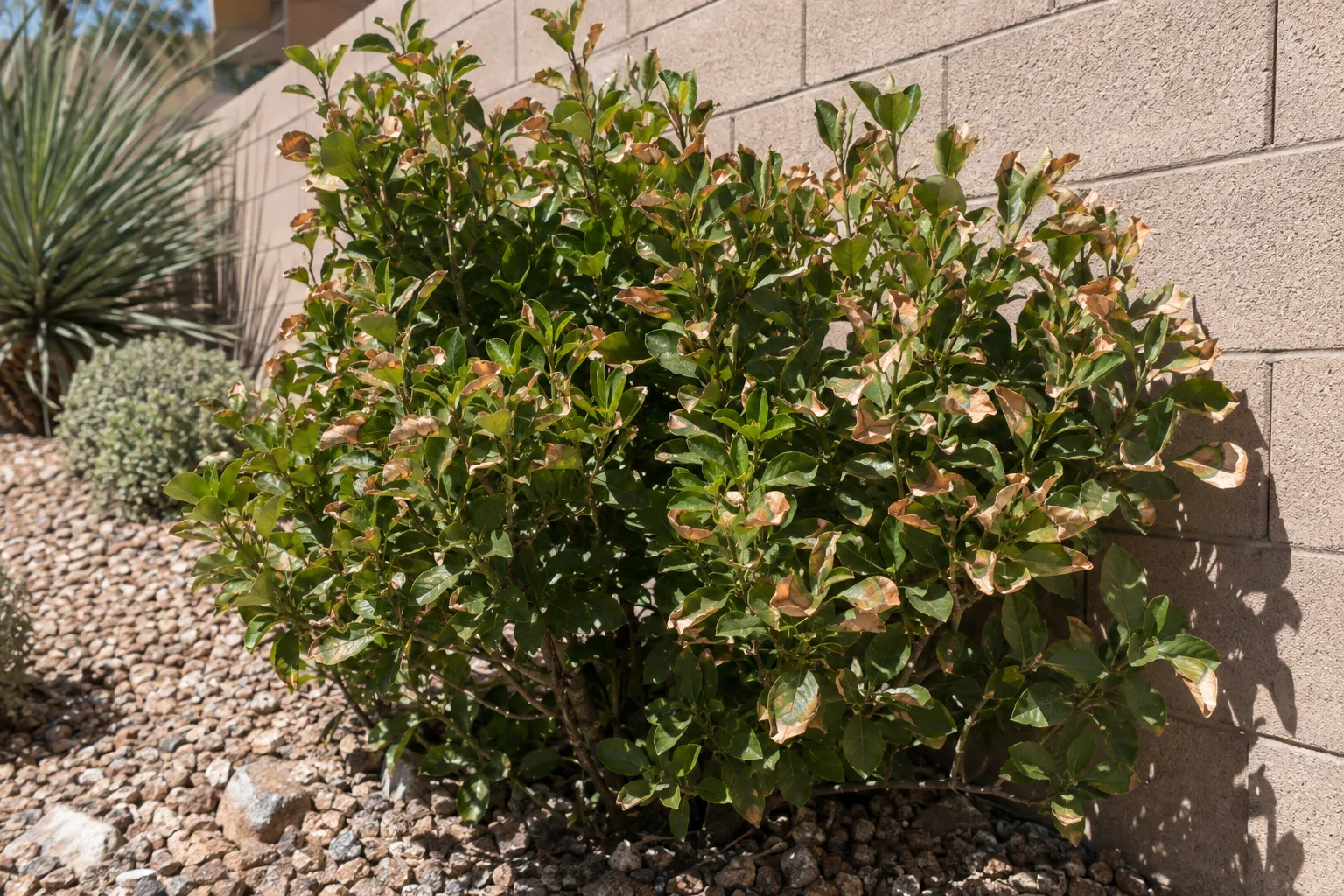
Sun damage shows up as scorched leaf edges, bleached foliage, midday wilting and cracked bark. Each sign points to a different problem, so look at where on the plant it appears.
Leaf scorch starts as tan or brown patches at the tips and edges, then spreads inward. The tissue feels dry and papery. Bleaching turns leaves pale yellow-green or white, usually on the side facing afternoon sun.
Wilting during the hottest hours means the plant loses water faster than its roots can supply it. Sunscald on trunks and stems blisters or cracks bark on the exposed side, and the wounds let pests and disease in.
Many gardeners read yellow leaves as a nutrient problem and reach for fertilizer. Look at which side of the plant is affected first. Damage confined to the west or south side almost always points to sun, and extra fertilizer only adds stress.
Why does extreme heat hurt plants so badly?
Heat hurts plants because they cool themselves by releasing water through their leaves, and in hot, dry air they cannot replace it fast enough. Above roughly 100°F with low humidity, that demand on the roots becomes very high.
When supply falls behind, leaves close their pores to save water, and that also shuts down photosynthesis. Growth stalls, flower buds drop and fruit shrivels. If the stress continues, leaf and stem cells die, which is the scorch you see.
Roots in shallow, exposed soil take damage as well. Hot soil slows nutrient uptake and can kill fine roots, so plants in containers and thin soil often suffer first.
How does intense sun affect Queen Creek soil?
Bare soil here heats up fast and dries out, and that hurts the roots and the microbes that feed them. Our alkaline soil and caliche layers make it worse.
Caliche is a hard mineral layer common in the East Valley. Water collects above it, evaporates quickly in summer and leaves salts behind. Clay-heavy spots bake into a crust that sheds water instead of absorbing it.
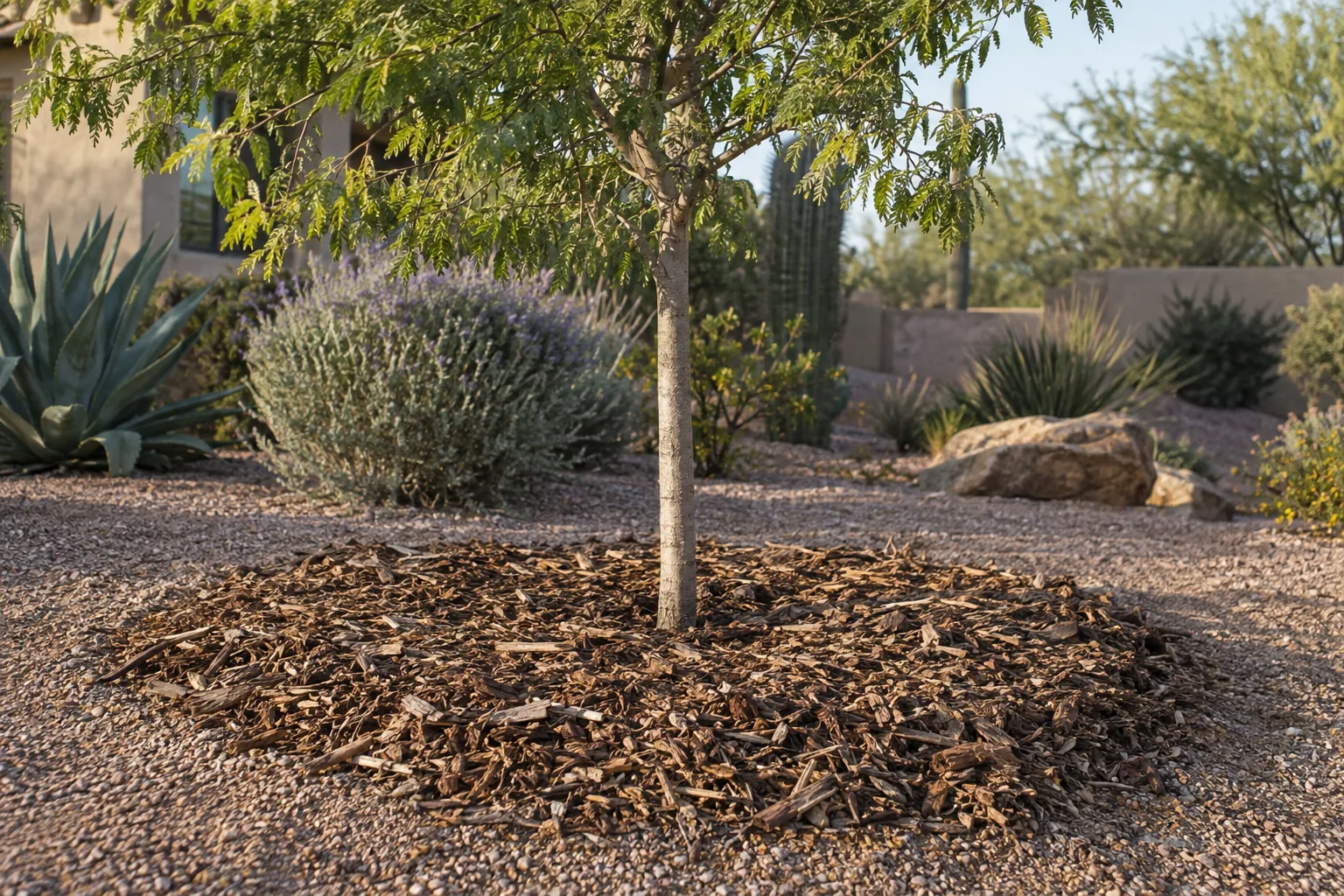
Mulch is the simplest fix. Wood chips and shredded bark insulate the soil, hold moisture and break down into organic matter. Gravel is common in desert yards, but it absorbs and radiates heat, so it does little to cool root zones. Keep mulch a few inches back from trunks and stems to avoid rot.
Which plants burn first in Arizona summers?
The plants most at risk are young or newly planted ones, thin-barked trees, vegetables, herbs and tropical shrubs in west-facing spots. Established desert natives are tougher but not immune.
Young citrus and thin-barked trees
Young citrus trunks have thin bark and sunscald easily. Fruit on mature trees can also sunburn in peak summer. Browse our citrus trees to see what suits your yard, and plan for trunk protection in the first few summers.
Vegetables and herbs
Tomatoes, peppers and squash that thrive in spring often drop blossoms and decline when daytime highs stay above roughly 105°F. Basil, mint and parsley bolt or burn in unprotected afternoon sun. Our gardening calendars help you time plantings around the heat.
Tropicals and new transplants
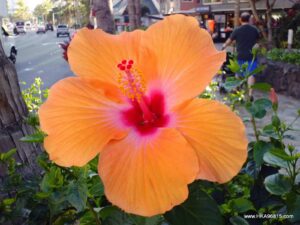
Hibiscus, bird of paradise and bougainvillea tolerate a lot of sun, but afternoon west exposure in July and August can still scorch them. Any plant set out in summer has a small root system and burns easily. Plant in fall or spring when you can.
Which sun-tolerant plants handle low desert heat best?
Desert-adapted trees, shrubs and succulents handle our sun best. These are varieties we commonly carry, though availability changes week to week and season to season.
Chilopsis linearis (desert willow) blooms through summer and tolerates alkaline soil and reflected heat. Tecoma stans (yellow bells) flowers from late spring into fall and recovers from frost damage. Palo verde trees give filtered shade and drop leaves in drought. Agaves store water in thick leaves and need little irrigation once established.
Lantana flowers all summer in full sun, though it can spread if left unchecked. Ruellia fills part-shade areas under trees and also takes more sun than most perennials. Even these need regular water during their first year. Our desert trees are a good place to start for shade.
How do I protect my garden from sun damage?
Start by finding out where the sun hits hardest, then add mulch, shade and trunk protection in that order. The steps below work for most East Valley yards.
- Walk your yard at about 2:00 PM in July and note which areas get direct sun, reflected heat from walls or pavement, or natural shade.
- Remember that west and south exposures run hotter than east and north ones, and south-facing walls radiate heat into the evening.
- Spread 3 to 4 inches of organic mulch around shrubs, trees and beds, leaving a gap at the trunk.
- Cover vegetables and young transplants with 30 to 50 percent shade cloth from June through September.
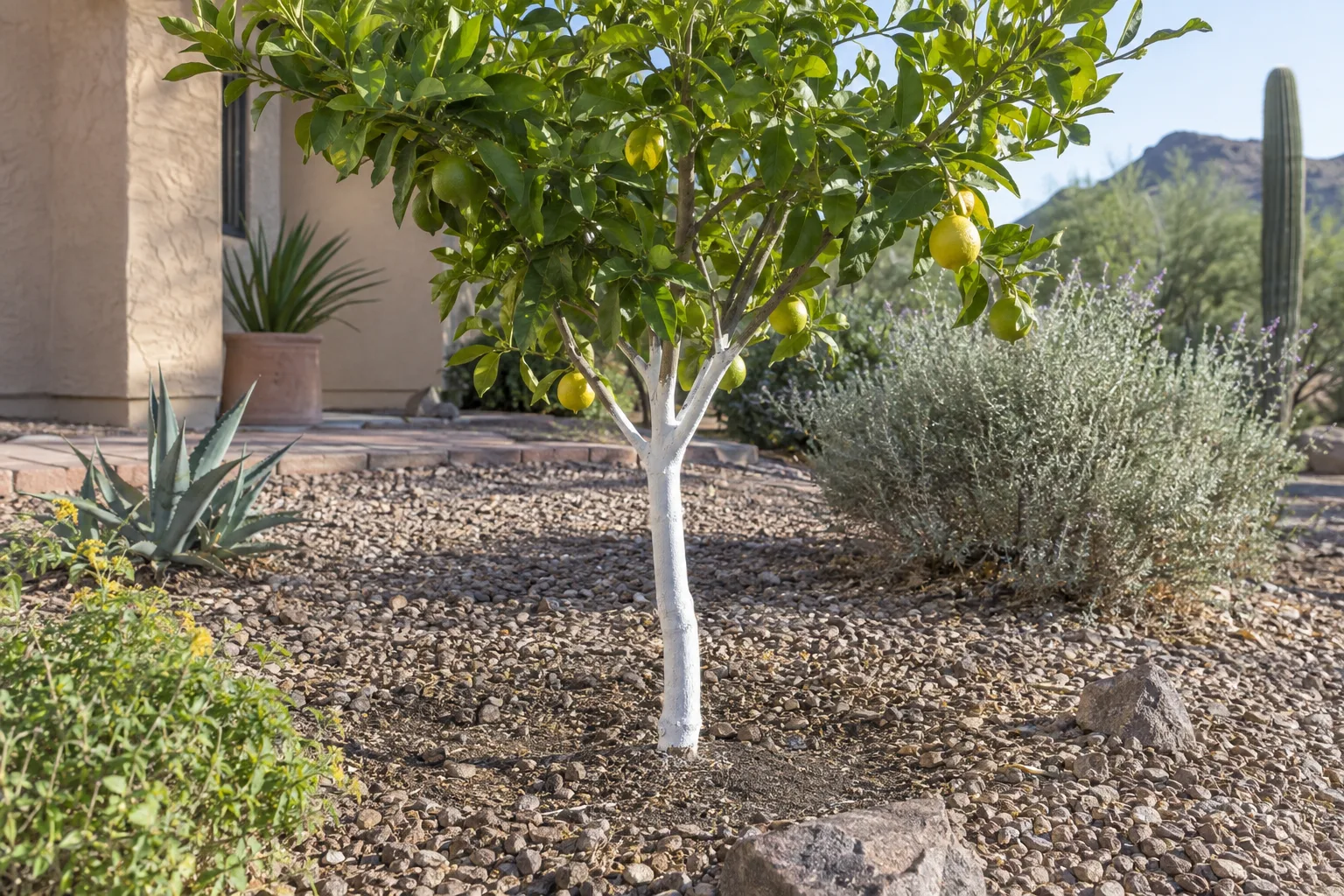
- Shield young citrus and other thin-barked trunks with tree wrap or diluted white interior latex paint.
- Water deeply in the early morning so plants carry moisture into the afternoon heat.
- Place sensitive plants on the east side of walls or under taller trees.
- Prune scorched leaves and dead branches so the plant can put energy into healthy growth.

What shade works best in the East Valley?
Trees give the best long-term shade, and shade cloth gives the fastest. Pergolas and walls fill in the gaps.
Palo verde, mesquite and desert willow cast filtered shade. Plant them on the west or southwest side of beds. A young tree may need several years before it casts real shade, so plant early. Our tree selection covers many options for different yard sizes.
Shade cloth on a simple PVC or metal frame works well for vegetables. Use about 30 percent for most plants and up to 50 percent for seedlings and fresh transplants. The east side of a block wall gets morning sun and shade by early afternoon, a good spot for plants that want light but not the 4 to 7 PM heat.
Can my watering habits make sun damage worse?
Yes. Shallow, frequent watering keeps roots near the hot surface, and overwatering during monsoon season can rot roots that are already stressed.
Deep, less frequent watering pushes roots down where soil stays cooler. Adjust your timer through the seasons, since summer demand is far higher than spring or fall. In late July and August, humidity and storms can saturate soil, so check before irrigating.
Water droplets on leaves are often blamed for burn spots, but evidence for that is weak, so we would not rearrange your watering around it. Water at the root zone, early in the day.
How does sun exposure change through the year?
The summer sun sits nearly overhead and produces the most intense exposure, while the winter sun sits low and can be blocked by walls that cast no shade in July.
| Season | Sun angle | Main risk |
|---|---|---|
| Summer (June to August) | Very high | Scorch, bleaching, root damage |
| Spring (March to May) | Rising | Transplant stress, early scorch |
| Fall (September to November) | Dropping | Leftover heat after monsoon |
| Winter (December to February) | Low | Frost on clear nights, citrus sunscald |
A spot that looks ideal in March can scorch plants by July. Judge a location against summer conditions before planting anything permanent.
Frequently asked questions
Can a plant recover from sun damage?
Yes, most can if the roots are healthy and the stress is removed. Prune dead tissue, mulch, adjust watering and add shade. Plants with repeated trunk sunscald or more than half their canopy lost are harder to save and may need replacing.
Is it heat stress or underwatering?
Timing tells you. A plant that wilts in the afternoon but recovers overnight is likely heat stressed. One still wilted in the morning is probably dry. Check soil 4 to 6 inches down before changing your watering.
When should I water in summer?
Early morning, roughly 4 to 7 AM, is best. Plants get a full reservoir before the heat and evaporation stays low. Drip lines at the root zone can run in the evening, but skip overhead watering at night.
Do desert natives get sun damage?
They can when young or moved to a harsher spot than they grew in. A cactus raised in shade can scald in a hot south-facing spot. Even established desert shrubs may show stress in extended heat above 115°F.
Should I paint my citrus trunks?
Painting young trunks white with diluted interior latex paint is a common way to reflect sun and prevent sunscald. Tree wrap works too. Most gardeners do this for the first few summers while bark thickens.
Is your yard ready for a Queen Creek summer?
If your plants sit in full afternoon sun on bare soil with a shallow watering routine, expect damage and fix those three things first. Desert-adapted plants with mulch and early morning irrigation will do well in most yards. If you want a tomato bed or tropical corner in a west-facing spot, plan on shade cloth every summer, or choose a different location. Stop by our plant selection in Queen Creek and talk through your yard with our staff.