
Bougainvillea, lantana, red bird of paradise, ruellia, desert marigold, angelita daisy and moss verbena are the plants that keep color from spring through summer in Arizona. One caveat: moss verbena fades in peak July heat and needs a little help.
Key takeaways
- Plant for summer color between late February and March, so roots have 6 to 8 weeks to settle in before temperatures pass 100°F.
- Bougainvillea, lantana and red bird of paradise are the strongest performers through July and August in full sun.
- Desert marigold, angelita daisy and moss verbena bloom heavily in spring and ease off in the hottest weeks, then rebound after monsoon moisture arrives.
- Overwatering kills more of these plants than heat does, so water deeply and let the soil dry between soaks.
- Frost can cut back bougainvillea, lantana and red bird of paradise in cold winters, but lantana and red bird of paradise usually regrow from the base in spring.
Why do plants stop blooming in an Arizona summer?
Most flowering plants stall once highs sit above 105°F to 110°F and nights stay warm. They stop spending energy on flowers and focus on staying alive. Plants from other climates drop buds, scorch and sulk.
Our soil adds to the problem. Alkaline ground with caliche below it drains slowly after a monsoon storm, then bakes dry in a couple of days. Plants that keep blooming through this swing are adapted to heat, strong light and fast drying, which is why the list below leans on desert natives and heat-loving shrubs.
Most color from annuals fades by June. If you want a quick seasonal pop in pots, our annual flowers and foliage section covers what to plant by season. The plants here are the longer-term answer.
Which plants hold color from spring into summer in the low desert?
The seven below bloom for a long stretch and tolerate East Valley heat once established. These are varieties we commonly carry, but availability changes week to week and season to season, so browse our full plant selection or ask what is on hand. Sizes are typical ranges and vary by variety.
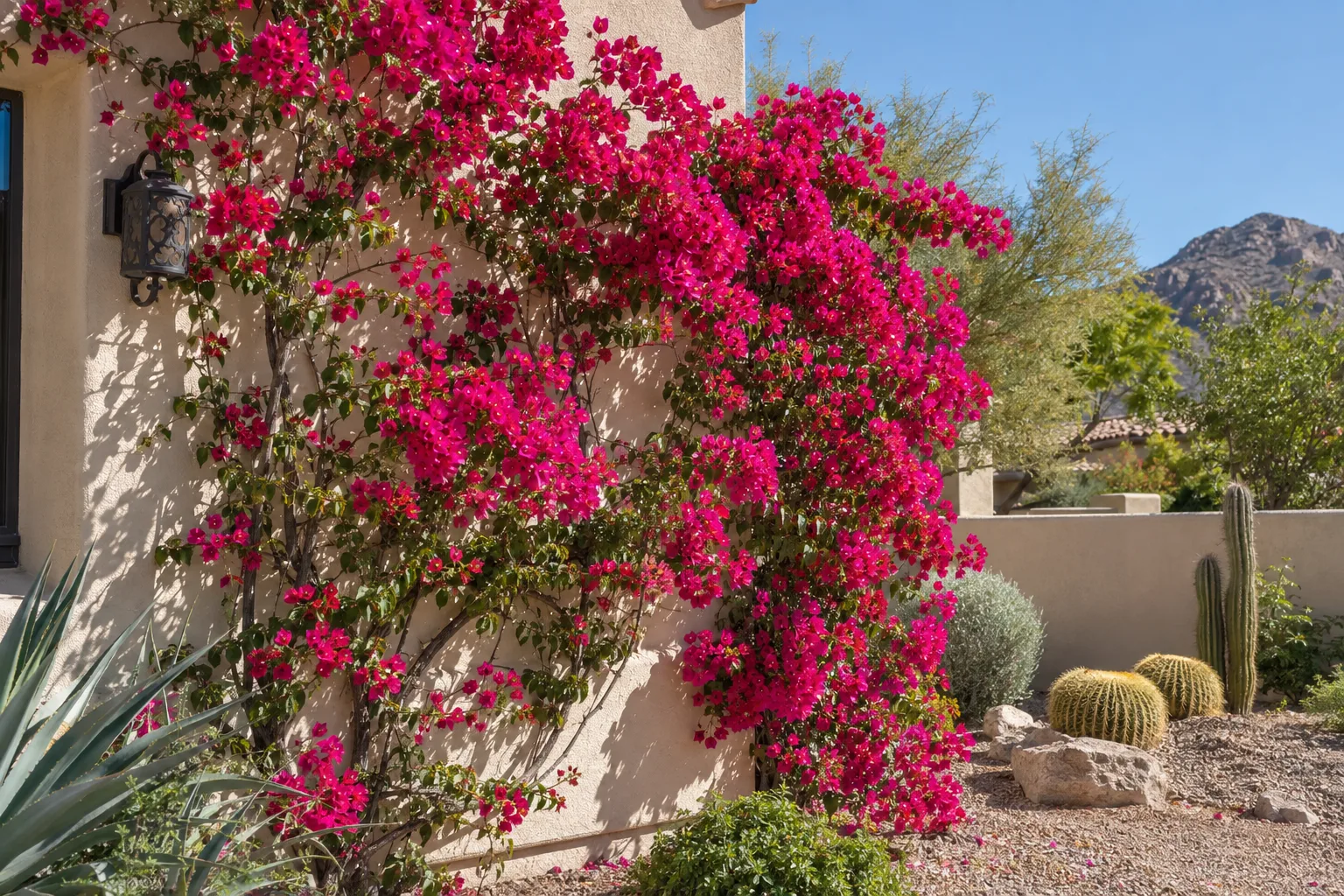
Bougainvillea Bougainvillea spp.
The color comes from papery bracts, not true petals, and bracts hold up to heat far better than petals do. Size ranges from about 4 feet for compact types to 15 feet or more for climbers. It wants full sun, 6 or more hours, and moderate drought stress to bloom hard. Drawback: frost damages it, and the thorns make pruning a chore. Heavy nitrogen feeding gives you leaves instead of bracts.
Lantana Lantana camara
Lantana blooms from spring until frost in shades of yellow, orange, pink, red and purple. Upright types reach 3 to 5 feet, and trailing types stay 1 to 2 feet tall and spread wider. It needs full sun and low to moderate water once established. Drawback: a hard frost can freeze it back, and it needs a cutback in late winter to look tidy. Bees and butterflies visit it often.
Red bird of paradise Caesalpinia pulcherrima
This shrub is at its best in June and July, with orange to red and yellow flower clusters on arching stems. Expect 6 to 10 feet tall and nearly as wide, so give it room. Full sun and low water once established. Drawback: a freeze can take it to the ground, and it looks bare in winter. It usually regrows from the base in spring.

Ruellia (Mexican petunia) Ruellia brittoniana
Ruellia carries purple, pink or white trumpet flowers from spring into fall. Tall forms reach about 3 feet, while dwarf selections stay around 12 to 18 inches. It takes full sun to part shade and low to moderate water. Drawback: it spreads by roots and seed, and the taller types can wander. Plant dwarf forms where you want it to stay put.
Desert marigold Baileya multiradiata
This Sonoran Desert native sends bright yellow daisies on tall stems above silvery, fuzzy foliage. Plan for 1 to 2 feet tall and wide in full sun with very little water. Bloom peaks in spring and returns after rain. Drawback: it is short-lived, can look ragged between flushes, and it dislikes rich soil and frequent watering. Let it reseed.
Angelita daisy Tetraneuris acaulis
Angelita daisy forms a tidy gray-green mound about 8 to 12 inches tall, covered in small yellow daisies for much of the year. It does best in full sun with low water. Drawback: flowering slows in the worst heat, and the crown rots in soggy soil. Skip it where irrigation overlaps or water pools.
Moss verbena Glandularia tenuisecta
Moss verbena is a low, spreading groundcover, around 4 to 8 inches tall, with purple, lavender or white flowers from late winter into early summer. It prefers full sun, but afternoon shade helps it last. Drawback: it declines in July and August heat and may look thin until monsoon moisture and cooler nights bring it back. Treat it as a spring-to-early-summer performer.
How do the seven compare month to month?
Use this to decide which plants carry each part of the season. Ratings are general and depend on your exposure and care.
| Plant | Spring | Early summer | July to August | Water |
|---|---|---|---|---|
| Bougainvillea | Strong | Strong | Strong | Low to moderate |
| Lantana | Strong | Strong | Strong | Low to moderate |
| Red bird of paradise | Starting | Strong | Peak | Low |
| Ruellia | Moderate | Strong | Strong | Low to moderate |
| Desert marigold | Strong | Moderate | Light, rebounds after rain | Very low |
| Angelita daisy | Strong | Strong | Moderate | Low |
| Moss verbena | Strong | Moderate | Light | Moderate |
When should I plant for summer color?
Late February through March is the best window. That gives 6 to 8 weeks of root growth before the first 100°F days. Plants set out in May have far less time and spend the summer struggling instead of blooming.
Our gardening calendars lay out what to plant and do each month. Here is how to set these plants up:
- Pick the spot first. Bougainvillea, lantana, red bird of paradise, desert marigold and angelita daisy need full sun. Ruellia and moss verbena tolerate or appreciate afternoon shade.
- Check drainage. Fill the hole with water and see how long it takes to drain. If water is still standing after several hours, build a mound or choose another spot.
- Dig twice as wide as the pot and no deeper than the root ball, so the crown sits level with or slightly above the soil.
- Backfill with the native soil. Heavy amending creates a pocket that roots hesitate to leave, which is a particular concern for the desert natives.
- Water slowly and deeply at planting to settle the soil and remove air pockets.
- Add 2 to 3 inches of mulch, keeping it a few inches from the stems.
- Run drip emitters around the root zone, widening the ring as the plant grows.

Many of our spring classes also cover planting for heat. See classes and events for what is coming up.
How much water do summer bloomers need?
Deep and infrequent works best. Once established, most of these plants do well with a long soak every several days in summer rather than a daily sprinkle. The right interval depends on soil, exposure and plant size.
Overwatering is the common failure. Soggy roots rot, leaves yellow and flowers drop. Push a screwdriver or dowel into the soil before watering. If it comes out damp several inches down, wait a day or two.
Yellow leaves with green veins, common on lantana and bougainvillea in our alkaline soil, point to iron chlorosis. Chelated iron applied as the label directs is the quick fix.
How do I combine them in one bed?
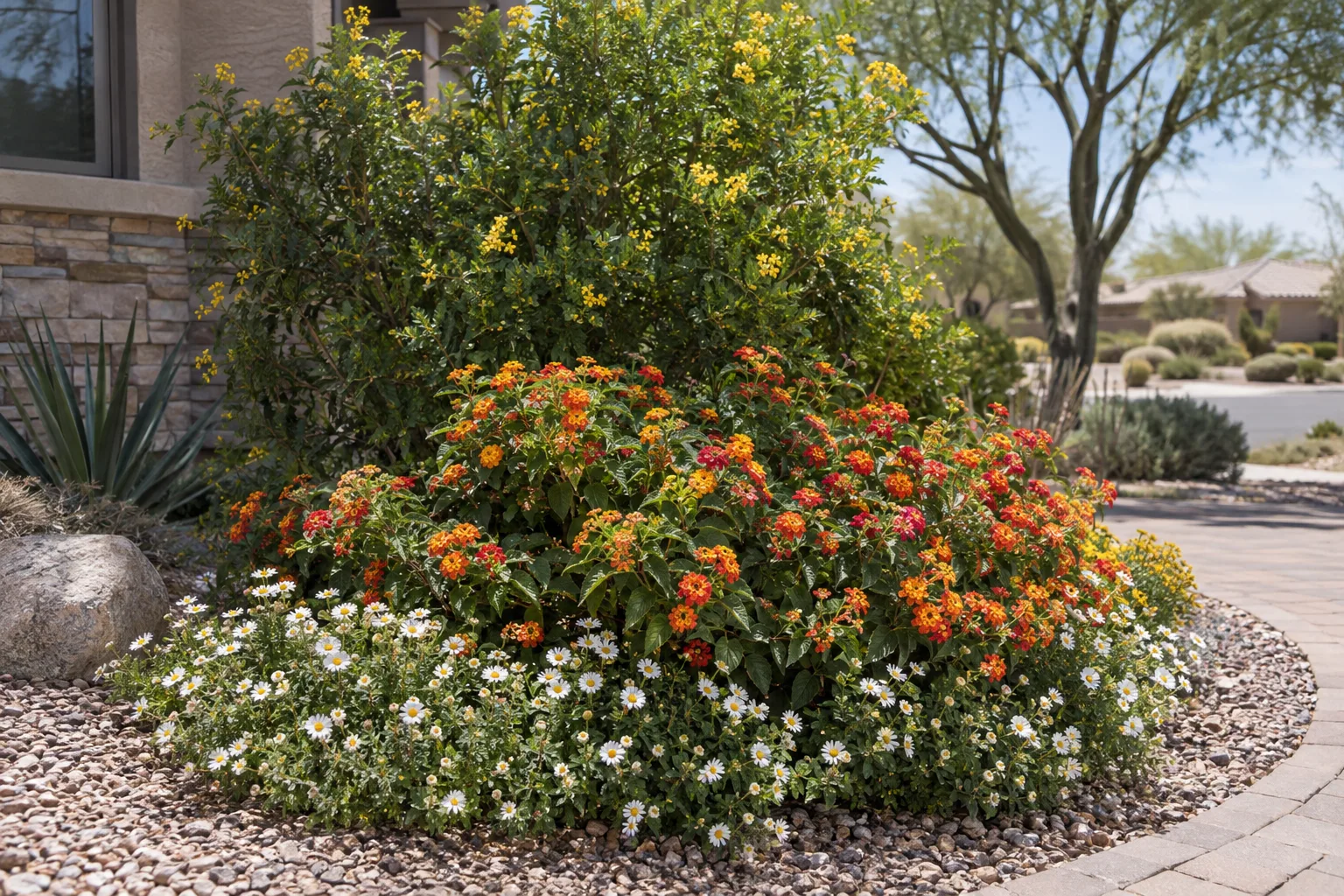
Layer by height and sun. Put red bird of paradise or bougainvillea at the back, lantana in the middle and desert marigold, angelita daisy or moss verbena along the edge. Warm yellows, oranges and reds sit well together, and their bloom windows overlap.
Keep water needs in the same zone on the same irrigation line. Group desert marigold, angelita daisy and bougainvillea on drier lines. Lantana, ruellia and moss verbena can share a slightly wetter one.
Frequently asked questions
Can I grow these in pots?
Yes, lantana, ruellia, moss verbena and angelita daisy all work in containers, and large pots suit bougainvillea. Use a well-draining mix and expect to water more often, since pots heat up quickly in summer. Light-colored containers help. Browse our pottery and planters for sizes that give roots room.
Do these plants attract pollinators?
Lantana, ruellia, desert marigold and angelita daisy draw bees and butterflies, and red bird of paradise is often visited by hummingbirds. Planting several together gives pollinators a longer season of flowers. Avoid spraying insecticides on blooming plants, since that can harm the visitors you are trying to attract.
Will they bloom in part shade?
Some will, but flowering drops. Ruellia and moss verbena tolerate part shade and benefit from afternoon relief in July. Lantana blooms less in shade. Bougainvillea, red bird of paradise, desert marigold and angelita daisy want full sun, and in shade they put out leaves with few flowers.
How often should I fertilize?
Rarely. A light application of a balanced slow-release fertilizer in spring is plenty for lantana, ruellia and bougainvillea. Skip high-nitrogen feeds in summer, which push leaves over flowers. Desert marigold and angelita daisy usually need none once established, and rich soil can shorten their lives.
What happens to these plants in a frost?
Bougainvillea suffers the most and may lose leaves or stems in a hard freeze. Lantana and red bird of paradise can freeze back but often regrow from the base in spring. Wait until new growth appears before cutting back, since the damaged stems protect the crown through the rest of winter.
Is long-season color worth planting for in my yard?
Yes, if you have sun and can keep irrigation modest. Bougainvillea, lantana and red bird of paradise are the safest picks for steady color in July and August. Skip these plants in a mostly shaded yard, or where the soil stays wet. Moss verbena and angelita daisy are better as spring and early summer accents. Bring photos of your yard, and come by our nursery in Queen Creek to talk through the right mix.