

Jade, sedum, echeveria, kalanchoe, graptoveria, elephant bush, aloe pups and agave pups are eight succulents that root fast from cuttings in Arizona, usually within two to five weeks. Let the cut end dry first, then set it in gritty mix in bright shade.
Key takeaways
- Take cuttings from late February through early June or from mid-September through November, when warm days help roots form.
- Let each cut end dry for 1 to 3 days in warm weather, or up to a week in cool months, before it touches any mix.
- Use a gritty mix, about half coarse perlite or pumice, in a container with a drainage hole.
- Keep unrooted cuttings in bright shade, away from afternoon sun and reflected heat off walls and gravel.
- Expect roots in about 1 to 5 weeks. Sedum is the quickest, and elephant bush and echeveria leaves are the slowest of the eight.
When can I take succulent cuttings in Arizona?
The best windows are late February through early June and again from mid-September through November. In those months the soil is warm enough for roots to form, and the sun is not yet strong enough to dry out a cutting that has no roots to draw water. Our gardening calendars lay out what else to tackle each month.
Summer cuttings can work with extra care. Keep them in deep shade, such as a north-facing wall or under 50 percent shade cloth, and expect slower rooting once highs pass 110°F. The monsoon, roughly July through September, brings humidity that raises the risk of rot, so use a mix that drains within minutes.
Winter is slow. From December through February, cool nights hold roots back, and cuttings often sit unchanged until March.
What do I need to root succulent cuttings?
You need a clean blade, a gritty mix, a shallow container and a shaded spot. Keep the list short.
- Clean blade: a sharp knife or pruners wiped with rubbing alcohol give a clean cut, and a clean cut seals faster and carries less disease from one plant to the next.
- Gritty mix: combine cactus mix with coarse perlite or pumice, roughly half and half. Skip anything labeled moisture control.
- Shallow container: terra cotta breathes and dries quickly. You will find a range in our pottery and planters department.
- Bright shade: a covered patio or the east side of a wall works well.
- Rooting hormone (optional): it helps most with woodier stems, and most of the plants below root without it.
Start with a healthy parent plant, since weak or sunburned stems root slowly. If you need a parent plant, browse our plant departments.
How do I root a succulent cutting step by step?
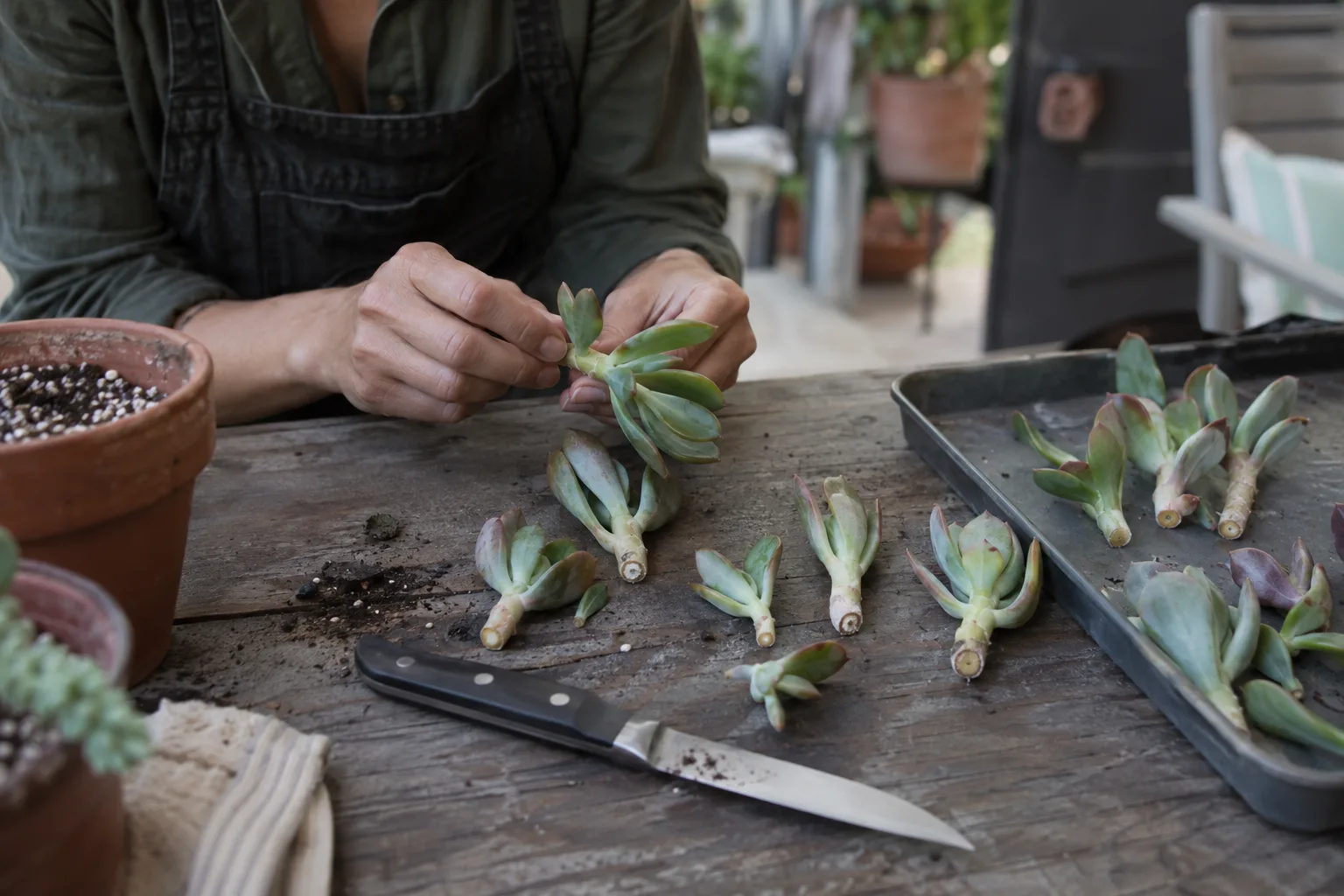
Cut a healthy piece, let the end dry, set it in gritty mix and keep it in bright shade until it holds firm. Skipping the drying step is the most common reason cuttings rot.
- Choose a firm, undamaged stem 3 to 6 inches long, or a plump leaf twisted off cleanly so the base stays intact.
- Cut in one smooth motion with a clean blade, just below a leaf node when you can.
- Strip the leaves from the bottom 1 to 2 inches of a stem cutting.
- Set the cutting in shade, out of soil, until the cut end feels dry and slightly papery. That takes 1 to 3 days in warm weather and up to a week in cool months.
- Insert the stem about 1 inch deep in barely damp mix, or lay a leaf flat on top.
- Water lightly every 3 to 5 days so the mix is damp near the base but never soggy.
- After 3 to 4 weeks, tug gently. Resistance means roots, and new growth at the tip confirms it.
Which succulents root fastest from cuttings here?
The eight below root dependably in low desert yards. These are varieties we commonly carry, though availability changes week to week and season to season. Sizes are typical for an in-ground plant and vary by variety.
Jade plant (Crassula ovata)
Jade grows 2 to 4 feet tall in bright light with some afternoon shade. Water deeply every 10 to 14 days in summer and less in winter. Stem cuttings usually root in 3 to 4 weeks. The drawback is frost damage, so cover or move it when nights fall toward 32°F.
Aloe vera (Aloe vera)
Aloe forms clumps about 1 to 2 feet tall and wide, in bright light with afternoon shade. Water every 2 to 3 weeks in summer. Pups with a few root nubs establish in about 2 to 3 weeks after separating and drying. Hard frost turns the leaves mushy, which is its main weakness here.
Echeveria (Echeveria species)
Echeverias form rosettes 4 to 12 inches across and prefer morning sun with afternoon shade. Leaves and stem tops root in about 3 to 5 weeks. Water every 1 to 2 weeks in summer when planted in the ground. They sunburn easily on bare gravel and need frost protection.
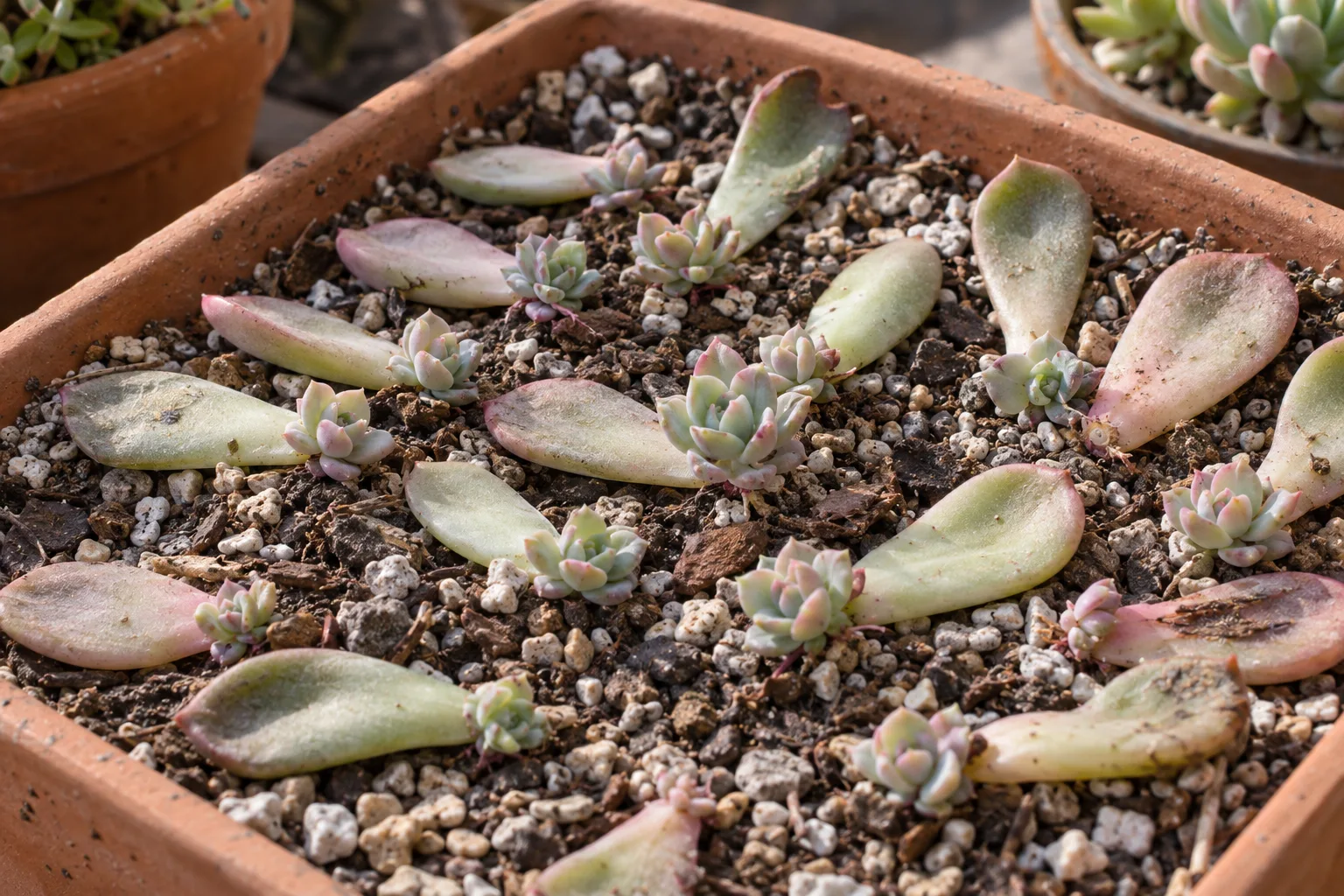
Sedum, or stonecrop (Sedum species)
Sedums range from 2 to 12 inches tall and take full morning sun. Stem pieces often root in 1 to 3 weeks, sometimes where they fall. Water every 1 to 2 weeks in summer. Some types melt out in reflected afternoon heat, so match the variety to the spot.
Kalanchoe (Kalanchoe species)
Most kalanchoes reach 1 to 3 feet in bright light with afternoon shade. Stem cuttings root in about 3 to 4 weeks. Water every 1 to 2 weeks in summer. The drawback is spread, since mother of thousands (Kalanchoe daigremontiana) drops plantlets that sprout everywhere and are hard to contain.
Elephant bush (Portulacaria afra)
Elephant bush reaches 6 to 10 feet in the ground and 3 to 5 feet in a large pot, in full sun to light afternoon shade. Cuttings root in about 3 to 5 weeks, and a hormone dip helps because the stems are woodier. Frost can burn the tips, so shelter it in cold snaps.
Agave pups (Agave species)
Agave size varies widely, from 1 foot to over 5 feet depending on the species, in full sun. Pups cut free with a sharp shovel and dried for several days establish in about 2 to 4 weeks. Once established, water every 2 to 4 weeks in summer. Sharp tips and spines demand gloves and a good planting spot.

Graptoveria (×Graptoveria hybrids)
These rosette hybrids stay 4 to 8 inches across and like bright light with afternoon shade. Leaves and stem tops root in 3 to 4 weeks. Water every 1 to 2 weeks in summer. Leaves drop at a touch, which is handy for propagating but frustrating in a busy bed.
How long does each succulent take to root?
Sedum roots fastest, usually in 1 to 3 weeks, while echeveria leaves and elephant bush take the longest at about 3 to 5 weeks. Warm weather shortens every range, and cool months stretch it.
| Succulent | Cutting type | Typical rooting time | Difficulty |
|---|---|---|---|
| Jade plant | Stem or leaf | 3 to 4 weeks | Easy |
| Aloe vera | Pup | 2 to 3 weeks | Easy |
| Echeveria | Leaf or stem top | 3 to 5 weeks | Easy |
| Sedum | Stem | 1 to 3 weeks | Very easy |
| Kalanchoe | Stem | 3 to 4 weeks | Easy |
| Elephant bush | Stem | 3 to 5 weeks | Moderate |
| Agave | Pup | 2 to 4 weeks | Easy |
| Graptoveria | Leaf or stem top | 3 to 4 weeks | Easy |
What mistakes kill succulent cuttings in the low desert?
Overwatering, skipping the drying step and too much sun cause nearly all failures. Each one has a simple fix.
- Planting a fresh cut: a wet wound invites rot, so always let the end dry first.
- Heavy potting soil: mixes that hold water stay wet long after a rootless cutting can use any of it. Use gritty mix.
- Afternoon sun too soon: a cutting with no roots cannot replace the water it loses on a 105°F afternoon. Keep it in bright shade for the first four to six weeks.
- Soaking instead of misting: an unrooted cutting takes up very little water, so excess pools around the base.
- Weak parent plants: stressed or sunburned stems root slowly or fail, so cut from healthy, actively growing plants.
How do I move rooted cuttings into the yard?
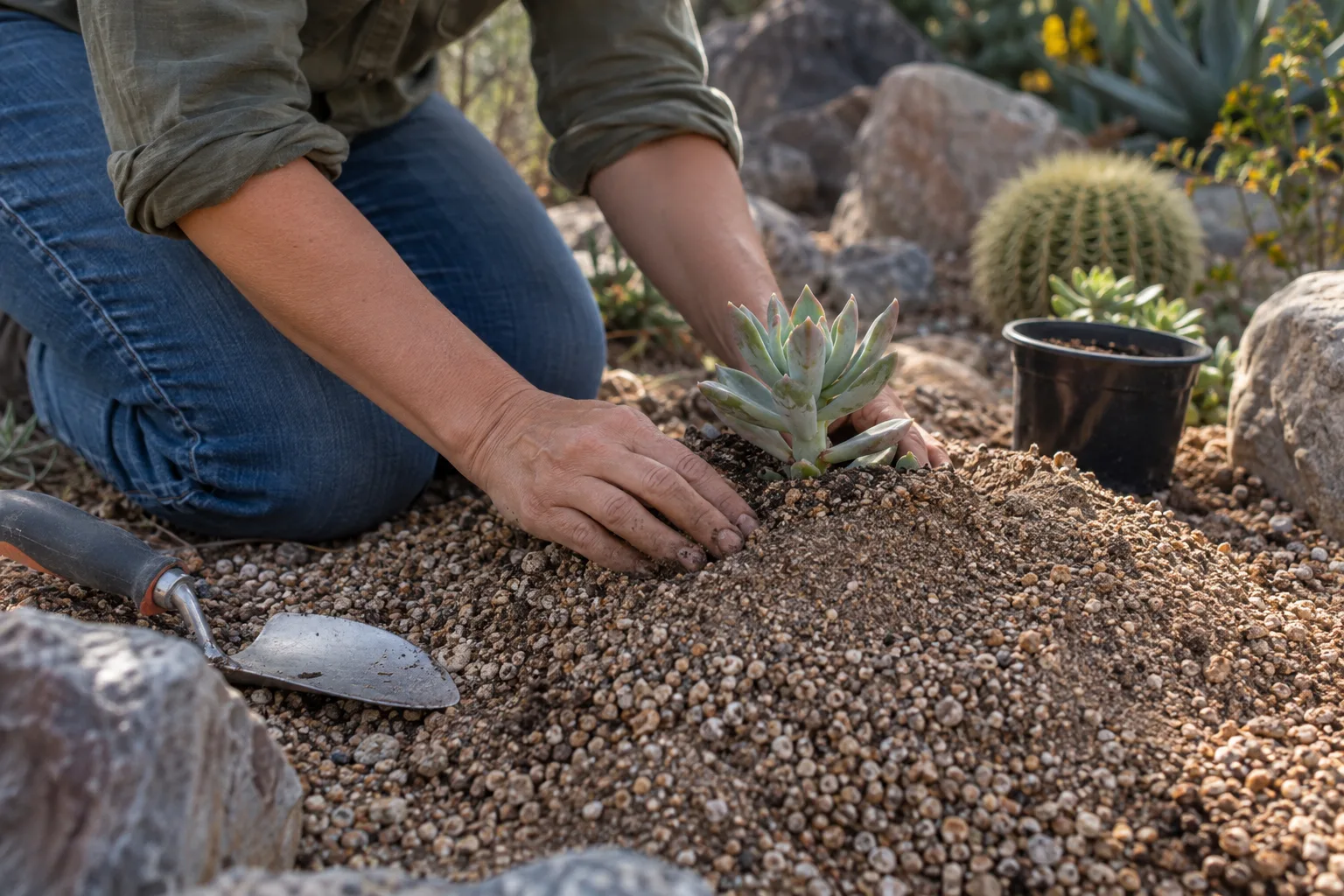
Wait until roots hold the cutting firmly, then raise the sun exposure over 1 to 2 weeks before planting out. Roots at this stage are tender and have not built the drought tolerance of an established plant.
Our soil is alkaline and often sits over caliche, a hard calcium layer that can block drainage and drown even drought-tolerant plants. Plant on a slight mound, or loosen the soil well beyond the root ball and mix in coarse sand or decomposed granite. Water deeply once, then wait until the top 2 inches are dry. Over the next two to three months, stretch the interval as roots reach deeper. If you would like hands-on help with propagating, see our classes and events.
Frequently asked questions
Do I need rooting hormone for succulents?
No, most succulents on this list root without it. Hormone helps most with woodier stems like elephant bush or a cutting that has had some stress. If you use powder, tap off the excess, because a thick coating can slow rooting. Beginners can skip it and focus on mix and drying time.
Can I root succulent cuttings in water?
You can, but soil rooting is more reliable. Stems left in water tend to rot at the base, and roots grown in water are often weak when moved to mix. If you try it, keep only the very tip of the cut end near the surface and move the cutting to mix as soon as roots show.
Why is my cutting shriveling instead of rooting?
A shriveling cutting is usually losing water faster than it can replace it. The cause is typically too much sun, or too long a drying period before planting. Move it to deeper shade and mist the mix near the base. Leaves often plump back up within a week if you catch it early.
Can I plant a cutting straight into the garden?
You can, but containers give you more control. Garden soil stays wetter and more compacted than gritty mix, and a monsoon storm can soak a new cutting overnight. If you plant in the ground, choose a raised, well-drained spot and hold off on irrigation near the cutting for the first 3 to 4 weeks.
Is propagating succulents from cuttings right for your yard?
Yes, if you are willing to wait two to five weeks and keep an eye on moisture. It costs little, and sedum, jade and echeveria forgive beginners. It is a poor fit if you want instant plants, if you tend to water on a fixed schedule regardless of the mix, or if your only available spot is full afternoon sun. Visit us in Queen Creek and we will help you choose a parent plant and the right mix.
