

Care for a succulent terrarium in Arizona by using an open container, fast-draining mix, bright indirect light and sparing water. Most failures here come from overwatering and from glass trapping heat, so the plan below keeps air moving and soil dry between drinks.
Key takeaways
- Use an open container at least 4 inches deep, because lidded glass traps heat and moisture in the low desert.
- Fill it with about two parts cactus and succulent mix to one part coarse perlite, and add 1 to 1.5 inches of gravel or pumice underneath if there is no drainage hole.
- Water only when the top 1.5 to 2 inches of mix is dry, roughly every 10 to 14 days in spring and fall and every 3 to 4 weeks in winter.
- Give bright indirect light or a few hours of morning sun, and keep glass out of full outdoor sun from June through September.
- Build or replant in March to May or October to November, when succulents are actively growing.

Why does a succulent terrarium need an open container in Arizona?
An open container lets air move over the soil, which dries the surface between waterings and keeps heat from building up. Sealed or lidded glass holds both warmth and moisture, and desert plants tolerate neither for long. Wide-mouthed bowls, open geometric glass and shallow boxes with a waterproof liner all work well.
Choose a vessel at least 4 inches deep and wider than it is tall. Succulent roots are shallow and spread sideways, so a broad bowl gives them room to anchor and gives the soil surface more area to dry. A drainage hole is the safest design. Many glass containers have none, and for those you build a gravel layer, covered in the soil section below.
To see the kinds of plants and containers we commonly carry, browse our houseplants and pottery and planters pages. Availability changes week to week and season to season.
What soil should I use in a succulent terrarium?
Use about two parts cactus and succulent mix to one part coarse perlite. The blend drains quickly and resists packing down. Standard potting soil stays wet too long inside glass, and soil dug from a Queen Creek yard is alkaline, often contains caliche and compacts hard in a container.
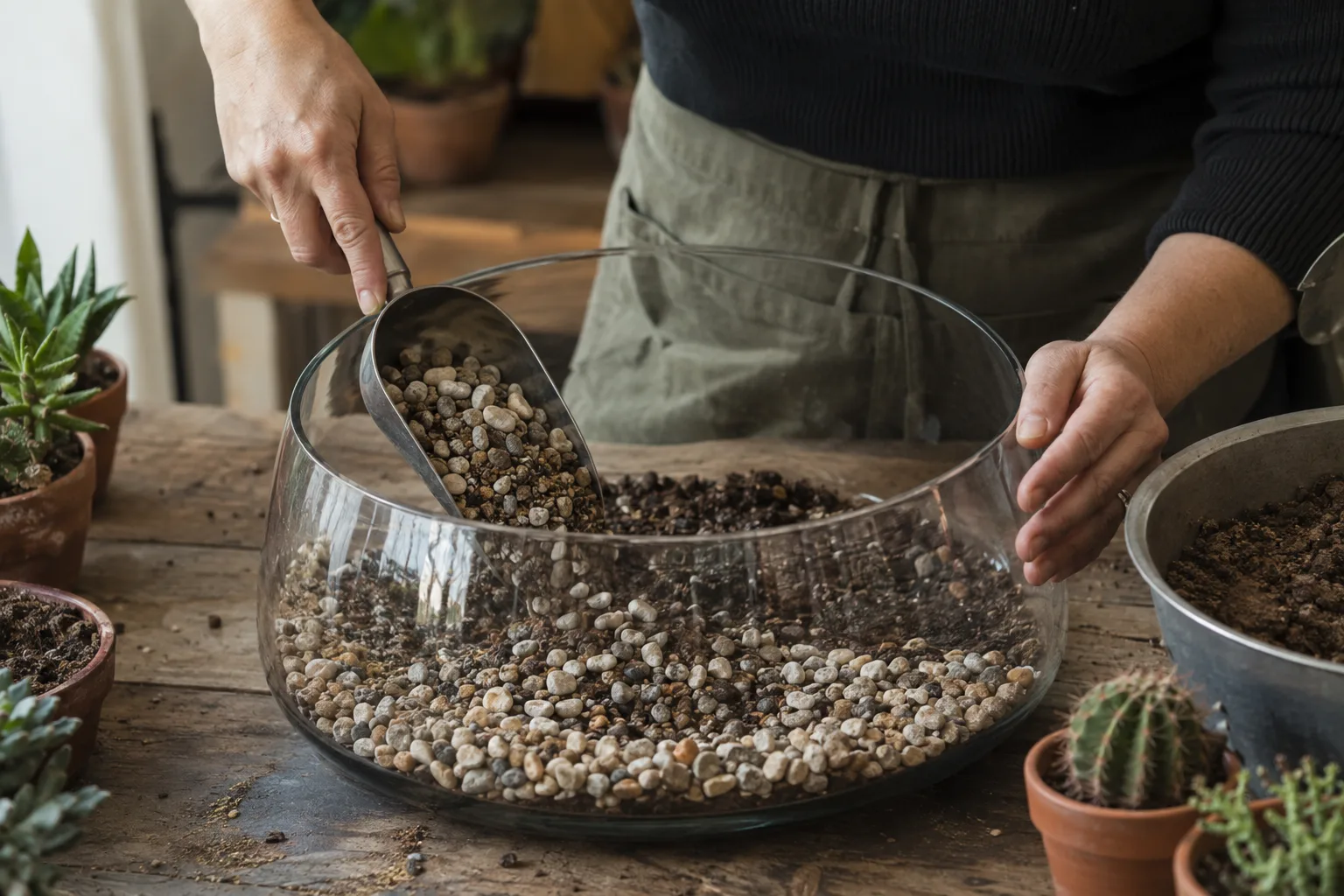
If your container has no drainage hole, put 1 to 1.5 inches of coarse gravel or pumice in the bottom before adding the mix. The layer gives excess water somewhere to sit away from the roots, though it does not make up for heavy watering. A thin layer of horticultural charcoal on top of the gravel is optional. Finish with a top dressing of decomposed granite or coarse sand, which helps the surface dry faster.
How often should I water a succulent terrarium in Arizona?
Water only when the top 1.5 to 2 inches of mix is completely dry, which usually works out to every 10 to 14 days in spring and fall. Summer and winter stretch that interval. Use the table as a starting point, then let the soil decide.
| Season | Months | Typical interval | Notes |
|---|---|---|---|
| Spring | March to May | 10 to 14 days | Active growth, good time to replant |
| Summer | June to September | 14 to 21 days | Plants slow in the heat, monsoon humidity can slow drying |
| Fall | October to November | 10 to 14 days | Active growth, covered outdoor spots work again |
| Winter | December to February | 21 to 30 days | Semi-dormant, protect from frost at 32°F or below |
Check the mix before every watering. Push a finger 1.5 to 2 inches down, and if it feels cool or damp, wait. Lifting the container also helps, since a dry terrarium feels noticeably lighter than a freshly watered one. A calendar reminder alone is a poor guide because air conditioning, window light and monsoon humidity from roughly July through September all change how fast the mix dries.
Without a drainage hole, use a narrow-spout can, squeeze bottle or turkey baster and aim at the base of each plant. Use about half the volume you would give a pot with holes. Hard East Valley tap water leaves a white mineral crust on the surface over time, and collected rainwater or filtered water slows that buildup.
For help timing the rest of your garden through the year, see our gardening calendars.
Where should I put a succulent terrarium?
Bright indirect light, or a few hours of gentle morning sun, suits most terrarium succulents. An east-facing window is usually the easiest spot. South and west glass in summer can scorch leaves, leaving white or tan patches that do not heal, so hang a sheer curtain from June through September if those are your only windows. North windows tend to be too dim, and plants stretch toward the light (a problem called etiolation).

Outdoors, a covered patio with morning sun works from roughly mid-October through April. Keep glass terrariums out of full sun in summer, when outdoor highs top 110°F and glass heats quickly. Bring them inside on nights that threaten frost, since winter lows in Queen Creek occasionally reach 32°F or below.
Turn the container a quarter turn every two to three weeks. Rotation keeps growth even. Give new plantings two weeks of bright indirect light before moving them into stronger sun.
Which succulents work best in a terrarium?
Small, slow-growing rosette and clumping succulents fit best, and the groups below are ones we commonly carry, though availability changes week to week and season to season. Choose plants with matching light and water needs. Keep full-size aloes and agaves out of the bowl, because they outgrow it quickly.
Haworthia (zebra plant and relatives)
Haworthia forms small, slow rosettes and tolerates lower light than most succulents, including zebra plant (Haworthia fasciata). The drawback is leaf tips that brown in strong direct sun.
Echeveria
Echeveria makes rosettes in blue-green, pink, purple and silver, and it wants bright light. It stretches if light is weak, and its offsets eventually crowd a small bowl.
Gasteria
Gasteria has thick, tongue-shaped leaves with mottled texture, and it handles dry indoor air well. It spreads slowly outward, so give it a little extra width.
Sedum
Small sedums such as jelly bean plant (Sedum rubrotinctum) trail over the container edge and color up in bright light. Their leaves drop easily, and fallen pieces root wherever they land.
Dwarf aloe
Tiger tooth aloe (Aloe juvenna) stays compact for a long time and handles heat well. It does clump and grow taller eventually, so plan to divide it.
Lithops (living stones)
Lithops looks like small pebbles and needs very little water, so it suits experienced growers. It rots quickly if watered on the same schedule as the rest of the bowl, which makes it a poor mixing partner for beginners.
When and how do I build a succulent terrarium?
Build or replant in March to May or October to November, when succulents are actively growing and roots settle in quickly. You need an open container at least 4 inches deep, gravel or pumice (if there is no drainage hole), cactus mix, coarse perlite, three to five small succulents, a chopstick or pencil, decomposed granite or coarse sand, and a narrow-spout watering can. Then follow these steps.
- Wash the container with warm water and let it dry completely.
- If there is no drainage hole, add 1 to 1.5 inches of gravel or pumice.
- Mix about two parts cactus mix with one part perlite, then fill the container, leaving at least 1 inch of space below the rim.
- Set the plants, still in their nursery pots, on top to plan the layout, with taller plants toward the back or center and trailing types at the edges.
- Remove each plant, loosen the outer roots gently and shake off loose nursery soil.
- Make a hole with the chopstick, set each plant so the base of the stem sits at or just above soil level, and firm the mix. Burying the stem invites rot.
- Spread a top dressing of decomposed granite or coarse sand around the plants.
- Wait about 48 hours so damaged roots can begin to heal, then water lightly at the base of each plant.

What problems should I watch for in a succulent terrarium?
Overwatering causes most failures, followed by too little light and mineral buildup.
Mushy or translucent leaves
Soft, see-through leaves near the base point to root rot from too much water. Lift the plant out, trim black or mushy roots with clean scissors, let it dry for two to three days, then replant in fresh dry mix and lengthen the time between waterings.
Pale, stretched growth
Plants reaching toward a window are not getting enough light, so move the terrarium somewhere brighter. Stretched stems will not shorten, but new growth comes in compact.
White crust on the soil
Hard water leaves mineral salts on the surface. Scrape off the crust, replace the top layer of mix and gravel, and switch to filtered or collected rainwater.
Mealybugs and fungus gnats
Mealybugs look like small white cotton tufts where leaves meet the stem. Touch each one with a cotton swab dipped in rubbing alcohol and check again after a week. Fungus gnats are tiny flies around the soil that signal mix staying too wet, so let it dry fully and use yellow sticky traps for the adults. Hold new plants apart for a week before adding them to an existing terrarium.
Frequently asked questions
Do succulent terrariums need fertilizer?
Yes, but lightly. Feed with a balanced liquid fertilizer diluted to half the label strength, once every six to eight weeks, and only in spring and fall when plants are actively growing. Skip feeding in summer and winter. Too much fertilizer causes weak, leggy growth that will not compact again, so a terrarium with slow growth rarely needs more.
Why are my succulent leaves turning red or orange?
Red, orange or purple tinting is usually a harmless response to bright light or mild dryness. Many echeverias and sedums produce extra pigment under those conditions. If the leaves stay firm and plump, leave the plant where it is. If they also look wrinkled or soft, check your watering and light before changing anything else.
Can I use rocks from my yard as top dressing?
Yes, after cleaning them. Scrub the rocks with hot water, rinse well and let them dry fully so dust, soil and any hitchhiking pests do not end up in the terrarium. Decomposed granite or coarse sand also works well as a top dressing and helps the soil surface dry faster.
How often should I replant a succulent terrarium?
Plan to refresh or replant every one to two years, or sooner when plants crowd each other. Succulents grow slowly, but rosettes such as echeveria produce offsets that fill a small bowl. Lift out the extras and pot them separately in spring or fall, then replace the top inch or two of mix and the gravel dressing.
Where can I learn to build one with help?
Check our classes and events page to see which workshops are on the schedule. Topics change through the year, so look before you plan a trip. Bring photos of your container and the window where it will sit if you want specific advice on light and plant choices.
Is a succulent terrarium right for your home?
A succulent terrarium suits anyone with a bright window or a shaded, covered patio and the patience to water rarely. It is a poor match if you like a regular watering routine, if your only spot is a hot south or west window with no curtain, or if you want a sealed, self-watering display. In those cases a sturdy potted succulent or a houseplant is a better fit. Stop by our Queen Creek nursery to talk through containers and plants for your space.