

Stop fertilizing roses, bougainvillea, palo verde, desert willow, agave, overseeded ryegrass and petunias by late April in the Arizona low desert. Fertilizer pushes soft new growth, and that growth scorches once summer highs climb toward 110°F.
Key takeaways
- Make the last spring feeding for roses and bougainvillea between early and late April, and water it in deeply.
- Established palo verde, desert willow and agave usually need little or no fertilizer at any time of year.
- Overseeded ryegrass fades as May heat arrives, so feeding it after mid-April buys only a few weeks of color.
- Spread 3 to 4 inches of mulch and water deeper but less often instead of adding fertilizer.
- Restart feeding roses and bougainvillea in late August or September, when nighttime lows begin to ease.

Why should you stop fertilizing by late April in Arizona?
Fertilizer in late April pushes soft new growth just before the low desert heats up, and that growth scorches. Nitrogen drives leafy growth, and tender leaves hold a lot of water and have thin protective surfaces. Fertilizer applied in April also keeps releasing into the summer, so a plant that should be slowing down for the heat keeps getting signals to grow.
Our soil adds a second problem. Alkaline soil, caliche layers and hard irrigation water already leave salts near the root zone. Granular fertilizer adds more, and summer evaporation concentrates all of it. Salt builds fast. Our gardening calendars lay out the work month by month, and late April is where the feeding schedule changes for most ornamentals.
Which 7 plants should you stop feeding by late April?
These seven are the ones we see gardeners feed past their useful window. Sizes are typical ranges and vary by variety.
Roses (Rosa spp.)
Roses reach 3 to 6 feet tall depending on the type. They want at least 6 hours of sun, ideally with some afternoon shade in July, and deep, regular watering. The drawback is leaf scorch and general stress during summer heat, even with good care.
Give roses a last balanced feeding in mid to late April and water it in thoroughly. Wait until late August or early September to feed again, when the fall bloom cycle starts.
Bougainvillea (Bougainvillea spp.)
Bougainvillea sprawls or climbs 10 to 15 feet or more, takes full sun and needs little water once established. Heavy nitrogen gives you dark green leaves and very little color. The drawback is frost damage, since a hard freeze can cut it back severely in winter.
If you feed it in spring, use a low-nitrogen formula and finish by early to mid-April. Pick it back up in September for fall color.
Palo verde (Parkinsonia spp.)
Palo verde grows 20 to 30 feet tall and about as wide, in full sun, and settles into deep watering every few weeks in summer once established. The drawback is litter from spring flowers and seed pods, plus occasional branch drop in monsoon winds.
This tree evolved to slow down in summer heat. A late nitrogen boost forces growth at the wrong moment, and established trees rarely need feeding at all. Browse our desert trees for others with the same habit.
Desert willow (Chilopsis linearis)
Desert willow reaches 15 to 25 feet, wants full sun and gets by on deep, infrequent watering after the first year or two. The drawback is an open, sometimes leggy shape and seed pods that drop in the fall. Its trumpet-shaped summer flowers appear without any fertilizer. Feeding it in late spring mostly adds weak, floppy shoots that you will want to prune off later.
Agave (Agave spp.)
Agaves range from 1 to 6 feet across depending on the species, like full sun with some afternoon shade where walls reflect heat, and need a deep soak only every few weeks in summer. The drawback is rot in wet soil during monsoon humidity. Extra nitrogen makes softer, water-heavy tissue that rots more easily. Cacti and most other succulents follow the same rule. If you feed them at all, do it once in early spring with a diluted, low-nitrogen product.
Overseeded ryegrass (Lolium spp.)
Ryegrass is the cool-season grass used to overseed Bermuda lawns for winter green. It is mowed short, takes full sun and needs frequent watering. The drawback is that it fades as heat arrives, usually by May. Feeding it in late April stretches its life slightly while it competes with the Bermuda coming up underneath. Stop feeding the ryegrass and let the changeover happen.
Petunias (Petunia x hybrida)
Petunias grow 6 to 12 inches tall and spread 1 to 3 feet. They take full sun in winter and need afternoon shade as spring warms. They are a cool-season annual here, and the drawback is that they decline once highs hover in the mid 90s. Feeding them in late April only exhausts them sooner. Pull them by mid to late April and use the bed for something that likes heat.
What should you do instead of fertilizing in May?
Mulch the soil and water deeper and less often. Both steps protect roots from heat, and neither adds salt.
Spread 3 to 4 inches of organic mulch such as wood chips or shredded bark over the root zone, and keep it a few inches back from trunks and stems. Decomposed granite works around desert plants. Mulch cools the soil, slows evaporation and holds back the salt concentration that comes with summer heat. Shift irrigation toward longer, less frequent soaks so roots chase moisture downward into cooler soil. Shallow watering keeps roots near a surface that gets very hot in July.
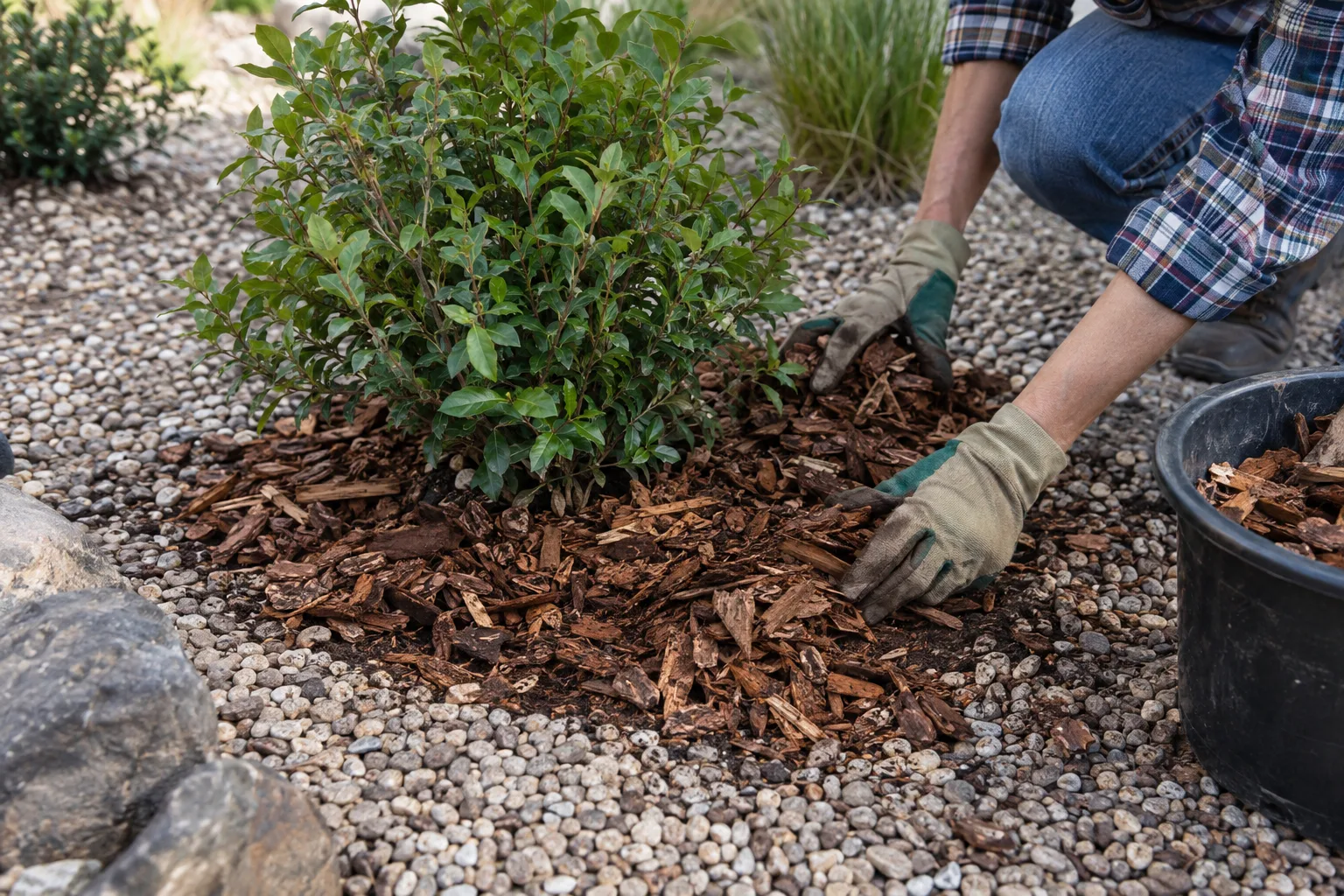
Water in any last feeding right away and keep irrigating deeply for the following week. A dry granular product sitting near the surface is the most likely to burn.
How do you tell iron chlorosis from a hungry plant?
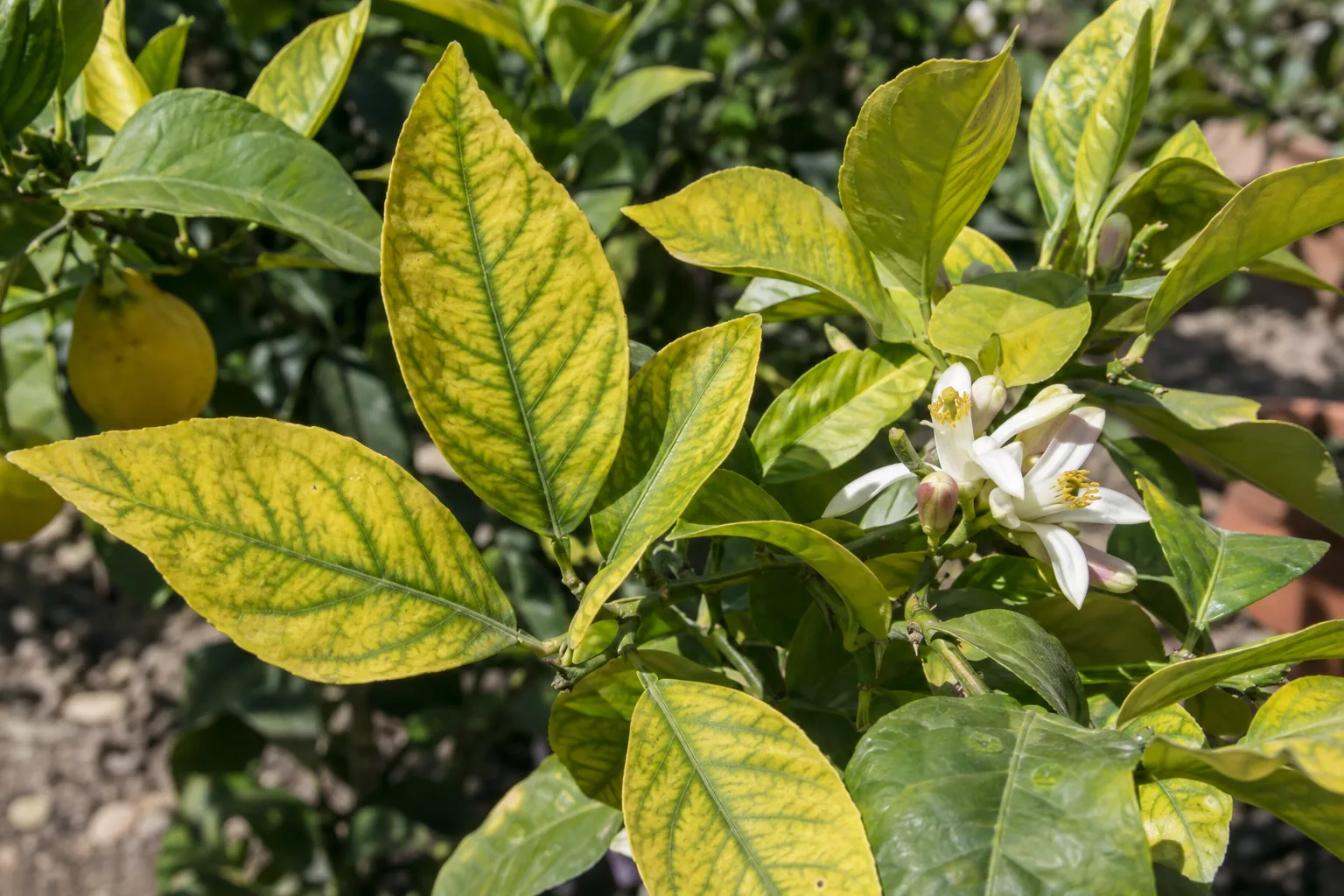
Iron chlorosis shows as yellow leaves with green veins, usually on the newest growth. It comes from alkaline soil locking up iron the plant cannot absorb, so more fertilizer rarely helps and extra nitrogen adds to the salt problem.
Chelated iron is the usual fix, and products using the EDDHA form are generally suited to alkaline soil. Sulfur can lower soil pH slowly over a season or more. Check your watering first, because overwatering and poor drainage cause the same yellowing. Pale, tired roses in late April are often heat stress or a watering problem rather than hunger.
Which plants can still be fed in late spring?
Citrus and established Bermuda grass follow a different calendar. Both are actively growing in May and use nutrients that a rose or palo verde no longer wants.
Many Arizona citrus growers feed in January to February, again around May and again in September, but the exact timing depends on tree age and the product label. Young trees need extra caution. Our citrus trees are worth a look if you are planning one, and varieties we commonly carry change with the season. Bermuda is generally fed once it is fully green and growing, and not during a heat spike.

What can you plant once cool-season color fades?
Heat-tolerant annuals such as vinca, portulaca and globe amaranth fill the bed from May on. They have different nutritional needs than winter flowers, so a light hand with fertilizer works best at planting time.
These are varieties we commonly carry, though availability changes week to week and season to season. See what is on offer in our annual flowers and foliage and the wider plant selection before you pull everything out.
Frequently asked questions
Can slow-release fertilizer go on in late April?
Only for plants that are still on a spring feeding schedule, and only by mid-April. Most slow-release products feed for 3 to 6 months. A late April application keeps releasing nutrients through July and August, when roses, bougainvillea and desert natives want to rest. Choose a light formula and water it in well.
Do potted plants follow the same cutoff?
Yes, and some gardeners end container feeding even earlier, around mid-April. Pots in full sun heat well past the air temperature, which stresses roots and concentrates salts quickly. Flush containers with plain water occasionally and move them toward shade if you can. Look through our pottery and planters for options with good drainage.
Is compost safe to add in late April?
A thin top dressing of finished compost, about 1 inch, is a low-risk choice because it releases nutrients slowly. Avoid fresh or hot compost and concentrated liquid products like fish emulsion, which can still push fast growth. Compost also does not replace mulch, so cover it with 3 to 4 inches of wood chips or bark.
When should I start feeding again?
Late August through September works for roses and bougainvillea, once nighttime lows begin to ease. Citrus has its own fall feeding window. Established native trees and shrubs often need nothing, though young ones may benefit from a light feeding in October. Use the product label and your plant’s growth as your guide.
What if a plant looks pale after I stop?
Check watering depth first, then look for iron chlorosis on new leaves. Dig 6 to 8 inches near the drip line to see whether the soil is moist or dry. Pale growth in heat usually signals water stress or locked-up iron, and neither one improves with a bag of nitrogen fertilizer.
Is ending spring feeding by late April right for your yard?
For most gardeners with roses, bougainvillea, desert trees or a Bermuda lawn that was overseeded, yes. Ending feeding by late April protects plants from a growth flush that summer heat will burn. It will not matter much if your yard is already established desert natives and agave, since those rarely get fed anyway. Citrus owners should follow the citrus schedule instead. If you want a plan for your own beds, stop by the nursery in Queen Creek and talk it through with our staff.
