

To start a garden in Arizona, test your soil, check for caliche, install drip irrigation, and plant for the season you are in. The low desert has two growing seasons, and timing matters more than most gardeners expect.
Key takeaways
- Plant trees, shrubs and perennials from October through March so roots settle in before summer highs above 110°F.
- Probe each planting spot 18 to 24 inches deep for caliche before you buy a single plant.
- Water deeply and less often through drip irrigation, and give new plantings more frequent water than established ones.
- Vegetables follow two seasons: cool-season crops go in from September through November, and warm-season crops such as tomatoes go in from February to early March.
- Spread 2 to 4 inches of organic mulch over bare soil, and keep it a few inches back from trunks and stems.

When should I start a garden in Arizona?
Start in fall for most plants, and again in late winter for warm-season vegetables. October through March is the best window for trees, shrubs and perennials, because roots grow through the mild months and are established by the time daytime highs pass 100°F in late spring.
Vegetables follow two seasons. Cool-season crops such as lettuce, broccoli, carrots and peas go in from roughly September through November. Warm-season crops such as tomatoes and peppers go in from about February to early March, early enough to set fruit before late-spring heat shuts fruiting down. Exact dates shift with the crop and the weather, so check the University of Arizona Cooperative Extension vegetable planting calendar for Maricopa County and our gardening calendars before you buy seed.
Summer planting is possible. It demands daily attention, so for a first garden it is easier to wait for fall and use the hot months to plan, test soil and set up irrigation. When your window opens, our herbs, vegetables and berries department shows what suits each season.
What does zone 9b mean for a Queen Creek garden?
Zone 9b means average yearly lowest temperatures of 25°F to 30°F, so frost shows up in some winters but is not a rule. Depending on the map edition and your address, parts of the East Valley are listed as zone 9b and others as 10a, so confirm your own zone before relying on it. Frost-tender plants such as bougainvillea and citrus can still need cover on the coldest nights from December through February.
Zone numbers describe winter lows and say nothing about summer. Summer is the harder test. Highs above 110°F and overnight lows in the 80s through much of July and August end many plants rated for 9b, especially ones bred for mild summers. Look for plants described as heat tolerant or native to the low desert, and treat the zone number as a minimum check. Our plants section is a good place to start browsing.
What should I check in my soil before planting?
Check pH and caliche first. Most Queen Creek soil is alkaline, often reading between 7.5 and 8.5, while most vegetables and ornamentals prefer 6.0 to 7.0. At high pH, iron and manganese bind to the soil and leaves turn yellow between the veins, a symptom called chlorosis that is common on citrus. A chelated iron product applied to the soil according to its label corrects it, and compost improves the soil over time.
Caliche is a hardened layer of calcium carbonate that can sit a few inches to a few feet below the surface. Roots cannot push through it, and water pools on top. Push a steel rod 18 to 24 inches into each planting spot. If it stops short, you have caliche. Break through with an auger or digging bar so water can drain, or build a raised bed above it.

A lab soil test shows pH, salinity and nutrients, and University of Arizona Cooperative Extension can point you to testing options. Our irrigation water is hard, and salts build up at the surface of beds, so an occasional deep soak that moves them below the root zone helps. For vegetable beds, mix 2 to 4 inches of compost into the top 8 to 12 inches. Desert-adapted shrubs and trees rarely need amending, and rich soil can push soft growth.
How much water does a new Arizona garden need?
Water deeply and less often, delivered by drip irrigation. Deep soaks pull roots downward, where soil stays cooler and moister, while shallow daily sprinkling keeps roots near a surface that can top 140°F in summer. Install drip before you plant, while lines are easy to move, and put it on a timer.
New plants need more frequent water than established ones. For the first few months, check the root ball every few days in summer and about weekly in cooler months, and water when the top couple of inches are dry. Established desert shrubs often do well on a deep soak every 7 to 14 days in summer, stretching to every 3 or 4 weeks in winter. Trees need slower, deeper soaks at a wider distance from the trunk as they grow. Vegetables and annuals in summer sun often need water every day or two, and sandy soil dries faster than clay.
Winter overwatering rots roots. The monsoon, roughly July through September, can drop an inch of rain in an hour, so use a rain sensor or switch the controller off after a soaking storm.
How do I start a garden bed step by step?
Work in this order, because each step makes the next one cheaper to fix.
- Map the sun. Note which parts of the yard get sun at 9 a.m., noon and 4 p.m. in your hottest month, since afternoon sun limits plant choices the most.
- Probe for caliche. Push a steel rod 18 to 24 inches deep in each planting spot and mark where it stops.
- Test the soil. Send a sample to a lab for pH, salinity and nutrients before you buy amendments.
- Install drip irrigation. Lay lines and emitters before planting, with separate zones for thirsty vegetables and drought-tolerant shrubs.
- Amend beds, not desert plantings. Mix 2 to 4 inches of compost into the top 8 to 12 inches of vegetable beds, and plant desert-adapted shrubs in native soil with little or no amendment.
- Pick plants for the season. Match your list to the calendar above, with cool-season vegetables in fall and warm-season ones in late winter.
- Plant in the cooler part of the day. Set the top of the root ball level with or slightly above the surrounding soil, backfill with native soil, and water in slowly.
- Mulch. Spread 2 to 4 inches of organic mulch such as wood chips, and keep it a few inches from trunks and stems.
- Check daily for two weeks. Look for wilting, scorched leaves and dry soil, and adjust the schedule as plants settle in.
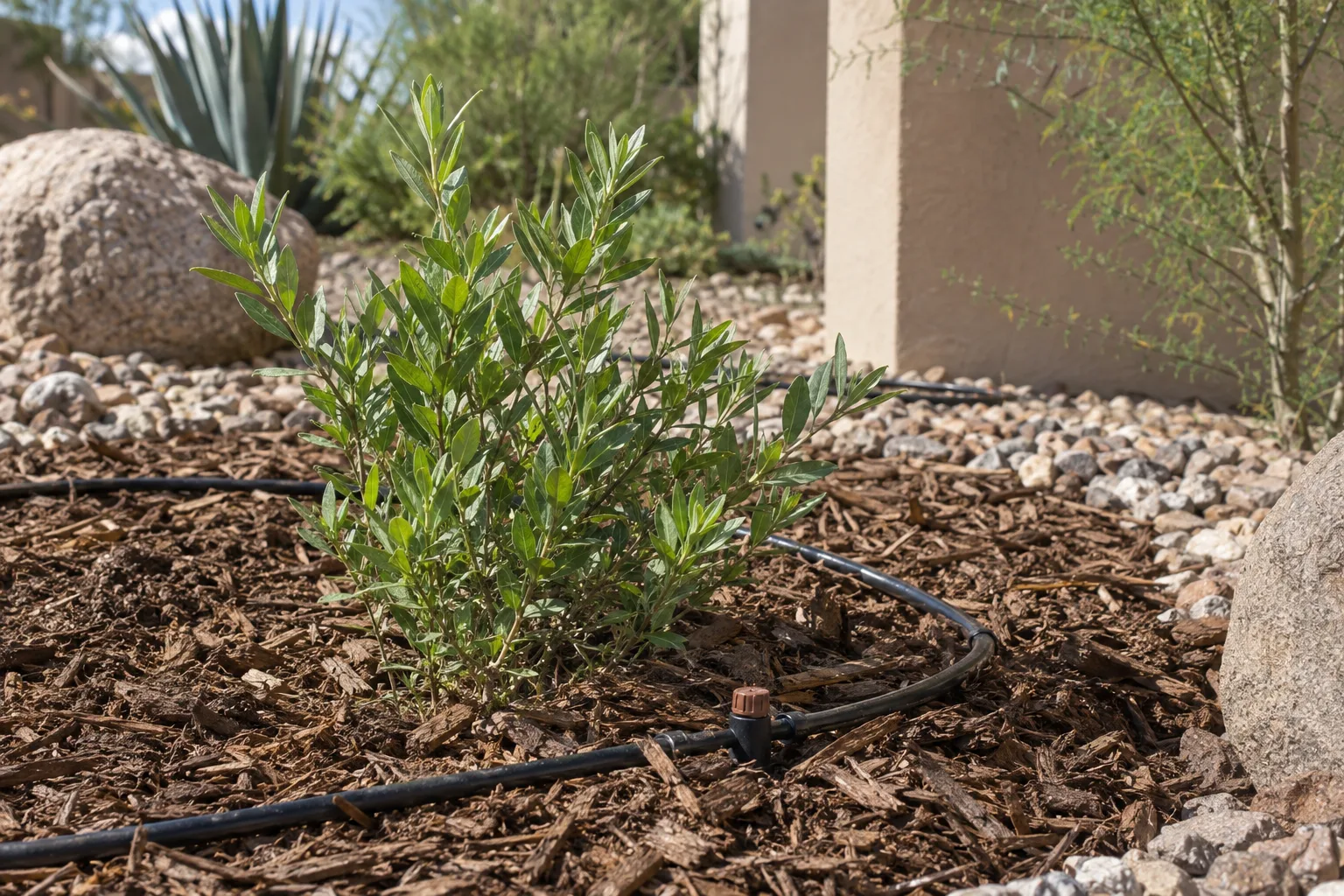
Which plants belong in a new Arizona garden?
Plants adapted to the low desert give you the best start, because they already handle heat and alkaline soil. Five fit a first garden.
- Desert willow (Chilopsis linearis): a native deciduous tree with trumpet-shaped pink to purple flowers from spring into summer. It takes full sun and reflected heat. It drops its leaves in winter and sheds seed pods.
- Foothills palo verde (Parkinsonia microphylla): a green-barked native tree that photosynthesizes through its trunk. It drops tiny leaves in drought and yellow petals in spring, which some people find messy.
- Lantana (Lantana hybrids): a shrubby perennial that blooms from spring through fall in full sun. It freezes back in hard frost and regrows in spring.
- Rosemary (Salvia rosmarinus): an evergreen herb and landscape shrub that tolerates alkaline soil and blooms in winter. It rots in wet, poorly drained soil.
- Bougainvillea (Bougainvillea hybrids): vivid color through summer heat. It is frost-tender and thorny, and heavy watering and feeding favor leaves over flowers.
These are varieties we commonly carry, and availability changes week to week and season to season, so ask us what is on hand before you plan a planting around one. If you want shade, our desert trees are a good place to start.

Where should each plant go in my yard?
Match each plant to the sun it will get in July, not in March, because a bed that looks gentle in spring can scorch plants once summer afternoons arrive and block walls and rock mulch begin radiating heat after sunset.
- East-facing beds: morning sun and afternoon shade, which suits vegetables, herbs and many perennials.
- South-facing beds: sun most of the day, best for cactus, succulents and heat-loving flowering shrubs.
- West-facing beds: the hottest afternoon exposure, so use the toughest desert plants or add 30 to 40 percent shade cloth over vegetables.
- North-facing beds: limited direct sun, workable for shade-tolerant plants.
North sides stay cooler. A south-facing wall also keeps frost-tender plants a few degrees warmer on winter nights, which is useful for citrus and bougainvillea.
What mistakes set new Arizona gardeners back?
Most early losses in a new garden trace back to a short list of avoidable decisions, and each one takes minutes to prevent but a full season to recover from.
- Planting on another region’s calendar. Tomatoes planted in April meet late-spring heat before they set much fruit, and February to early March gives them a head start.
- Watering in winter as in summer. Cool, dormant plants use far less water, and soggy soil rots roots.
- Skipping the caliche probe. Water pools above the layer and roots stay shallow.
- Leaving soil bare. Exposed soil heats up and loses water faster than mulched soil.
- Over-fertilizing desert plants. Extra nitrogen pushes soft growth that suffers in heat and frost.
- Buying for a photo. Plants that want cool, moist, acidic conditions, such as hydrangeas and Japanese maples, struggle in the low desert.
Prevention is cheap. If you learn best hands on, check our classes and events for upcoming sessions.
Frequently asked questions
Can I plant in summer in the Arizona low desert?
Yes, but it takes more care than fall or spring planting. Heat-loving plants such as lantana and bougainvillea can go in during summer if you water new roots frequently, plant in the morning or evening, and mulch. Trees and shrubs settle in more easily from October through March. Vegetables mostly wait for September.
Are raised beds worth it in Queen Creek?
Raised beds are worth it for vegetables and for anyone with caliche or heavy alkaline clay. They let you control the soil mix and drainage, and they sit above hardpan layers. They dry out faster in summer, so plan on drip irrigation and mulch. Desert shrubs and trees usually do fine planted in the ground.
Do desert-adapted plants need fertilizer?
Most need very little. A light layer of compost once or twice a year is usually enough for desert-adapted shrubs and trees, and heavy nitrogen pushes soft growth that suffers in heat and frost. Vegetables and fruit trees are hungrier and need regular feeding through their growing season; follow the label for rate and timing.
Can I grow hydrangeas or Japanese maples here?
Rarely with good results in the ground. Both prefer cool summers, consistent moisture and acidic soil, the opposite of Queen Creek conditions. If you want to try them, use containers in morning sun and afternoon shade with potting mix, and expect some losses. Desert-adapted flowering shrubs and trees give better results for the same effort.
Does the monsoon mean I can turn off my irrigation?
Not entirely, but you can often skip cycles after a soaking storm. Monsoon rain arrives unevenly, so one yard may get an inch while the next street stays dry. Check the soil 4 to 6 inches down before running the system, and use a rain sensor or controller adjustment.
Is starting a garden in Queen Creek worth the extra planning?
Yes, as long as you plan around the heat, the alkaline soil and the caliche. That planning takes a weekend of probing, testing and laying out drip lines, and it removes the most common causes of plant loss. A large vegetable garden is a poor fit if you cannot water on a steady schedule through summer, so start with desert-adapted shrubs and a few containers instead. Visit us at the nursery in Queen Creek and we will help you match plants to your yard.
