
Eight warm-season plants are worth starting in containers before spring in Arizona: tomatoes, peppers, eggplant, cucumbers, basil, summer squash, melons and marigolds. Seeds started indoors from January to early February are ready to transplant in late February and March, before the heat of April and May arrives.
Key takeaways
- Start tomato seeds from late December to January and peppers and eggplant in early to mid January, about 6 to 10 weeks before transplanting.
- Warm-season seeds germinate best with soil at roughly 70 to 80°F, which an unheated patio in a low desert winter rarely reaches.
- Harden seedlings off over 7 to 10 days before they go into the ground.
- Squash, melons and cucumbers need only 3 to 4 weeks in a pot and dislike root disturbance.
- Tomatoes tend to stop setting fruit once daytime highs stay above the mid 90s and nights stay above about 75°F, so an early start matters.

Why start plants in containers before spring in the low desert?
The spring window for most warm-season vegetables is short. Nights are still cool in February, and by May the heat is shutting down fruit set. Starting seeds in pots lets you control warmth and moisture while the weather is unsettled, then plant out sturdy transplants when conditions suit them.
Containers also bypass our native ground for the first weeks. Queen Creek soil is alkaline and often has caliche close to the surface, and tiny seedlings handle a loose, light mix far better than that. You can also carry pots indoors on a night when frost is forecast, which does happen in the East Valley in January and sometimes February. Many of the herbs, vegetables and berries we commonly carry are sold as ready-to-plant starts if you would rather skip the seed stage, though availability changes week to week and season to season.
When should I start seeds, and when do they go outside?
Start most warm-season seeds between late December and mid February, and move them outdoors from mid February through March. Count back 6 to 8 weeks from your planting date for tomatoes, peppers and eggplant, and 3 to 4 weeks for squash, melons and cucumbers.
Dates shift with the weather, so treat the table as a starting range. Check the University of Arizona Cooperative Extension vegetable planting calendar for Maricopa County for planting windows, and our gardening calendars for a month-by-month view. Hold transplants back if a frost is in the forecast, or cover them overnight.
| Plant | Start seeds | Transplant outdoors |
|---|---|---|
| Tomatoes | Late December to January | Mid February to early March |
| Peppers | Early to mid January | Late February to March |
| Eggplant | Early to mid January | Late February to March |
| Cucumbers | Late January to mid February | Late February to March |
| Basil | February | March |
| Summer squash | Early to mid February | Early to mid March |
| Melons | Early to mid February | Early to mid March |
| Marigolds | Late January to February | March |
Which plants are worth a container start?
These eight give the biggest payoff from an early start, because each one either needs a long run before the heat or struggles in cold soil. Variety names below are ones that suit the low desert, and which of them are on our shelves changes through the season.
Tomatoes (Solanum lycopersicum)
Tomato vines reach 3 to 6 feet, want full sun and regular, deep watering. Cherry types and heat-set varieties such as Heatmaster or Solar Fire usually hold fruit longer into warm weather than big slicers. Seeds sprout in roughly 7 to 14 days at 70 to 75°F. The drawback is timing: blossoms drop when heat arrives, so a late start can mean a short harvest.
Peppers (Capsicum annuum)
Plants grow 2 to 3 feet tall, need full sun and moderate water. Seeds are slow to sprout and seedlings grow slowly, so they gain the most from an early start. Hot types like jalapeño and serrano tolerate summer better than bells. Bell peppers often stall once highs reach the 100s, which is the main drawback.
Eggplant (Solanum melongena)
Expect plants 2 to 4 feet tall in full sun with regular water. Eggplant likes warmth and often keeps producing into early summer. Slender Japanese types usually ripen sooner than large Italian ones. Seedlings are slow, commonly taking 10 to 14 days to emerge, and cold nights stunt them badly.
Cucumbers (Cucumis sativus)
Vines run 4 to 8 feet, so give them a trellis at transplant time. They need full sun and steady moisture. Seeds sprout in about 5 to 7 days in warm soil, so a 3 to 4 week head start is plenty. Armenian cucumber (Cucumis melo var. flexuosus) tolerates more heat than standard types. The drawback is that most cucumbers slow down as temperatures climb through May.

Basil (Ocimum basilicum)
Basil grows 1 to 2 feet tall in full sun, with regular water and some afternoon shade as summer approaches. It is frost-tender and sulks in cold soil, so start seeds indoors and plant out in March. Genovese, Thai and lemon basil all do well here. Once heat arrives it bolts, so pinch flower buds to extend the harvest.
Summer squash (Cucurbita pepo)
Bush types reach 2 to 3 feet tall and 3 to 4 feet wide, in full sun with deep, regular watering. Sow in individual pots about 3 to 4 weeks before transplanting and keep the root ball intact when you plant. First harvest usually comes 50 to 60 days after transplanting. The drawback is size, since a single plant covers a lot of ground.
Melons (Cucumis melo and Citrullus lanatus)
Cantaloupe and watermelon vines spread 6 to 10 feet, need full sun, and want deep watering that tapers as fruit ripens. Spring sun and low humidity suit them well. Roots resent being cramped or disturbed, so use roomy individual pots and plant out young. The drawback is space, and smaller types like Sugar Baby watermelon fit modest yards better.
Marigolds (Tagetes species)
French marigolds stay about 1 foot tall and African types reach 2 to 3 feet. Both want full sun and moderate water. Seeds sprout in 5 to 7 days, and blooming transplants go in during March. They bloom through April and May, then decline in summer heat. Find more spring color in our annual flowers and foliage.
How do I start seeds in containers step by step?
Fill clean containers with seed-starting mix, sow, keep them warm and evenly moist, then give seedlings strong light once they emerge. The steps below work for all eight plants.
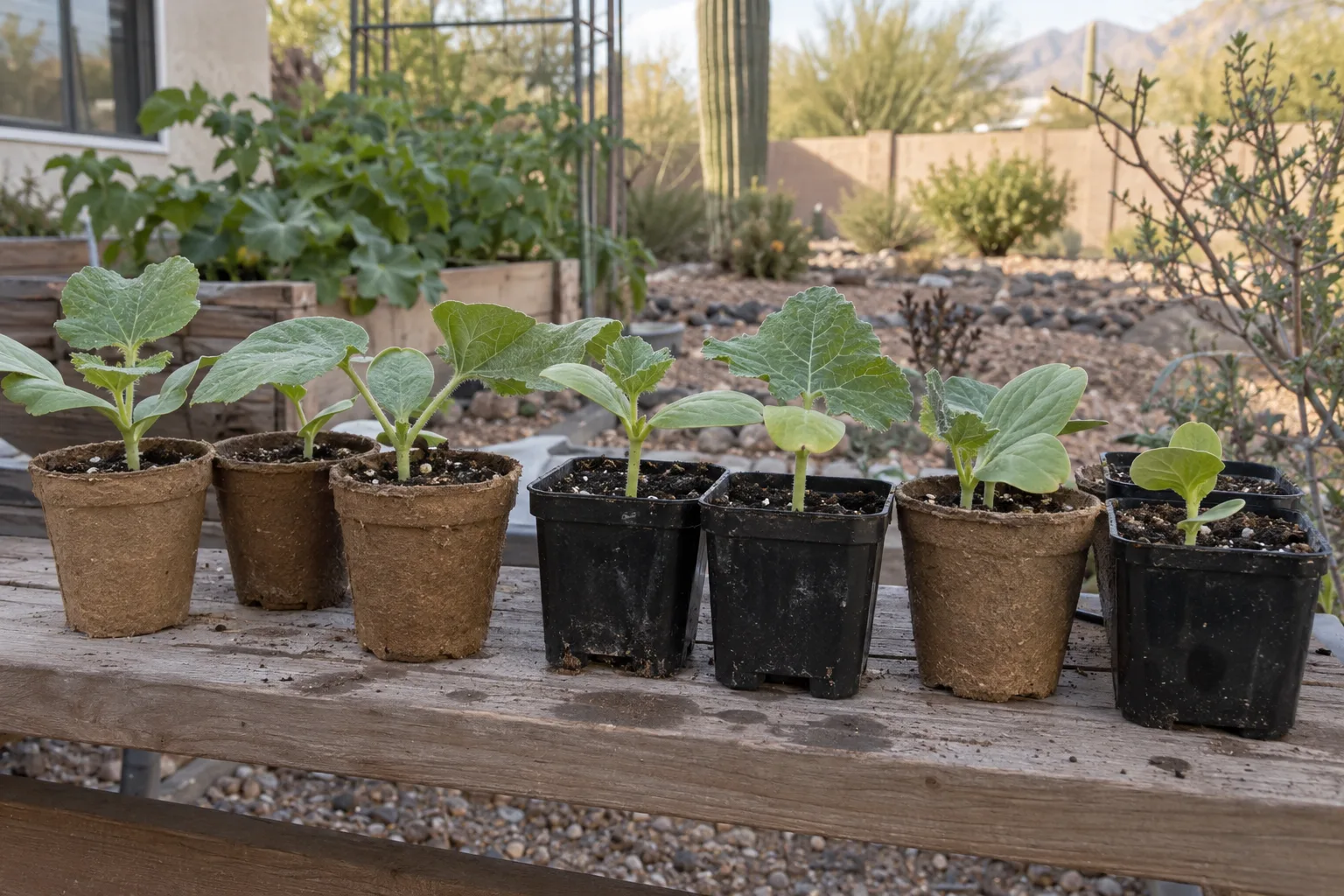
- Choose containers with drainage holes, such as cell trays, 3 to 4 inch pots or biodegradable pots.
- Fill with a light, sterile seed-starting mix and moisten it before sowing. Skip native soil and heavy potting soil.
- Sow seeds about 2 to 3 times as deep as they are wide, usually 1/4 to 1/2 inch for vegetables.
- Set trays on a heat mat at about 70 to 75°F, and cover with a humidity dome until seeds sprout.
- Move seedlings under bright light as soon as they emerge. Keep LED or fluorescent lights a few inches above the plants for 14 to 16 hours a day.
- Feed with a half-strength liquid fertilizer after the first true leaves appear.
- Harden off over 7 to 10 days, starting with 2 to 3 hours in shade and building to full sun.
- Transplant in the late afternoon or on a cloudy day, water deeply, and shade young plants for a day or two.
What containers work best for starting seeds?
Cell trays suit small seeds like tomatoes, peppers and basil, while squash, melons and cucumbers do better in individual pots they can be planted in. Match the container to the root habit, because plants that hate disturbance need a pot that goes straight into the ground.
Dry air can pull moisture out of small cells in a day, so check trays morning and evening. If you want pots for the next stage, browse our pottery and planters for larger containers.
What mistakes should I avoid?
Starting too late is the most common one, followed by weak light and uneven watering. A seedling that gets 14 to 16 hours of strong light stays short and stocky, while one on a dim windowsill stretches and falls over after transplanting.
Skipping hardening off is the other frequent failure. Leaves grown indoors can sunburn within a day in direct low desert sun. Overfeeding also backfires, since lush soft growth struggles outside.

Frequently asked questions
Do I need a grow light, or will a sunny window work?
A grow light gives better results for tomatoes, peppers and eggplant. A south-facing window can work for fast crops like basil, but winter days are short and light is weaker indoors. If seedlings look pale or tall and floppy, they need more light. A basic LED shop light placed a few inches above the plants is enough.
Can I start warm-season seeds outdoors in winter?
Outdoor sowing of warm-season seeds in winter is unreliable. Nights in December and January often fall into the 30s and 40s, which stalls germination and can kill tender seedlings. Cool-season crops like lettuce and spinach do fine outdoors then. Tomatoes and peppers do better indoors on a heat mat.
Can container-started plants stay in pots all summer?
Peppers, eggplant and basil can survive summer in large pots with afternoon shade, and the container should hold at least 15 gallons for good moisture buffering. Tomatoes, cucumbers and squash usually stop producing once heat settles in. Expect to water daily and sometimes twice a day when highs pass 110°F.
Why are my seedlings tall and thin?
Tall, thin seedlings are not getting enough light. Move them closer to the bulbs, a few inches above the leaves, or increase the hours to 14 to 16 a day. Warm rooms also stretch seedlings. Once plants are leggy, you can bury tomato stems deeper at transplant, but other plants will stay weak.
When do I start the fall garden?
Fall seeds for tomatoes, peppers and eggplant start in late July to August, so plants are established before cooler temperatures arrive. The setup is the mirror image of spring, and the challenge is keeping seedlings cool instead of warm. Check the planting calendar for exact windows.
Is starting seeds early worth it for your garden?
Yes if you want tomatoes, peppers or melons before summer heat stops them, and have a bright spot indoors and a few minutes each day for watering. It is not worth the effort for a handful of herbs or a single plant, where buying a transplant costs less in time. If you want to see starts in person, come by our Queen Creek nursery and talk it through with us.