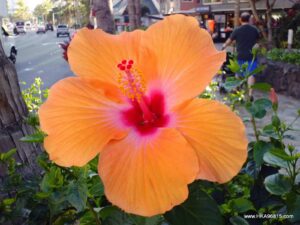

Spring pruning in Arizona removes freeze damage, thins crowded growth before monsoon humidity and sets up new growth ahead of summer heat. The best window runs from late February to mid-April, before daytime highs settle near 100°F.
Key takeaways
- The best spring pruning window in the East Valley runs from late February to mid-April, after frost risk passes and before highs settle near 100°F.
- Scratch the bark with a thumbnail before cutting, since green tissue means a stem is alive.
- Flowering shrubs that bloom on new growth take hard cutbacks, while trees and citrus should lose about one-fifth of the canopy or less.
- Skip heavy pruning from May through August.
- Water deeply after pruning and wait 10 to 14 days before fertilizing.

Why does spring pruning help plants in the Arizona low desert?
Spring pruning clears dead and damaged wood, sends energy into fresh growth and opens dense canopies before the monsoon raises humidity in July. You can browse shrubs, vines and perennials by category on our plants page.
Fresh growth and more flowers
Removing old, crossing and spent stems leaves fewer growing points, and each one gets a larger share of the plant’s energy. Lantana (Lantana camara) and desert willow (Chilopsis linearis) bloom on new growth, so a cut in late February or March shapes the color you get from spring into summer. Shrubs left alone for years often shade their own centers and end up woody and bare inside. Pruning breaks that pattern.
Cleanup after frost
A night near or below freezing can blacken stems on bougainvillea (Bougainvillea spp.), lantana and citrus (Citrus spp.). Dead wood left in place gives borers and decay an easy way into healthy tissue, so cut back to green wood once new growth shows where the damage ends. Patience helps here.
Better airflow before the monsoon
Thick, tangled growth holds moisture against leaves and stems, and the monsoon from roughly July through September adds humidity to that. Thinning in spring lets air move through the plant, which lowers the odds of fungal problems such as powdery mildew. Open canopies dry faster after a storm.
Less water lost in summer
A trimmed canopy has less leaf surface, so it loses less water when highs run above 110°F. The savings are modest and deep watering still matters, but a plant carrying less dead and crowded growth is easier to keep hydrated.
When is the best time to prune in spring in Arizona?
Late February to mid-April works for most shrubs and trees in the East Valley. Cuts made then have warm days to heal and push new growth before daytime highs settle near 100°F, usually by late May or early June.
Frost can still reach some East Valley yards into late February or early March, so wait on frost-tender plants like bougainvillea and citrus until that risk has passed. Pruning in January carries its own risk, because tender new shoots can meet a late cold night. Pruning in May leaves open cuts to heal under heat that can reach 110°F. For month-by-month planning beyond pruning, see our gardening calendars.
| Period | What to do | Good candidates |
|---|---|---|
| Late February | Cut back frost-damaged growth once frost risk has passed | Frost-damaged shrubs and vines |
| March | Shape, thin crowded canopies, light work on trees | Mounded shrubs, flowering trees, citrus |
| April | Finish shaping, trim spent flower stalks | Native perennials after bloom |
| May to August | Remove only dead wood and safety hazards | All plants |
How do I tell dead wood from dormant wood?
Scratch the bark lightly with your thumbnail. Green tissue underneath means the stem is alive, while brown and dry tissue means it is dead.
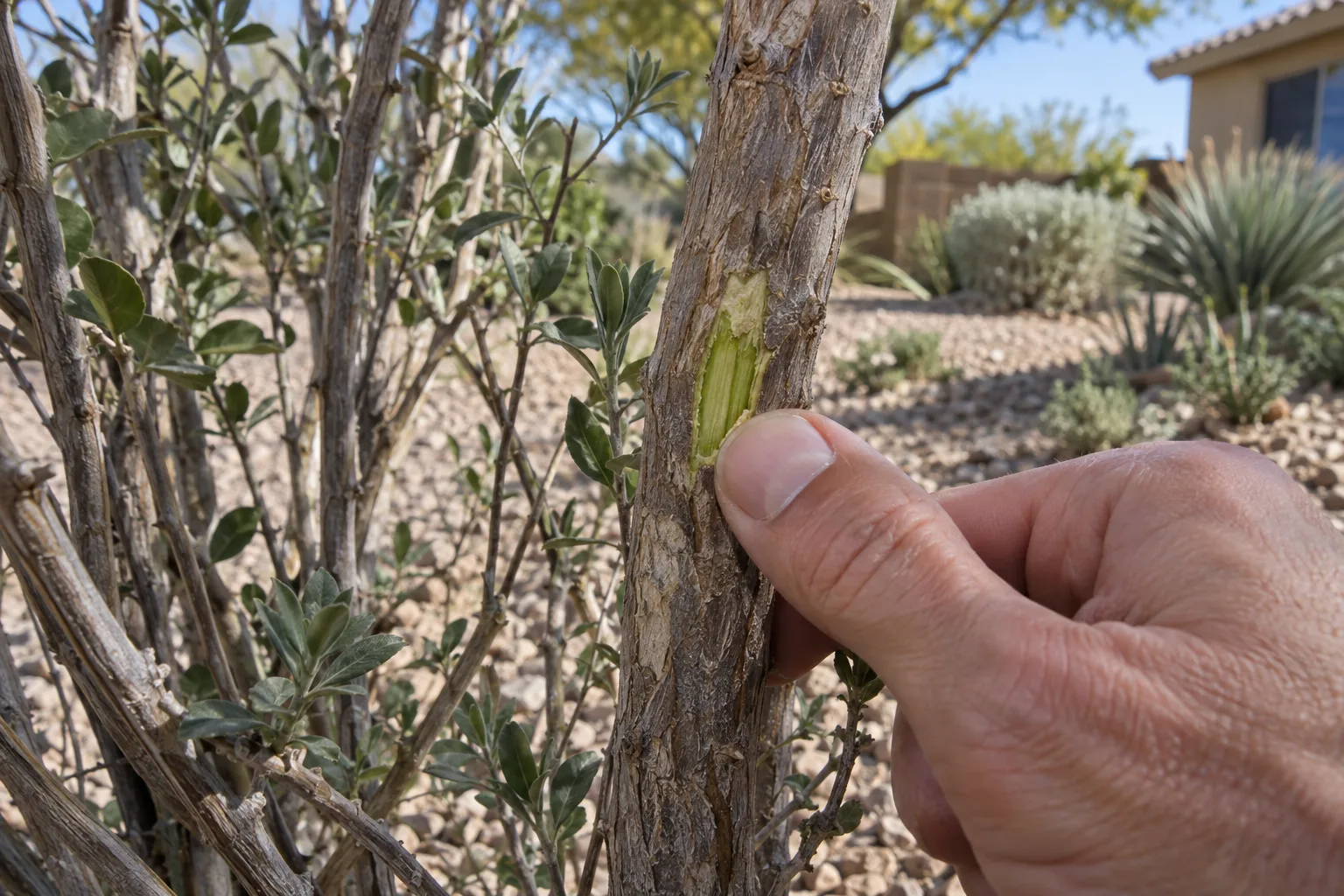
Work down each stem until you find the point where green wood meets dry, gray or black wood, then cut just above an outward-facing bud or side branch at that point. This is the most dependable method in late February, when some plants have not broken dormancy yet and look worse than they are.
If the whole plant looks lifeless, check the base and wait. Plants in cold pockets of a yard can leaf out a few weeks later than the rest, so give them until mid-March before deciding anything.
Which plants benefit most from spring pruning?
Fast-regrowing flowering shrubs gain the most from a spring cut, while trees and citrus need only light work. These are the most common spring jobs in East Valley yards.
Bougainvillea (Bougainvillea spp.)
Prune bougainvillea after frost risk has passed, usually late February to March. It flowers on new growth, so cutting back by roughly one-third to one-half to a strong framework of main canes encourages a fresh flush of colorful bracts. Wear thick leather gloves because the thorns are sharp. Avoid heavy cuts in summer.
Lantana (Lantana camara)
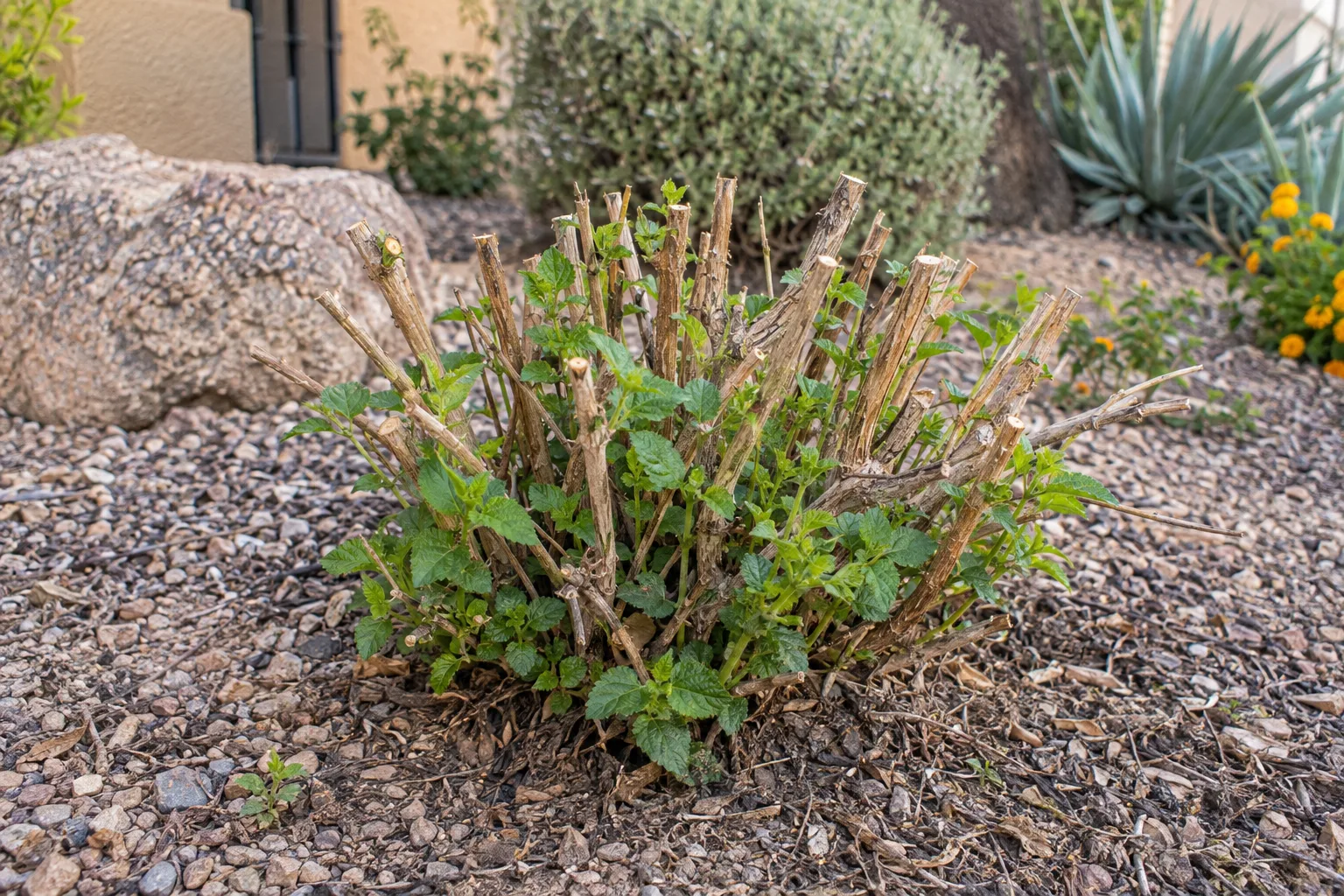
Lantana often looks dead after frost, but established plants usually regrow from the base. Cut stems back to roughly 6 to 12 inches once frost risk has passed, then wait for new growth, which typically appears within a few weeks of warm weather. Pulling it out early in spring can remove a healthy root system.
Texas sage (Leucophyllum frutescens)
Texas sage responds best to selective shaping with hand pruners. Remove the longest outward-reaching stems to keep a loose, mounded form and let light into the center. Tight shearing into a ball builds dense outer growth that shades the interior and tends to reduce flowering.
Desert willow (Chilopsis linearis)
A light spring trim sets up desert willow flowers because it blooms on new growth. Shorten the previous season’s growth by up to about one-third and remove crossing or dead branches. Avoid topping the tree, which triggers a thicket of weak shoots.
Palo verde (Parkinsonia spp.)
Palo verde, like most desert trees, needs only light pruning in spring. Remove dead wood, crossing branches and low limbs over walkways, and keep removal to about one-fifth of the canopy or less in a single season, because heavy cuts stress the tree.
Citrus
Citrus takes light pruning once frost danger has passed, usually February to April. Remove dead wood, crossing branches and water sprouts, the fast vertical shoots on the trunk or main limbs. Heavy cuts expose bark to sunscald and can reduce fruit for the season. If you are choosing a tree, start with our citrus trees page.
What should I leave alone in spring?
Skip heavy cuts on trees, tight shearing on woody shrubs and any major pruning after mid-April. Each costs the plant more than it gains.
- Topping trees. Cutting the top off a mesquite (Prosopis spp.), palo verde or desert willow produces a flush of weakly attached sprouts that regrow dense and fast and break easily in monsoon wind.
- Shearing woody shrubs into balls and boxes. Tight shearing cuts airflow and causes interior dieback on plants such as Texas sage and rosemary (Salvia rosmarinus), so use selective cuts with hand pruners instead.
- Cutting deep into native perennials. Brittlebush (Encelia farinosa) and globe mallow (Sphaeralcea ambigua) regrow from light trimming of spent flower stalks, but old woody tissue may not resprout, so trim stalks and stray stems by up to about one-third after bloom.
- Painting cuts. Arborists generally do not recommend pruning paint or wound sealant, since it can trap moisture, and clean cuts made with sharp tools dry on their own.
- Leaving stubs. A stub with no bud below it dies back and can shelter borers, so cut to a bud, side branch or the branch collar.
How do I prune step by step in spring?
Clean your tools, remove dead wood first, open the center of the plant and finish with clean cuts above a bud. You need bypass pruners for stems up to about 3/4 inch, loppers for branches up to about 1.5 inches, a pruning saw for anything thicker and thick leather gloves.

- Wipe the blades with 70 percent isopropyl alcohol before the first plant and between plants.
- Walk around the plant and pick out the dead, crossing and inward-growing branches before you cut anything.
- Remove dead wood back to healthy green tissue, or to the base if the whole stem is dead.
- Thin crossing and inward-growing branches so light and air reach the center.
- Make shaping cuts just above an outward-facing bud or side branch, angled slightly so water sheds away.
- For a branch thicker than about 2 inches, make an undercut about a foot from the trunk, a top cut a little further out to drop the branch, then a final cut just outside the branch collar.
- Step back every few cuts and look at the shape, since removed wood cannot go back on.
- Bag diseased or pest-infested material for the trash and chip healthy trimmings for mulch.
Dull blades crush tissue and heal slowly.
How should I water and fertilize after pruning?
Water deeply within a day or two of pruning, and wait 10 to 14 days before fertilizing. New growth needs soil moisture at depth, and the alkaline, often compacted soil of the low desert can stay dry below the surface even when the top inch looks damp.
For established shrubs, aim to wet the soil to roughly 18 to 24 inches. Trees need about 24 to 36 inches. Check with a long screwdriver, which pushes easily into moist soil and stops at dry, hard soil.
After the waiting period, apply a balanced fertilizer at the label rate. Citrus does best with a fertilizer made for citrus that includes micronutrients such as iron and zinc, since alkaline soil limits how much iron plants can take up. Fertilizing too soon pushes soft growth that the first hot spell can scorch.
Frequently asked questions
Can I prune in January if the weather is warm?
Wait until late February for shaping cuts, because a warm January can be followed by a frost that damages new shoots. Removing clearly dead or broken branches is fine at any time. Hold cutbacks on frost-tender plants until the cold risk has passed, even if the plant looks tired.
Should I prune plants that are blooming in spring?
Prune spring bloomers right after the flowers fade. Cutting earlier removes the buds and flowers you were waiting for, and cutting right after bloom gives the plant the warm season to set next year’s flowering wood. Plants that bloom on new growth, such as lantana and desert willow, can be cut back before they flower.
What if my plant has not regrown a month after pruning?
Wait until late spring before giving up on it. Scratch a stem near the base, and green tissue means the roots are alive and the plant needs only warmth and deep watering. Brown tissue all the way to the base means the plant is dead, and it can be replaced.
When should I call a professional?
Call an ISA-certified arborist for branches thicker than about 3 inches, work that needs a ladder or climbing, and anything near power lines. Palo verde limbs can split without warning, and a poor cut on a major branch leaves a weak point that can fail in monsoon wind. Light pruning of small branches is a job most homeowners can do with a saw and loppers.
Is spring pruning worth it for your yard?
Yes, for most yards with flowering shrubs, citrus or vines, a few hours between late February and mid-April pays back in cleaner growth, more flowers and fewer problems when the monsoon arrives. Some yards can skip it. If yours is mostly cacti, agave and low-water natives that hold their own shape, remove dead wood and leave the rest. Visit us in Queen Creek and ask our staff what to cut and when.