Spring planting tips for Mesa start with timing: set warm-season vegetables out from late February to mid-March, loosen compacted or caliche soil first, water deeply, mulch, and finish most new planting by early May, before summer heat settles in.
Key takeaways
- Plant tomato, pepper and squash transplants between late February and mid-March, so they get several weeks of mild weather before highs pass 100°F.
- Lettuce, broccoli and spinach belong in the fall and winter garden, because spring warmth makes them bolt within a few weeks.
- Loosen soil 12 to 18 inches deep and break through caliche before planting, since hardpan holds water around roots.
- Install drip emitters before planting, then water deeply and less often once roots establish.
- Spread 2 to 3 inches of organic mulch and add 30 to 40 percent shade cloth when May heat arrives.
When is the best time for spring planting in Mesa?
Late February to mid-March is the best window for warm-season vegetable transplants, and March through April works for heat-tolerant flowers and shrubs. The window is short because highs often reach the high 90s by May, and tomatoes, peppers and squash need several weeks of mild weather to root in and set fruit. Frost can still return in February.
East Valley last-frost dates usually fall in February, and open spots in Queen Creek can run colder than central Mesa, so keep frost cloth nearby for tender transplants. The University of Arizona Cooperative Extension publishes a vegetable planting calendar for Maricopa County with crop-by-crop dates, and our gardening calendars page gives a month-by-month view.
| Timing | What to do |
|---|---|
| Late January to early February | Start tomato and pepper seeds indoors |
| Late February to mid-March | Set out warm-season vegetable transplants |
| March to April | Plant heat-tolerant annuals, perennials and shrubs |
| Early May onward | Stop most new planting; focus on mulch, shade and watering |
How do I prepare alkaline, caliche-heavy soil before planting?
Loosen the soil 12 to 18 inches deep, break through any caliche layer, and mix compost into vegetable beds. East Valley soil often tests alkaline, roughly pH 7.5 to 8.5, and caliche (a cemented calcium carbonate layer) can sit anywhere from a few inches to a couple of feet below the surface.
Caliche blocks drainage, so a hole dug into it fills like a bowl. Fill each new planting hole with water and watch it. If water is still standing after 24 hours, dig deeper or break up the layer with a breaker bar.
For vegetable beds, work in compost at roughly one part to three or four parts native soil. For trees and shrubs, backfill with the native soil you removed, because a rich pocket of amended soil can hold water around the roots while the surrounding ground drains slowly.
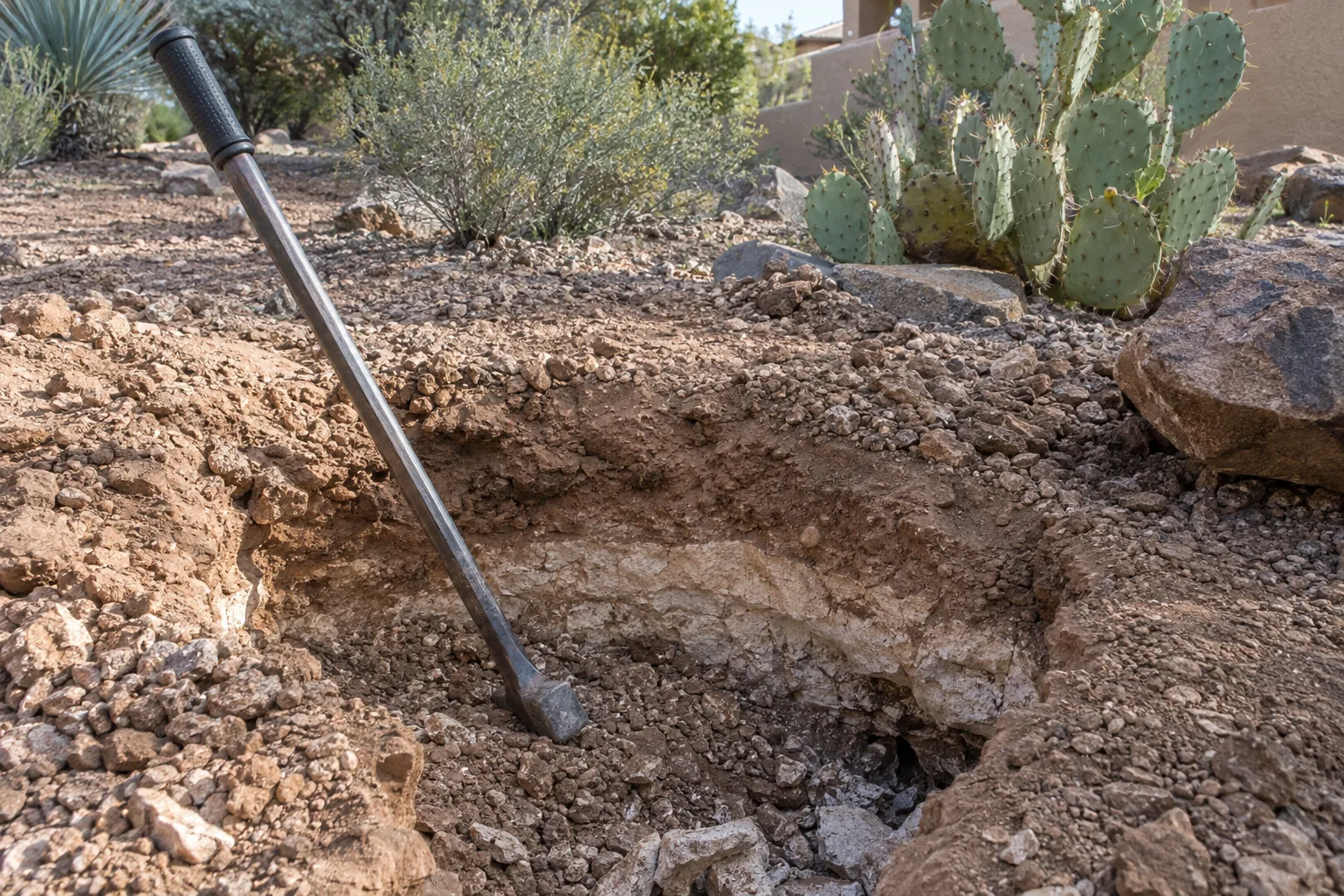
Raised beds are another route. Build them at least 12 inches deep, fill them with a free-draining mix, and they can sit right on top of caliche.
How often should I water new spring plantings?
New transplants need water every day or two for the first week or two, then less often as roots spread. After that, deep and slow beats frequent and light, because shallow watering keeps roots near the surface where soil dries out fastest.
Vegetables usually want water every two to three days in March and April, depending on the weather. Established desert shrubs and trees often do well with a deep soak every one to three weeks in spring. Overwatering kills more landscape plants than drought does, so check before you water. Push a long screwdriver 6 inches into the soil. If it slides in easily and comes out damp, wait another day or two.
Drip irrigation delivers water to the root zone, cuts evaporation and keeps leaves dry. Lay the lines before planting, because working around plants that are already in the ground is slow and easy to get wrong.
Which vegetables and varieties handle Mesa’s spring heat?
Cherry tomatoes, heat-set tomato varieties, peppers, eggplant, melons and okra handle our spring best. Tomatoes drop blossoms when nights stay above roughly 75°F and days climb past the 90s, and large beefsteak types are the first to stall.
Look for varieties bred to set fruit in heat, such as Heatmaster and Solar Fire. These are varieties we commonly carry, though availability changes week to week and season to season, so check our herbs, vegetables and berries department for what is on the shelf. Squash and melons go in from mid-February through March, and peppers and eggplant from late February into March.
Cool-season crops such as lettuce, spinach, broccoli and carrots belong in fall and winter. Planted in March, they bolt quickly.
Which flowers and shrubs can I plant in spring?
Lantana, desert marigold, Angelita daisy, Texas ranger and bougainvillea all go in well from March through April, once frost danger has passed. Each handles reflected heat and alkaline soil, and each asks for very little water after its first season. You can browse the plants section of our website to see what we group under shrubs and perennials.
Lantana (Lantana camara)
Expect 2 to 4 feet tall and 3 to 6 feet wide in full sun, with low water once established. Frost cuts it back each winter, and cutting it back hard in late February encourages fresh spring growth. Drawback: it can spread more than you planned.
Desert marigold (Baileya multiradiata)
This wildflower reaches about 1 to 2 feet in full sun and needs little water. It self-seeds freely and blooms from spring into fall. Drawback: individual plants are short-lived and can look sparse in midsummer.
Angelita daisy (Tetraneuris acaulis)
A compact mound, usually under a foot tall and about a foot wide, it bears yellow flowers for months in full sun. It fits along walkways and at the base of larger shrubs. Drawback: soggy soil shortens its life.

Texas ranger (Leucophyllum frutescens)
This evergreen shrub grows 5 to 8 feet tall and wide in full sun with low water, and it often blooms after humid spells around the monsoon. Drawback: heavy shearing and frequent watering ruin its natural shape.
Bougainvillea (Bougainvillea species)
It sprawls 10 feet or more as a shrub or vine in full sun, and it blooms best with deep, infrequent watering. Too much water gives you leaves instead of color. Drawback: frost damages it, so plant after the last cold nights, and it has thorns.
Why does mulch matter in a Mesa garden?
A 2 to 3 inch layer of organic mulch keeps soil cooler, slows evaporation and breaks down into organic matter. Use wood chips or shredded bark around shrubs and trees, and straw in vegetable beds, where it is easy to move at replanting time.
Keep mulch a few inches away from stems and trunks. Piled against the base of a plant, it holds moisture against the bark and invites rot. Decomposed granite is common in East Valley yards, but it does less to hold moisture and moderate soil temperature than organic mulch does. Apply mulch right after planting, since bare soil loses water fast.
What are the steps for planting a spring transplant?
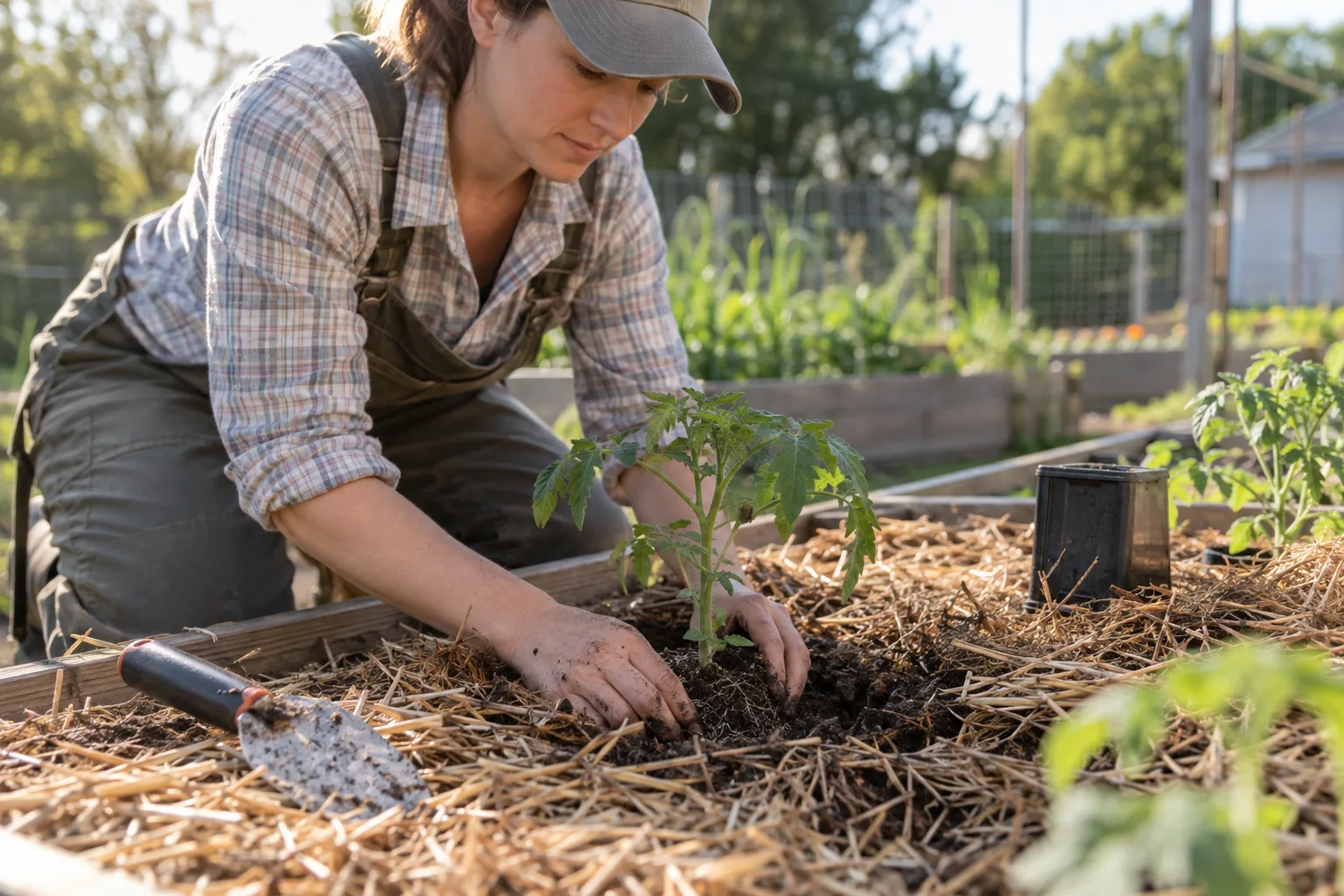
Plant in the early morning or evening, set the root ball level with the soil, and water slowly right away. Follow these steps for each plant:
- Install drip lines or emitters in the bed before planting.
- Dig a hole about twice as wide as the pot and no deeper than the root ball.
- Fill the hole with water to check drainage, as described above.
- Loosen circling roots gently with your fingers.
- Set the plant so the top of the root ball sits level with or just above the surrounding soil.
- Backfill with the soil from the hole or bed, firming it lightly to remove air pockets.
- Water slowly until the soil around the root ball is soaked.
- Spread mulch, then check moisture daily until new growth shows.

The most common mistake is planting too deep, which lets water pool against the stem. Another is skipping the daily check during the first two weeks, when a young transplant can dry out between irrigation cycles.
How do I feed and shade new plants before May heat?
Feed vegetables lightly at planting, and add shade cloth once afternoons reach the upper 90s. A balanced slow-release fertilizer worked into the top few inches of soil is enough to start vegetables, with a second feeding mid-season. Most true desert natives, such as mesquite, palo verde and cacti, need little or none.
Alkaline soil locks up iron, so yellow leaves with green veins (iron chlorosis) are common. A chelated iron product made for high-pH soil works better than plain iron sulfate. Citrus trees are heavy feeders, and many Arizona growers fertilize them in February, May and August.
For shade, drape 30 to 40 percent shade cloth over vegetable beds from about 11 a.m. to 4 p.m. PVC hoops or stakes hold it in place. Remove it on cloudy days.
Site matters too. West and south walls radiate stored heat into the evening, and beds surrounded by concrete run hotter than beds next to turf. Beds on the north or east side stay cooler and suit plants that struggle in reflected heat.
Frequently asked questions
Can I plant lettuce or broccoli in Mesa in spring?
You can, but they usually bolt within a few weeks of warm weather. Lettuce, spinach, broccoli and carrots grow best here from fall through winter, when days stay mild. If you want greens in March, choose quick, small varieties and plan to harvest before temperatures climb into the 90s.
Is it too late to plant if it is already April?
No, but the choices narrow. Heat lovers such as okra, yard-long beans, Armenian cucumber and sweet potatoes usually still do well from an April planting. Tomatoes planted in April have a short harvest window. Shrubs and perennials still establish if you water consistently through the first summer.
Do desert-adapted plants need fertilizer in spring?
Most true desert natives need little or none, and extra nitrogen can push weak, soft growth. Flowering shrubs like lantana may benefit from one light feeding in late winter or early spring. Vegetables and citrus need regular feeding. Check leaf color before adding anything, since yellowing in alkaline soil is often iron, not nitrogen.
Is it worth starting seeds indoors in January?
Yes for tomatoes and peppers, which need roughly 6 to 8 weeks of growth before they go outdoors. Starting in January or early February puts transplants at the right size for late February or March planting. Squash, melons and beans grow quickly and are usually sown directly in the garden instead.
Do these tips work in Queen Creek, Gilbert and Chandler?
Yes, the same calendar and soil advice apply across the East Valley. Differences come down to a few degrees and your own yard. Low spots and open lots can hold cold longer in February, while yards ringed by block walls and pavement warm faster in May. Adjust your planting dates a week or so accordingly.
Is spring planting in Mesa worth the effort?
Yes, if you can get transplants in by mid-March and set up drip irrigation and mulch at the same time. You will have a good run of tomatoes, peppers and squash before summer. If you start in late April, expect a short harvest. If you travel in May or will not water consistently, skip vegetables and choose established shrubs, or wait until fall. Stop by the nursery in Queen Creek and tell us about your yard, and we will help you pick what suits it.