

The best early spring landscaping ideas for Arizona yards start with planting desert-adapted shrubs, trees and perennials from mid-February through March, fixing drainage first, putting new plants on drip irrigation, and layering color so something blooms from March into November.
Key takeaways
- Plant trees, shrubs and perennials from mid-February to mid-April, so roots have 3 to 5 months to settle in before summer highs pass 110°F.
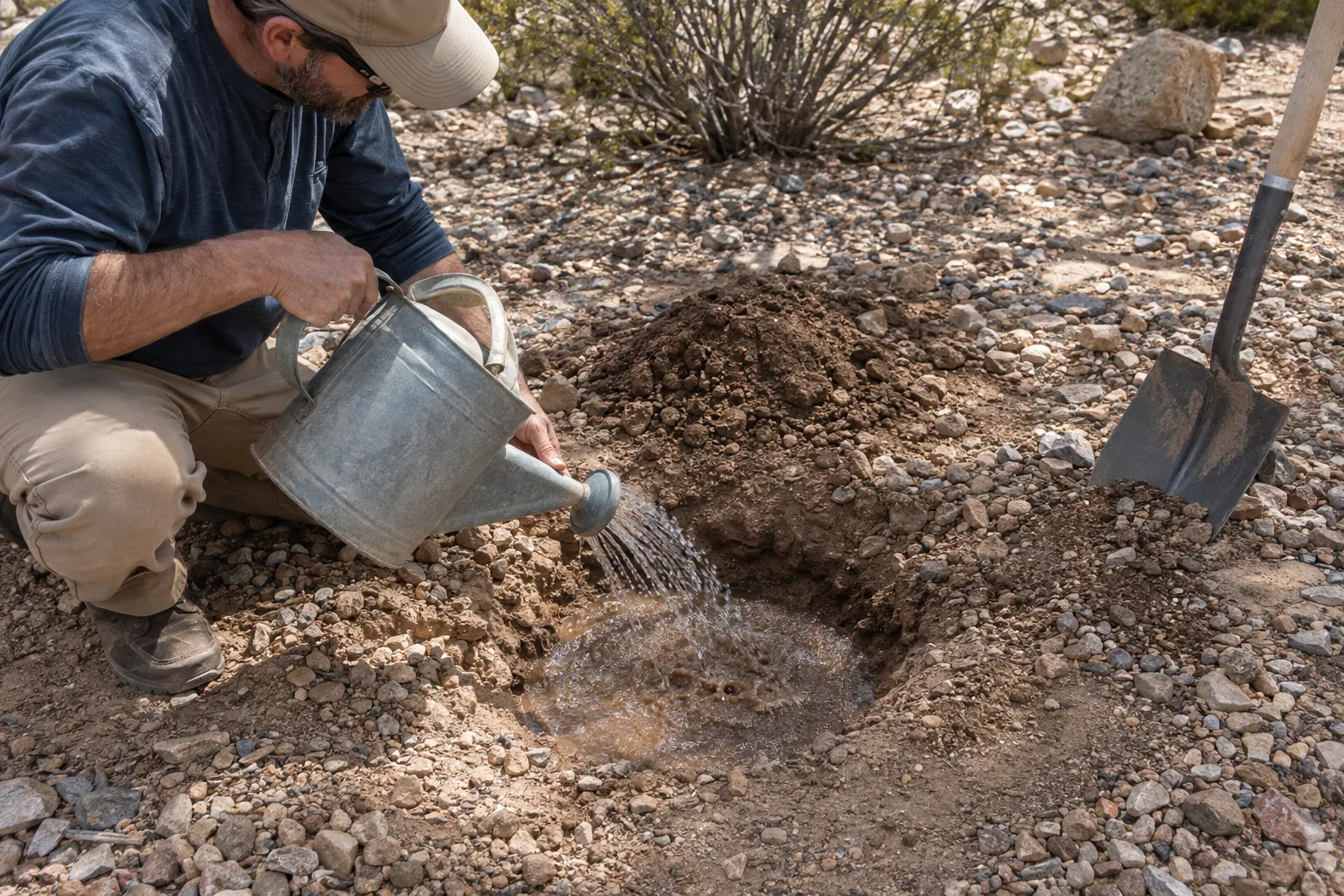
- Fill a 12-inch test hole with water. If it still holds water after 24 hours, you likely have caliche to break through, or a raised bed to build.
- Dig the hole 2 to 3 times as wide as the pot and no deeper than the root ball, with the top of the root ball sitting slightly above grade.
- Put plants with similar water needs on the same drip zone, and check mature size before planting near walls, walkways and power lines.
- Choose plants for three bloom windows (spring, the monsoon from July through September, and fall) so the yard is not flat after April.

When is the best time to plant in the Arizona low desert in spring?
Mid-February through mid-April is the best window for most trees, shrubs and perennials. The soil has warmed enough for roots to grow actively, and air temperatures are still mild, so new plants are not fighting heat while they settle in.
Plants set out in February and March get roughly four to five months of root growth before the monsoon arrives in July, and a well-rooted shrub handles monsoon humidity and saturated soil far better than one planted in June. Frost can still show up in Queen Creek into late February and early March, so hold frost-tender plants such as bougainvillea until nights stay above freezing. Plan on finishing by mid-April. Warm-season annuals can go in once nights hold above 50°F. For shade and structure, browse our desert trees, and look through our full plant selection for shrubs and perennials.
What should I check in my yard before buying plants?
Spend 20 minutes walking the yard and note sun, drainage, irrigation and space. Every lot has microclimates, and a south or west wall can run 10 to 15°F hotter than the north side of the same house on a July afternoon.
- Sun: mark areas with full sun all day, morning sun only, and afternoon shade.
- Drainage: dig a hole about 12 inches deep, fill it with water, and see how long it takes to empty.
- Irrigation: trace each drip line and count how many more emitters it can carry.
- Mature size: look up for power lines, roof overhangs and air conditioner units.
- Wind: spring gusts and monsoon storms can snap tall, young branches, so note the spots that funnel wind.
A rough sketch with your square footage, sun patterns and problem spots prevents most wrong-plant purchases. It does not need to be to scale, and a photo of each area helps just as much when you talk plants with us.
Which plants wake up an East Valley yard in early spring?
These six cover a tree, shrubs, a perennial, an accent plant and a vine, and all of them handle full sun and alkaline soil. They are varieties we commonly carry, though availability changes week to week and season to season.

Desert willow
Chilopsis linearis grows 15 to 25 feet tall and 10 to 20 feet wide in full sun, with trumpet-shaped pink, lavender or white flowers from spring into summer. Once established it needs deep, infrequent water. The drawback is litter, since spent flowers and long seed pods drop onto patios and pools.
Autumn sage
Salvia greggii forms a mound 2 to 3 feet tall and wide and blooms in spring and again in fall in red, pink or salmon, which hummingbirds visit. It takes full sun, though light afternoon shade keeps it fuller in the hottest spots. The drawback is a tendency to turn woody and sparse without a light shearing once or twice a year.
Texas sage
Leucophyllum frutescens reaches 5 to 8 feet tall and wide, with silver foliage and purple flowers that often follow humidity, including monsoon moisture. It wants full sun and little water. Overwatering causes dieback. Shearing it into tight balls also cuts off the bloom.
Blackfoot daisy
Melampodium leucanthum stays 6 to 12 inches tall and spreads 12 to 24 inches, covered in white flowers with yellow centers for much of the year. It needs full sun and very little supplemental water once established. The drawback is a short life, and summer overwatering rots it, although it reseeds readily into gravel and bare spots.
Red yucca
Hesperaloe parviflora makes a clump 3 to 4 feet tall and wide, with coral-pink flower stalks rising 4 to 5 feet in spring and into summer. It handles full sun, reflected heat and low water. The drawback is slow filling, and the dry flower stalks need cutting back after bloom.
Bougainvillea
Bougainvillea spp. gives the brightest color on a warm south or west wall, and vigorous varieties can spread 15 to 20 feet. It wants full sun, moderate water while it roots in and less afterward. The drawbacks are thorns, resentment of root disturbance, and frost damage when temperatures fall to about freezing.
How do I layer color so the yard keeps blooming after March?
Plan for three bloom windows instead of one. Late winter through April, the July to September monsoon, and October through November each need their own plants, or the yard looks flat for most of the year.
For the spring window, brittlebush (Encelia farinosa) gives yellow, globe mallow (Sphaeralcea ambigua) gives orange, and Parry’s penstemon (Penstemon parryi) gives pink. Texas sage carries the monsoon, and autumn sage returns in fall. A flowering tree adds height to the display, and our flowering trees are a good place to start. For quick warm-season color in beds and pots, check our annual flowers and foliage once nights stay above 50°F.
Repetition makes a planting look designed. Groups of three to five of the same plant read as intentional, while one of everything looks scattered.
How do I plant and water new additions in spring?
Set each plant at the right depth, soak it well, and taper the water as roots establish. The same steps work for most trees and shrubs.
- Test drainage by filling the hole with water. If it still stands after 24 hours, break through the caliche with a digging bar or plant in a raised bed.
- Dig the hole 2 to 3 times as wide as the container and no deeper than the root ball.
- Loosen any circling roots, then set the top of the root ball about an inch above the surrounding grade.
- Backfill with the native soil you dug out. Skip heavy amendments, because a pocket of rich soil in hard ground traps water around the roots.
- Build a shallow basin and water slowly until the root ball and the soil around it are soaked.
- Spread 2 to 4 inches of mulch or decorative granite, pulled back several inches from trunks and stems.
- Place drip emitters at the edge of the root ball, then move them outward as roots spread.

New plants usually need water every 2 to 3 days for the first several weeks, then weekly as they root in, and checking the soil 3 to 4 inches down before each watering beats following the clock. A plant that looks wilted in the cool morning may need more water. Yellowing lower leaves often point to too much. Planting too deep invites crown rot.
How do I deal with caliche and alkaline soil?
Break through caliche physically, and plant species that tolerate alkaline soil rather than trying to change the soil itself. Amendments cannot fix a layer of rock.
Caliche is a hardened calcium carbonate layer that can be a few inches or several feet thick, and neither water nor roots pass through it. Low desert soil also runs about 7.5 to 8.5 in pH, which ties up iron and causes yellow leaves with green veins (chlorosis) in plants that need more acidic conditions. Our hard irrigation water pushes pH back up, so one application of sulfur will not change it for long.
Desert-adapted plants such as palo verde, desert willow, brittlebush and globe mallow prefer lean, well-drained, alkaline ground. Match the plant to the soil you have.
What hardscape and irrigation choices suit a desert yard?
Decomposed granite, boulders and drip irrigation suit a desert yard best, because they shape the space year-round and keep water at the roots. Spring is a comfortable time to build them before new plants get in the way.
Lay decomposed granite 2 to 3 inches deep in buff or brown tones that blend with desert plants. Set boulders in groups of odd numbers and bury about a third of each so they look placed by nature. Flagstone paths set in granite rather than mortar can be adjusted later.
Run drip lines by water need, a practice called hydrozoning. A bougainvillea and a saguaro on the same line means one gets too much or the other too little.
What should I do each month from February to May?
Work in order: prepare in February, plant in March, finish by mid-April, and shift to heat monitoring in May. Our gardening calendars carry the same timing through the rest of the year.
| Month | Main tasks | Watering new plants |
|---|---|---|
| February | Prune frost damage, repair drip lines, prepare soil, plant hardy shrubs and trees | Every 2 to 3 days at first |
| March | Plant trees, shrubs and perennials, install hardscape, add warm-season annuals late in the month | Every 2 to 3 days, tapering as roots grow |
| April | Finish planting by mid-month, add mulch, lengthen drip run times | Increase as highs rise |
| May | Watch for heat stress, water established plants deeply and less often | Check soil depth before each watering |
Frequently asked questions
Can I plant a tree in spring, or should I wait for fall?
Yes, spring planting works for most desert trees. February and March plantings get a full growing season to root, but they need steady water through the first summer, especially in June when highs pass 105°F. Fall is also a good window, so choose whichever one you can water reliably.
Do I need to add compost to the soil?
Usually not for desert-adapted plants. They evolved in lean, fast-draining ground, and rich soil encourages soft growth and holds water around the roots. Fix physical problems like caliche instead. Vegetables and non-native perennials are the exception, and they grow best in a raised bed filled with quality soil mix.
What do I do if frost is forecast after I plant?
Cover tender plants overnight with frost cloth or an old sheet when the forecast nears 32°F, and remove it in the morning. Let the cover reach the ground so it traps soil warmth. Bougainvillea is the most vulnerable, while established desert natives usually need less protection.
Should I keep my lawn in a spring yard refresh?
Keep turf only where you use it, such as a play area. Lawn usually takes the largest share of household outdoor water, and replacing unused areas with desert plants on drip irrigation cuts that demand. Remove the sod fully before planting, because leftover grass roots compete with new shrubs.
Where can I learn more before I buy?
Our classes and events page is a good place to start, since it shows what is currently scheduled. Bring your yard sketch and a few photos to the nursery, and we can help match plants to each spot.
Is a spring yard refresh worth it, or should I wait for fall?
Refresh in spring if you can water new plants consistently through June, July and August, because those first hot months decide whether a plant establishes. Wait for fall if travel or a packed schedule will interrupt watering. Skip big planting projects until you have tested drainage, since caliche is easier to deal with before roots go in. Stop by the nursery in Queen Creek and talk through your yard with us.
