
The best spring flowers for the Arizona low desert are California poppy, desert marigold, Parry’s penstemon, lantana, African daisy, globe mallow, snapdragon and Texas bluebonnet. Most bloom from February through April, and several need planting the previous fall.
Key takeaways
- Sow poppy and bluebonnet seed in October to November so the plants have months to root before they flower.
- Snapdragons and African daisies bloom longest when planted as transplants in October to November, with February as the later option.
- Poppy, desert marigold and globe mallow prefer lean, gritty soil, so skip the compost for them.
- Cool-season annuals fade once daytime highs stay in the 90s, usually from late April to May.
- Water new transplants every 2 to 3 days for the first two weeks, then stretch the interval as roots settle.

When should I plant spring flowers in the Arizona low desert?
Plant most of them in fall, from October to November, for color in February through April. Our soil stays warm into autumn and cools quickly in winter, so fall roots get several months of mild weather before the bloom push.
Planting in January or February still works for many of these flowers, but the plants are smaller and the show is shorter. Our gardening calendars list planting windows month by month if you want a quick check before you start. Timing is approximate and shifts with each year’s weather.
| Flower | Start from | Typical bloom |
|---|---|---|
| California poppy | Seed, October to December | February to April |
| Desert marigold | Seed or transplant, October to November or February to March | March to May, repeats later |
| Parry’s penstemon | Transplant, October to March | February to April |
| Lantana | Transplant, March to April | March to November |
| African daisy | Transplant, October to November or February | February to May |
| Globe mallow | Seed or transplant, October to March | March to May, rebloom after rain |
| Snapdragon | Transplant, October to November or February | February to May |
| Texas bluebonnet | Scarified seed, October to November | March to April |
Which eight spring flowers bloom best in the low desert?
The eight below handle our alkaline soil, dry air and sudden warm spells better than most spring flowers sold nationally. Many are varieties we commonly carry, though availability changes week to week and season to season. You can browse the current selection in our annual flowers and foliage department.
California poppy (Eschscholzia californica)
Orange, yellow and cream flowers on plants 1 to 2 feet tall, in full sun with little water once established. Poppies reseed freely, so they return on their own. The drawback is that they resent transplanting, so sow seed where you want them. The foliage also looks ragged once the flowers finish in April.
Desert marigold (Baileya multiradiata)
This native forms a silvery mound 1 to 2 feet tall topped with yellow daisy-like flowers. It needs full sun and sharp drainage, and it handles caliche better than most. Bloom peaks in spring and fall, with scattered flowers between if it gets an occasional soak. It declines in soil that stays wet, and individual plants are short-lived.
Parry’s penstemon (Penstemon parryi)
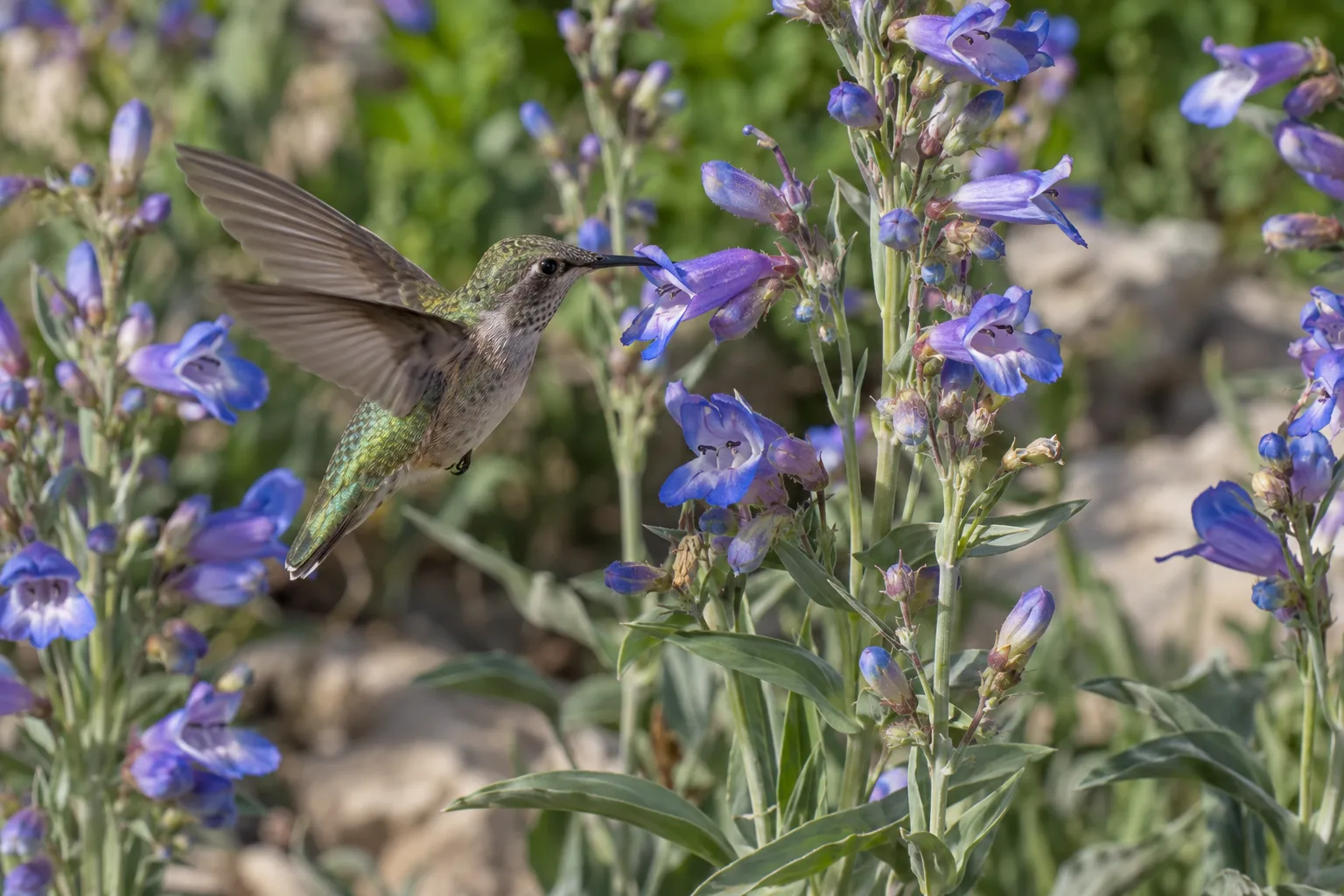
Pink tubular flowers rise on stalks 3 to 5 feet tall from a low clump of leaves, and hummingbirds visit them. It wants full sun, gravelly soil and low water. The drawback is that the flower stalks look bare after bloom, so cut them back to the base once they brown.
Lantana (Lantana camara)
A shrubby perennial 3 to 4 feet tall with clusters in yellow, orange, pink, red and white. It flowers from spring until frost and keeps going in heat above 110°F. Frost burns it back in winter, so wait until the danger passes in late February or March before pruning. It spreads wide, and a few varieties can grow larger than expected.
African daisy (Osteospermum)
Compact mounds 1 to 2 feet tall carry white, purple, orange or yellow daisies. Give it full sun to light afternoon shade and regular water. The drawback is heat. It slows down when highs reach the low 90s and usually finishes by May.
Globe mallow (Sphaeralcea ambigua)
A native perennial 2 to 4 feet tall with gray-green leaves and apricot, coral or white cup-shaped flowers. It takes full sun and very little water, and it can rebloom after monsoon rain. Rich soil and extra irrigation make it floppy. It also self-seeds, so pull seedlings that land where you do not want them.
Snapdragon (Antirrhinum majus)
Flower spikes 1 to 3 feet tall in nearly every color suit borders and pots. Plant in full sun or light afternoon shade, and water regularly. Snapdragons are a cool-season annual here, so expect them to decline as highs reach the 90s in May.
Texas bluebonnet (Lupinus texensis)
Dense blue-purple spikes on plants 1 to 2 feet tall in full sun and well-drained soil. Seed needs scratching (scarification) before sowing in October to November, and water should be modest. It is the fussiest plant on this list, and results vary from yard to yard. It is an annual that returns only if it sets seed.
How do I prepare alkaline soil and caliche for spring flowers?
Loosen the soil 12 to 18 inches deep and break through any caliche, the cement-like calcium layer that blocks drainage and roots. Many East Valley yards have soil with a pH above 8, which locks up iron and turns leaves yellow between the veins.
For snapdragons, African daisies and other annuals, mix in 2 to 3 inches of compost. For poppies, desert marigold, globe mallow and penstemon, leave the compost out and loosen only the top 6 inches. Rich soil makes natives grow leaves instead of flowers and shortens their lives. Finish every bed with about 2 inches of decomposed granite to hold moisture and cool the roots.
If leaves turn yellow with green veins, a chelated iron product often helps. Follow the label closely, and fix any drainage problem first, because soggy roots cannot take up iron.
How often should I water spring flowers?
Water new transplants every 2 to 3 days for the first two weeks, then widen the gap. These intervals are starting points, and sun exposure and soil type change them.
Established natives such as globe mallow and desert marigold usually need a deep soak every 7 to 14 days in spring. Snapdragons and African daisies prefer every 3 to 5 days. Water early in the morning, and keep water off the leaves of snapdragons to reduce mildew. Our water is hard, so an occasional long soak helps flush salts below the root zone. Seeds need the surface kept damp until they sprout, typically 7 to 14 days.

How do I keep spring flowers blooming into May?
Remove faded flowers every few days and add light shade when afternoon temperatures climb. Deadheading keeps snapdragons, African daisies and lantana making buds instead of seed.
A 30 to 40 percent shade cloth over annual beds can cool the soil enough to add a couple of weeks. Even so, plan to pull cool-season annuals in May. Portulaca and desert zinnia are good replacements that tolerate summer sun. Lantana and desert marigold carry the bed through summer.
Can I grow spring flowers in pots?
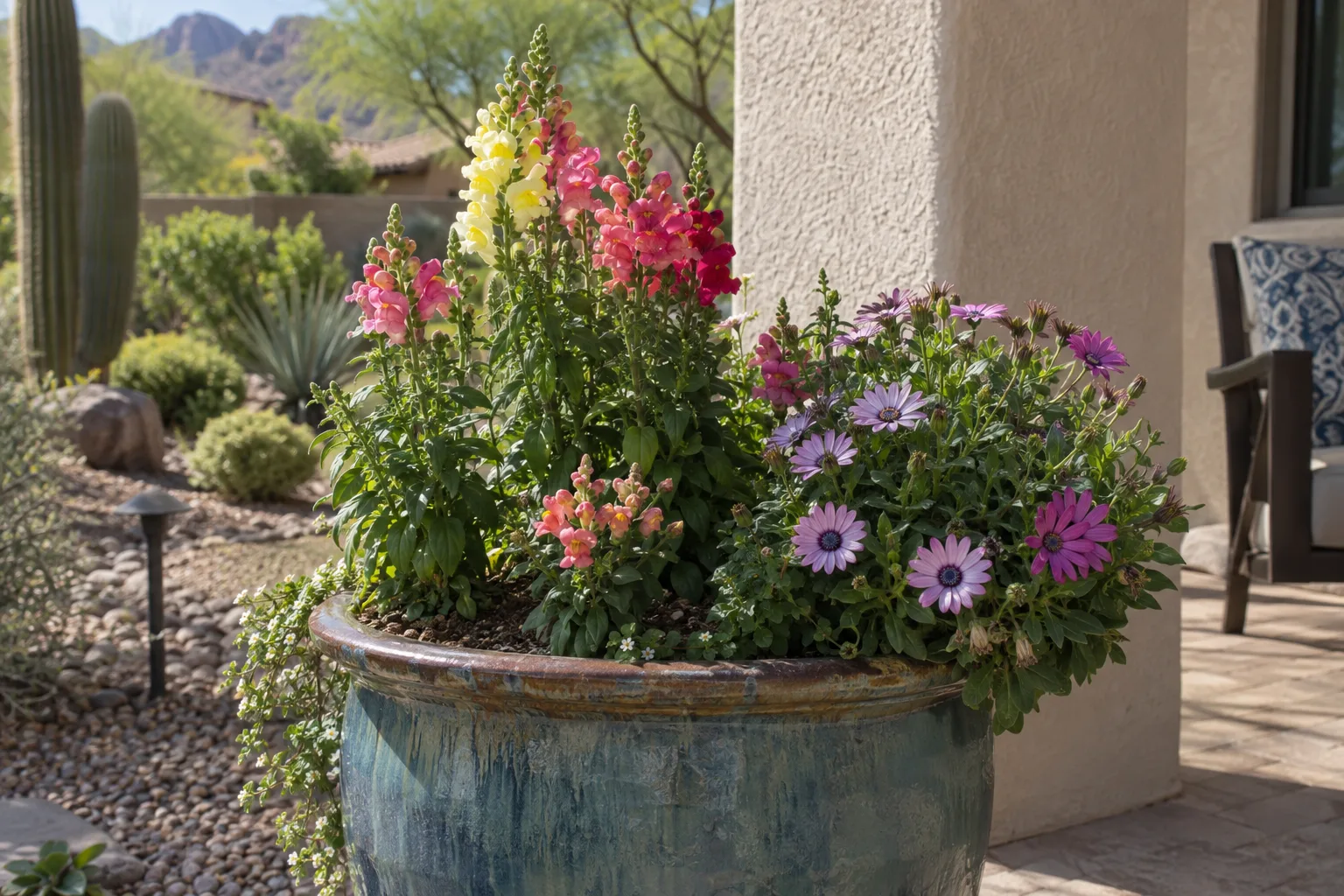
Yes, and pots suit snapdragons, African daisies and lantana well. A container lets you control the soil, so you can use a fast-draining potting mix, and you can move it into shade in late April. Choose a pot with drainage holes and check moisture often, because pots dry faster than beds. Our pottery and planters range in size, and a bigger pot holds moisture longer in the heat.
What mistakes cut the spring bloom short?
Planting late, adding compost to native beds and overwatering are the three biggest. Annuals set out in April have little time before heat arrives.
Natives given the same schedule as thirsty annuals rot at the crown, and shallow planting exposes roots to sun. Set each transplant at the same depth it grew in its container. Browse our plant selection and match plants with similar water needs in the same bed, so one watering schedule fits everything.
Frequently asked questions
Which of these flowers come back every year?
Penstemon, desert marigold, globe mallow and lantana are perennials here. Poppies and bluebonnets are annuals that return only by reseeding. African daisies and snapdragons usually finish by summer, so plan to replant them the next fall.
Do spring flowers help pollinators?
Yes. Penstemon draws hummingbirds, and native bees visit desert marigold and globe mallow. Lantana attracts butterflies for months. Choose a mix with staggered bloom times so something is flowering from February through May.
Can I still sow seed in January?
You can, and poppy seed will often sprout in cool January soil. The plants will be smaller and bloom later than fall sowings. Bluebonnets sown that late usually perform poorly, so favor transplants after October.
What do I do when the monsoon arrives?
Reduce watering, because summer rain can soak beds for days. Natives like globe mallow may rebloom after storms. Make sure beds drain well and pull any annuals that have yellowed from heat and wet.
Can I plant spring flowers in March?
Yes, with realistic expectations. Transplants set out in March can bloom through April and early May. Pick lantana, desert marigold or globe mallow, which keep going into summer, and water them regularly while they settle.
Are spring flowers worth planting in a Queen Creek yard?
Yes, if you plant in fall and match each flower to its soil and water needs. A mix of natives and a few annuals gives you color from February to May with modest effort. Skip them if you will not water new plants for the first two weeks, or if you want the same flowers all summer without replanting. Stop by our nursery in Queen Creek, and we will help you choose a combination for your yard.