
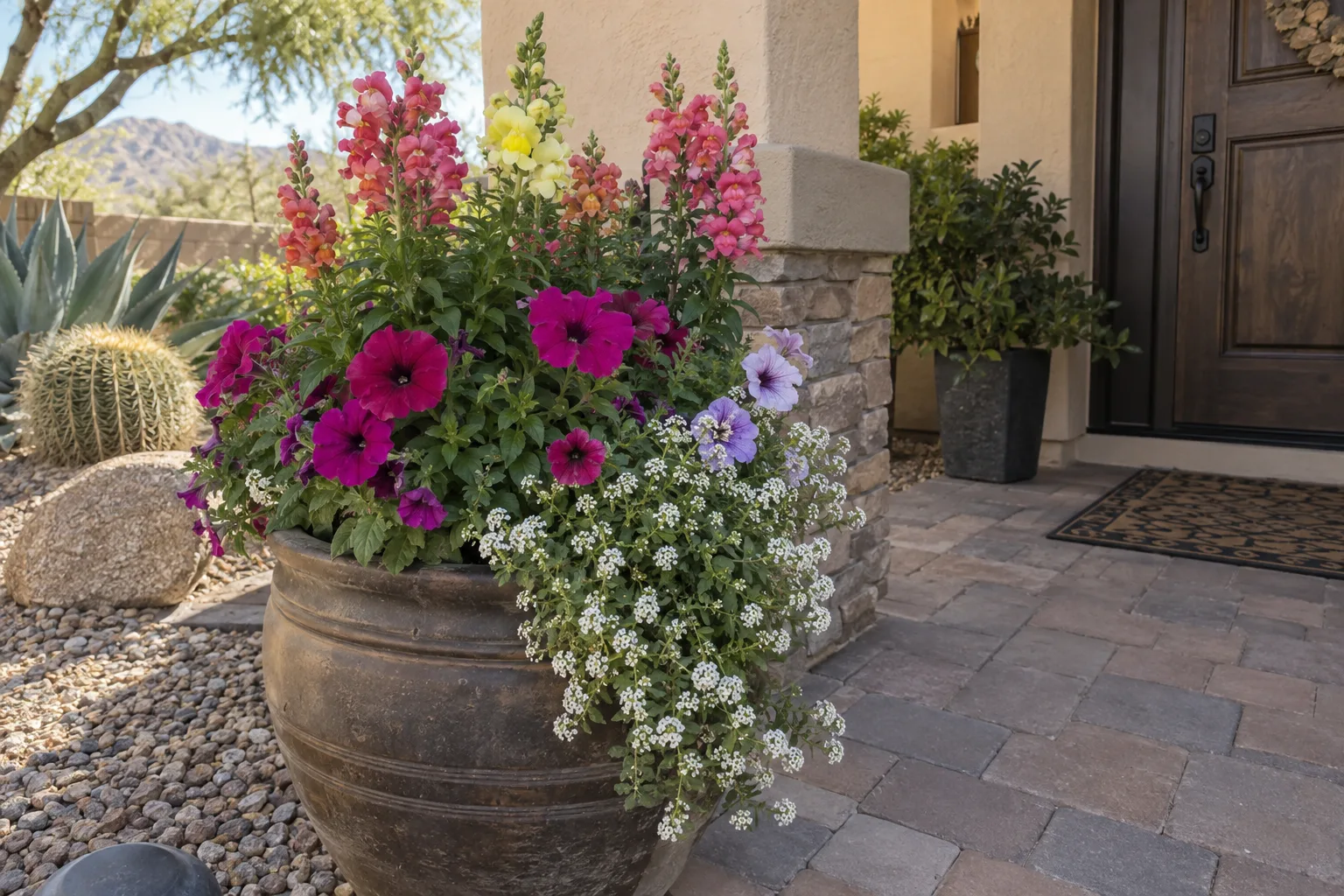
The best container plants for early spring color in Arizona are petunias, snapdragons, alyssum, dianthus, lobelia, pansies, calibrachoa and osteospermum. Plant them from mid-February to mid-March and expect bloom until late April or early May.
Key takeaways
- Plant cool-season color from mid-February to mid-March, and keep frost cloth or a covered patio handy for nights near 32°F.
- Expect roughly 8 to 10 weeks of peak bloom before highs stay in the 90s in late April.
- Use a pot 12 to 16 inches wide with drainage holes and fresh potting mix, never native caliche soil.
- Water when the top 1 to 2 inches of mix is dry, which in April can be every day for small pots in sun.
- Move pots to morning sun and afternoon shade in April to add a few weeks of bloom.
When should I plant spring containers in Arizona?
Plant from mid-February to mid-March, once the coldest nights have passed. Frost can still show up in the East Valley into early March, so check the forecast before you set out tender plants such as petunias and calibrachoa, and move pots under a patio cover if lows approach 32°F.
Pansies, snapdragons, alyssum and dianthus handle light frost better. They also last longest when planted in October or November, so a February planting gives a shorter show. Spring heat is the real deadline. By late April highs reach the 90s, and most of these plants slow down or stop.
| Month | What to do in your containers |
|---|---|
| Late February | Plant cool-season color and cover tender plants on nights near freezing |
| March | Peak bloom, feed every 2 weeks and deadhead |
| April | Deadhead often, check small pots daily and move pots to morning sun |
| Early May | Pull faded plants and replant with heat-tolerant options |
Which container plants give the best early spring color in Arizona?
These eight are varieties we commonly carry in early spring, though availability changes week to week and season to season, so ask us what is in bloom when you visit. Check the plant tag for exact sizes. You can also browse our annual flowers and foliage for more seasonal color.
Petunias (Petunia × hybrida)
Petunias reach 8 to 18 inches tall, and trailing types spread 1 to 3 feet. They want full sun and regular water. Trailing types spill over pot edges and bloom heavily from March into April. The drawback is frost tenderness and a leggy look once highs reach the 90s, so pinch back long stems to encourage fresh growth.
Snapdragons (Antirrhinum majus)
Choose dwarf or intermediate types, which stay roughly 6 to 24 inches tall, because tall cutting types flop over in pots. They take full sun to light afternoon shade and moderate water, and they tolerate light frost. The drawback is that bloom stalls once highs stay above roughly 85 to 90°F.
Sweet alyssum (Lobularia maritima)
Alyssum stays 4 to 8 inches tall and spreads 8 to 12 inches, which makes it a good filler around taller plants. It likes full sun to part shade and regular water, and it tolerates light frost. The flowers carry a honey scent. The drawback is that the blooms are tiny, so you need several plants for impact, and they thin out as heat arrives.
Dianthus (Dianthus chinensis hybrids)
Dianthus grows 6 to 15 inches tall and 6 to 12 inches wide, with clove-scented flowers in red, pink and white. It wants full sun, moderate water and a mix that drains well. The drawback is crown rot when the mix stays soggy, and bloom slows as spring warms.
Lobelia (Lobelia erinus)
Trailing lobelia grows 4 to 8 inches tall and trails 8 to 12 inches, with blue, violet or white flowers. Give it morning sun, afternoon shade and consistent water. The drawback is a short season. Of these eight it usually fades first once warm weather arrives, so it suits pots with afternoon shade best.
Pansies (Viola × wittrockiana)
Pansies stay 6 to 9 inches tall and 6 to 10 inches wide. They like full sun in winter, morning sun later and regular water. Violas (Viola cornuta) have smaller flowers and usually hold on longer into spring. The drawback is that both fade by April, and fall planting gives the longest display.
Calibrachoa (Calibrachoa × hybrida)
Calibrachoa grows 6 to 10 inches tall and trails 1 to 2 feet, covered in small petunia-like flowers. It wants full sun to light afternoon shade and consistent water. The drawback is a quick wilt when the mix dries out and yellowing new leaves in alkaline mix or hard water without added iron.
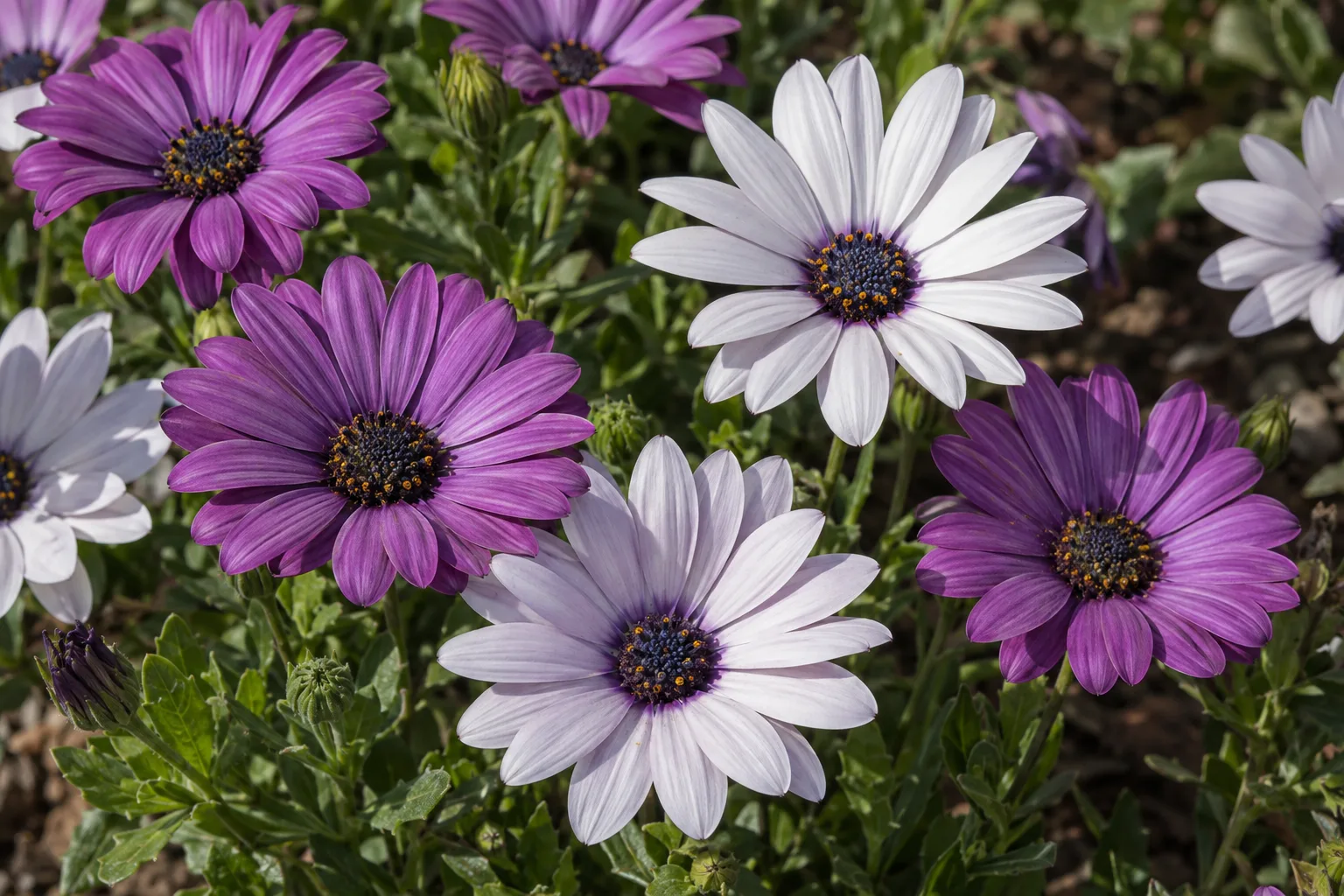
Osteospermum (Osteospermum ecklonis hybrids)
Osteospermum, or African daisy, grows 8 to 18 inches tall and 12 to 24 inches wide, with large daisy flowers in purple, white, yellow and orange. It takes full sun, moderate water and a mix that drains well. The drawback is that flowers close at night and on cloudy days, and the plant declines as April heat builds.
What size pot and potting mix work best for spring color?
Use a pot 12 to 16 inches wide with drainage holes, filled with fresh bagged potting mix. Larger pots hold more water and stay cooler, which matters when April afternoons can dry a small pot in a few hours. Native Queen Creek soil is alkaline and often has caliche, and it packs hard in a container. Fresh mix drains better.
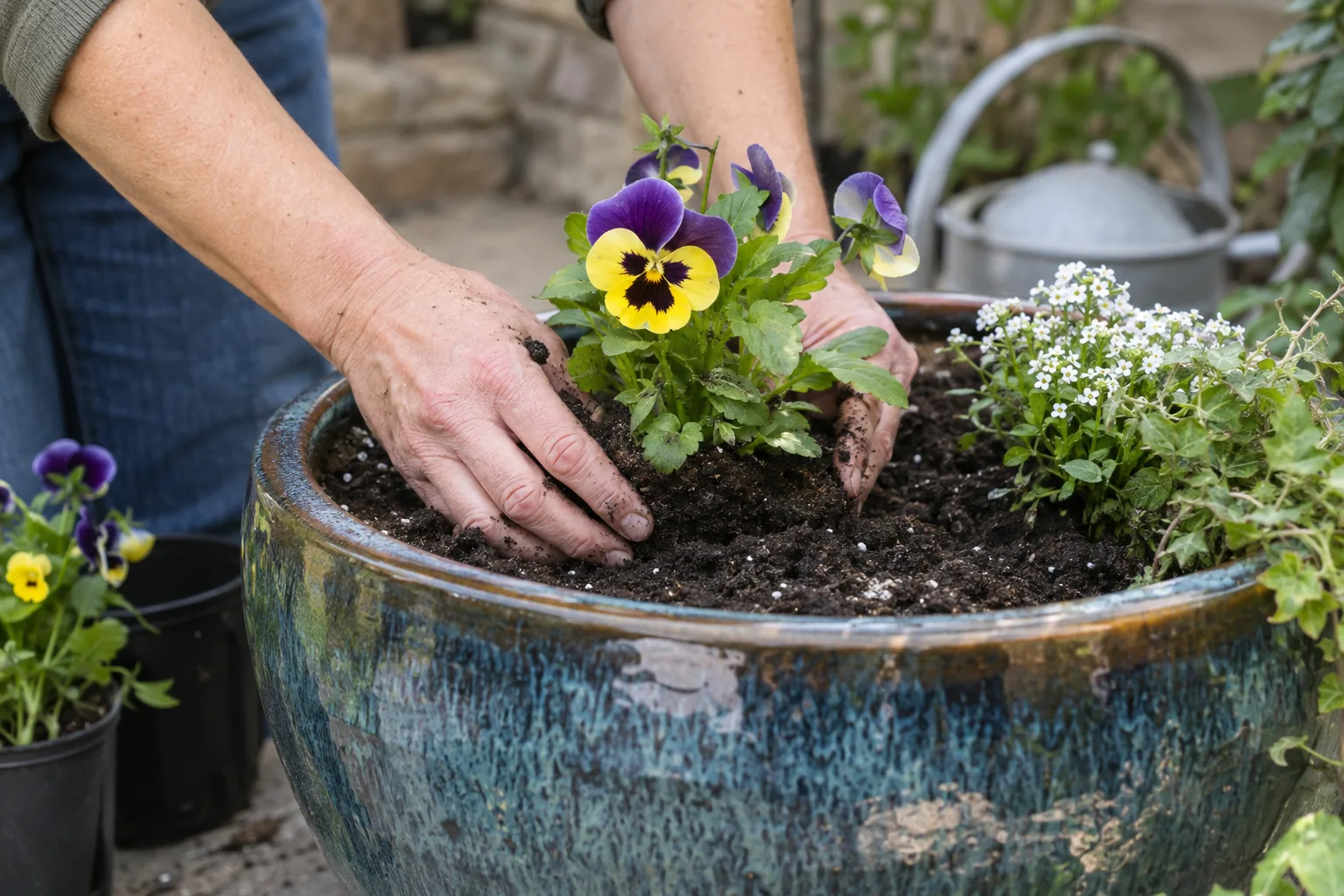
Our selection of pottery and planters changes through the year, so bring your patio measurements when you shop. Then plant in four steps:
- Fill the pot with potting mix to within 2 inches of the rim, leaving room to water.
- Mix in a slow-release fertilizer at the rate on the label.
- Set each plant at the same depth it grew in its nursery pot, spaced a few inches apart.
- Water until it runs freely from the drainage holes.
How often should I water spring containers?
Check daily and water when the top 1 to 2 inches of mix feels dry. In late February and March that is often every 2 to 3 days, and by April small pots in sun can need water every day. Low humidity and wind dry pots faster than the air temperature suggests.
Push a finger into the mix instead of judging by the surface, which can look dry while the roots stay damp. Water slowly until the pot drains. Grouping pots together slows evaporation, and morning watering lets foliage dry before night.
How do I feed spring containers when our water is hard?
Feed every 2 weeks with a liquid fertilizer labeled for flowering plants, or follow the schedule on your slow-release product. Hard Queen Creek water leaves mineral salts behind that show up as white crust on pot rims and brown leaf tips, so flush each pot every few weeks by running plain water through it for a couple of minutes.
Alkaline water and mix can also lock up iron, and calibrachoa shows it first with yellow new leaves and green veins. A fertilizer with chelated iron corrects this for most plants. Flush first, then feed.
How do I keep spring containers blooming into late April?
Deadhead every few days and move pots to morning sun with afternoon shade once highs reach the 90s. Snipping off spent flowers before they set seed keeps petunias, snapdragons, pansies and calibrachoa making new buds. An east-facing wall or the edge of a covered patio usually gives plants enough morning light to keep blooming while it cuts the hottest afternoon sun that dries out pots.
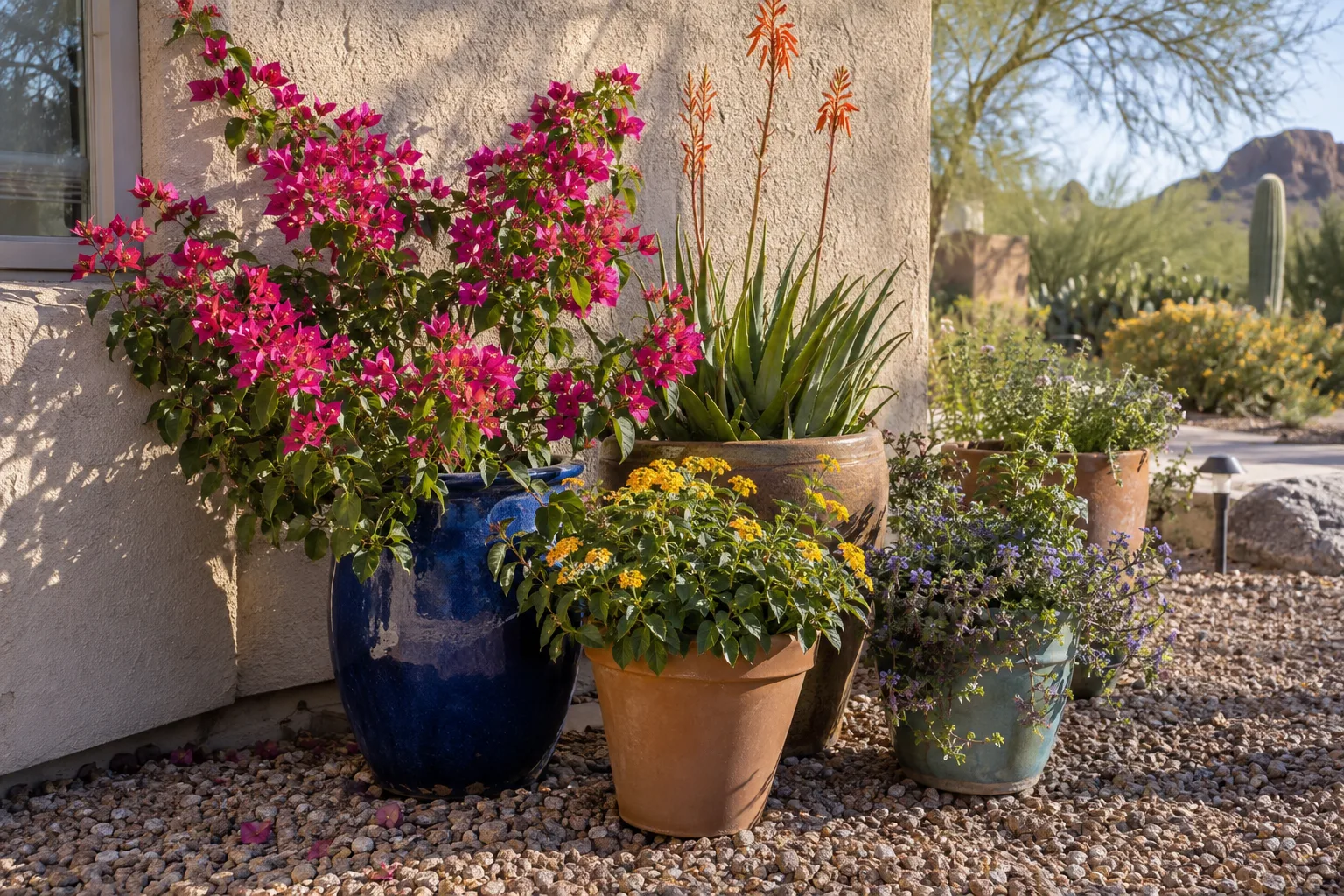
Pinch back leggy petunias by a few inches in April to push fresh growth. Cut stems right above a leaf. When flowers stop for good in early May, pull the plants and replant, and our gardening calendars help you time that switch. Our classes and events page lists upcoming workshops.
Which spring container plants look good together?
Pair one taller plant, one mounding plant and one trailing plant, and match them by sun and water needs so no plant in the pot is stressed while its neighbor is comfortable. Here are three combinations.
- Snapdragons, dianthus and alyssum for a cool palette of purple, white and pink in morning sun.
- Osteospermum, petunias and calibrachoa for warm oranges, corals and yellows in a full-sun pot.
- Pansies with trailing alyssum for a low, fragrant bowl near a seat or doorway.
Lobelia adds blue trails at the front of a pot with morning sun and afternoon shade, though it fades earliest.
Frequently asked questions
Can I leave spring containers outside on a frost night?
Hardy plants can stay out, but tender ones need cover. Pansies, snapdragons, alyssum and dianthus usually handle light frost, while petunias and calibrachoa do not. Drape frost cloth or a sheet over tender pots in the evening, or move them under a patio roof, and remove the cover in the morning so plants do not overheat.
Can I reuse spring potting mix for summer plants?
Yes, if you refresh it first. Pull out old roots, flush the pot with plenty of water to wash out salts, and mix in some fresh potting mix and slow-release fertilizer. Replace the mix entirely if it has turned hard or if water beads on top and runs off instead of soaking in.
What do I plant in containers after spring color fades?
Switch to heat-tolerant plants in early May. Vinca and portulaca are two flowering annuals commonly used in low desert summer pots, and both take full sun better than spring annuals. Ask us what is in for summer when you stop by, since availability changes with the season and the weather.
Should I use terracotta or plastic pots?
Either works, but plastic and glazed pots hold moisture longer. Terracotta is porous and dries fastest, so it needs more frequent watering in April. Light-colored pots absorb less heat than dark ones, which helps roots stay cooler on a sunny patio. Choose based on how often you are willing to water.
Can I plant these in the ground instead of pots?
Yes, in a bed with loosened, amended soil that drains well. Where caliche sits close to the surface, a container or raised bed gives roots more room and better drainage. Spacing and watering needs stay similar, but in-ground plants dry out more slowly than pots in April.
Are spring containers worth the effort in Arizona?
Yes, if you want color from late February to late April and will check pots daily once April warms up. The show is short, so these plants suit entries, patios and spots you walk past every day. Skip them if you travel in April or rarely water, because a pot of drought-tolerant succulents will suit you better. Stop by the nursery in Queen Creek and we will help you match plants and pots to your exposure.