The soil amendments most Arizona low desert yards need are compost for organic matter and, where a test calls for it, elemental sulfur for high pH or gypsum for sodium. Test your soil first, because each amendment fixes a different problem.
Key takeaways
- Run a soil test and dig an 18 to 24 inch test hole before you buy anything, since pH, clay and caliche each call for a different fix.
- Work 2 to 3 inches of finished compost into the top 8 to 12 inches of new vegetable beds, and top-dress established beds with 1 to 2 inches once a year.
- Gypsum does not lower pH. Elemental sulfur lowers it slowly over months, and chelated iron clears yellow leaves with green veins faster.
- Amend 2 to 4 weeks before planting, in January to February for spring beds and late August to September for fall beds.
- Palo verde, mesquite and other desert natives do best in native soil with 3 to 4 inches of mulch on top.

How do I find out what my soil needs?
Run a soil test and dig a test hole, and you will know your pH, your texture and whether caliche sits under the bed. Most East Valley soil is alkaline, commonly testing around 7.5 to 8.5, while vegetables and fruit trees do best closer to 6.0 to 7.0. That gap explains a lot of yellow leaves.
Dig the test hole 18 to 24 inches deep where the bed will go and fill it with water. If it drains within a day, drainage is acceptable. A hard white to light gray layer that stays hard when wet is caliche. Then squeeze a moist handful of soil: a long ribbon means heavy clay, and a handful that crumbles at once means sand.
Retest after a season, because hard irrigation water adds calcium and bicarbonate with every watering and pH tends to creep back up.
Which soil amendments work in the low desert?
Compost does the most work in low desert soil. Sulfur, gypsum and chelated iron are targeted fixes for specific test results, and each one has limits that the table below lays out.
| Amendment | What it addresses | When to use it | Limit |
|---|---|---|---|
| Compost | Low organic matter, sandy or clay texture | Before each planting season, then top-dress yearly | Breaks down quickly in heat |
| Elemental sulfur | High pH | When a test shows pH well above what your plants prefer | Slow, and weak in caliche or high-lime soil |
| Gypsum | Sodium-heavy soil | Only when a test shows a sodium problem | Does not lower pH |
| Chelated iron | Yellow leaves with green veins | When new growth shows the symptom | Treats the symptom, so repeat applications are needed |
| Wood chip mulch | Heat, evaporation, slow organic matter | After planting, 3 to 4 inches deep | Keep it off stems and trunks |
Compost
Finished compost holds water in sandy soil, loosens clay and feeds soil microbes. Heat and low humidity break it down fast here, so organic matter needs topping up at least once a year. Choose compost that is dark, crumbly and earthy-smelling, and use only fully composted manure, since fresh manure carries salts that can burn roots.
Vegetable beds use compost fastest. If you are planning beds, the herbs, vegetables and berries page shows what we commonly carry, and availability changes week to week and season to season.
Elemental sulfur
Soil bacteria slowly convert elemental sulfur into acid, so a change shows up over weeks to months rather than days. In soil with a lot of free lime or caliche, the lime neutralizes much of that acid, and a large pH drop in the ground is hard to achieve. Sulfur works best in raised beds and containers filled with a mix you control. Follow the rate on your soil test report or the product label, and retest before adding more.
Gypsum
Gypsum (calcium sulfate) corrects sodium-heavy soil by letting calcium replace sodium so the salts can wash below the roots. It does little for ordinary clay without a sodium problem, so check your soil test for sodium before buying a bag. Organic matter is the usual fix for clay.
Chelated iron
Chelated iron stays available to roots in alkaline soil and clears the yellow leaf with green veins faster than sulfur can. Citrus trees are among the first plants to show this symptom, and the citrus trees page lists the types we commonly carry, though availability varies by season. Apply iron by the label directions and expect to repeat it.
When should I amend soil in the East Valley?
Amend 2 to 4 weeks before planting: January to February for spring beds and late August to September for fall beds. Vegetables here have a spring and a fall planting window, and the University of Arizona Cooperative Extension vegetable planting calendar for Maricopa County lists dates crop by crop. Our gardening calendars are a second place to check monthly tasks.
Established trees and shrubs take a compost top-dressing in fall or winter, when cooler weather slows decomposition. Skip digging near roots in summer. Heavy mechanical work such as breaking caliche is easier on empty beds, though with summer highs above 110°F you should start at dawn and stop by mid-morning.
How do I amend a garden bed step by step?
Test, fix only what the test shows, add compost, mix it in, water it, then plant and mulch. The steps below take a new bed from bare ground to planted.

- Test the soil and dig a test hole, as described above.
- Break through caliche or a compacted layer where the bed will sit, or plan a raised bed instead.
- Apply sulfur or gypsum only if the test calls for it, at the rate on the report or label, and water it in.
- Spread 2 to 3 inches of finished compost over the bed.
- Work the compost into the top 8 to 12 inches with a garden fork, stopping before the soil turns to powder.
- Water deeply and let the bed settle for 2 to 4 weeks if your planting date allows.
- Plant, then add 3 to 4 inches of wood chip mulch, keeping it a few inches from stems and trunks.
- Retest after one growing season and adjust.
Drip irrigation delivers water to the root zone and works well under mulch. Deep, infrequent watering pushes roots down into the amended layer, where soil stays cooler than the surface during summer highs above 110°F. Skip any step that does not apply.
What can I do about caliche?
No amendment dissolves caliche, the calcium carbonate layer that cements desert soil, so you either break through it or build above it. It can sit a few inches to several feet down, and both water and roots stop at it.

- Break through it with a pickaxe, digging bar or rented electric breaker so roots and water can move down.
- Drill or dig a chimney through the layer for a single tree or shrub, then fill the hole with water. If it is still full the next day, the layer below blocks drainage and a different spot or a raised planting is the better choice.
- Build raised beds at least 12 inches deep for vegetables, so roots stay in the soil you bring in.
- Choose plants adapted to alkaline, shallow soil.
Poor drainage above caliche is the main danger, particularly during monsoon storms from roughly July through September. Roots need air as well as water.
Do desert natives and trees need amended soil?
Usually no. Desert natives and most desert-adapted trees do best in the native soil, with mulch on the surface rather than rich compost in the planting hole.
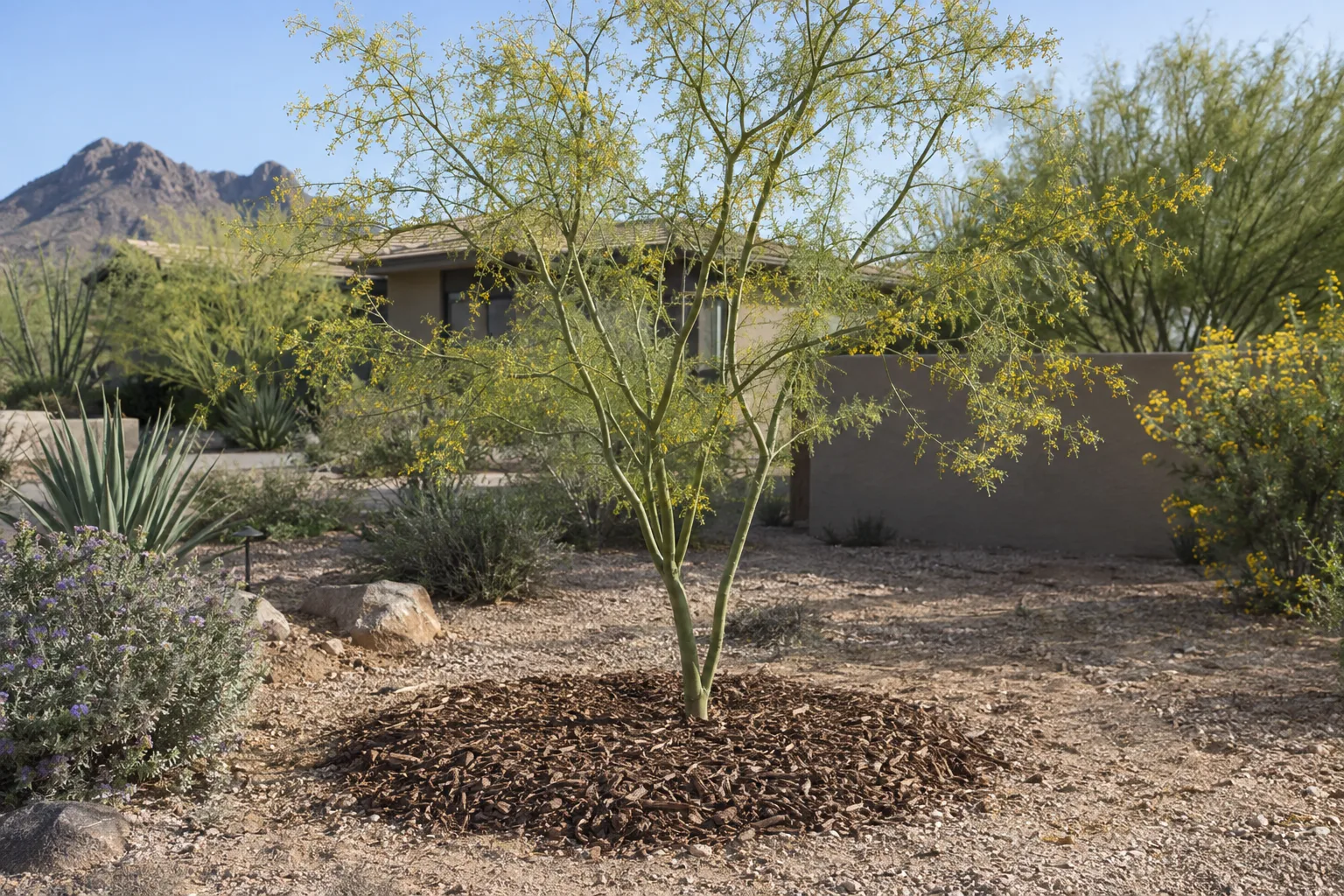
Rich backfill drains and holds water differently from the surrounding soil, so roots can stay inside the hole instead of spreading out, and the pit can collect water after irrigation or storms. Palo verde (Parkinsonia species) and mesquite (Prosopis species) are typical examples, and the desert trees page shows the kinds we commonly carry.
Rosemary (Salvia rosmarinus) and lantana (Lantana camara) also do well in lean, well-drained soil. Drainage matters more than richness for all of these. Citrus, fruit trees, roses and vegetables come from milder, wetter climates and respond well to compost, mulch and iron.
Which soil amendment mistakes should I avoid?
The costliest mistakes are buying amendments before testing and using one product for every problem. A few more are worth listing.
- Fertilizing yellow leaves before checking pH. Iron is hard for roots to take up in alkaline soil, so extra fertilizer adds salts without greening the leaves.
- Using fresh manure, which carries salts that can burn roots.
- Adding organic matter to a bed that drains poorly, which leaves roots sitting in saturated soil.
- Treating amending as a one-time job. Heat breaks organic matter down fast and hard water keeps nudging pH upward, so plan a yearly top-dressing.
- Using gypsum to fix pH. Gypsum addresses sodium and leaves alkalinity largely unchanged.
Test first, then buy. A soil test is a small step that prevents most of these problems.
Frequently asked questions
How often should I add compost to my beds?
Add compost to vegetable and annual beds once or twice a year, before spring and fall planting. Established trees, shrubs and perennial beds usually need a 1 to 2 inch top-dressing once a year. Wood chip mulch breaks down over time and adds organic matter too, so beds under mulch may need less compost. Check bed depth and soil texture each season.
Is gypsum the same as lime?
No, gypsum and lime are different products. Gypsum is calcium sulfate and helps move sodium out of the root zone without changing pH much. Lime is calcium carbonate and raises pH, which low desert soils rarely need because they already test alkaline. Skip lime unless a soil test shows a pH below about 6.0.
Why are my leaves yellow with green veins?
Yellow leaves with green veins usually point to iron chlorosis, caused by alkaline soil that locks iron away from roots. Chelated iron applied by label greens new growth within a few weeks, though it treats the symptom only. Pair it with deep watering, mulch and, in beds or containers, sulfur to bring pH down gradually. Overwatering and poor drainage can cause similar yellowing.
Should I add sand to clay soil?
No, sand added to clay soil can make it firmer, not looser. Clay particles fill the gaps between sand grains, and the mix can set up like concrete unless you add a very large amount. Compost is the better fix, because it builds structure that holds air and water. Work 2 to 3 inches into the top 8 to 12 inches and repeat yearly.
Can I make compost at home in the East Valley?
Yes, and summer heat speeds the process, but the pile dries out quickly. Keep it in partial shade or a covered bin, and keep it as damp as a wrung-out sponge. Mix roughly 3 parts dry carbon material such as leaves, cardboard and wood chips to 1 part green material such as kitchen scraps. Finished compost can take 2 to 4 months, depending on turning and moisture.
Is amending the whole yard worth the effort?
Amending is worth it for vegetable beds, fruit trees, citrus and flower borders, where compost and a corrected pH show up as steadier growth and fewer yellow leaves. Spend your effort there, and test before buying anything. Skip it if your yard holds mostly desert natives and cacti, which grow best in the soil they came with, or if you garden only in containers filled with fresh potting mix. If you want help matching an amendment to your soil test, come visit us at the nursery in Queen Creek.