
The best vegetables for small spaces in Arizona are cherry tomatoes, bush beans, cucumbers, radishes, Swiss chard, green onions, kale and bush zucchini. Each one produces well in a pot, a narrow bed or up a trellis, and each fits one of our two low desert growing seasons.
Key takeaways
- Plant cool-season crops (radishes, chard, kale, green onions) from about October through February, and warm-season crops (tomatoes, beans, cucumbers, zucchini) from about late February through March.
- Radishes can be ready in roughly 3 to 4 weeks, which makes them the fastest crop for a tight bed.
- Give a cherry tomato a container of at least 15 gallons and stake it, and give a bush zucchini about 20 gallons.
- Spread 2 to 3 inches of mulch over the soil and put drip irrigation on a timer, because containers can dry out daily once temperatures pass 100°F.
- Choose spots with morning sun and afternoon shade, since west-facing walls hold heat well into the evening.

When can I plant vegetables in small spaces in Arizona?
You can plant in two windows: a cool season from about October through February and a warm season from about late February through March. Radishes, chard, kale and green onions suit the cool window, while tomatoes, beans, cucumbers and zucchini go in as the soil warms. Exact dates shift by crop, so check the University of Arizona Cooperative Extension vegetable planting calendar for Maricopa County before you buy seed.
Warm-season crops have a short run. By May, highs in Queen Creek regularly pass 100°F, and by June they sit near or above 110°F, so spring plantings need to be in the ground early enough to finish first. Most vegetables slow or stall through the summer. Our gardening calendars are a handy monthly reference for what to plant and do next.
Which vegetables grow best in small spaces here?
Eight crops give the most food for the room they use. They are varieties we commonly carry in our herbs, vegetables and berries department, though availability changes week to week and season to season. Ask our team what is available when you visit.
1. Cherry tomatoes (Solanum lycopersicum var. cerasiforme)
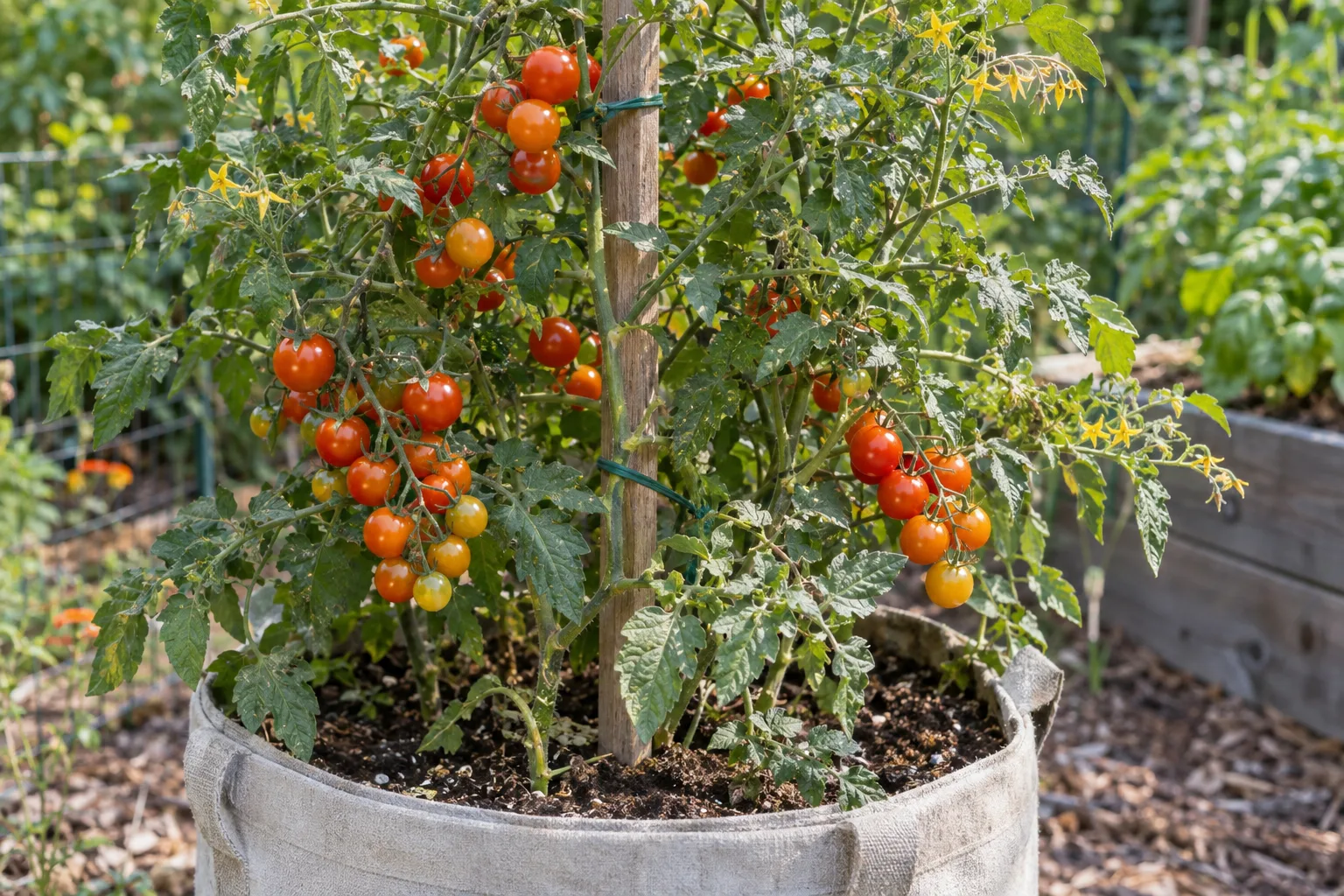
Cherry tomatoes grow as staked vines 4 to 6 feet tall and want 6 or more hours of sun, with some afternoon shade as spring warms. Water deeply and evenly, and expect daily watering in a container by late spring. Large tomatoes tend to stop setting fruit when days reach the mid 90s, and cherry types usually keep going longer. The drawback is a short spring harvest, so transplant in February or early March.
2. Bush beans (Phaseolus vulgaris)
Bush beans stay 1 to 2 feet tall, need no trellis and often produce in about 50 to 60 days. They want full sun and even moisture. Sow seed directly, about 1 inch deep, because beans dislike having their roots disturbed. The drawback is a short picking window of a few weeks per planting, so sow a second round a couple of weeks later.
3. Cucumbers (Cucumis sativus)
Trellised cucumber vines climb 4 to 6 feet and use roughly a square foot of ground. They need full sun and steady water, with a 10-gallon container or larger. Compact or bush types suit patios best. The drawback is heat sensitivity, since fruit quality and flowering drop as temperatures approach 100°F, so plant in early March and pick often.
4. Radishes (Raphanus sativus)
Radishes stay under 8 inches tall and grow in containers only 6 inches deep. They need 4 to 6 hours of sun and light, regular watering. Sow every couple of weeks through the cool season for a steady supply. The drawback is quality: roots turn woody and hot-tasting if they sit too long or the weather warms, so pull them promptly.
5. Swiss chard (Beta vulgaris subsp. cicla)
Swiss chard grows 1.5 to 2 feet tall and about a foot wide, in full sun or light afternoon shade. Water moderately and harvest the outer leaves so the center keeps producing. It tolerates cool nights and handles spring warmth better than spinach or lettuce. The drawback is bolting once heat arrives in late spring, after which the leaves turn tough and bitter.
6. Green onions (Allium fistulosum)
Green onions reach 12 to 18 inches and tolerate tight spacing and shallow soil. They like 6 hours of sun, though a little shade is fine, and they need light, frequent watering because their roots are shallow. Snip the tops and they regrow. The drawback is patience: from seed they can take 60 to 80 days to reach a good size.
7. Kale (Brassica oleracea, Acephala group)
Kale grows 18 to 30 inches tall and wants full sun in the cool season and moderate water. Flavor often sweetens after a light frost. Transplants set out in October can start giving leaves within a couple of months. The drawbacks are cabbage worms and aphids on the leaves and a tendency to bolt as spring warms, so check the undersides of leaves weekly.
8. Bush zucchini (Cucurbita pepo)
Bush zucchini forms a mound 2 to 3 feet wide and needs full sun and deep, consistent watering. Plant in late February or March so it finishes before the hottest weather. Uneven watering can cause blossom end rot, where the fruit tips turn dark and sunken. The drawback is size: even compact types need a 20-gallon pot or a bed of their own, and powdery mildew often shows up late in the season.
Should I use containers or raised beds?
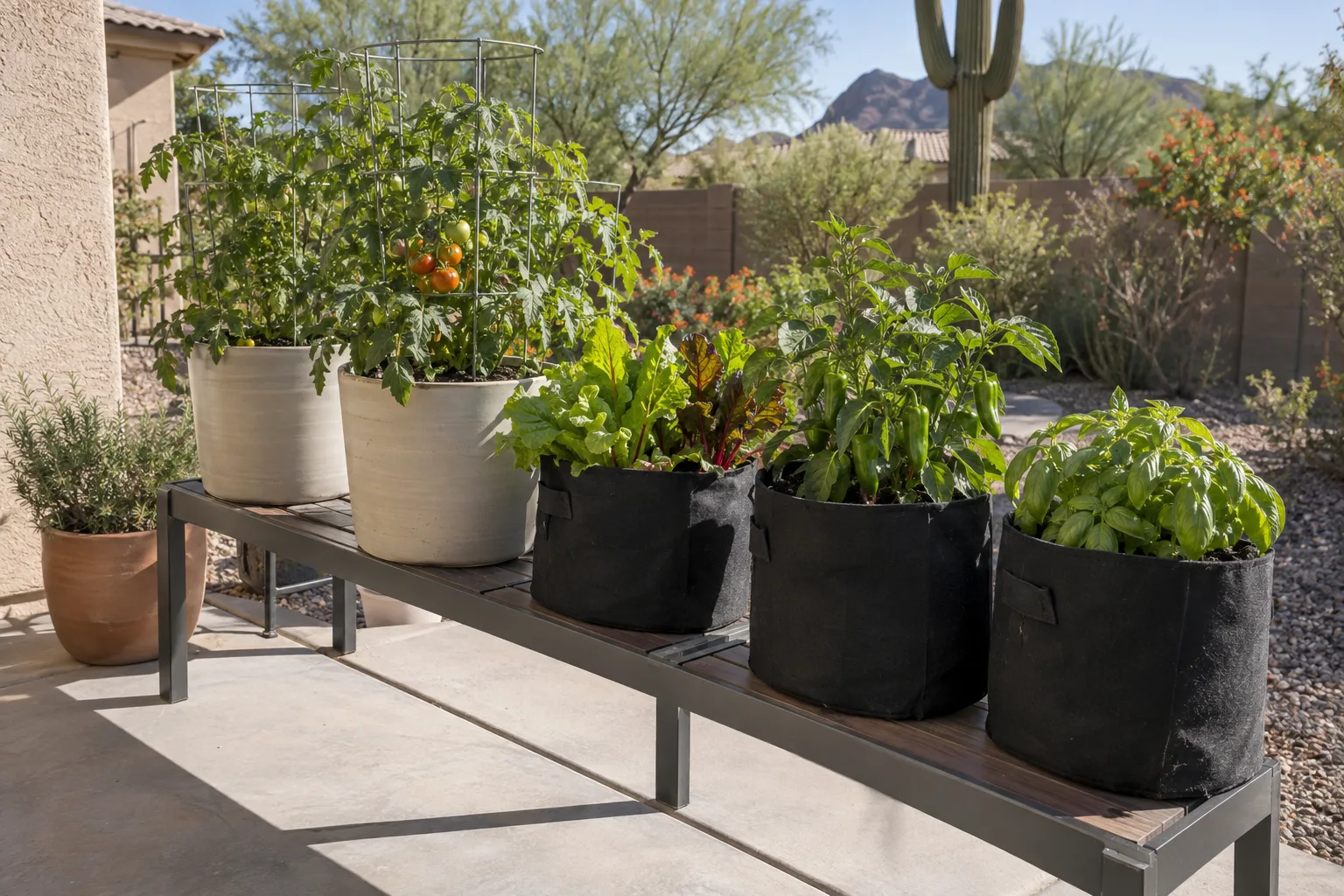
Either works, and the choice depends on your space and how often you can water. Containers move to shade, drain well and cost less to start. Raised beds hold moisture longer and give roots more room, with a depth of 12 to 18 inches suiting most of these crops. Match the pot to the plant: roughly 15 gallons for tomatoes, 10 for cucumbers and 5 for greens and radishes.
Pot color matters here. A dark container on a concrete patio can heat the root zone well above the air temperature on a summer afternoon. Choose light-colored pots or fabric grow bags, and lift them off the pavement on a stand or pallet. Browse our pottery and planters for sizes that fit a patio.
How often should I water small-space vegetables?
Plan on watering containers daily by late spring and raised beds every 2 to 3 days in the cool season, then more often as temperatures climb. Check the soil 2 inches down with a finger and water when it feels dry. Morning is best, because it gives leaves time to dry and cuts down on fungal problems.
Drip irrigation on a timer saves effort and keeps water at the roots. Mulch with 2 to 3 inches of straw or shredded bark to slow evaporation. Hard irrigation water leaves salts behind in pots, so water until it runs out the bottom now and then. That flushes them out.
What soil should I use for vegetables in pots and raised beds?
Use a quality potting mix blended with compost instead of native soil. East Valley soil is typically alkaline, often with a pH above 7.5, and caliche layers underneath drain slowly and block roots. Most vegetables do best at a pH of about 6.0 to 7.0, and hard water pushes pH upward over time.
Add 2 to 3 inches of fresh compost at the start of each season, because summer heat breaks down organic matter quickly. Containers also lose nutrients with frequent watering, so plan to feed them regularly through the growing season.
How can I grow more food by going vertical?
Growing up a trellis frees ground space and improves airflow around the leaves. Cucumbers, pole or bush beans and indeterminate tomatoes all climb well. Good supports include an A-frame trellis, a cattle panel bent into an arch over a raised bed, or a wire grid fixed to a wall.
Think about where the shadow falls. A tall trellis on the south side of a bed shades the plants behind it, which helps cool-season greens and hurts sun-loving tomatoes. Put tall crops on the north side of the bed so they do not shade the shorter ones.

How do I protect small-space vegetables from summer heat?
Shade, mulch and mobility do most of the work. A 30 to 40 percent shade cloth held 12 to 18 inches above the plants takes the edge off afternoon sun in April and May. Move pots so they get morning sun and afternoon shade from a wall. Water deeply the day before a forecast of 108°F or higher.
Even with protection, most vegetables pause between June and September. Use those months to repair irrigation, refresh your compost and plan fall plantings.
Frequently asked questions
Can I grow vegetables in Arizona through the summer?
A few crops will keep going, but yields drop. Heat-adapted vegetables such as okra, yardlong beans and Armenian cucumber are commonly grown through summer in the low desert. Most gardeners treat July and August as a rest period and replant in September and October for the cool season.
How often should I fertilize vegetables in containers?
Feed containers every 2 to 3 weeks during the growing season with a diluted liquid fertilizer, following the label. Frequent watering washes nutrients out of pots quickly. Raised beds that were amended with compost need feeding less often. Yellowing lower leaves are a common sign the plant needs nitrogen.
Is a west-facing patio too hot for vegetables?
West exposure is the hardest, because afternoon sun and reflected heat from walls and paving build up fast. East-facing spots with morning sun and afternoon shade work best in spring. On a west patio, use shade cloth, light-colored pots and mostly cool-season crops, which finish before the worst heat arrives.
Should I start from seed or buy transplants?
Seed works for radishes, beans and green onions, which grow quickly and resent root disturbance. Transplants are better for tomatoes and for most spring plantings, because the growing window is short and they give you a head start. Kale, chard and cucumbers can go either way.
How many vegetables should a beginner start with?
Start with two or three crops in your first season. That lets you learn how your sun, irrigation and microclimate behave before you add more. Radishes, chard and bush beans are forgiving choices. Our classes and events page lists upcoming sessions for new gardeners.
Is a small-space vegetable garden worth it in Arizona?
Yes, if you can give plants 6 hours of sun and a few minutes of watering each day in spring. A few pots or one raised bed can supply greens, tomatoes and beans for months. It is a poor fit if your space is mostly shade, or if you travel often and cannot set up drip irrigation on a timer. Stop by our Queen Creek nursery and we will help you choose crops for your patio.