

The best seedlings to transplant in April in Arizona are heat lovers: peppers, eggplant, okra, basil, sweet potato slips, Armenian cucumber, summer squash and lemongrass. Get them in the ground early in the month so roots establish before 100°F days arrive.
Key takeaways
- Transplant heat-loving crops in the first half of April so they have 4 to 6 weeks of root growth before summer.
- April highs in Queen Creek usually run from the mid 80s to the mid 90s, and 100°F days can show up by May.
- Plant in the evening or on an overcast morning, water deeply, and mulch 2 to 3 inches deep.
- Check moisture 4 inches down. New transplants often need water every day or every other day for the first two weeks.
- Wait until fall for full-size tomatoes and bell peppers, which stall once nights and days stay hot.

Why is April the last good window for transplanting in Arizona?
April is the last stretch when the soil is warm and the air is still mild enough for young roots to settle in. Warm soil drives fast root growth, and the monsoon is months away, so you control the moisture.
The window closes quickly. By May, highs climb toward 100°F and the surface of bare soil gets far hotter than the air, which scorches small roots. A transplant set out on April 5 has a month or more to anchor itself. One set out on May 25 has days.
The University of Arizona Cooperative Extension publishes a vegetable planting calendar for Maricopa County that shows planting dates for each crop, and it is worth checking against your own yard. Our gardening calendars cover the rest of the year.
Your yard may run hotter than the forecast. A west-facing block wall or a concrete patio can add several degrees to nearby beds, so plan afternoon shade for those spots.
Which 8 seedlings can you transplant in April?
Eight crops suit April planting in the East Valley, and all of them come from warm climates. These are varieties we commonly carry in our herbs, vegetables and berries department, though availability changes week to week and season to season.
Hot peppers (Capsicum annuum)
Jalapeños, serranos and Anaheims reach about 2 to 3 feet tall and want full sun, with some afternoon shade once May heat arrives. Water deeply when the soil is nearly dry 3 to 4 inches down. Hot types keep setting fruit through summer better than bell peppers do. The drawback is that flowers can drop during the hottest stretches, so expect a slow patch in July before production picks up again.
Eggplant (Solanum melongena)
Eggplant grows 2 to 4 feet tall and tolerates summer heat well once its roots are established. It needs full sun and steady water. Japanese, Italian and Thai types all fit. Spider mites are the usual drawback in dry weather, so check the undersides of leaves every week or two.
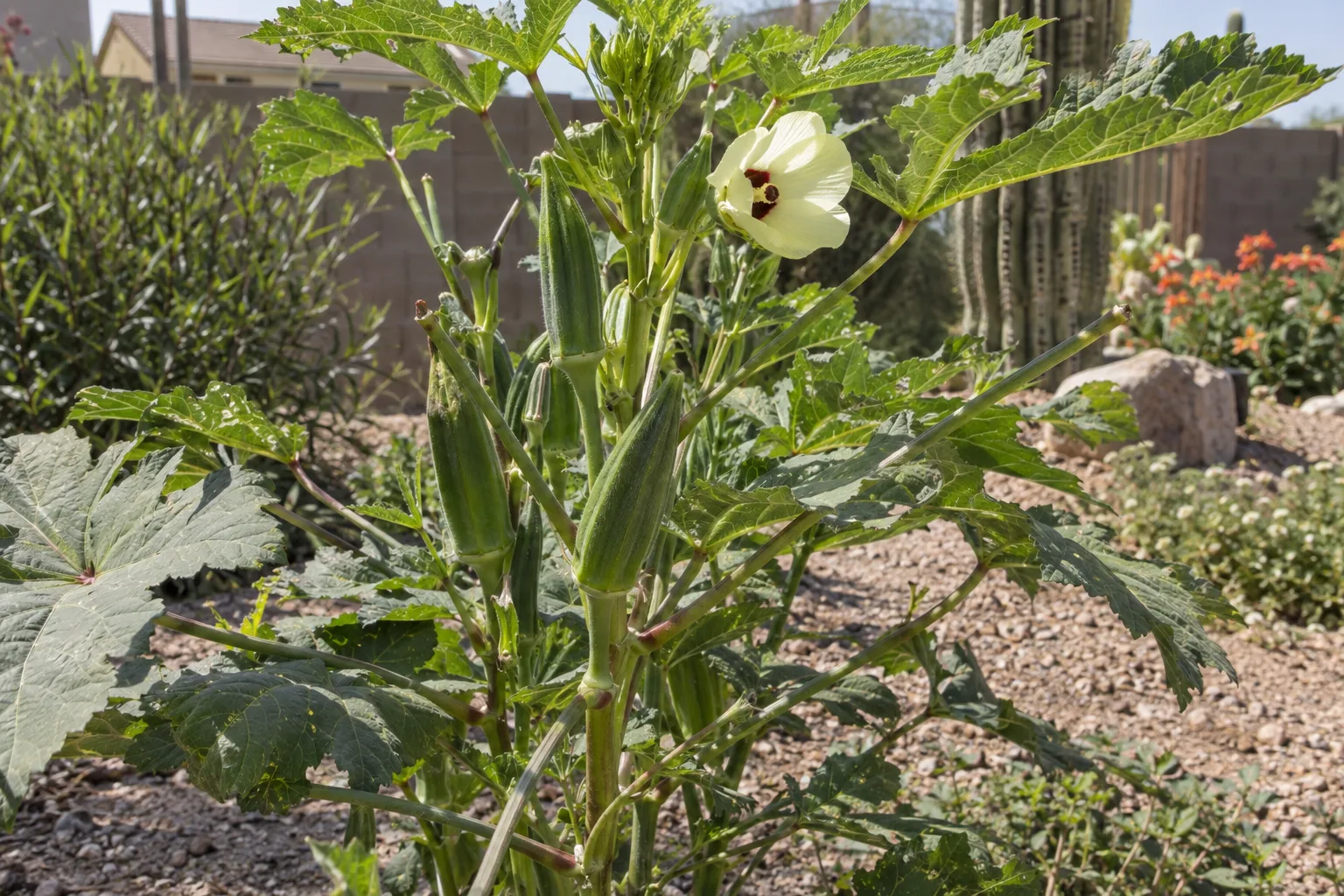
Okra (Abelmoschus esculentus)
Okra grows 3 to 6 feet tall, wants full sun, and handles 110°F heat with moderate water. Pick pods when they are about 3 to 4 inches long, and check the plants every couple of days at peak. The drawback is size. Plants get tall and woody, and the leaves and pods can irritate bare skin, so wear sleeves when you harvest.
Basil (Ocimum basilicum)
Basil stays at 1 to 2 feet and likes morning sun with shade after about 2 PM as summer heat builds. Water regularly and pinch off flower heads so the plant keeps making leaves. Genovese, Thai and lemon types all work. Basil flowers early in hot weather, which makes the leaves bitter, so pinching is a weekly chore.
Sweet potato slips (Ipomoea batatas)
Sweet potato vines run 4 to 10 feet across in full sun, with moderate water once rooted. Set slips 12 to 18 inches apart in loose, well-drained soil. Harvest comes in fall, roughly 90 to 120 days after planting. The drawback is sprawl. Give the vines room, or they will crowd out neighboring crops.
Armenian cucumber (Cucumis melo var. flexuosus)
Technically a type of melon, this crop tastes like a mild cucumber and tolerates summer heat. Vines reach 6 to 10 feet and do best on a trellis in full sun with moderate water. The drawback is powdery mildew, which tends to show up as humidity rises during the monsoon. Good airflow from trellising helps.
Summer squash (Cucurbita pepo)
Zucchini, yellow squash and pattypan form bushy plants about 2 to 3 feet wide that need full sun and generous water. Transplants establish faster than seed this late in the season. Mulch helps. The drawback is a short season, since production often fades by midsummer, and squash bugs and vine borers are common pests.
Lemongrass (Cymbopogon citratus)
Lemongrass forms a clump 3 to 5 feet tall and wide in full sun, with regular water. Cut stalks near the base for cooking or tea. The drawback is frost. The plant is tender, so plan to cover it or move a container in on cold winter nights.

How do you transplant seedlings in April heat?
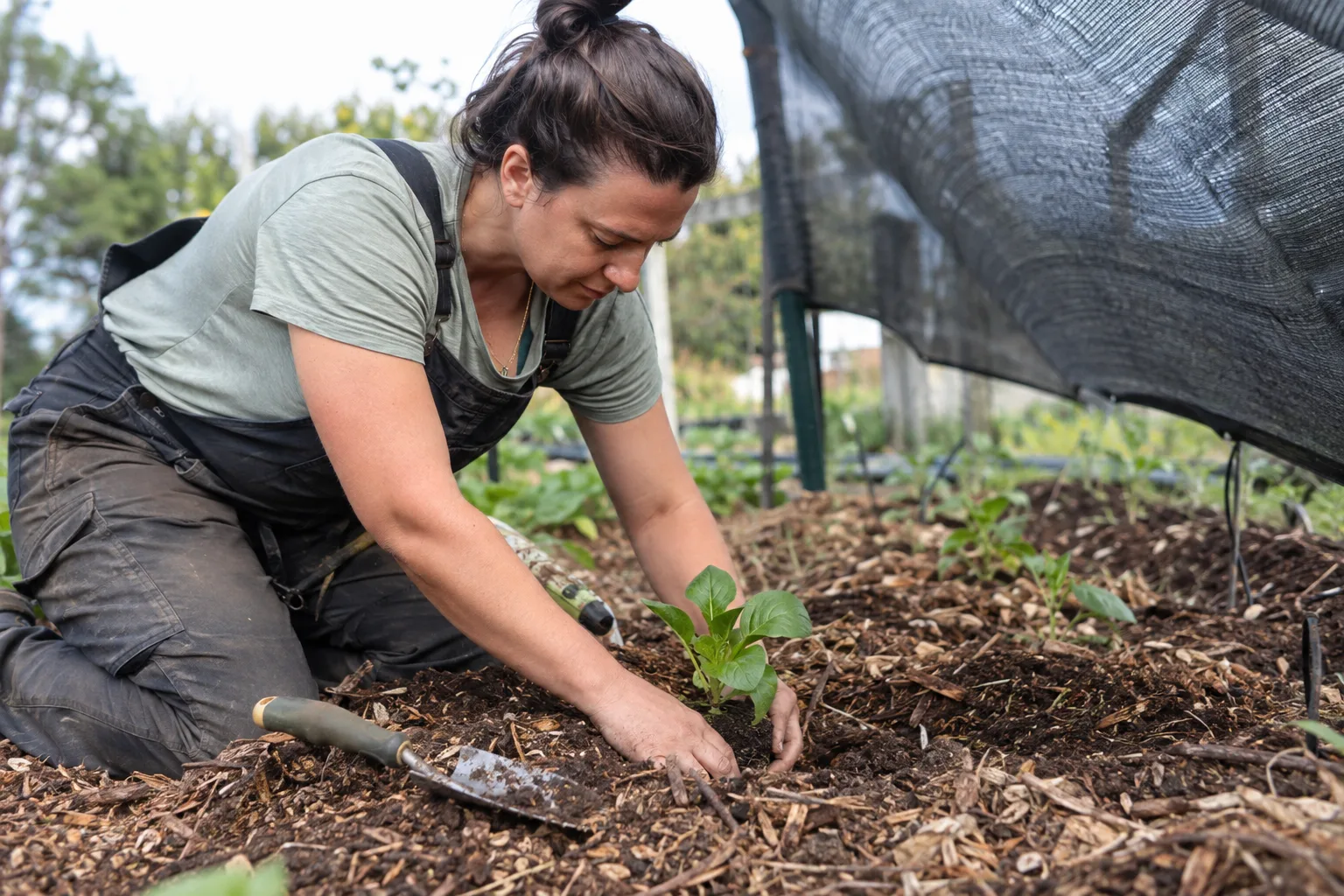
Plant in the evening or on an overcast morning, water in deeply, and shade new plants for the first week. Handling the seedling gently and keeping the root ball moist does most of the work.
Alkaline soil and caliche shape how you dig here. If your shovel hits a hard white layer, break through it or choose a raised bed or large container. Work compost into the top 8 to 12 inches of the bed before planting. A good planter or pot with drainage holes is a fine alternative to fighting caliche.
- Set nursery-grown seedlings in filtered shade for 5 to 7 days so they adjust to direct sun.
- Water the seedlings thoroughly the night before planting.
- Dig a hole about twice as wide as the root ball and the same depth.
- Plant in the evening or on a cloudy morning.
- Set each plant at the same depth it grew in the pot, and firm the soil gently.
- Water slowly until the soil around the roots is soaked.
- Spread 2 to 3 inches of mulch, keeping it a few inches from the stem.
- Prop 30 to 40 percent shade cloth over the plants for 7 to 10 days, and remove it once you see new growth.
How much water do April transplants need?
Plan on watering every day or every other day for the first two weeks, then stretch the interval as new growth appears. The right schedule depends on soil, plant size and weather, so check the soil rather than the calendar.
Push a finger or a screwdriver 4 inches into the soil. If it feels nearly dry at that depth, water. If it is damp, wait. The top inch dries within hours in April sun, so surface dryness tells you little.
Drip irrigation delivers water at the roots and wastes less than a hose or sprinkler. Hard water leaves mineral deposits, so flush emitters if they clog. By June, plants that were fine on a few minutes a day may need more water per session, so build in room to adjust.
What should you leave alone in April?
Leave full-size tomatoes, bell peppers and cool-season crops for fall or next year. Tomatoes are best planted earlier, in late winter, and they usually stop setting fruit once days stay above the mid 90s.
Lettuce, broccoli, peas and spinach bolt or turn bitter in rising heat. Skip heavy pruning of established shrubs and trees, too, since fresh growth burns in strong sun. If you are filling gaps with color instead of food, our annual flowers and foliage section has warm-season options.
Frequently asked questions
Can I plant seeds instead of transplants in April?
Yes, for several of these crops. Okra, squash and Armenian cucumber germinate quickly in warm soil, so seed works well. Peppers, eggplant and sweet potatoes do better from transplants or slips because they need a long season. Direct-seeded plants lag transplants by a couple of weeks but avoid transplant shock.
How can I tell heat stress from overwatering?
Check the timing. Heat-stressed leaves wilt in the afternoon and perk up by morning. Overwatered plants stay droopy morning and evening, and lower leaves often turn yellow. Confirm by checking the soil 4 inches down. If it is wet and the plant looks sick, hold off on water and improve drainage.
Do April transplants need fertilizer?
A light feeding is enough at planting. Mix compost into the bed and use a balanced, slow-release product according to its label. Heavy nitrogen pushes leafy growth before roots can support it. Once plants show several weeks of steady growth, you can feed again, following label directions for each crop.
Can I grow these in containers?
Yes. Peppers, eggplant, basil, okra and lemongrass all do well in large pots with drainage holes. Containers heat up and dry out faster than beds, so water more often and keep dark pots out of the harshest afternoon sun. Sweet potatoes and squash need especially roomy pots.
What happens when the monsoon arrives?
The monsoon runs roughly July through September and brings humidity, wind and sudden downpours. Stake tall plants like okra and eggplant at planting time. Make sure beds drain well, and watch for powdery mildew on squash and Armenian cucumber as the air stays humid.
Is April planting worth it for your garden?
Yes, if you can plant in the first half of the month and water daily for the first two weeks. Peppers, eggplant, okra and basil reward that effort with a long harvest. If you travel in May or have no irrigation, wait for fall planting, when conditions are easier. Come visit us in Queen Creek and we will help you choose seedlings that match your yard.
