
The best seasonal landscaping tricks to sell an Arizona home faster are fixing irrigation first, timing color to your listing month, refreshing gravel, pruning lightly and staging the entry. Start three to four weeks before photos.
Key takeaways
- Start your yard work 3 to 4 weeks before listing photos so cuts heal and new plants settle.
- Plant cool-season color in January or early February for spring photos, and warm-season color once nights hold below about 100°F in late September.
- Top-dress decomposed granite with about 1 inch of fresh material and rake it smooth before photos.
- Remove dead trees and shrubs completely, since they pull the eye in photos and raise questions about the irrigation.
- Place two matching pots, at least 18 inches wide, on either side of the front door.

Why does curb appeal matter so much for East Valley sellers?
Buyers form an opinion from the street, and in the low desert that opinion rests on plants, gravel and tidiness, not on a lawn. A yard that looks healthy, low-water and cared for tells buyers the rest of the house probably was too.
Seasons change the picture quickly here. Summer highs above 110°F, a monsoon from roughly July through September and occasional winter frost mean the same yard can look very different in January and August. Match your effort to the month you list.
Which seasonal color should I plant before listing?
Plant color that is in its best weeks on photo day, and give it time to fill in. Trick 1 is matching the planting to the month.
Spring listings (February to April)
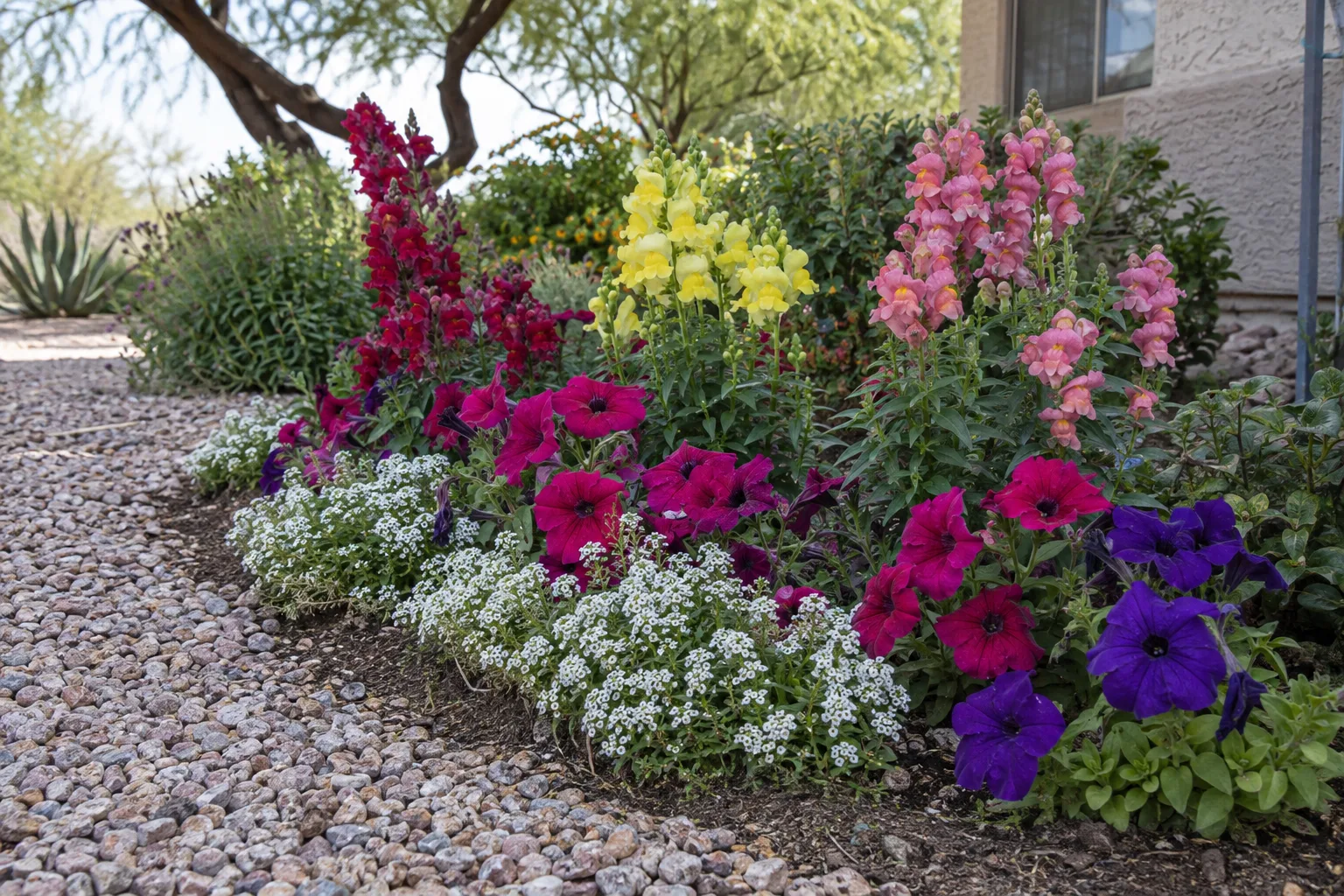
Cool-season annuals such as alyssum, snapdragons, petunias and dianthus suit this window. Plant them about 6 to 8 weeks before photos. Planting later leaves them thin, and the heat arrives fast by April.
Fall listings (October to November)
Set out warm-season color in late September, once temperatures stay below about 100°F. Pentas and marigolds are common choices. Many cool-season annuals go in during October.
Summer listings
Stick with heat-lovers such as purslane, vinca and bougainvillea, and plant them at least 4 weeks ahead. Water new plantings deeply, because anything freshly set out in 110°F heat can scorch or wilt. You can browse annual flowers and foliage for varieties we commonly carry, though availability changes week to week and season to season.
How do I refresh decomposed granite before photos?
Rake it smooth, pull the weeds, and add a topdressing about 1 inch deep. Trick 2 is the cheapest change with the biggest effect, because faded, crusted gravel makes a yard look neglected.
Warm tan and golden tones photograph well against most stucco colors. Gray rock in front of a warm-toned house can look flat, so consider swapping it if the colors clash. Check that weed barrier fabric has not worked its way to the surface, since exposed fabric reads as deferred maintenance.
Pull weeds by hand where you can. If you plan to use any herbicide or pre-emergent, follow the product label exactly.
Should I prune before I list?
Yes, but prune to show the plant’s natural shape, and finish 3 to 4 weeks before photos. This is Trick 3. Round, tightly sheared palo verdes and acacias look unnatural and many buyers notice.
Lift the canopy so people can see under the tree, and remove dead wood and any branch that crowds the entry or a window. Hold off on pruning flowering shrubs such as Texas sage (Leucophyllum frutescens) until bloom ends, because you want buyers to see the flowers. Avoid heavy cuts in summer heat, since exposed bark can sunburn.
Why fix the irrigation first?
Plants depend on the system, and buyers and inspectors notice a failing one. Trick 4 is to walk every zone before doing anything else. Dry plants on one side and soggy soil on the other signal a problem.
Check each emitter, replace cracked or sun-baked tubing, and set the controller to the current season’s schedule. Newly planted material needs shorter, more frequent cycles for the first couple of weeks. Disclose what you know about the system to buyers, and present it working.
Can containers stage the front entry?
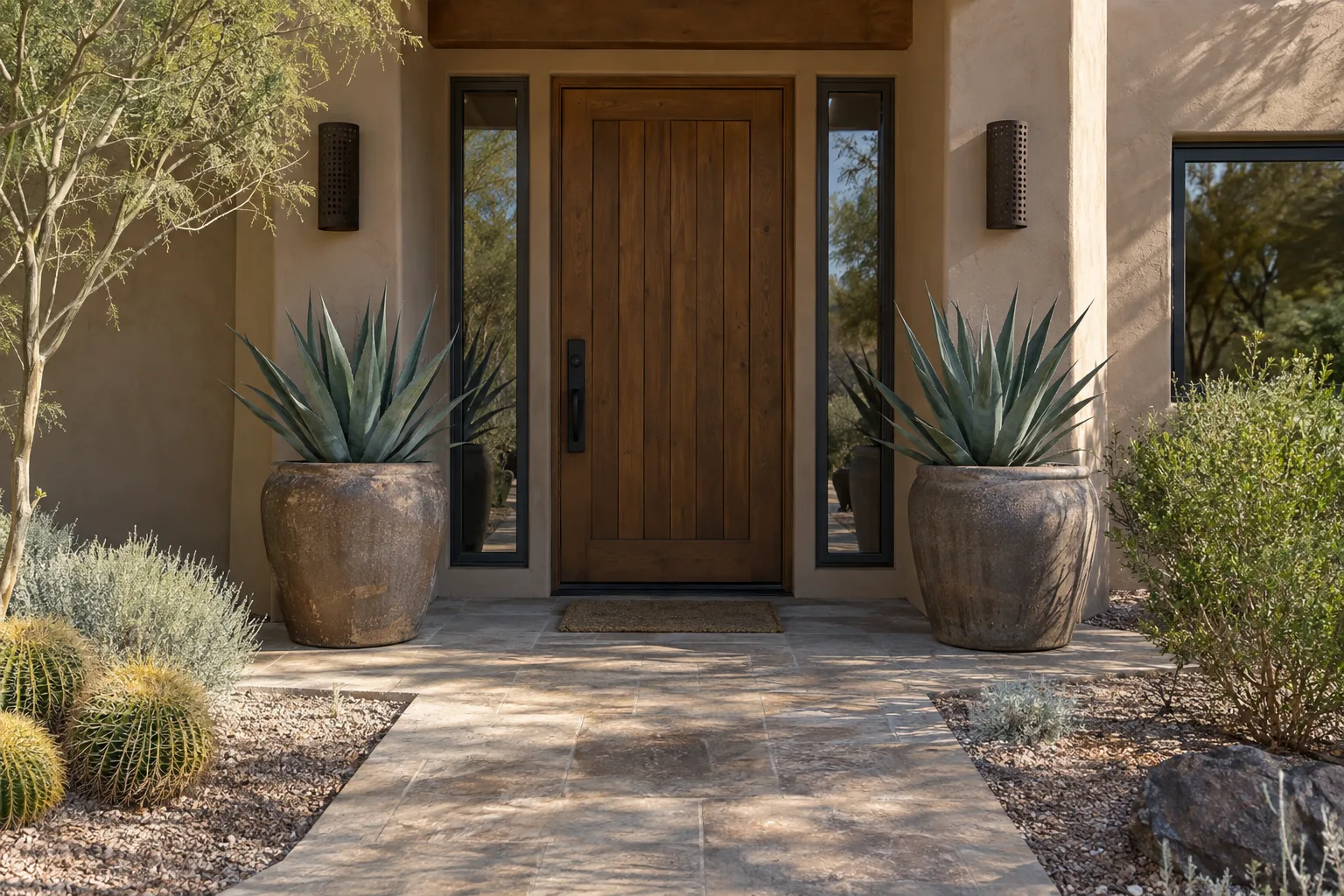
Yes, two matching pots flanking the door add structure fast. This is Trick 5. Choose pots at least 18 inches across and keep them off west-facing walls that hold heat after mid-afternoon.
Good candidates include agave, bougainvillea and desert willow (Chilopsis linearis). Pots also cover gaps where plants died, without new in-ground planting, and you can take them with you. Browse pottery and planters to see styles we commonly carry.
What should I do about a dead or stressed tree?
Remove a dead tree, stump if possible, and replace it or fill the space with fresh gravel and companion plants. Trick 6 is not to leave it, because a dead tree is the first thing a camera finds.
A stressed tree may recover with deep, slow watering. Our alkaline, caliche-prone soil means some root problems never resolve, so call a certified arborist if you are unsure. For replacements, look at desert trees. Larger specimens give faster visual impact, but they need steady watering to establish.
Can the monsoon help my listing?
It can. Trick 7: after storms, desert plants flush with new growth and gravel looks clean. Do not prune heavily just before monsoon season, so plants can put on that growth.
Blow debris off hardscape after any big wind event, before photos. Wildflower seed scattered ahead of the rains may bloom, but results vary, so do not count on it for a particular photo date.
What does a drought-smart yard look like to a buyer?
It has defined beds, clean edging, mulched tree basins, drip irrigation and plants grouped by water need. Trick 8 is design, not just plant choice, and a bare gravel expanse looks unfinished.
Layer heights, mix flowering shrubs with structural succulents, and use boulders to break up flat areas. Buyers should be able to picture themselves living with it. See our plant selection for ideas.
Which plants give the most impact quickly?
Tough, fast-establishing shrubs and accents work best, covering the remaining tricks: Trick 9 for flowering shrubs, Trick 10 for structure, and Trick 11 for fillers.
Trick 9: Flowering shrubs
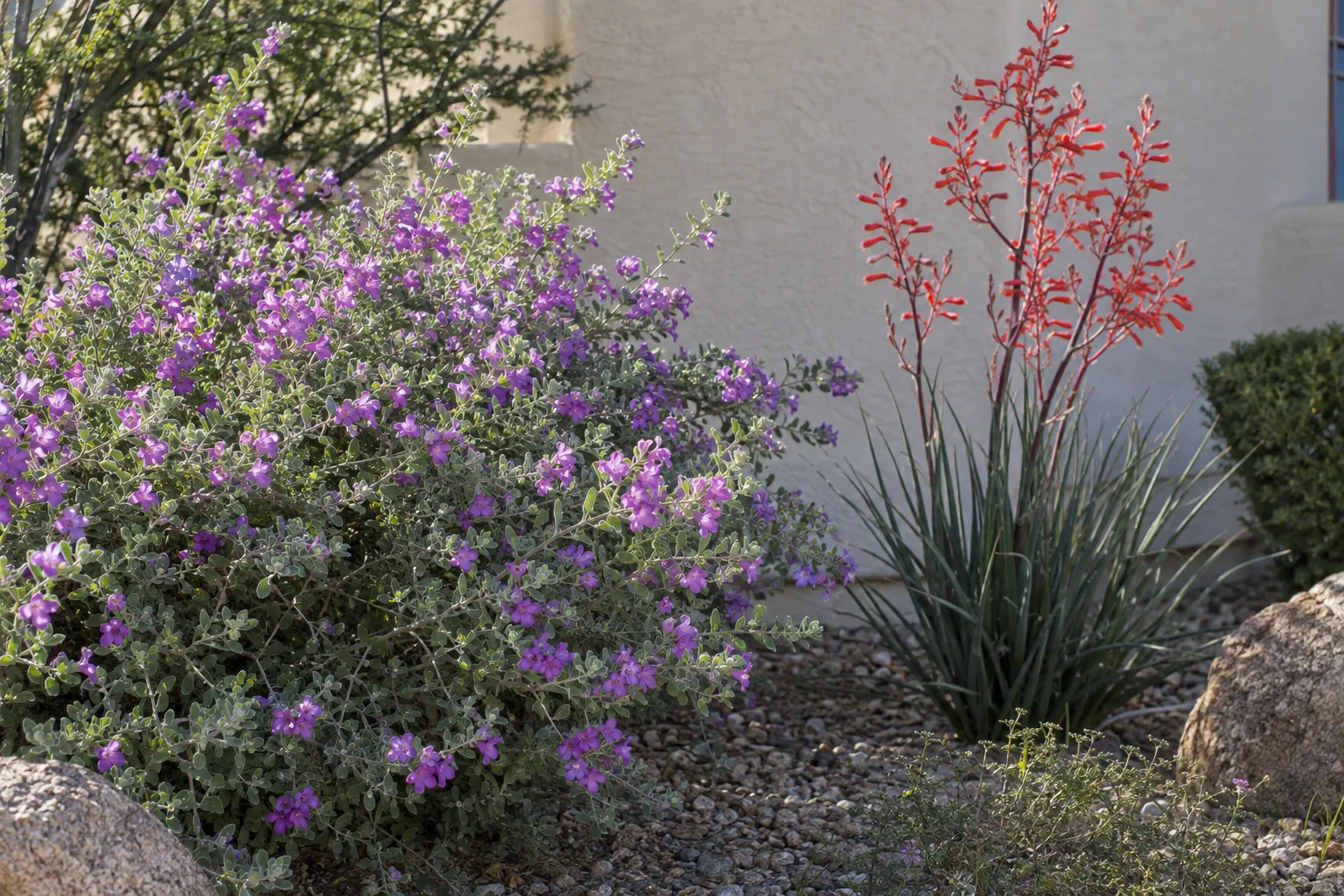
Leucophyllum frutescens (Texas sage) blooms in purple after humid weather and handles full sun. Bougainvillea brings bold magenta, orange or red color but is frost-tender in colder winters.
Trick 10: Structural plants
Agave americana and Agave parryi read as a planned desert garden. Both have sharp tips, so keep them away from walkways. ‘Desert Museum’ palo verde is a popular thornless hybrid tree for the street side.
Trick 11: Fillers
Hesperaloe parviflora (red yucca) adds coral flower spikes, and lantana comes in many colors. Lantana may freeze back in a cold winter, so give it time to recover before photos.
What is the order of work over three to four weeks?
Follow this sequence so each task has time to settle.
- Week 1: walk the property and repair the irrigation.
- Week 1: remove dead plants and pull weeds.
- Week 2: prune trees and large shrubs.
- Week 2: plant replacements, color and containers.
- Week 3: top-dress gravel, re-edge beds and clean hardscape.
- Week 3: add mulch in tree basins.
- Day before photos: blow off paths, put hoses away and water.
For month-by-month timing, check our gardening calendars.
Frequently asked questions
Should I remove my lawn before listing?
Keep a healthy lawn, since some buyers want turf for kids or pets. Convert a patchy or brown one to clean gravel and plantings, because lawn rehab rarely finishes before escrow. A tidy, designed desert yard photographs better than a struggling lawn.
Can I sell with a bare dirt front yard?
You can, but bare dirt suggests neglect and an unfinished project. A simple layer of gravel and a few desert shrubs changes that impression. Ask your agent how a bare yard might affect buyers in your neighborhood.
What is the fastest fix with only two weeks?
Clean hardscape, top-dress gravel, set two pots by the door and replace obviously dead plants. Skip annuals you cannot let establish, since freshly planted ones look wilted. Fresh mulch around tree bases finishes the look.
Does landscape lighting help?
It helps evening showings, which matter in fall and winter when it gets dark early. Low-voltage LED fixtures along walkways and up-lighting on a tree work well. If you already have a system, make sure every fixture works and bulbs match in color.
When are the best photos?
Photos taken the day after a winter rain can look especially good, as plants green up and gravel darkens. Do not wait on weather alone, though. Schedule around your listing date and be ready.
Is a pre-listing landscape refresh worth it?
For most sellers, yes, if you stick to low-cost work: irrigation repair, fresh gravel, light pruning, color and two pots. Skip big redesigns, walls or new hardscape unless the yard is clearly hurting your sale, because those costs rarely come back. If your home sells in a hot market in days, a cleanup may be enough. Stop by our nursery in Queen Creek and we can help you pick plants for your listing month.