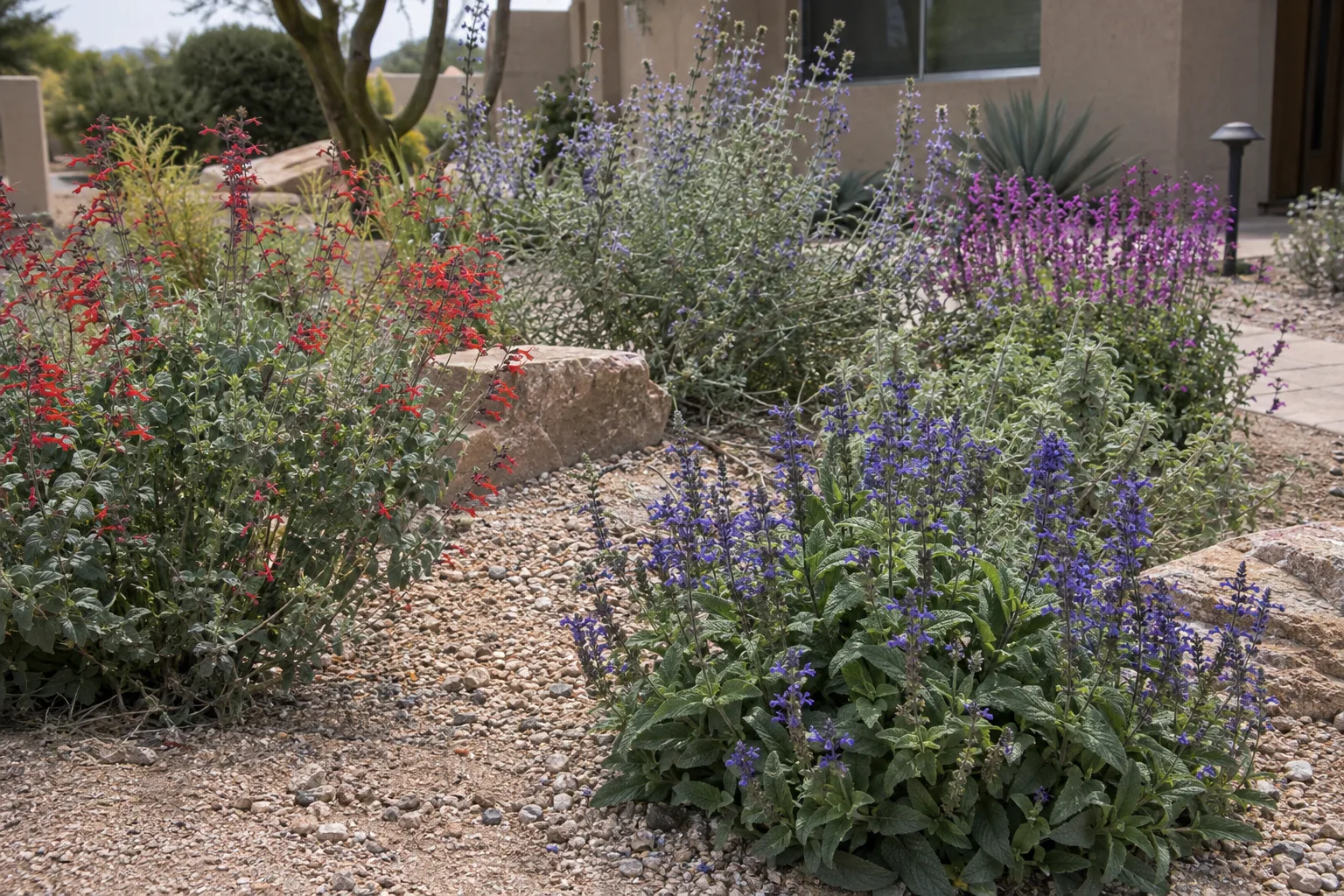
Eight salvias handle Arizona heat and drought well, but only three on this list are true Arizona natives. The rest come from Texas and Mexico and still perform in Queen Creek with full sun, fast drainage and little water once established.
Key takeaways
- Chia sage, desert sage and crimson sage are the Arizona natives here. The other five are Texas or Mexico natives with a long record in low desert gardens.
- Plant from October through early November, or in February and March, so roots settle in well before summer highs above 110°F.
- Set the crown at or slightly above soil level and leave compost out of the backfill, because wet crowns sitting on caliche cause most losses.
- Most salvias want full sun, but crimson sage and baby sage do better with shade from about 2 PM in July and August.
- Cut plants back by about one third in late winter once frost danger has passed, and skip heavy pruning from June through August.
Which of these salvias are native to Arizona?
Three of the eight are. Chia sage (Salvia columbariae) grows wild across the Sonoran Desert, desert sage (Salvia dorrii) grows in the northwestern part of the state, and crimson sage (Salvia henryi) grows in the southern part. The other five are native to Texas or Mexico.
That difference matters less than you might expect. A salvia from the Chihuahuan Desert or central Mexico already knows alkaline soil, dry air and strong sun, and the Texas and Mexico species here have grown in Valley gardens for decades. The native three, though, are fussier about drainage and often harder to establish. You can browse the full range in our plant department, and our staff can tell you which ones suit your exposure.
Which salvias work best in Queen Creek yards?
For most East Valley yards, autumn sage, Mexican bush sage and mealy cup sage are the easiest starting points. All eight below are varieties we commonly carry, though availability changes week to week and season to season, so check with us before you plan a bed around one.
Autumn sage (Salvia greggii)
Autumn sage reaches 2 to 3 feet tall and wide and blooms in red, pink, coral, peach or white. It flowers heavily in spring and fall and slows in the hottest weeks. It takes full sun, with light afternoon shade on a west wall helping in July. Water is low once established. The drawback is that it turns woody and open if you skip the yearly cutback.
Mexican bush sage (Salvia leucantha)
This one grows 3 to 4 feet tall and about as wide, with velvety purple and white spikes from roughly September into November. It wants full sun and low to moderate water. Frost browns the tops in cold winters, though plants usually resprout from the base in spring. Its size is the drawback, since it crowds a small bed quickly.
Mealy cup sage (Salvia farinacea)
Mealy cup sage stays 2 to 3 feet tall and carries violet-blue spikes from spring through fall. Give it full sun and low to moderate water. It fits mid-border spots and mass plantings along walls and slopes. The drawback is a shorter life than the shrubbier salvias, and many plants decline after a few years and need replacing.
Germander sage (Salvia chamaedryoides)
A low, spreading plant of 1 to 2 feet with small silver-gray leaves and bright gentian-blue flowers in spring and again in fall. It takes full sun to light afternoon shade and needs little water once settled. It looks good tucked in front of taller plants. The drawback is that it can look thin in peak summer and rots quickly in slow-draining soil.
Baby sage (Salvia microphylla)
Baby sage grows 3 to 4 feet tall and wide and blooms in red, pink, or red and white from spring into fall. Plant it in morning sun with afternoon shade in summer. Water needs are low to moderate. The drawback is leaf scorch on a hot west-facing wall, where reflected heat can push it past what it tolerates.
Crimson sage (Salvia henryi)
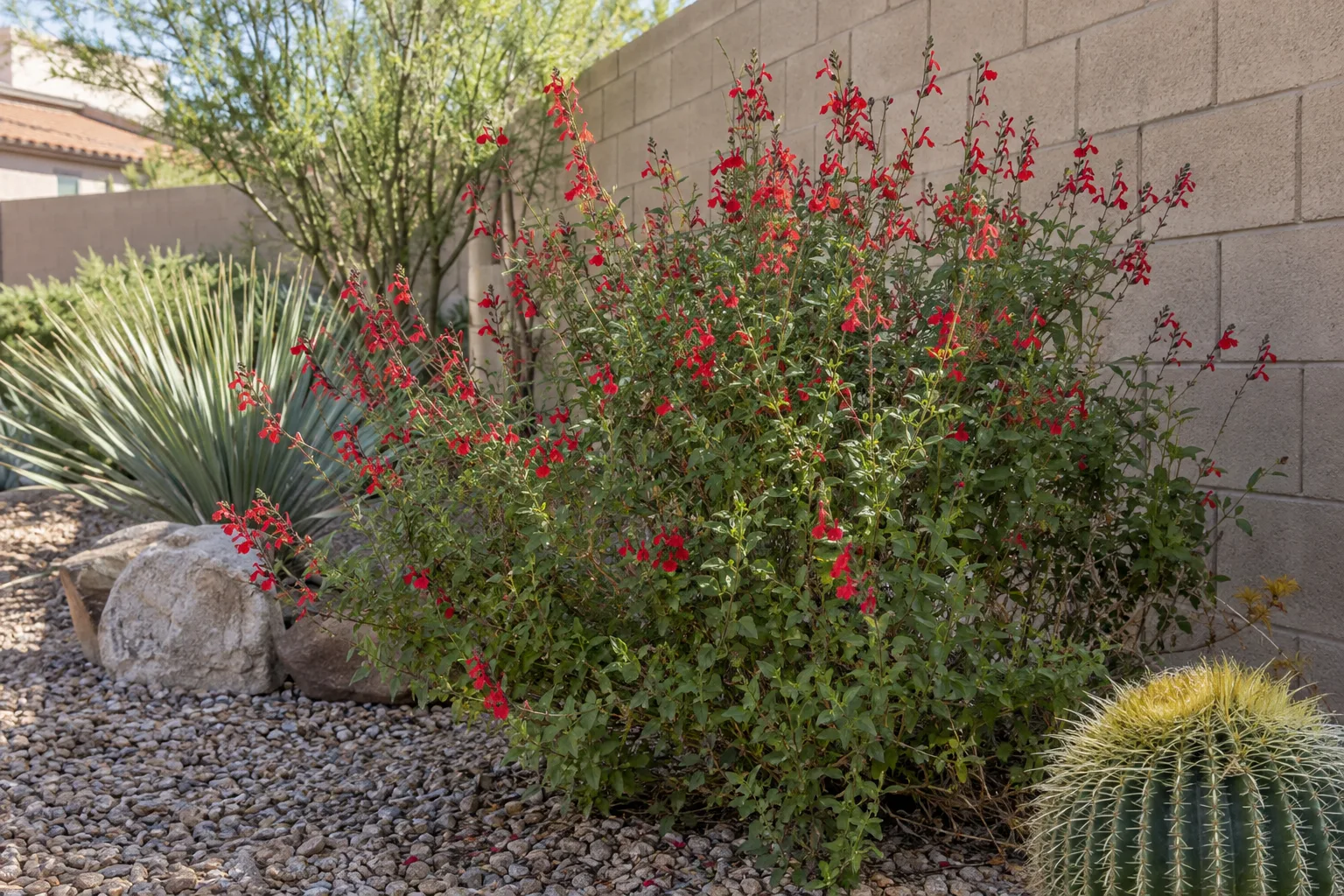
This Arizona native stays around 1 to 2 feet tall, with deep red tubular flowers on loose stems from spring into summer. It grows in rocky canyon country, so give it fast drainage and afternoon shade in summer. Water is low. The drawback is that it is less common in nurseries, and a bed that stays damp will finish it.
Chia sage (Salvia columbariae)
Chia sage is a winter annual wildflower of 6 to 20 inches, with blue-violet flower balls stacked on upright stems from late winter into spring. It wants full sun and gets by on fall and winter rain once seed germinates. Leave the spent stalks so it reseeds. The drawback is that it dries to brown by late spring and returns unevenly.
Desert sage (Salvia dorrii)
Desert sage forms a gray-leaved mound of 1 to 2 feet, with purple-blue flowers in spring. It needs full sun, very fast drainage and very little water. It comes from the Mojave and Great Basin, which are cooler than the East Valley, so it is the least certain plant on this list here. Treat it as an experiment in a gravelly spot.
How do the eight salvias compare?
The table puts size, bloom time and sun side by side so you can match a plant to a spot. Heights are typical ranges in the ground and vary with pruning and water.
| Salvia | Height | Main bloom | Sun |
|---|---|---|---|
| Autumn sage | 2 to 3 ft | Spring and fall | Full sun |
| Mexican bush sage | 3 to 4 ft | September to November | Full sun |
| Mealy cup sage | 2 to 3 ft | Spring to fall | Full sun |
| Germander sage | 1 to 2 ft | Spring and fall | Full sun to light shade |
| Baby sage | 3 to 4 ft | Spring to fall | Morning sun, afternoon shade |
| Crimson sage | 1 to 2 ft | Spring to summer | Afternoon shade |
| Chia sage | 6 to 20 in | Late winter to spring | Full sun |
| Desert sage | 1 to 2 ft | Spring | Full sun |
When should I plant salvias in Queen Creek?
October through early November is the best window. Roots grow through the mild months, and plants reach summer with a root system that can handle 110°F days. February and March also work, though spring plantings have less time before the heat arrives.
Avoid planting from late May through August unless you can water often and shade new plants. Our gardening calendars lay out the planting windows month by month. Sow chia sage seed in fall, before the winter rains.
How much water do salvias need in the low desert?
New salvias need frequent water for the first weeks, then a gradual shift to deep, infrequent soaks. Established plants usually do well on a deep watering every 7 to 10 days in summer and every 2 to 4 weeks in winter. Treat these as starting points and adjust to your soil.
Overwatering kills more salvias here than drought does. Check the soil 4 to 6 inches down before you irrigate, and wait if it is still damp. During monsoon weeks, skip a cycle after a good rain. Slow soaking that wets 12 to 18 inches of soil pushes roots down where the ground stays cooler.
What soil do salvias need over caliche?
Salvias need fast drainage and lean soil. Much of the East Valley has alkaline soil with caliche, a hard calcium layer that holds water above it, so the real risk is a wet root zone, not poor fertility.
Dig the hole 2 to 3 times wider than the pot but no deeper. Break through any caliche you hit, or plant on a low mound of 6 to 8 inches if water pools after a soaking. Backfill with the native soil and leave out compost and fertilizer, which push soft growth that struggles in heat. A 2 to 3 inch layer of decomposed granite keeps the soil evenly moist, but keep it off the crown.
When and how should I prune salvias?
Cut autumn sage, baby sage, mealy cup sage and Mexican bush sage back by about one third in late winter, after frost danger has passed, usually from mid-February to early March. This removes woody stems and gets a full flush of spring growth.

Shear spent flower spikes after each bloom flush to encourage a second round, which often comes within 3 to 4 weeks. Leave chia sage alone so it can drop seed. From June through August, remove only dead stems, since heavy cuts in extreme heat stress the plant. If you want hands-on help with pruning, see our classes and events.
Frequently asked questions
Can I grow salvias in containers?
Yes, autumn sage, baby sage and mealy cup sage do well in pots. Choose a large, light-colored container with drainage holes, since dark pots can overheat roots above 110°F. Place it where it gets afternoon shade, and expect to water more often than in the ground. Browse our pottery and planters for options.
Do salvias need fertilizer?
Usually not. Salvias grow in lean desert soils, and extra nitrogen leads to soft, leafy growth with fewer flowers. If a plant looks pale after a few years, a single light feeding in early spring is plenty. Skip fertilizer for chia sage and desert sage entirely.
Will hummingbirds and bees visit them?
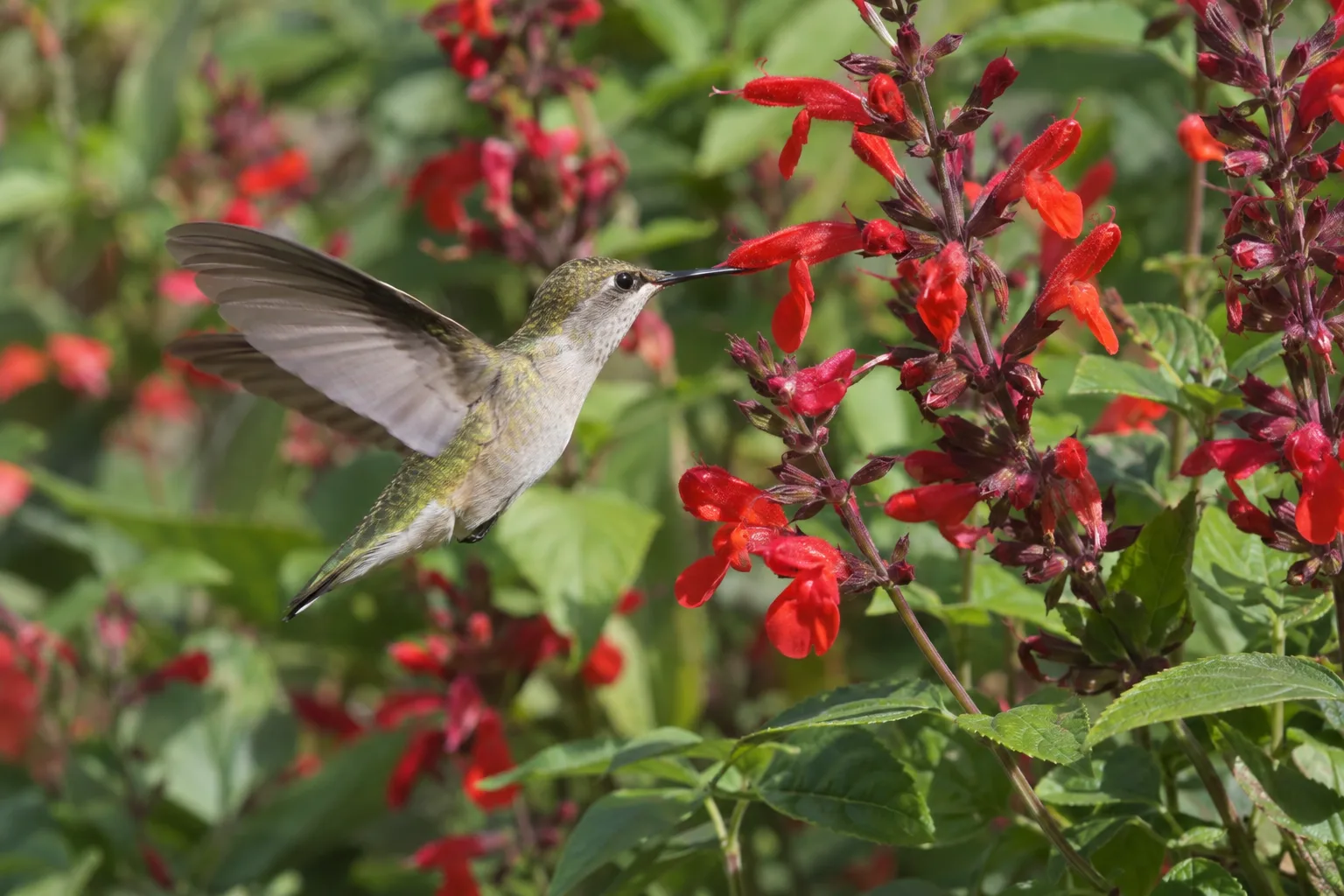
Often, yes. Tubular red and pink flowers, such as autumn sage, baby sage and crimson sage, are the ones hummingbirds tend to favor. Native bees and butterflies visit the blue and purple spikes. Planting several bloom times keeps nectar available through more of the year.
What happens to salvias in a frost?
Frost browns the tops of tender types such as Mexican bush sage, but they usually resprout from the base in spring. Leave the damaged growth in place until danger passes, since it shelters the crown. Then cut back to fresh growth.
Why does my salvia flop open in the middle?
Flopping usually comes from too much shade, too much water, or skipped pruning. Move the plant to full sun if you can, water deeply but less often, and cut it back by one third each late winter to keep it dense.
Which salvia is right for your yard?
Autumn sage, mealy cup sage and Mexican bush sage suit most sunny Queen Creek beds and are the easiest to grow. Pick baby sage or crimson sage for a spot with afternoon shade. Try chia sage and desert sage only if you have gravelly, fast-draining ground and like experiments. Skip salvias entirely if your bed stays wet from irrigation, because they will not last. Stop by our Queen Creek nursery and we will help you match a plant to your spot.